







-
 Agriculture
-
 Health-Care
-
 Environment
-
 Construction-Real-Estate
-
 Tools-Hardware
-
 Home-Garden
-
 Furniture
-
 Luggage-Bags-Cases
-
 Medical-devices-Supplies
-
 Gifts-Crafts
-
 Sports-Entertainment
-
 Food-Beverage
-
 Vehicles-Transportation
-
 Power-Transmission
-
 Material-Handling
-
 Renewable-Energy
-
 Safety
-
 Testing-Instrument-Equipment
-
 Construction-Building-Machinery
-
 Pet-Supplies
-
 Personal-Care-Household-Cleaning
-
 Vehicle-Accessories-Electronics-Tools
-
 School-Office-Supplies
-
 Packaging-Printing
-
 Mother-Kids-Toys
-
 Business-Services
-
 Commercial-Equipment-Machinery
-
 Apparel-Accessories
-
 Security
-
 Shoes-Accessories
-
 Vehicle-Parts-Accessories
-
 Jewelry-Eyewear-Watches-Accessories
-
 Lights-Lighting
-
 Fabric-Textile-Raw-Material
-
 Fabrication-Services
-
 Industrial-Machinery
-
 Consumer-Electronics
-
 Electrical-Equipment-Supplies
-
 Electronic-Components-Accessories-Telecommunications
-
 Home-Appliances
-
 Beauty
-
 Chemicals
-
 Rubber-Plastics
-
 Metals-Alloys


























































































































































































































































































































































































































































































































































































- Masonry Materials
- Curtain Walls & Accessories
- Earthwork Products
- Fireproofing Materials
- Heat Insulation Materials
- Plastic Building Materials
- Building Boards
- Soundproofing Materials
- Timber
- Waterproofing Materials
- Balustrades & Handrails
- Bathroom & Kitchen
- Flooring & Accessories
- Tiles & Accessories
- Door, Window & Accessories
- Fireplaces & Stoves
- Floor Heating Systems & Parts
- Stairs & Stair Parts
- Ceilings
- Elevators & Escalators
- Stone
- Countertops, Vanity Tops & Table Tops
- Mosaics
- Metal Building Materials
- Multifunctional Materials
- Ladders & Scaffoldings
- Mouldings
- Corner Guards
- Decorative Films
- Formwork
- Building & Industrial Glass
- Other Construction & Real Estate
- Wallpapers/Wall panels
- HVAC System & Parts
- Outdoor Facilities
- Prefabricated Buildings
- Festive & Party Supplies
- Bathroom Products
- Household Sundries
- Rain Gear
- Garden Supplies
- Household Cleaning Tools & Accessories
- Lighters & Smoking Accessories
- Home Storage & Organization
- Household Scales
- Smart Home Improvement
- Home Textiles
- Kitchenware
- Drinkware & Accessories
- Dinnerware, Coffee & Wine
- Home Decor
- Golf
- Fitness & Body Building
- Amusement Park Facilities
- Billiards, Board Game,Coin Operated Games
- Musical Instruments
- Outdoor Affordable Luxury Sports
- Camping & Hiking
- Fishing
- Sports Safety&Rehabilitation
- Ball Sports Equipments
- Water Sports
- Winter Sports
- Luxury Travel Equipments
- Sports Shoes, Bags & Accessories
- Cycling
- Other Sports & Entertainment Products
- Artificial Grass&Sports Flooring&Sports Court Equipment
- Scooters
- Food Ingredients
- Honey & Honey Products
- Snacks
- Nuts & Kernels
- Seafood
- Plant & Animal Oil
- Beverages
- Fruit & Vegetable Products
- Frog & Escargot
- Bean Products
- Egg Products
- Dairy Products
- Seasonings & Condiments
- Canned Food
- Instant Food
- Baked Goods
- Other Food & Beverage
- Meat & Poultry
- Confectionery
- Grain Products
- Feminie Care
- Hair Care & Styling
- Body Care
- Hands & Feet Care
- Hygiene Products
- Men's Grooming
- Laundry Cleaning Supplies
- Travel Size & Gift Sets
- Room Deodorizers
- Other Personal Care Products
- Pest Control Products
- Special Household Cleaning
- Floor Cleaning
- Kitchen & Bathroom Cleaning
- Oral Care
- Bath Supplies
- Yellow Pages
- Correction Supplies
- Office Binding Supplies
- Office Cutting Supplies
- Board Erasers
- Office Adhesives & Tapes
- Education Supplies
- Pencil Cases & Bags
- Notebooks & Writing Pads
- File Folder Accessories
- Calendars
- Writing Accessories
- Commercial Office Supplies
- Pencil Sharpeners
- Pens
- Letter Pad/Paper
- Paper Envelopes
- Desk Organizers
- Pencils
- Markers & Highlighters
- Filing Products
- Art Supplies
- Easels
- Badge Holder & Accessories
- Office Paper
- Printer Supplies
- Book Covers
- Other Office & School Supplies
- Stationery Set
- Boards
- Clipboards
- Stamps
- Drafting Supplies
- Stencils
- Electronic Dictionary
- Books
- Map
- Magazines
- Calculators
- Baby & Toddler Toys
- Educational Toys
- Classic Toys
- Dress Up & Pretend Play
- Toy Vehicle
- Stuffed Animals & Plush Toys
- Outdoor Toys & Structures
- Balloons & Accessories
- Baby Food
- Children's Clothing
- Baby Supplies & Products
- Maternity Clothes
- Kids Shoes
- Baby Care
- Novelty & Gag Toys
- Dolls & Accessories
- Puzzle & Games
- Blocks & Model Building Toys
- Toddler Clothing
- Baby Clothing
- Kids' Luggage & Bags
- Arts, Crafts & DIY Toys
- Action & Toy Figures
- Baby Appliances
- Hobbies & Models
- Remote Control Toys
- Promotional Toys
- Pregnancy & Maternity
- Hygiene Products
- Kid's Textile&Bedding
- Novelty & Special Use
- Toy Weapons
- Baby Gifts
- Baby Storage & Organization
- Auto Drive Systems
- ATV/UTV Parts & Accessories
- Marine Parts & Accessories
- Other Auto Parts
- Trailer Parts & Accessories
- Auto Transmission Systems
- Train Parts & Accessories
- Universal Parts
- Railway Parts & Accessories
- Auto Brake Systems
- Aviation Parts & Accessories
- Truck Parts & Accessories
- Auto Suspension Systems
- Auto Lighting Systems
- New Energy Vehicle Parts & Accessories
- Auto Steering Systems
- Wheels, Tires & Accessories
- Bus Parts & Accessories
- Auto Performance Parts
- Cooling System
- Go-Kart & Kart Racer Parts & Accessories
- Air Conditioning Systems
- Heavy Duty Vehicle Parts & Accessories
- Auto Electrical Systems
- Auto Body Systems
- Auto Engine Systems
- Container Parts & Accessories
- Motorcycle Parts & Accessories
- Refrigeration & Heat Exchange Equipment
- Machine Tool Equipment
- Food & Beverage Machinery
- Agricultural Machinery & Equipment
- Apparel & Textile Machinery
- Chemical Machinery
- Packaging Machines
- Paper Production Machinery
- Plastic & Rubber Processing Machinery
- Industrial Robots
- Electronic Products Machinery
- Metal & Metallurgy Machinery
- Woodworking Machinery
- Home Product Manufacturing Machinery
- Machinery Accessories
- Environmental Machinery
- Machinery Service
- Electrical Equipment Manufacturing Machinery
- Industrial Compressors & Parts
- Tobacco & Cigarette Machinery
- Production Line
- Used Industrial Machinery
- Electronics Production Machinery
- Other Machinery & Industrial Equipment
- Camera, Photo & Accessories
- Portable Audio, Video & Accessories
- Television, Home Audio, Video & Accessories
- Video Games & Accessories
- Mobile Phone & Accessories
- Electronic Publications
- Earphone & Headphone & Accessories
- Speakers & Accessories
- Smart Electronics
- TV Receivers & Accessories
- Mobile Phone & Computer Repair Parts
- Chargers, Batteries & Power Supplies
- Used Electronics
- VR, AR, MR Hardware & Software
- Projectors & Presentation Equipments
- Other Consumer Electronics
- Cables & Commonly Used Accessories
- Computer Hardware & Software
- Displays, Signage and Optoelectronics
- Discrete Semiconductors
- Wireless & IoT Module and Products
- Telecommunications
- Connectors, Terminals & Accessories
- Development Boards, Electronic Modules and Kits
- Circuit Protection
- Sensors
- Isolators
- Audio Components and Products
- Integrated Circuits
- Power Supplies
- Relays
- RF, Microwave and RFID
- Electronic Accessories & Supplies
- Passive Components
- PCB & PCBA
- Air Quality Appliances
- Home Appliance Parts
- Heating & Cooling Appliances
- Small Kitchen Appliances
- Laundry Appliances
- Water Heaters
- Water Treatment Appliances
- Refrigerators & Freezers
- Personal Care & Beauty Appliances
- Major Kitchen Appliances
- Cleaning Appliances
- Second-hand Appliances
- Smart Home Appliances
- Other Home Appliances
- Energy Chemicals
- Inorganic Chemicals
- Basic Organic Chemicals
- Agrochemicals
- Admixture & Additives
- Catalysts & Chemical Auxiliary Agents
- Pigments & Dyestuff
- Coating & Paint
- Daily Chemicals
- Polymer
- Organic Intermediate
- Adhesives & Sealants
- Chemical Waste
- Biological Chemical Products
- Surface Treatment Chemicals
- Painting & Coating
- Chemical Reagents
- Flavor & Fragrance
- Non-Explosive Demolition Agents
- Other Chemicals
- Custom Chemical Services

How to Prevent Custom Adapters from Reaching Competitors
To keep custom adapters from being supplied to competitors, establish clear contractual, technical, and production controls from the beginning of the OEM or ODM relationship. Document the adapter's design, dimensions, materials, branding, tooling ownership, approved applications, and authorized sales channels. Controlled drawings, reference samples, purchase-order records, inspection reports, and written change approvals can help prove exactly what was commissioned and where it may be sold.
Key Protection Measures
- Describe the adapter's geometry, interfaces, special dimensions, materials, logo requirements, packaging, and intended use in the OEM or ODM agreement.
- Prohibit unauthorized manufacturing, resale, distribution, or supply of identical or substantially similar adapters to other customers.
- Connect each purchase order to an approved drawing, sample, bill of materials, and inspection record for full production traceability.
- For universal quick-connect products, identify the permitted water guns, foam lances, pressure washers, pumps, brands, territories, or customer programs.
Contract and Specification Controls
The strongest protection starts with a precise product definition. Instead of relying on a broad phrase such as “custom adapter,” identify the connection type, dimensions, tolerances, material grade, surface finish, logo position, packaging, performance requirements, and approved market. The agreement should also explain whether a modified or substantially similar design is covered by the restriction.
OEM and ODM terms should clearly state that the manufacturer cannot produce, resell, or provide the protected adapter to another party without prior written authorization. The restriction should cover direct sales, distributor supply, private-label orders, samples, excess inventory, production leftovers, and design variations where appropriate.
Tooling and Technical File Ownership
Tooling ownership deserves separate treatment. The contract can specify who owns molds, fixtures, drawings, CAD files, samples, and production data, as well as how these assets must be stored, used, returned, or destroyed. Written approval should be required before changing materials, connectors, dimensions, manufacturing processes, or approved sales destinations.
Yiwu Zanchy Mechatronics Co. Ltd. provides OEM and ODM production for custom logos, special dimensions, special materials, and non-standard products. Its stated MOQ for custom products is approximately 100 to 1000 pieces, depending on product complexity and tooling requirements. These details make it especially important to define ownership and permitted use before production begins.
Traceability and Quality Enforcement
Every order should refer to the current approved drawing and sample. Purchase orders, inspection results, revision numbers, batch information, and written change approvals create a chain of evidence that links the delivered adapter to the authorized specification. This documentation also makes it easier to identify unauthorized production or substitutions.
The company states that it carries out full inspection. Its product information includes a high-pressure braided hose made with PVC and polyester, a working pressure of 18 MPa (2610 psi), Karcher quick-connect and M22 14/15 mm connection options, and lengths ranging from 5 m to 30 m. Such performance and interface details show why a protection schedule should cover both functional requirements and connection compatibility.
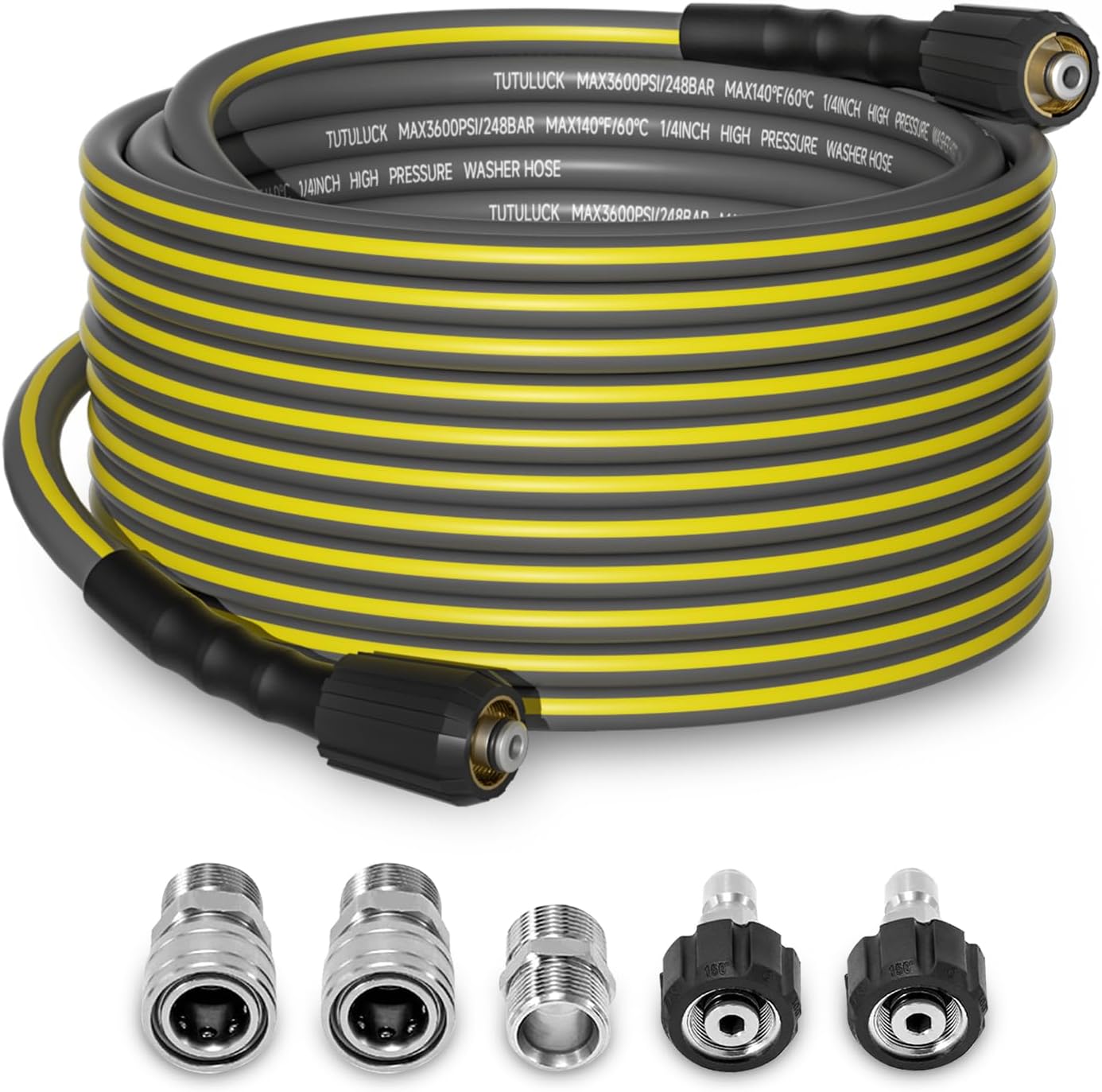
Application and channel definitions can further reduce disputes. The company describes water outlet connectors as universal quick-connect adapters compatible with different water guns, foam lances, and water pumps. A protected custom version should state whether it is restricted to a specific pressure washer model, brand initiative, distributor, region, or end-use application rather than being treated as a general stock item.
One cooperation example involving American distributors of car-washing accessories describes high-pressure gun use for vehicle cleaning, courtyard floor washing, balcony stain removal, and dust cleaning on construction equipment. Recording these intended applications helps establish the authorized market and supports a claim that the custom design was developed for a defined commercial purpose.
Protection Measures at a Glance
| Control Area | Recommended Implementation |
|---|---|
| Product definition | Document the logo, dimensions, materials, interfaces, performance specifications, drawings, packaging, and approved sample. |
| Manufacturing and resale limits | Prohibit unauthorized production, resale, distribution, private-label supply, and delivery to other customers. |
| Tooling and file management | Assign ownership and define permitted use, storage, return, destruction, and access to molds, samples, and technical files. |
| Change management | Require written approval for design changes, material substitutions, connector changes, or production revisions. |
| Market and channel control | List authorized customers, territories, applications, brands, and distribution channels, with approval required for additions. |
| Traceability | Link purchase orders, revision-controlled drawings, inspection records, batch details, and approved samples. |
Frequently Asked Questions
What details belong in a custom adapter agreement?
Include the adapter design, measurements, tolerances, materials, connection interfaces, branding, packaging, performance standards, approved application, tooling ownership, and permitted customers or channels.
Does the restriction cover a modified adapter?
It can, provided the agreement defines whether similar, revised, derivative, or functionally equivalent products are restricted. Written authorization should be required before supplying any such version to another customer.
Why are production records important?
Controlled drawings, approved samples, purchase orders, inspection reports, and change records establish traceability. Together, they show what was ordered, how it was produced, and which sales were authorized.
Conclusion and Practical Recommendation
Protecting a custom adapter requires more than a confidentiality clause. Combine a detailed OEM or ODM agreement with tooling ownership terms, restricted sales provisions, approved market definitions, revision control, written change authorization, and documented inspection results. Yiwu Zanchy supports OEM and ODM manufacturing, factory-direct supply, bulk production, and flexible small-batch orders. Its stated sample lead time is 3–7 days, while standard orders generally require 7–15 days. For technical support or a customized production solution, contact sales8@zanchy.com.
About Us
Yiwu Zanchy Mechatronics Co. Ltd. is an integrated manufacturer and exporter specializing in complete accessory ranges for high-pressure cleaning machines. Its products include high-pressure water guns, foam lances, spray nozzles, pressure hoses, quick connectors, pump accessories, and filter accessories. The company's independent R&D team focuses on structural design, material improvement, product upgrades, and new product development. Its facilities include mold development equipment and precision testing instruments for evaluating performance, corrosion resistance, pressure resistance, and aging.

REPORT