







-
 Agriculture
-
 Health-Care
-
 Environment
-
 Construction-Real-Estate
-
 Tools-Hardware
-
 Home-Garden
-
 Furniture
-
 Luggage-Bags-Cases
-
 Medical-devices-Supplies
-
 Gifts-Crafts
-
 Sports-Entertainment
-
 Food-Beverage
-
 Vehicles-Transportation
-
 Power-Transmission
-
 Material-Handling
-
 Renewable-Energy
-
 Safety
-
 Testing-Instrument-Equipment
-
 Construction-Building-Machinery
-
 Pet-Supplies
-
 Personal-Care-Household-Cleaning
-
 Vehicle-Accessories-Electronics-Tools
-
 School-Office-Supplies
-
 Packaging-Printing
-
 Mother-Kids-Toys
-
 Business-Services
-
 Commercial-Equipment-Machinery
-
 Apparel-Accessories
-
 Security
-
 Shoes-Accessories
-
 Vehicle-Parts-Accessories
-
 Jewelry-Eyewear-Watches-Accessories
-
 Lights-Lighting
-
 Fabric-Textile-Raw-Material
-
 Fabrication-Services
-
 Industrial-Machinery
-
 Consumer-Electronics
-
 Electrical-Equipment-Supplies
-
 Electronic-Components-Accessories-Telecommunications
-
 Home-Appliances
-
 Beauty
-
 Chemicals
-
 Rubber-Plastics
-
 Metals-Alloys


























































































































































































































































































































































































































































































































































































- Masonry Materials
- Curtain Walls & Accessories
- Earthwork Products
- Fireproofing Materials
- Heat Insulation Materials
- Plastic Building Materials
- Building Boards
- Soundproofing Materials
- Timber
- Waterproofing Materials
- Balustrades & Handrails
- Bathroom & Kitchen
- Flooring & Accessories
- Tiles & Accessories
- Door, Window & Accessories
- Fireplaces & Stoves
- Floor Heating Systems & Parts
- Stairs & Stair Parts
- Ceilings
- Elevators & Escalators
- Stone
- Countertops, Vanity Tops & Table Tops
- Mosaics
- Metal Building Materials
- Multifunctional Materials
- Ladders & Scaffoldings
- Mouldings
- Corner Guards
- Decorative Films
- Formwork
- Building & Industrial Glass
- Other Construction & Real Estate
- Wallpapers/Wall panels
- HVAC System & Parts
- Outdoor Facilities
- Prefabricated Buildings
- Festive & Party Supplies
- Bathroom Products
- Household Sundries
- Rain Gear
- Garden Supplies
- Household Cleaning Tools & Accessories
- Lighters & Smoking Accessories
- Home Storage & Organization
- Household Scales
- Smart Home Improvement
- Home Textiles
- Kitchenware
- Drinkware & Accessories
- Dinnerware, Coffee & Wine
- Home Decor
- Golf
- Fitness & Body Building
- Amusement Park Facilities
- Billiards, Board Game,Coin Operated Games
- Musical Instruments
- Outdoor Affordable Luxury Sports
- Camping & Hiking
- Fishing
- Sports Safety&Rehabilitation
- Ball Sports Equipments
- Water Sports
- Winter Sports
- Luxury Travel Equipments
- Sports Shoes, Bags & Accessories
- Cycling
- Other Sports & Entertainment Products
- Artificial Grass&Sports Flooring&Sports Court Equipment
- Scooters
- Food Ingredients
- Honey & Honey Products
- Snacks
- Nuts & Kernels
- Seafood
- Plant & Animal Oil
- Beverages
- Fruit & Vegetable Products
- Frog & Escargot
- Bean Products
- Egg Products
- Dairy Products
- Seasonings & Condiments
- Canned Food
- Instant Food
- Baked Goods
- Other Food & Beverage
- Meat & Poultry
- Confectionery
- Grain Products
- Feminie Care
- Hair Care & Styling
- Body Care
- Hands & Feet Care
- Hygiene Products
- Men's Grooming
- Laundry Cleaning Supplies
- Travel Size & Gift Sets
- Room Deodorizers
- Other Personal Care Products
- Pest Control Products
- Special Household Cleaning
- Floor Cleaning
- Kitchen & Bathroom Cleaning
- Oral Care
- Bath Supplies
- Yellow Pages
- Correction Supplies
- Office Binding Supplies
- Office Cutting Supplies
- Board Erasers
- Office Adhesives & Tapes
- Education Supplies
- Pencil Cases & Bags
- Notebooks & Writing Pads
- File Folder Accessories
- Calendars
- Writing Accessories
- Commercial Office Supplies
- Pencil Sharpeners
- Pens
- Letter Pad/Paper
- Paper Envelopes
- Desk Organizers
- Pencils
- Markers & Highlighters
- Filing Products
- Art Supplies
- Easels
- Badge Holder & Accessories
- Office Paper
- Printer Supplies
- Book Covers
- Other Office & School Supplies
- Stationery Set
- Boards
- Clipboards
- Stamps
- Drafting Supplies
- Stencils
- Electronic Dictionary
- Books
- Map
- Magazines
- Calculators
- Baby & Toddler Toys
- Educational Toys
- Classic Toys
- Dress Up & Pretend Play
- Toy Vehicle
- Stuffed Animals & Plush Toys
- Outdoor Toys & Structures
- Balloons & Accessories
- Baby Food
- Children's Clothing
- Baby Supplies & Products
- Maternity Clothes
- Kids Shoes
- Baby Care
- Novelty & Gag Toys
- Dolls & Accessories
- Puzzle & Games
- Blocks & Model Building Toys
- Toddler Clothing
- Baby Clothing
- Kids' Luggage & Bags
- Arts, Crafts & DIY Toys
- Action & Toy Figures
- Baby Appliances
- Hobbies & Models
- Remote Control Toys
- Promotional Toys
- Pregnancy & Maternity
- Hygiene Products
- Kid's Textile&Bedding
- Novelty & Special Use
- Toy Weapons
- Baby Gifts
- Baby Storage & Organization
- Auto Drive Systems
- ATV/UTV Parts & Accessories
- Marine Parts & Accessories
- Other Auto Parts
- Trailer Parts & Accessories
- Auto Transmission Systems
- Train Parts & Accessories
- Universal Parts
- Railway Parts & Accessories
- Auto Brake Systems
- Aviation Parts & Accessories
- Truck Parts & Accessories
- Auto Suspension Systems
- Auto Lighting Systems
- New Energy Vehicle Parts & Accessories
- Auto Steering Systems
- Wheels, Tires & Accessories
- Bus Parts & Accessories
- Auto Performance Parts
- Cooling System
- Go-Kart & Kart Racer Parts & Accessories
- Air Conditioning Systems
- Heavy Duty Vehicle Parts & Accessories
- Auto Electrical Systems
- Auto Body Systems
- Auto Engine Systems
- Container Parts & Accessories
- Motorcycle Parts & Accessories
- Refrigeration & Heat Exchange Equipment
- Machine Tool Equipment
- Food & Beverage Machinery
- Agricultural Machinery & Equipment
- Apparel & Textile Machinery
- Chemical Machinery
- Packaging Machines
- Paper Production Machinery
- Plastic & Rubber Processing Machinery
- Industrial Robots
- Electronic Products Machinery
- Metal & Metallurgy Machinery
- Woodworking Machinery
- Home Product Manufacturing Machinery
- Machinery Accessories
- Environmental Machinery
- Machinery Service
- Electrical Equipment Manufacturing Machinery
- Industrial Compressors & Parts
- Tobacco & Cigarette Machinery
- Production Line
- Used Industrial Machinery
- Electronics Production Machinery
- Other Machinery & Industrial Equipment
- Camera, Photo & Accessories
- Portable Audio, Video & Accessories
- Television, Home Audio, Video & Accessories
- Video Games & Accessories
- Mobile Phone & Accessories
- Electronic Publications
- Earphone & Headphone & Accessories
- Speakers & Accessories
- Smart Electronics
- TV Receivers & Accessories
- Mobile Phone & Computer Repair Parts
- Chargers, Batteries & Power Supplies
- Used Electronics
- VR, AR, MR Hardware & Software
- Projectors & Presentation Equipments
- Other Consumer Electronics
- Cables & Commonly Used Accessories
- Computer Hardware & Software
- Displays, Signage and Optoelectronics
- Discrete Semiconductors
- Wireless & IoT Module and Products
- Telecommunications
- Connectors, Terminals & Accessories
- Development Boards, Electronic Modules and Kits
- Circuit Protection
- Sensors
- Isolators
- Audio Components and Products
- Integrated Circuits
- Power Supplies
- Relays
- RF, Microwave and RFID
- Electronic Accessories & Supplies
- Passive Components
- PCB & PCBA
- Air Quality Appliances
- Home Appliance Parts
- Heating & Cooling Appliances
- Small Kitchen Appliances
- Laundry Appliances
- Water Heaters
- Water Treatment Appliances
- Refrigerators & Freezers
- Personal Care & Beauty Appliances
- Major Kitchen Appliances
- Cleaning Appliances
- Second-hand Appliances
- Smart Home Appliances
- Other Home Appliances
- Energy Chemicals
- Inorganic Chemicals
- Basic Organic Chemicals
- Agrochemicals
- Admixture & Additives
- Catalysts & Chemical Auxiliary Agents
- Pigments & Dyestuff
- Coating & Paint
- Daily Chemicals
- Polymer
- Organic Intermediate
- Adhesives & Sealants
- Chemical Waste
- Biological Chemical Products
- Surface Treatment Chemicals
- Painting & Coating
- Chemical Reagents
- Flavor & Fragrance
- Non-Explosive Demolition Agents
- Other Chemicals
- Custom Chemical Services

How to Protect Your Investment When Buying Decorative Aluminium Profiles
Buyers can reduce the risk of financial loss when purchasing decorative aluminium profiles by combining precise contract terms, milestone-based payments, documented inspections, secure packaging, and clear after-sales obligations. Before production starts, verify the supplier's manufacturing capacity, certifications, minimum order quantity, delivery schedule, shipping method, and payment conditions. Guangdong Xinhe Aluminium Co., Ltd. states that its quality controls include production-line inspection, laboratory sampling and testing, incoming-material checks, and delivery within 15–20 days.
Practical Safeguards for Buyers
- Include profile dimensions, alloy, finish, color, tolerances, quantities, and intended application in the sales contract.
- Connect payments to production milestones. The stated terms are 30% D/P before manufacture and 70% before loading for aluminium profiles, while aluminium windows and doors require 50% D/P before manufacture and the remaining balance before loading.
- Request production inspection records, laboratory test results, and evidence that incoming raw materials were checked before shipment.
- Agree in writing on packaging standards, delivery responsibility, shipping arrangements, and procedures for handling defects or damage after delivery.
How Each Control Reduces Purchasing Risk
1. Fix the Technical Specification Before Production
The first layer of protection is a complete and approved product specification. Link the order to drawings, samples, or a written schedule that identifies dimensions, alloy grade, surface treatment, color, quantity, allowable tolerances, and the installation environment. This prevents vague requirements from becoming disputes after production. Xinhe Aluminium lists decorative profiles among its principal products and operates through an integrated industrial chain, distribution network, and direct-sales model.
2. Use Inspection Points Throughout the Process
A final inspection alone may not reveal when a problem occurred. A stronger process checks materials and products at multiple stages. The quality procedure described by Xinhe Aluminium includes 100% production-line inspection, laboratory sampling and testing, and inspection of incoming raw materials. Buyers should request the relevant records and define which documents or inspection results must be approved before the balance is released.
3. Verify Certifications and Supplier Capability
Third-party credentials can provide useful supporting evidence during supplier evaluation, although they should not replace order-specific inspection. Xinhe Aluminium lists a CNAS Laboratory Accreditation Certificate, certificate number CNAS L 10434, and a Quality Management System Certificate based on GB/T 19001-2016/ISO 9001:2015. The company also lists SIRIM certification for aluminium and aluminium alloy extruded shapes used in windows and sliding doors in Malaysia, as well as Qualicoat certification for aluminium profile powder coating in Europe. Confirm that any certificate applies to the relevant facility, product, and current order.
4. Tie Payment to Verifiable Milestones
Payment terms should give the buyer practical leverage while remaining clear to both parties. The listed minimum order quantity for aluminium profiles is 3 tons, with an indicated delivery period of 15–20 days and monthly production capacity of 17,000 tons. These figures should be reconfirmed in the quotation and signed contract because capacity, lead time, and order requirements can vary by product and project. For larger orders, the buyer may also consider an agreed pre-shipment inspection before authorizing the final payment.

5. Treat Packaging and Freight as Part of Quality Control
Profiles can be scratched, bent, or damaged at corners during handling and transport. Packaging requirements should therefore be written into the order rather than left to assumption. A Hotel Equatorial Penang cooperation case states that aluminium profiles and glass were protected at edges and corners during logistics. A Singapore data centre case describes kraft-paper wrapping and foam corner protectors for profiles. Sea freight is listed as an option for large quantities and long-shaped materials. The contract should identify packaging materials, loading standards, responsibility for freight damage, and the evidence needed to support a claim.
6. Match the Product to the Application
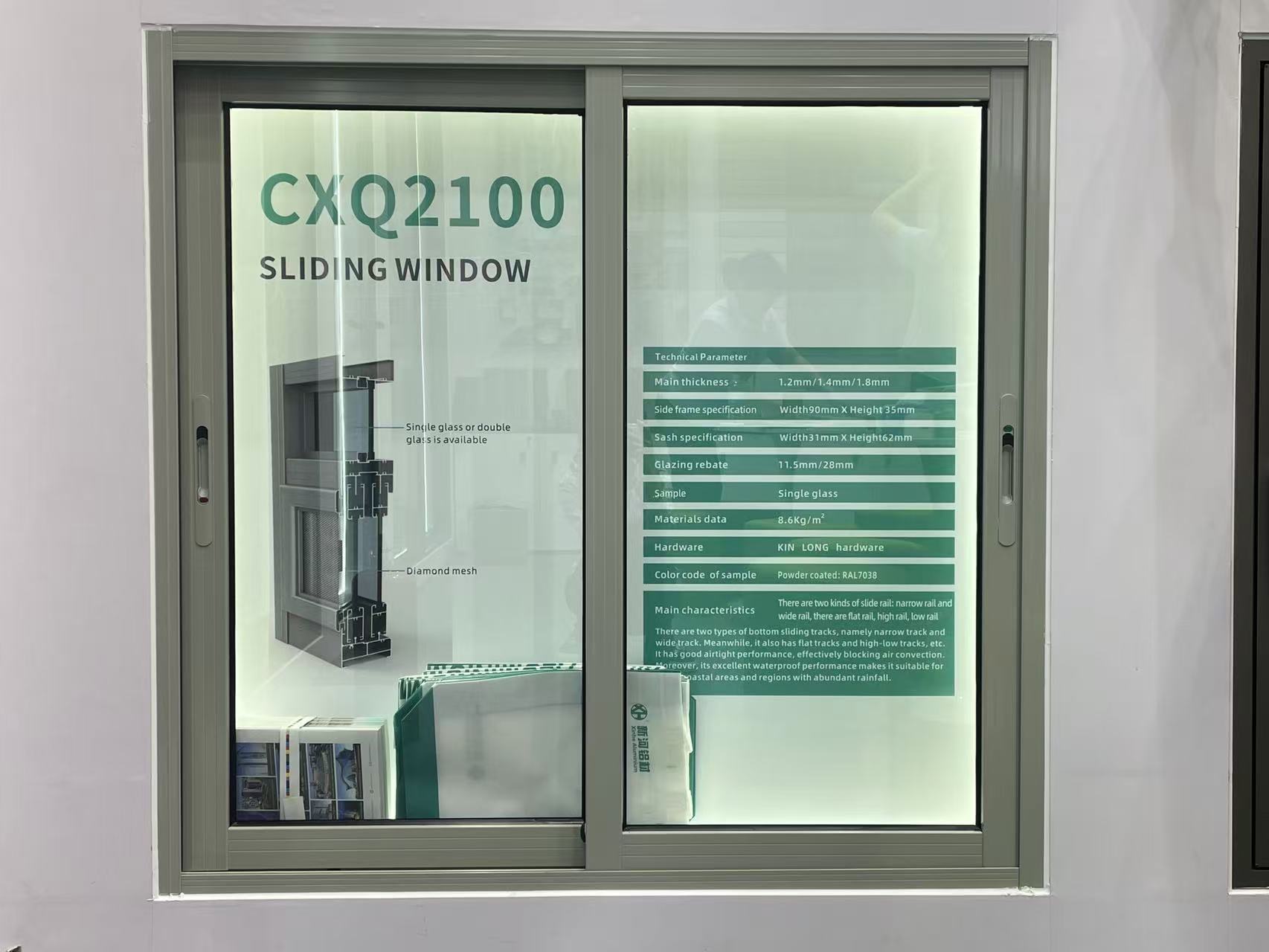
Technical details must suit the building and its operating conditions. Xinhe Aluminium lists aluminium sliding windows for bedrooms, studies, kitchens, bathrooms, sunrooms, offices, hotels, apartments, retail premises, and coastal or riverside residences. The listed Sliding Window information includes main thicknesses of 1.2 mm, 1.4 mm, and 1.8 mm, a 500 sqm MOQ, and KIN LONG hardware. These specifications should be treated as reference information and confirmed for the exact design, finish, hardware package, and project quantity.
Safeguard Comparison
| Control measure | Information to confirm or action to take | How it limits loss |
|---|---|---|
| Detailed contract specification | Record dimensions, alloy, finish, color, quantity, tolerances, and application, supported by drawings or samples | Creates an objective standard for checking conformity |
| Milestone payment | For aluminium profiles, the stated terms are 30% before manufacture and 70% before loading | Keeps payment connected to identifiable production and loading stages |
| Multi-stage inspection | Use production-line inspection, laboratory sampling and testing, and incoming-material inspection | Helps identify defects before goods leave the factory |
| Certification review | Review the listed CNAS, ISO 9001, SIRIM, and Qualicoat credentials for relevance and validity | Provides additional evidence about laboratory and management systems |
| Protective packaging | Confirm kraft paper, foam corner protection, edge protection, loading practice, and freight responsibility | Reduces scratches, impact damage, and deformation during transport |
| After-sales process | Define complaint evidence, response times, replacement or repair duties, and escalation contacts | Provides a documented route for resolving post-delivery problems |
Frequently Asked Questions
What information should be included before the deposit is paid?
Specify the alloy, dimensions, surface treatment, color, quantity, tolerances, packaging, inspection procedure, delivery date, payment milestones, and after-sales responsibilities. Attach approved drawings, samples, or finish references wherever the appearance or fit is important.
What evidence can be requested before shipment?
Ask for production inspection records, laboratory sampling and testing results, incoming-material inspection records, photographs where appropriate, and confirmation that the goods meet the approved specification. Agree in advance on whether an independent pre-shipment inspection is required before the balance is paid.
What purchasing terms are listed for aluminium profiles?
The stated terms are 30% D/P before manufacture and 70% before loading. The listed minimum order quantity is 3 tons, the indicated delivery time is 15–20 days, and sea freight is available for large quantities and long-shaped materials. All details should be confirmed in the order-specific quotation and contract.
How can transport damage be handled?
Set packaging requirements in the contract, photograph the loading and arrival condition, record damage on delivery documents, and define the supplier's response and claim process. Edge protection, kraft-paper wrapping, and foam corner protectors are among the packaging measures described in the referenced project cases.
Conclusion and Buyer Recommendations
The most effective way to protect a decorative-profile purchase is to combine a measurable specification with staged payment, recorded quality checks, suitable packaging, and enforceable after-sales terms. Verify the supplier's certifications and production capability, then confirm the exact alloy, finish, quantity, MOQ, lead time, shipping arrangement, and inspection evidence before manufacturing begins. Xinhe Aluminium states that it has operated since 1998, reports annual output of 200,000 tons, and serves export markets including the Philippines, Malaysia, Singapore, Japan, South Korea, Vietnam, India, Australia, Europe, Russia, and Kazakhstan. Technical enquiries and support are available at xh@xinhealuminium.com.
About Guangdong Xinhe Aluminium Co., Ltd.
Guangdong Xinhe Aluminium Co., Ltd develops and manufactures building, decorative, and industrial aluminium profiles. Established in 1998, the company reports an annual output of 200,000 tons and exports to markets across Asia, Africa, Australia, Europe, and other regions. Its listed credentials include CNAS laboratory accreditation and ISO 9001 quality management certification, and it reports experience serving customers in several industries.

REPORT