







-
 Agriculture
-
 Health-Care
-
 Environment
-
 Construction-Real-Estate
-
 Tools-Hardware
-
 Home-Garden
-
 Furniture
-
 Luggage-Bags-Cases
-
 Medical-devices-Supplies
-
 Gifts-Crafts
-
 Sports-Entertainment
-
 Food-Beverage
-
 Vehicles-Transportation
-
 Power-Transmission
-
 Material-Handling
-
 Renewable-Energy
-
 Safety
-
 Testing-Instrument-Equipment
-
 Construction-Building-Machinery
-
 Pet-Supplies
-
 Personal-Care-Household-Cleaning
-
 Vehicle-Accessories-Electronics-Tools
-
 School-Office-Supplies
-
 Packaging-Printing
-
 Mother-Kids-Toys
-
 Business-Services
-
 Commercial-Equipment-Machinery
-
 Apparel-Accessories
-
 Security
-
 Shoes-Accessories
-
 Vehicle-Parts-Accessories
-
 Jewelry-Eyewear-Watches-Accessories
-
 Lights-Lighting
-
 Fabric-Textile-Raw-Material
-
 Fabrication-Services
-
 Industrial-Machinery
-
 Consumer-Electronics
-
 Electrical-Equipment-Supplies
-
 Electronic-Components-Accessories-Telecommunications
-
 Home-Appliances
-
 Beauty
-
 Chemicals
-
 Rubber-Plastics
-
 Metals-Alloys


























































































































































































































































































































































































































































































































































































- Masonry Materials
- Curtain Walls & Accessories
- Earthwork Products
- Fireproofing Materials
- Heat Insulation Materials
- Plastic Building Materials
- Building Boards
- Soundproofing Materials
- Timber
- Waterproofing Materials
- Balustrades & Handrails
- Bathroom & Kitchen
- Flooring & Accessories
- Tiles & Accessories
- Door, Window & Accessories
- Fireplaces & Stoves
- Floor Heating Systems & Parts
- Stairs & Stair Parts
- Ceilings
- Elevators & Escalators
- Stone
- Countertops, Vanity Tops & Table Tops
- Mosaics
- Metal Building Materials
- Multifunctional Materials
- Ladders & Scaffoldings
- Mouldings
- Corner Guards
- Decorative Films
- Formwork
- Building & Industrial Glass
- Other Construction & Real Estate
- Wallpapers/Wall panels
- HVAC System & Parts
- Outdoor Facilities
- Prefabricated Buildings
- Festive & Party Supplies
- Bathroom Products
- Household Sundries
- Rain Gear
- Garden Supplies
- Household Cleaning Tools & Accessories
- Lighters & Smoking Accessories
- Home Storage & Organization
- Household Scales
- Smart Home Improvement
- Home Textiles
- Kitchenware
- Drinkware & Accessories
- Dinnerware, Coffee & Wine
- Home Decor
- Golf
- Fitness & Body Building
- Amusement Park Facilities
- Billiards, Board Game,Coin Operated Games
- Musical Instruments
- Outdoor Affordable Luxury Sports
- Camping & Hiking
- Fishing
- Sports Safety&Rehabilitation
- Ball Sports Equipments
- Water Sports
- Winter Sports
- Luxury Travel Equipments
- Sports Shoes, Bags & Accessories
- Cycling
- Other Sports & Entertainment Products
- Artificial Grass&Sports Flooring&Sports Court Equipment
- Scooters
- Food Ingredients
- Honey & Honey Products
- Snacks
- Nuts & Kernels
- Seafood
- Plant & Animal Oil
- Beverages
- Fruit & Vegetable Products
- Frog & Escargot
- Bean Products
- Egg Products
- Dairy Products
- Seasonings & Condiments
- Canned Food
- Instant Food
- Baked Goods
- Other Food & Beverage
- Meat & Poultry
- Confectionery
- Grain Products
- Feminie Care
- Hair Care & Styling
- Body Care
- Hands & Feet Care
- Hygiene Products
- Men's Grooming
- Laundry Cleaning Supplies
- Travel Size & Gift Sets
- Room Deodorizers
- Other Personal Care Products
- Pest Control Products
- Special Household Cleaning
- Floor Cleaning
- Kitchen & Bathroom Cleaning
- Oral Care
- Bath Supplies
- Yellow Pages
- Correction Supplies
- Office Binding Supplies
- Office Cutting Supplies
- Board Erasers
- Office Adhesives & Tapes
- Education Supplies
- Pencil Cases & Bags
- Notebooks & Writing Pads
- File Folder Accessories
- Calendars
- Writing Accessories
- Commercial Office Supplies
- Pencil Sharpeners
- Pens
- Letter Pad/Paper
- Paper Envelopes
- Desk Organizers
- Pencils
- Markers & Highlighters
- Filing Products
- Art Supplies
- Easels
- Badge Holder & Accessories
- Office Paper
- Printer Supplies
- Book Covers
- Other Office & School Supplies
- Stationery Set
- Boards
- Clipboards
- Stamps
- Drafting Supplies
- Stencils
- Electronic Dictionary
- Books
- Map
- Magazines
- Calculators
- Baby & Toddler Toys
- Educational Toys
- Classic Toys
- Dress Up & Pretend Play
- Toy Vehicle
- Stuffed Animals & Plush Toys
- Outdoor Toys & Structures
- Balloons & Accessories
- Baby Food
- Children's Clothing
- Baby Supplies & Products
- Maternity Clothes
- Kids Shoes
- Baby Care
- Novelty & Gag Toys
- Dolls & Accessories
- Puzzle & Games
- Blocks & Model Building Toys
- Toddler Clothing
- Baby Clothing
- Kids' Luggage & Bags
- Arts, Crafts & DIY Toys
- Action & Toy Figures
- Baby Appliances
- Hobbies & Models
- Remote Control Toys
- Promotional Toys
- Pregnancy & Maternity
- Hygiene Products
- Kid's Textile&Bedding
- Novelty & Special Use
- Toy Weapons
- Baby Gifts
- Baby Storage & Organization
- Auto Drive Systems
- ATV/UTV Parts & Accessories
- Marine Parts & Accessories
- Other Auto Parts
- Trailer Parts & Accessories
- Auto Transmission Systems
- Train Parts & Accessories
- Universal Parts
- Railway Parts & Accessories
- Auto Brake Systems
- Aviation Parts & Accessories
- Truck Parts & Accessories
- Auto Suspension Systems
- Auto Lighting Systems
- New Energy Vehicle Parts & Accessories
- Auto Steering Systems
- Wheels, Tires & Accessories
- Bus Parts & Accessories
- Auto Performance Parts
- Cooling System
- Go-Kart & Kart Racer Parts & Accessories
- Air Conditioning Systems
- Heavy Duty Vehicle Parts & Accessories
- Auto Electrical Systems
- Auto Body Systems
- Auto Engine Systems
- Container Parts & Accessories
- Motorcycle Parts & Accessories
- Refrigeration & Heat Exchange Equipment
- Machine Tool Equipment
- Food & Beverage Machinery
- Agricultural Machinery & Equipment
- Apparel & Textile Machinery
- Chemical Machinery
- Packaging Machines
- Paper Production Machinery
- Plastic & Rubber Processing Machinery
- Industrial Robots
- Electronic Products Machinery
- Metal & Metallurgy Machinery
- Woodworking Machinery
- Home Product Manufacturing Machinery
- Machinery Accessories
- Environmental Machinery
- Machinery Service
- Electrical Equipment Manufacturing Machinery
- Industrial Compressors & Parts
- Tobacco & Cigarette Machinery
- Production Line
- Used Industrial Machinery
- Electronics Production Machinery
- Other Machinery & Industrial Equipment
- Camera, Photo & Accessories
- Portable Audio, Video & Accessories
- Television, Home Audio, Video & Accessories
- Video Games & Accessories
- Mobile Phone & Accessories
- Electronic Publications
- Earphone & Headphone & Accessories
- Speakers & Accessories
- Smart Electronics
- TV Receivers & Accessories
- Mobile Phone & Computer Repair Parts
- Chargers, Batteries & Power Supplies
- Used Electronics
- VR, AR, MR Hardware & Software
- Projectors & Presentation Equipments
- Other Consumer Electronics
- Cables & Commonly Used Accessories
- Computer Hardware & Software
- Displays, Signage and Optoelectronics
- Discrete Semiconductors
- Wireless & IoT Module and Products
- Telecommunications
- Connectors, Terminals & Accessories
- Development Boards, Electronic Modules and Kits
- Circuit Protection
- Sensors
- Isolators
- Audio Components and Products
- Integrated Circuits
- Power Supplies
- Relays
- RF, Microwave and RFID
- Electronic Accessories & Supplies
- Passive Components
- PCB & PCBA
- Air Quality Appliances
- Home Appliance Parts
- Heating & Cooling Appliances
- Small Kitchen Appliances
- Laundry Appliances
- Water Heaters
- Water Treatment Appliances
- Refrigerators & Freezers
- Personal Care & Beauty Appliances
- Major Kitchen Appliances
- Cleaning Appliances
- Second-hand Appliances
- Smart Home Appliances
- Other Home Appliances
- Energy Chemicals
- Inorganic Chemicals
- Basic Organic Chemicals
- Agrochemicals
- Admixture & Additives
- Catalysts & Chemical Auxiliary Agents
- Pigments & Dyestuff
- Coating & Paint
- Daily Chemicals
- Polymer
- Organic Intermediate
- Adhesives & Sealants
- Chemical Waste
- Biological Chemical Products
- Surface Treatment Chemicals
- Painting & Coating
- Chemical Reagents
- Flavor & Fragrance
- Non-Explosive Demolition Agents
- Other Chemicals
- Custom Chemical Services

How to Protect Your Purchase When Outdoor Garden Furniture Arrives Damaged
When a garden table and chairs arrive damaged, incomplete, or different from the approved order, the contract should provide a clear path to inspection, evidence collection, notification, and a remedy. For the Roaona aluminum outdoor dining set, buyers should include the agreed materials, dimensions, colors, packaging standards, quality checks, delivery terms, and after-sales responsibilities in the signed agreement.
Contract Provisions Every Buyer Should Include
- Attach the approved product specification, including the aluminum frame, rope-woven construction, selected color, stackable chair design, 150 kg capacity per seat, and confirmed dimensions.
- Set a defined arrival-inspection window covering quantity, packaging, visible damage, measurements, finish quality, and structural stability.
- Require a formal process for reporting defects, supported by photographs, delivery records, packaging evidence, and a written description of the problem.
- State whether the supplier must provide repair instructions, replacement components, on-site service, a complete replacement, or another agreed remedy.
- For hotels, resorts, restaurants, villas, and poolside developments, record batch numbers, installation requirements, maintenance support, and future replenishment arrangements.
How to Draft the Product Specification
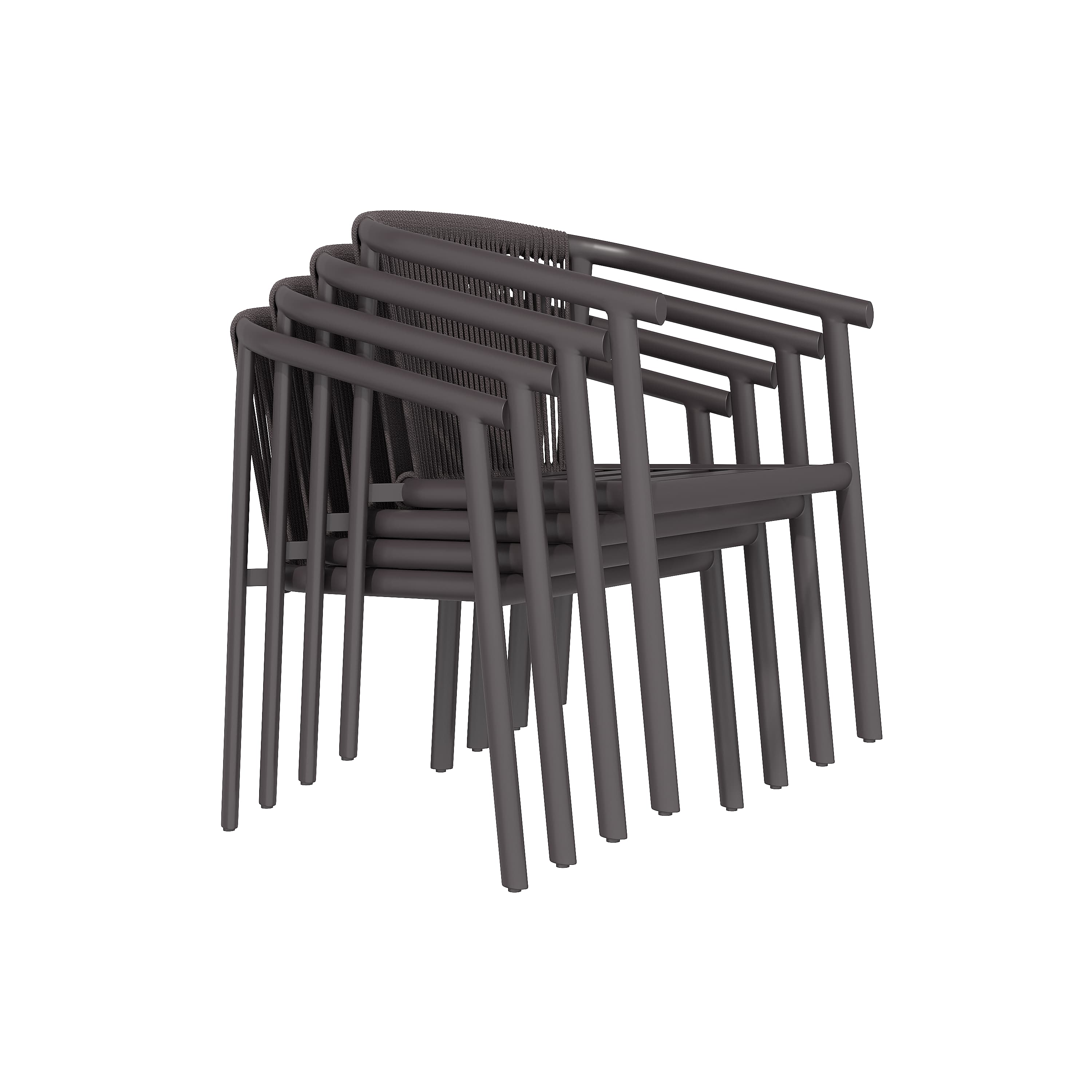
The strongest protection starts with a detailed description of the goods. The Roaona aluminum outdoor dining set of 6 is presented with an aluminum frame, rope-woven material, customized color options, standard carton packaging, and stackable chairs. Depending on the selected configuration, the table can support seating for 6, 10, or 12 people. These details should be attached to the purchase contract together with approved drawings, samples, finish references, and any customization instructions.
The written specification should also identify the agreed measurements. The listed dining table measures 180*90*75 cm, while each dining chair measures 58*58*85 cm. The stated load capacity is 150 kg per seat. If the buyer accepts a manufacturing tolerance, color variation, surface standard, or other deviation, that allowance should be defined before production begins. A precise reference makes it easier to establish whether a delivered item is defective or simply falls within an agreed tolerance.

Inspection, Acceptance, and Defect Evidence
The agreement should give the buyer a reasonable period to inspect the furniture after delivery. The inspection clause can require checks of the number of cartons and products, external packaging, dimensions, color, weaving, surface finish, visible damage, and structural stability. It should also explain whether the buyer may open a package before signing for delivery and whether acceptance is conditional on a later inspection.
Before unpacking, buyers should photograph the cartons, labels, pallet condition, seals, and any impact marks. During inspection, they should record missing items, scratches, dents, loose joints, damaged rope weaving, unstable frames, incorrect dimensions, and differences from the approved sample. The supplier's documented quality process includes raw material specifications, production stages, measurements, appearance, structural checks, quantities, and packaging condition during loading and dispatch. The contract can require the supplier to provide relevant inspection or loading records for the ordered batch.
A defect-notice provision should identify the reporting deadline, contact person, required evidence, and method of delivery for the notice. It should also clarify that concealed defects discovered after installation remain eligible for a claim within a separate warranty period. This distinction is particularly important for commercial projects where furniture may be delivered to a warehouse before being installed at the final site.
Repair, Replacement, and Service Obligations
A remedy clause should explain what happens after a defect is confirmed. Minor or repairable issues may be handled through written repair guidance, replacement parts, or local service support. Serious or non-repairable defects may require replacement of the affected furniture or an agreed credit. The contract should establish who decides which remedy applies and whether the buyer must approve the proposed solution.
The available after-sales support includes prompt communication, repair instructions, replacement components, possible nearby on-site repair assistance, and installation and maintenance support for commercial projects. The agreement should convert these general services into measurable commitments, such as an initial response within a stated number of business days, dispatch of replacement parts by a specified date, and completion of repair or replacement within an agreed period.
Responsibility for freight should be addressed separately. If damage occurred during transit, the contract should state whether the supplier, carrier, buyer, or insurer must arrange and pay for collection, replacement shipping, inspection, and disposal of damaged goods. The selected delivery term and transfer-of-risk point should match the claims procedure.
Project, Certification, and Delivery Considerations
Quality certificates can be listed as supporting documents, but they should not replace product-specific acceptance requirements. Kingwell lists ISO90001 certificate 19822QC0573R0S for outdoor furniture and CE certificate SCT240600370228 for outdoor dining sets. The contract should state the scope and relevance of any certificate while retaining separate requirements for the materials, finish, dimensions, packaging, and quality of the specific order.
Project buyers should also include the delivery batch, installation location, site access requirements, assembly instructions, maintenance responsibilities, and replenishment procedure. Kingwell reports supplying outdoor furniture for a luxury hotel in New Zealand, a resort poolside project in the United States, and a five-star beach hotel in Spain. These applications demonstrate why commercial orders benefit from clauses covering phased delivery, site coordination, installation, maintenance, and replacement stock.
Key Contract Terms at a Glance
| Protection area | Relevant product or service information | What the agreement should define |
|---|---|---|
| Product identity | Aluminum frame, rope-woven material, customized color, stackable chairs | Approved materials, color references, configuration, drawings, samples, and customization details |
| Dimensions and performance | Table: 180*90*75 cm; chair: 58*58*85 cm; 150 kg per seat | Measurement method, permitted tolerances, appearance standard, stability test, and load requirement |
| Condition on arrival | Quantity, packaging, appearance, dimensions, and loading checks | Inspection period, photographs, defect notice procedure, and responsibility for transport damage |
| Defect resolution | Repair guidance, replacement parts, possible local assistance, installation, and maintenance support | Repair or replacement criteria, response time, service costs, freight responsibility, and completion date |
| Production and delivery | Sample order: 7-10 days; formal order: 30-45 days; MOQ: 5-10 sets | Confirmed quantity, production schedule, customization approval, delivery date, and delay consequences |
| Payment and logistics | TT, LC, PayPal; sea, air, express, rail, multimodal, FCL, LCL, and door-to-door delivery | Payment method, shipping mode, delivery point, risk transfer, insurance, and damage-claim process |
Frequently Asked Questions
What should I document if the garden furniture arrives defective?
Photograph the outer packaging before opening it, then record the product quantity, labels, visible damage, dimensions, finish, weaving, and structural stability. Keep delivery documents, loading records, inspection notes, and all communication with the supplier. Submit the defect notice within the contractual deadline.
Can replacement parts and repair assistance be included in the contract?
Yes. The agreement can require repair instructions, replacement parts, nearby on-site assistance where available, and commercial installation or maintenance support. It should also specify which defects qualify for each remedy and identify responsibility for labor, transport, service visits, and return shipping.
Which payment and shipping details need to be recorded?
State the chosen payment method, such as TT, LC, or PayPal, together with the selected transport method, including sea, air, rail, express, FCL, LCL, or door-to-door service. The contract should also name the delivery location, packaging standard, inspection party, insurance arrangement, transfer-of-risk point, and procedure for reporting transit damage.
Conclusion
A buyer can substantially improve protection by attaching a signed specification, defining an arrival inspection process, setting a defect-notice deadline, establishing the required evidence, and agreeing on repair or replacement obligations. For the Roaona set, the contract should specifically mention the aluminum frame, rope-woven material, dimensions, stackable chairs, 150 kg seat capacity, packaging, customization, and delivery schedule.
Kingwell provides Manufacturer, OEM & ODM, and Custom Project Solutions, supported by pre-shipment quality checks and after-sales services covering repairs, replacement parts, installation, maintenance, and replenishment. For technical information or project support, contact info@kingwellgrou.com.
About Foshan Kingwell Industry Co., Ltd.
Foshan Kingwell Industry Co., Ltd. supplies outdoor furniture for engineering and commercial projects, including aluminum and teak furniture, customized products, and one-stop sourcing services. Founded in 2015, the company operates a 26,800 sqm factory in Foshan, Guangdong, equipped with automated cutting machines, robotic welding arms, and manual production capabilities. It supports OEM and ODM development and lists ISO90001 certification for outdoor furniture and CE certification for outdoor dining sets, serving customers across several industries.

REPORT