







-
 Agriculture
-
 Health-Care
-
 Environment
-
 Construction-Real-Estate
-
 Tools-Hardware
-
 Home-Garden
-
 Furniture
-
 Luggage-Bags-Cases
-
 Medical-devices-Supplies
-
 Gifts-Crafts
-
 Sports-Entertainment
-
 Food-Beverage
-
 Vehicles-Transportation
-
 Power-Transmission
-
 Material-Handling
-
 Renewable-Energy
-
 Safety
-
 Testing-Instrument-Equipment
-
 Construction-Building-Machinery
-
 Pet-Supplies
-
 Personal-Care-Household-Cleaning
-
 Vehicle-Accessories-Electronics-Tools
-
 School-Office-Supplies
-
 Packaging-Printing
-
 Mother-Kids-Toys
-
 Business-Services
-
 Commercial-Equipment-Machinery
-
 Apparel-Accessories
-
 Security
-
 Shoes-Accessories
-
 Vehicle-Parts-Accessories
-
 Jewelry-Eyewear-Watches-Accessories
-
 Lights-Lighting
-
 Fabric-Textile-Raw-Material
-
 Fabrication-Services
-
 Industrial-Machinery
-
 Consumer-Electronics
-
 Electrical-Equipment-Supplies
-
 Electronic-Components-Accessories-Telecommunications
-
 Home-Appliances
-
 Beauty
-
 Chemicals
-
 Rubber-Plastics
-
 Metals-Alloys


























































































































































































































































































































































































































































































































































































- Masonry Materials
- Curtain Walls & Accessories
- Earthwork Products
- Fireproofing Materials
- Heat Insulation Materials
- Plastic Building Materials
- Building Boards
- Soundproofing Materials
- Timber
- Waterproofing Materials
- Balustrades & Handrails
- Bathroom & Kitchen
- Flooring & Accessories
- Tiles & Accessories
- Door, Window & Accessories
- Fireplaces & Stoves
- Floor Heating Systems & Parts
- Stairs & Stair Parts
- Ceilings
- Elevators & Escalators
- Stone
- Countertops, Vanity Tops & Table Tops
- Mosaics
- Metal Building Materials
- Multifunctional Materials
- Ladders & Scaffoldings
- Mouldings
- Corner Guards
- Decorative Films
- Formwork
- Building & Industrial Glass
- Other Construction & Real Estate
- Wallpapers/Wall panels
- HVAC System & Parts
- Outdoor Facilities
- Prefabricated Buildings
- Festive & Party Supplies
- Bathroom Products
- Household Sundries
- Rain Gear
- Garden Supplies
- Household Cleaning Tools & Accessories
- Lighters & Smoking Accessories
- Home Storage & Organization
- Household Scales
- Smart Home Improvement
- Home Textiles
- Kitchenware
- Drinkware & Accessories
- Dinnerware, Coffee & Wine
- Home Decor
- Golf
- Fitness & Body Building
- Amusement Park Facilities
- Billiards, Board Game,Coin Operated Games
- Musical Instruments
- Outdoor Affordable Luxury Sports
- Camping & Hiking
- Fishing
- Sports Safety&Rehabilitation
- Ball Sports Equipments
- Water Sports
- Winter Sports
- Luxury Travel Equipments
- Sports Shoes, Bags & Accessories
- Cycling
- Other Sports & Entertainment Products
- Artificial Grass&Sports Flooring&Sports Court Equipment
- Scooters
- Food Ingredients
- Honey & Honey Products
- Snacks
- Nuts & Kernels
- Seafood
- Plant & Animal Oil
- Beverages
- Fruit & Vegetable Products
- Frog & Escargot
- Bean Products
- Egg Products
- Dairy Products
- Seasonings & Condiments
- Canned Food
- Instant Food
- Baked Goods
- Other Food & Beverage
- Meat & Poultry
- Confectionery
- Grain Products
- Feminie Care
- Hair Care & Styling
- Body Care
- Hands & Feet Care
- Hygiene Products
- Men's Grooming
- Laundry Cleaning Supplies
- Travel Size & Gift Sets
- Room Deodorizers
- Other Personal Care Products
- Pest Control Products
- Special Household Cleaning
- Floor Cleaning
- Kitchen & Bathroom Cleaning
- Oral Care
- Bath Supplies
- Yellow Pages
- Correction Supplies
- Office Binding Supplies
- Office Cutting Supplies
- Board Erasers
- Office Adhesives & Tapes
- Education Supplies
- Pencil Cases & Bags
- Notebooks & Writing Pads
- File Folder Accessories
- Calendars
- Writing Accessories
- Commercial Office Supplies
- Pencil Sharpeners
- Pens
- Letter Pad/Paper
- Paper Envelopes
- Desk Organizers
- Pencils
- Markers & Highlighters
- Filing Products
- Art Supplies
- Easels
- Badge Holder & Accessories
- Office Paper
- Printer Supplies
- Book Covers
- Other Office & School Supplies
- Stationery Set
- Boards
- Clipboards
- Stamps
- Drafting Supplies
- Stencils
- Electronic Dictionary
- Books
- Map
- Magazines
- Calculators
- Baby & Toddler Toys
- Educational Toys
- Classic Toys
- Dress Up & Pretend Play
- Toy Vehicle
- Stuffed Animals & Plush Toys
- Outdoor Toys & Structures
- Balloons & Accessories
- Baby Food
- Children's Clothing
- Baby Supplies & Products
- Maternity Clothes
- Kids Shoes
- Baby Care
- Novelty & Gag Toys
- Dolls & Accessories
- Puzzle & Games
- Blocks & Model Building Toys
- Toddler Clothing
- Baby Clothing
- Kids' Luggage & Bags
- Arts, Crafts & DIY Toys
- Action & Toy Figures
- Baby Appliances
- Hobbies & Models
- Remote Control Toys
- Promotional Toys
- Pregnancy & Maternity
- Hygiene Products
- Kid's Textile&Bedding
- Novelty & Special Use
- Toy Weapons
- Baby Gifts
- Baby Storage & Organization
- Auto Drive Systems
- ATV/UTV Parts & Accessories
- Marine Parts & Accessories
- Other Auto Parts
- Trailer Parts & Accessories
- Auto Transmission Systems
- Train Parts & Accessories
- Universal Parts
- Railway Parts & Accessories
- Auto Brake Systems
- Aviation Parts & Accessories
- Truck Parts & Accessories
- Auto Suspension Systems
- Auto Lighting Systems
- New Energy Vehicle Parts & Accessories
- Auto Steering Systems
- Wheels, Tires & Accessories
- Bus Parts & Accessories
- Auto Performance Parts
- Cooling System
- Go-Kart & Kart Racer Parts & Accessories
- Air Conditioning Systems
- Heavy Duty Vehicle Parts & Accessories
- Auto Electrical Systems
- Auto Body Systems
- Auto Engine Systems
- Container Parts & Accessories
- Motorcycle Parts & Accessories
- Refrigeration & Heat Exchange Equipment
- Machine Tool Equipment
- Food & Beverage Machinery
- Agricultural Machinery & Equipment
- Apparel & Textile Machinery
- Chemical Machinery
- Packaging Machines
- Paper Production Machinery
- Plastic & Rubber Processing Machinery
- Industrial Robots
- Electronic Products Machinery
- Metal & Metallurgy Machinery
- Woodworking Machinery
- Home Product Manufacturing Machinery
- Machinery Accessories
- Environmental Machinery
- Machinery Service
- Electrical Equipment Manufacturing Machinery
- Industrial Compressors & Parts
- Tobacco & Cigarette Machinery
- Production Line
- Used Industrial Machinery
- Electronics Production Machinery
- Other Machinery & Industrial Equipment
- Camera, Photo & Accessories
- Portable Audio, Video & Accessories
- Television, Home Audio, Video & Accessories
- Video Games & Accessories
- Mobile Phone & Accessories
- Electronic Publications
- Earphone & Headphone & Accessories
- Speakers & Accessories
- Smart Electronics
- TV Receivers & Accessories
- Mobile Phone & Computer Repair Parts
- Chargers, Batteries & Power Supplies
- Used Electronics
- VR, AR, MR Hardware & Software
- Projectors & Presentation Equipments
- Other Consumer Electronics
- Cables & Commonly Used Accessories
- Computer Hardware & Software
- Displays, Signage and Optoelectronics
- Discrete Semiconductors
- Wireless & IoT Module and Products
- Telecommunications
- Connectors, Terminals & Accessories
- Development Boards, Electronic Modules and Kits
- Circuit Protection
- Sensors
- Isolators
- Audio Components and Products
- Integrated Circuits
- Power Supplies
- Relays
- RF, Microwave and RFID
- Electronic Accessories & Supplies
- Passive Components
- PCB & PCBA
- Air Quality Appliances
- Home Appliance Parts
- Heating & Cooling Appliances
- Small Kitchen Appliances
- Laundry Appliances
- Water Heaters
- Water Treatment Appliances
- Refrigerators & Freezers
- Personal Care & Beauty Appliances
- Major Kitchen Appliances
- Cleaning Appliances
- Second-hand Appliances
- Smart Home Appliances
- Other Home Appliances
- Energy Chemicals
- Inorganic Chemicals
- Basic Organic Chemicals
- Agrochemicals
- Admixture & Additives
- Catalysts & Chemical Auxiliary Agents
- Pigments & Dyestuff
- Coating & Paint
- Daily Chemicals
- Polymer
- Organic Intermediate
- Adhesives & Sealants
- Chemical Waste
- Biological Chemical Products
- Surface Treatment Chemicals
- Painting & Coating
- Chemical Reagents
- Flavor & Fragrance
- Non-Explosive Demolition Agents
- Other Chemicals
- Custom Chemical Services

How to Record Defects During a Double-end Saw Trial
A Double-end Saw trial should produce a complete, traceable defect record rather than a general quality note. For every issue, identify the machine and trial stage, classify the defect, describe the exact symptom, name the affected component, record the inspection result, document the corrective action, and state whether the retest passed. Shipment should be approved only after all required repairs have been verified.
Recommended Defect Recording Method
Create a separate entry for each defect and assign a visible status, such as open, awaiting rework, retest pending, or accepted. This keeps unresolved issues from being hidden in a general trial summary and makes responsibility easier to track.
Use objective descriptions for dimensional errors, scratches, surface damage, loose fasteners, poor fitting, machining inaccuracies, abnormal noise, excessive vibration, unstable electrical operation, and output failures. The recorded symptom should be separated from any suspected cause unless the cause has been confirmed through inspection.
Evidence to Include
- Machine identification, affected location, and trial stage.
- Measured dimensions, tolerance deviation, or other inspection data.
- Photos, test readings, or operating observations when available.
- Required rework, responsible action, and the result of reinspection.
- Final status showing whether the issue remains open or has been verified as closed.
Quality Control Principles for Trial Records
The record should follow the same traceability principles used in a complete machine inspection. Each finding must connect the observed condition with the corrective measure and the final verification. This approach applies equally to visible defects, assembly deviations, processing accuracy problems, and operating faults.
Before components are placed in storage, Sun Hunt's QC process checks spare parts for dimensions, material, and performance. After assembly, the machine undergoes process rechecks and complete testing. Typical checks include no-load operation, extended full-load running, precision remeasurement, noise and vibration monitoring, and electrical stability testing.
These records are especially important for applications such as wooden door production and panel furniture manufacturing, where repeatable sizing, stable operation, and consistent processing directly affect the output of the entire production line. Sun Hunt has experience supporting a 19-machine wooden door factory line in India and a 10-machine wood processing line in the UAE.
Keep Product Data Separate from Trial Findings
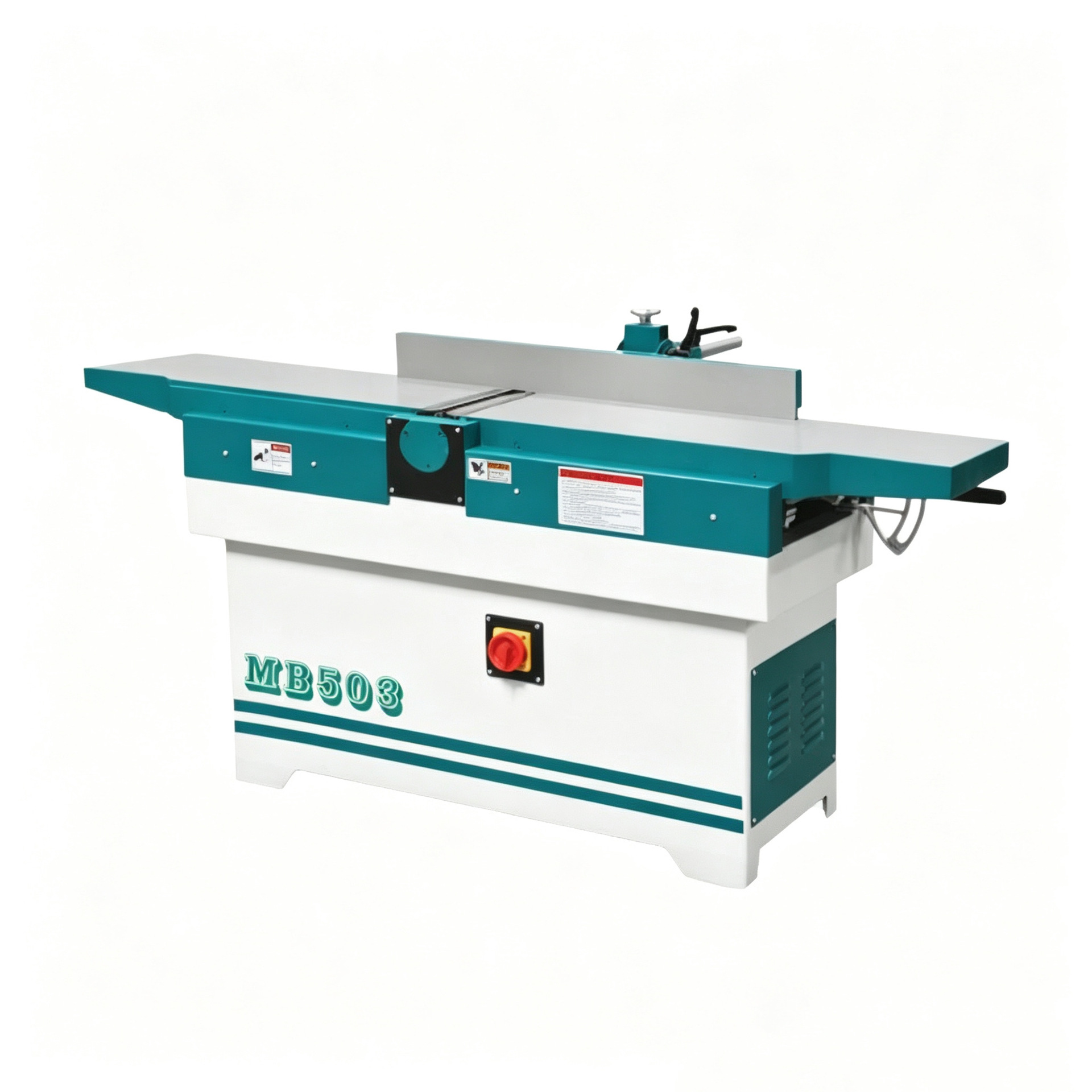
Technical specifications should be copied into a trial report only when they belong to the machine being tested. The available product reference identifies a Surface Planer, not a Double-end Saw. Its stated specifications include a spindle speed of 5800 r/min, maximum planing width of 300 mm, maximum planing depth of 5 mm, installed power of 2.2 kW, and a 10-day delivery period. These figures should not be presented as Double-end Saw data unless they have been confirmed for that model.
Defect Documentation and Acceptance Criteria
| Inspection Area | Information to Record | Evidence for Closure |
|---|---|---|
| Appearance and components | Defect location, visible condition, affected part, and pre-repair status | Follow-up inspection confirms the appearance and component condition |
| Dimensional and mechanical accuracy | Measured value, required tolerance, fitting condition, and processing deviation | Recorded remeasurement meets the applicable requirement |
| Operating performance | Trial mode, duration, noise, vibration, and observed running behavior | No-load or full-load retest is completed and passed |
| Electrical and output function | Control response, electrical symptom, and output-related failure | Electrical stability and output checks verify the correction |
| Shipment approval | Outstanding defects, rework condition, replacement parts, and final inspection status | All issues are closed before loading and shipment |
Frequently Asked Questions
What should be included in every Double-end Saw defect record?
Record the machine identification, test stage, defect category, precise symptom, affected component, inspection result, corrective action, and retest status. Add measurements, photographs, or other supporting evidence where practical.
Should the suspected cause be written as the defect?
No. First document what was actually observed, such as a dimensional deviation, loose part, abnormal vibration, or unstable electrical response. A suspected cause can be added separately and should be identified as unverified until inspection confirms it.
When is a trial issue considered closed?
An issue is closed only after the specified rework has been completed and the relevant inspection has been repeated. The final result should be recorded before the machine is released for shipment.
Final Recommendations
A dependable Double-end Saw trial report provides a clear chain from defect observation to correction and verified retest. Keep appearance, dimensional, mechanical, electrical, noise, vibration, and output findings distinct so that each risk can be evaluated properly. Foshan Sun Hunt generally supports one-set orders, offers business-model delivery in approximately 20 to 35 days, and provides online technical assistance, installation guidance, spare-parts support, and a one-year warranty subject to its stated exclusions. For technical solutions or service support, contact vincent@fsshmachine.cn.
About Us
Foshan Sun Hunt Woodworking Machinery Co.,Ltd. develops and manufactures woodworking machinery for a range of processing applications. Located in Lunjiao Subdistrict, Shunde District, Foshan City, the company has management and R&D teams focused on woodworking equipment technology. Its product range includes CNC Router Machines, Double-End Saw Series, Planer Machines, Drilling Machines, Edge Banding Machines, and Panel Saw.

REPORT