







-
 Agriculture
-
 Health-Care
-
 Environment
-
 Construction-Real-Estate
-
 Tools-Hardware
-
 Home-Garden
-
 Furniture
-
 Luggage-Bags-Cases
-
 Medical-devices-Supplies
-
 Gifts-Crafts
-
 Sports-Entertainment
-
 Food-Beverage
-
 Vehicles-Transportation
-
 Power-Transmission
-
 Material-Handling
-
 Renewable-Energy
-
 Safety
-
 Testing-Instrument-Equipment
-
 Construction-Building-Machinery
-
 Pet-Supplies
-
 Personal-Care-Household-Cleaning
-
 Vehicle-Accessories-Electronics-Tools
-
 School-Office-Supplies
-
 Packaging-Printing
-
 Mother-Kids-Toys
-
 Business-Services
-
 Commercial-Equipment-Machinery
-
 Apparel-Accessories
-
 Security
-
 Shoes-Accessories
-
 Vehicle-Parts-Accessories
-
 Jewelry-Eyewear-Watches-Accessories
-
 Lights-Lighting
-
 Fabric-Textile-Raw-Material
-
 Fabrication-Services
-
 Industrial-Machinery
-
 Consumer-Electronics
-
 Electrical-Equipment-Supplies
-
 Electronic-Components-Accessories-Telecommunications
-
 Home-Appliances
-
 Beauty
-
 Chemicals
-
 Rubber-Plastics
-
 Metals-Alloys


























































































































































































































































































































































































































































































































































































- Masonry Materials
- Curtain Walls & Accessories
- Earthwork Products
- Fireproofing Materials
- Heat Insulation Materials
- Plastic Building Materials
- Building Boards
- Soundproofing Materials
- Timber
- Waterproofing Materials
- Balustrades & Handrails
- Bathroom & Kitchen
- Flooring & Accessories
- Tiles & Accessories
- Door, Window & Accessories
- Fireplaces & Stoves
- Floor Heating Systems & Parts
- Stairs & Stair Parts
- Ceilings
- Elevators & Escalators
- Stone
- Countertops, Vanity Tops & Table Tops
- Mosaics
- Metal Building Materials
- Multifunctional Materials
- Ladders & Scaffoldings
- Mouldings
- Corner Guards
- Decorative Films
- Formwork
- Building & Industrial Glass
- Other Construction & Real Estate
- Wallpapers/Wall panels
- HVAC System & Parts
- Outdoor Facilities
- Prefabricated Buildings
- Festive & Party Supplies
- Bathroom Products
- Household Sundries
- Rain Gear
- Garden Supplies
- Household Cleaning Tools & Accessories
- Lighters & Smoking Accessories
- Home Storage & Organization
- Household Scales
- Smart Home Improvement
- Home Textiles
- Kitchenware
- Drinkware & Accessories
- Dinnerware, Coffee & Wine
- Home Decor
- Golf
- Fitness & Body Building
- Amusement Park Facilities
- Billiards, Board Game,Coin Operated Games
- Musical Instruments
- Outdoor Affordable Luxury Sports
- Camping & Hiking
- Fishing
- Sports Safety&Rehabilitation
- Ball Sports Equipments
- Water Sports
- Winter Sports
- Luxury Travel Equipments
- Sports Shoes, Bags & Accessories
- Cycling
- Other Sports & Entertainment Products
- Artificial Grass&Sports Flooring&Sports Court Equipment
- Scooters
- Food Ingredients
- Honey & Honey Products
- Snacks
- Nuts & Kernels
- Seafood
- Plant & Animal Oil
- Beverages
- Fruit & Vegetable Products
- Frog & Escargot
- Bean Products
- Egg Products
- Dairy Products
- Seasonings & Condiments
- Canned Food
- Instant Food
- Baked Goods
- Other Food & Beverage
- Meat & Poultry
- Confectionery
- Grain Products
- Feminie Care
- Hair Care & Styling
- Body Care
- Hands & Feet Care
- Hygiene Products
- Men's Grooming
- Laundry Cleaning Supplies
- Travel Size & Gift Sets
- Room Deodorizers
- Other Personal Care Products
- Pest Control Products
- Special Household Cleaning
- Floor Cleaning
- Kitchen & Bathroom Cleaning
- Oral Care
- Bath Supplies
- Yellow Pages
- Correction Supplies
- Office Binding Supplies
- Office Cutting Supplies
- Board Erasers
- Office Adhesives & Tapes
- Education Supplies
- Pencil Cases & Bags
- Notebooks & Writing Pads
- File Folder Accessories
- Calendars
- Writing Accessories
- Commercial Office Supplies
- Pencil Sharpeners
- Pens
- Letter Pad/Paper
- Paper Envelopes
- Desk Organizers
- Pencils
- Markers & Highlighters
- Filing Products
- Art Supplies
- Easels
- Badge Holder & Accessories
- Office Paper
- Printer Supplies
- Book Covers
- Other Office & School Supplies
- Stationery Set
- Boards
- Clipboards
- Stamps
- Drafting Supplies
- Stencils
- Electronic Dictionary
- Books
- Map
- Magazines
- Calculators
- Baby & Toddler Toys
- Educational Toys
- Classic Toys
- Dress Up & Pretend Play
- Toy Vehicle
- Stuffed Animals & Plush Toys
- Outdoor Toys & Structures
- Balloons & Accessories
- Baby Food
- Children's Clothing
- Baby Supplies & Products
- Maternity Clothes
- Kids Shoes
- Baby Care
- Novelty & Gag Toys
- Dolls & Accessories
- Puzzle & Games
- Blocks & Model Building Toys
- Toddler Clothing
- Baby Clothing
- Kids' Luggage & Bags
- Arts, Crafts & DIY Toys
- Action & Toy Figures
- Baby Appliances
- Hobbies & Models
- Remote Control Toys
- Promotional Toys
- Pregnancy & Maternity
- Hygiene Products
- Kid's Textile&Bedding
- Novelty & Special Use
- Toy Weapons
- Baby Gifts
- Baby Storage & Organization
- Auto Drive Systems
- ATV/UTV Parts & Accessories
- Marine Parts & Accessories
- Other Auto Parts
- Trailer Parts & Accessories
- Auto Transmission Systems
- Train Parts & Accessories
- Universal Parts
- Railway Parts & Accessories
- Auto Brake Systems
- Aviation Parts & Accessories
- Truck Parts & Accessories
- Auto Suspension Systems
- Auto Lighting Systems
- New Energy Vehicle Parts & Accessories
- Auto Steering Systems
- Wheels, Tires & Accessories
- Bus Parts & Accessories
- Auto Performance Parts
- Cooling System
- Go-Kart & Kart Racer Parts & Accessories
- Air Conditioning Systems
- Heavy Duty Vehicle Parts & Accessories
- Auto Electrical Systems
- Auto Body Systems
- Auto Engine Systems
- Container Parts & Accessories
- Motorcycle Parts & Accessories
- Refrigeration & Heat Exchange Equipment
- Machine Tool Equipment
- Food & Beverage Machinery
- Agricultural Machinery & Equipment
- Apparel & Textile Machinery
- Chemical Machinery
- Packaging Machines
- Paper Production Machinery
- Plastic & Rubber Processing Machinery
- Industrial Robots
- Electronic Products Machinery
- Metal & Metallurgy Machinery
- Woodworking Machinery
- Home Product Manufacturing Machinery
- Machinery Accessories
- Environmental Machinery
- Machinery Service
- Electrical Equipment Manufacturing Machinery
- Industrial Compressors & Parts
- Tobacco & Cigarette Machinery
- Production Line
- Used Industrial Machinery
- Electronics Production Machinery
- Other Machinery & Industrial Equipment
- Camera, Photo & Accessories
- Portable Audio, Video & Accessories
- Television, Home Audio, Video & Accessories
- Video Games & Accessories
- Mobile Phone & Accessories
- Electronic Publications
- Earphone & Headphone & Accessories
- Speakers & Accessories
- Smart Electronics
- TV Receivers & Accessories
- Mobile Phone & Computer Repair Parts
- Chargers, Batteries & Power Supplies
- Used Electronics
- VR, AR, MR Hardware & Software
- Projectors & Presentation Equipments
- Other Consumer Electronics
- Cables & Commonly Used Accessories
- Computer Hardware & Software
- Displays, Signage and Optoelectronics
- Discrete Semiconductors
- Wireless & IoT Module and Products
- Telecommunications
- Connectors, Terminals & Accessories
- Development Boards, Electronic Modules and Kits
- Circuit Protection
- Sensors
- Isolators
- Audio Components and Products
- Integrated Circuits
- Power Supplies
- Relays
- RF, Microwave and RFID
- Electronic Accessories & Supplies
- Passive Components
- PCB & PCBA
- Air Quality Appliances
- Home Appliance Parts
- Heating & Cooling Appliances
- Small Kitchen Appliances
- Laundry Appliances
- Water Heaters
- Water Treatment Appliances
- Refrigerators & Freezers
- Personal Care & Beauty Appliances
- Major Kitchen Appliances
- Cleaning Appliances
- Second-hand Appliances
- Smart Home Appliances
- Other Home Appliances
- Energy Chemicals
- Inorganic Chemicals
- Basic Organic Chemicals
- Agrochemicals
- Admixture & Additives
- Catalysts & Chemical Auxiliary Agents
- Pigments & Dyestuff
- Coating & Paint
- Daily Chemicals
- Polymer
- Organic Intermediate
- Adhesives & Sealants
- Chemical Waste
- Biological Chemical Products
- Surface Treatment Chemicals
- Painting & Coating
- Chemical Reagents
- Flavor & Fragrance
- Non-Explosive Demolition Agents
- Other Chemicals
- Custom Chemical Services

How to Review Skin Allergy Claims for Invisible Sticky Bra Pads
When an end user reports a possible skin allergy after wearing invisible sticky bra pads with a backless dress, treat the matter as a documented quality and customer-service case. The first response should be to ask the customer to stop using the product during the review, record the reported symptoms and usage conditions, and preserve the product and packaging whenever possible.
Recommended Complaint-Handling Process
Begin by identifying the exact product involved. Record the product name, M or L size, nude or transparent color, order reference, quantity, delivery date, and any customized specifications. The complaint file should also include the customer’s description of the reaction, photographs or returned samples if available, the wearing duration, and whether the pads were used for bridal clothing, formal dresses, party outfits, camisoles, yoga clothing, or another application.
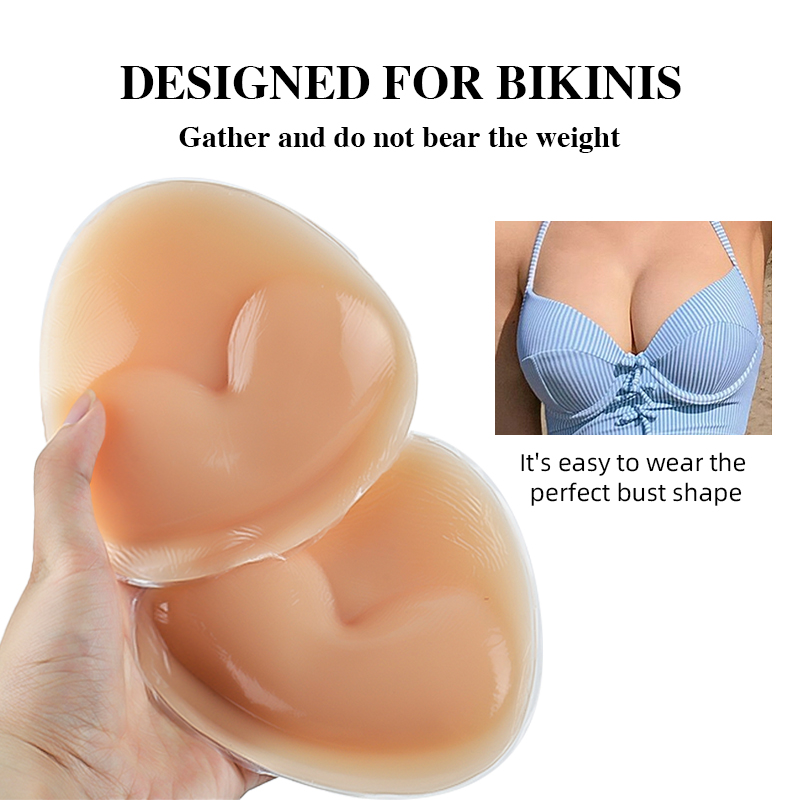
Care instructions should be reviewed as part of the assessment. The invisible sticky bra pads are described as being made from silicone and TPU and are intended to be hand washed only. The buyer should therefore provide details about washing, drying, storage, and repeated use. This information can help distinguish a potential product issue from a care, storage, or application-related factor.
Technical Review and Product Verification
After the complaint is recorded, retain the reported product, packaging, labels, and available order information for review. The quality team can compare the returned item with the approved specification and investigate possible links to raw materials, manufacturing, storage, transportation, or end-user handling.
Xinrui describes inspection procedures covering incoming raw materials, production processes, and finished goods. Its quality-control team also conducts testing throughout the production process. These records may help determine whether the item was produced according to the required specification and whether similar complaints have appeared in the same batch or product version.
The available technical and compliance references include SGS testing, ISO 10993, RoHS, REACH, BRC, ISO 9001, and BSCI-related documentation. These materials can support a product compliance and technical assessment. However, they should not be used alone to make a medical diagnosis, confirm that the product caused the reported reaction, or support a universal allergy-free or medically suitable claim.
Commercial Resolution After Verification
Once the product condition and complaint details have been checked, apply the relevant after-sales procedure. The stated remedies include resupply for short shipments or damaged goods, or a payment deduction through a price discount. A skin-related complaint requires documented technical review before a commercial solution is selected, because the appropriate response depends on the evidence and verified product condition.
Review Areas and Available Evidence
| Review area | Available information | Practical action |
|---|---|---|
| Materials and care | Silicone and TPU; hand washing only | Confirm the material specification and document how the customer washed, dried, stored, and wore the pads. |
| Product quality | Incoming-material, in-process, and finished-goods inspections | Request applicable inspection records and compare the reported item with the approved product and batch information. |
| Compliance support | SGS testing and listed ISO 10993, RoHS, REACH, BRC, ISO 9001, and BSCI documentation | Use relevant documents for technical review without presenting them as an individual medical conclusion. |
| After-sales handling | Resupply for short shipment or damage; price discount for payment deduction | Choose the applicable remedy after the complaint and product condition have been verified. |
| Customized versions | Color, size, and weight customization available | Record the exact customized version to ensure the complaint is matched with the correct specification. |
Frequently Asked Questions
Should the customer keep wearing the sticky bra pads during the investigation?
The available product information does not provide a medical recommendation for continued wear during an active skin reaction. The case should be documented and escalated for technical review. The product, packaging, order information, and care details should be retained when available.
Do SGS, ISO 10993, RoHS, or REACH documents prove that the pads cannot cause an allergy?
No. These documents may support a compliance and product-quality assessment, but they do not by themselves establish the cause of an individual customer’s symptoms or prove universal allergy-free performance.
What should a buyer submit to Xinrui?
Provide the product name, size, color, order reference, quantity, delivery information, care method, wearing scenario, complaint description, photographs, and returned samples when available. A complete record helps connect the customer report with the correct product and inspection data.
Can previous customer cooperation help with a repeated-complaint review?
Xinrui reports a long-term supply relationship with a US-based online women’s apparel seller purchasing invisible breast pasties for formal dresses, camisoles, yoga outfits, and bridal accessories. This supply-chain experience may provide useful context for reviewing repeated feedback, but every end-user claim still needs its own evidence and records.
Conclusion and Supplier Support
A skin allergy claim involving invisible sticky bra pads should be managed through prompt product-use suspension, complete complaint intake, specification matching, care-instruction review, sample preservation, and quality-record verification. Silicone and TPU details, inspection procedures, and available compliance documents can support the investigation, but unsupported medical, allergy-free, or universal suitability claims should be avoided.
Xinrui operates as an integrated manufacturing and trading enterprise, supports a minimum order quantity of 1 for the listed business model, and provides the stated after-sales remedies after verification. For technical assistance or product-support inquiries, contact judy@xinruibra.com.
About Xinrui
Dongguan Xinrui Underwear Co., Ltd. is a factory-based supplier of women’s invisible underwear and intimate apparel. The company provides product development, mass production, OEM/ODM services, and packaging customization for overseas brands, wholesalers, e-commerce sellers, and distributors. Established in 2007, Xinrui operates a 10,000 sqm factory and has an R&D team of five engineers. The company reports new customized product development timelines of 20 to 50 days, with listed credentials including ISO 9001 and ISO 10993.

REPORT