







-
 Agriculture
-
 Health-Care
-
 Environment
-
 Construction-Real-Estate
-
 Tools-Hardware
-
 Home-Garden
-
 Furniture
-
 Luggage-Bags-Cases
-
 Medical-devices-Supplies
-
 Gifts-Crafts
-
 Sports-Entertainment
-
 Food-Beverage
-
 Vehicles-Transportation
-
 Power-Transmission
-
 Material-Handling
-
 Renewable-Energy
-
 Safety
-
 Testing-Instrument-Equipment
-
 Construction-Building-Machinery
-
 Pet-Supplies
-
 Personal-Care-Household-Cleaning
-
 Vehicle-Accessories-Electronics-Tools
-
 School-Office-Supplies
-
 Packaging-Printing
-
 Mother-Kids-Toys
-
 Business-Services
-
 Commercial-Equipment-Machinery
-
 Apparel-Accessories
-
 Security
-
 Shoes-Accessories
-
 Vehicle-Parts-Accessories
-
 Jewelry-Eyewear-Watches-Accessories
-
 Lights-Lighting
-
 Fabric-Textile-Raw-Material
-
 Fabrication-Services
-
 Industrial-Machinery
-
 Consumer-Electronics
-
 Electrical-Equipment-Supplies
-
 Electronic-Components-Accessories-Telecommunications
-
 Home-Appliances
-
 Beauty
-
 Chemicals
-
 Rubber-Plastics
-
 Metals-Alloys


























































































































































































































































































































































































































































































































































































- Masonry Materials
- Curtain Walls & Accessories
- Earthwork Products
- Fireproofing Materials
- Heat Insulation Materials
- Plastic Building Materials
- Building Boards
- Soundproofing Materials
- Timber
- Waterproofing Materials
- Balustrades & Handrails
- Bathroom & Kitchen
- Flooring & Accessories
- Tiles & Accessories
- Door, Window & Accessories
- Fireplaces & Stoves
- Floor Heating Systems & Parts
- Stairs & Stair Parts
- Ceilings
- Elevators & Escalators
- Stone
- Countertops, Vanity Tops & Table Tops
- Mosaics
- Metal Building Materials
- Multifunctional Materials
- Ladders & Scaffoldings
- Mouldings
- Corner Guards
- Decorative Films
- Formwork
- Building & Industrial Glass
- Other Construction & Real Estate
- Wallpapers/Wall panels
- HVAC System & Parts
- Outdoor Facilities
- Prefabricated Buildings
- Festive & Party Supplies
- Bathroom Products
- Household Sundries
- Rain Gear
- Garden Supplies
- Household Cleaning Tools & Accessories
- Lighters & Smoking Accessories
- Home Storage & Organization
- Household Scales
- Smart Home Improvement
- Home Textiles
- Kitchenware
- Drinkware & Accessories
- Dinnerware, Coffee & Wine
- Home Decor
- Golf
- Fitness & Body Building
- Amusement Park Facilities
- Billiards, Board Game,Coin Operated Games
- Musical Instruments
- Outdoor Affordable Luxury Sports
- Camping & Hiking
- Fishing
- Sports Safety&Rehabilitation
- Ball Sports Equipments
- Water Sports
- Winter Sports
- Luxury Travel Equipments
- Sports Shoes, Bags & Accessories
- Cycling
- Other Sports & Entertainment Products
- Artificial Grass&Sports Flooring&Sports Court Equipment
- Scooters
- Food Ingredients
- Honey & Honey Products
- Snacks
- Nuts & Kernels
- Seafood
- Plant & Animal Oil
- Beverages
- Fruit & Vegetable Products
- Frog & Escargot
- Bean Products
- Egg Products
- Dairy Products
- Seasonings & Condiments
- Canned Food
- Instant Food
- Baked Goods
- Other Food & Beverage
- Meat & Poultry
- Confectionery
- Grain Products
- Feminie Care
- Hair Care & Styling
- Body Care
- Hands & Feet Care
- Hygiene Products
- Men's Grooming
- Laundry Cleaning Supplies
- Travel Size & Gift Sets
- Room Deodorizers
- Other Personal Care Products
- Pest Control Products
- Special Household Cleaning
- Floor Cleaning
- Kitchen & Bathroom Cleaning
- Oral Care
- Bath Supplies
- Yellow Pages
- Correction Supplies
- Office Binding Supplies
- Office Cutting Supplies
- Board Erasers
- Office Adhesives & Tapes
- Education Supplies
- Pencil Cases & Bags
- Notebooks & Writing Pads
- File Folder Accessories
- Calendars
- Writing Accessories
- Commercial Office Supplies
- Pencil Sharpeners
- Pens
- Letter Pad/Paper
- Paper Envelopes
- Desk Organizers
- Pencils
- Markers & Highlighters
- Filing Products
- Art Supplies
- Easels
- Badge Holder & Accessories
- Office Paper
- Printer Supplies
- Book Covers
- Other Office & School Supplies
- Stationery Set
- Boards
- Clipboards
- Stamps
- Drafting Supplies
- Stencils
- Electronic Dictionary
- Books
- Map
- Magazines
- Calculators
- Baby & Toddler Toys
- Educational Toys
- Classic Toys
- Dress Up & Pretend Play
- Toy Vehicle
- Stuffed Animals & Plush Toys
- Outdoor Toys & Structures
- Balloons & Accessories
- Baby Food
- Children's Clothing
- Baby Supplies & Products
- Maternity Clothes
- Kids Shoes
- Baby Care
- Novelty & Gag Toys
- Dolls & Accessories
- Puzzle & Games
- Blocks & Model Building Toys
- Toddler Clothing
- Baby Clothing
- Kids' Luggage & Bags
- Arts, Crafts & DIY Toys
- Action & Toy Figures
- Baby Appliances
- Hobbies & Models
- Remote Control Toys
- Promotional Toys
- Pregnancy & Maternity
- Hygiene Products
- Kid's Textile&Bedding
- Novelty & Special Use
- Toy Weapons
- Baby Gifts
- Baby Storage & Organization
- Auto Drive Systems
- ATV/UTV Parts & Accessories
- Marine Parts & Accessories
- Other Auto Parts
- Trailer Parts & Accessories
- Auto Transmission Systems
- Train Parts & Accessories
- Universal Parts
- Railway Parts & Accessories
- Auto Brake Systems
- Aviation Parts & Accessories
- Truck Parts & Accessories
- Auto Suspension Systems
- Auto Lighting Systems
- New Energy Vehicle Parts & Accessories
- Auto Steering Systems
- Wheels, Tires & Accessories
- Bus Parts & Accessories
- Auto Performance Parts
- Cooling System
- Go-Kart & Kart Racer Parts & Accessories
- Air Conditioning Systems
- Heavy Duty Vehicle Parts & Accessories
- Auto Electrical Systems
- Auto Body Systems
- Auto Engine Systems
- Container Parts & Accessories
- Motorcycle Parts & Accessories
- Refrigeration & Heat Exchange Equipment
- Machine Tool Equipment
- Food & Beverage Machinery
- Agricultural Machinery & Equipment
- Apparel & Textile Machinery
- Chemical Machinery
- Packaging Machines
- Paper Production Machinery
- Plastic & Rubber Processing Machinery
- Industrial Robots
- Electronic Products Machinery
- Metal & Metallurgy Machinery
- Woodworking Machinery
- Home Product Manufacturing Machinery
- Machinery Accessories
- Environmental Machinery
- Machinery Service
- Electrical Equipment Manufacturing Machinery
- Industrial Compressors & Parts
- Tobacco & Cigarette Machinery
- Production Line
- Used Industrial Machinery
- Electronics Production Machinery
- Other Machinery & Industrial Equipment
- Camera, Photo & Accessories
- Portable Audio, Video & Accessories
- Television, Home Audio, Video & Accessories
- Video Games & Accessories
- Mobile Phone & Accessories
- Electronic Publications
- Earphone & Headphone & Accessories
- Speakers & Accessories
- Smart Electronics
- TV Receivers & Accessories
- Mobile Phone & Computer Repair Parts
- Chargers, Batteries & Power Supplies
- Used Electronics
- VR, AR, MR Hardware & Software
- Projectors & Presentation Equipments
- Other Consumer Electronics
- Cables & Commonly Used Accessories
- Computer Hardware & Software
- Displays, Signage and Optoelectronics
- Discrete Semiconductors
- Wireless & IoT Module and Products
- Telecommunications
- Connectors, Terminals & Accessories
- Development Boards, Electronic Modules and Kits
- Circuit Protection
- Sensors
- Isolators
- Audio Components and Products
- Integrated Circuits
- Power Supplies
- Relays
- RF, Microwave and RFID
- Electronic Accessories & Supplies
- Passive Components
- PCB & PCBA
- Air Quality Appliances
- Home Appliance Parts
- Heating & Cooling Appliances
- Small Kitchen Appliances
- Laundry Appliances
- Water Heaters
- Water Treatment Appliances
- Refrigerators & Freezers
- Personal Care & Beauty Appliances
- Major Kitchen Appliances
- Cleaning Appliances
- Second-hand Appliances
- Smart Home Appliances
- Other Home Appliances
- Energy Chemicals
- Inorganic Chemicals
- Basic Organic Chemicals
- Agrochemicals
- Admixture & Additives
- Catalysts & Chemical Auxiliary Agents
- Pigments & Dyestuff
- Coating & Paint
- Daily Chemicals
- Polymer
- Organic Intermediate
- Adhesives & Sealants
- Chemical Waste
- Biological Chemical Products
- Surface Treatment Chemicals
- Painting & Coating
- Chemical Reagents
- Flavor & Fragrance
- Non-Explosive Demolition Agents
- Other Chemicals
- Custom Chemical Services

How to Safeguard a Custom Electrostatic Flocking Fabric Design
Reducing the risk of a custom Electrostatic Flocking Fabric design being copied starts with a precise written specification, an approved reference sample, and clear contractual terms. Mingqian offers customizable materials, colors, pile structures, finishes, and shapes, along with OEM/ODM manufacturing and batch-traceable quality records. However, the available company information does not describe a dedicated anti-copying or customer-design protection program. Ask for written confirmation of confidentiality and usage rights before production.
Define and Document the Custom Design
Identify the design through measurable details rather than relying on a fabric name or a verbal description. The specification can include the base material, pile type and height, color, texture, functional treatment, adhesive backing, width, roll length, finishing steps, and any die-cut dimensions. Mingqian lists base options such as cotton-rayon, spunlace, nonwoven, knitted, silk, PVC, polyester pongee, lining fabric, and sponge. Pile heights are available from 0.3 to 1.2 millimeters, with surface finishes including plain, pearl, embossed, crushed, soft textured, and frosted styles.
Keep the approved sample and its identifying details with the order documents. Mingqian reports using a Pantone database with more than 1,000 colors, with color-matching accuracy of Delta E 2.0 or less for standard orders and Delta E 0.5 or less for custom orders. Recording the color reference, sample ID, pattern, pile specification, and revision helps establish which configuration was approved.
Make Production and Acceptance Criteria Traceable
Custom finishing can also be part of the design definition. Available processes include gold stamping, silk-screen printing, hot pressing, embossing, laser engraving positioning flocking, paper mounting, adhesive backing, and precision die-cutting to a stated tolerance of plus or minus 0.1 millimeters. Include the required processes and acceptance criteria in the technical specification so samples and production batches can be checked against the same reference.
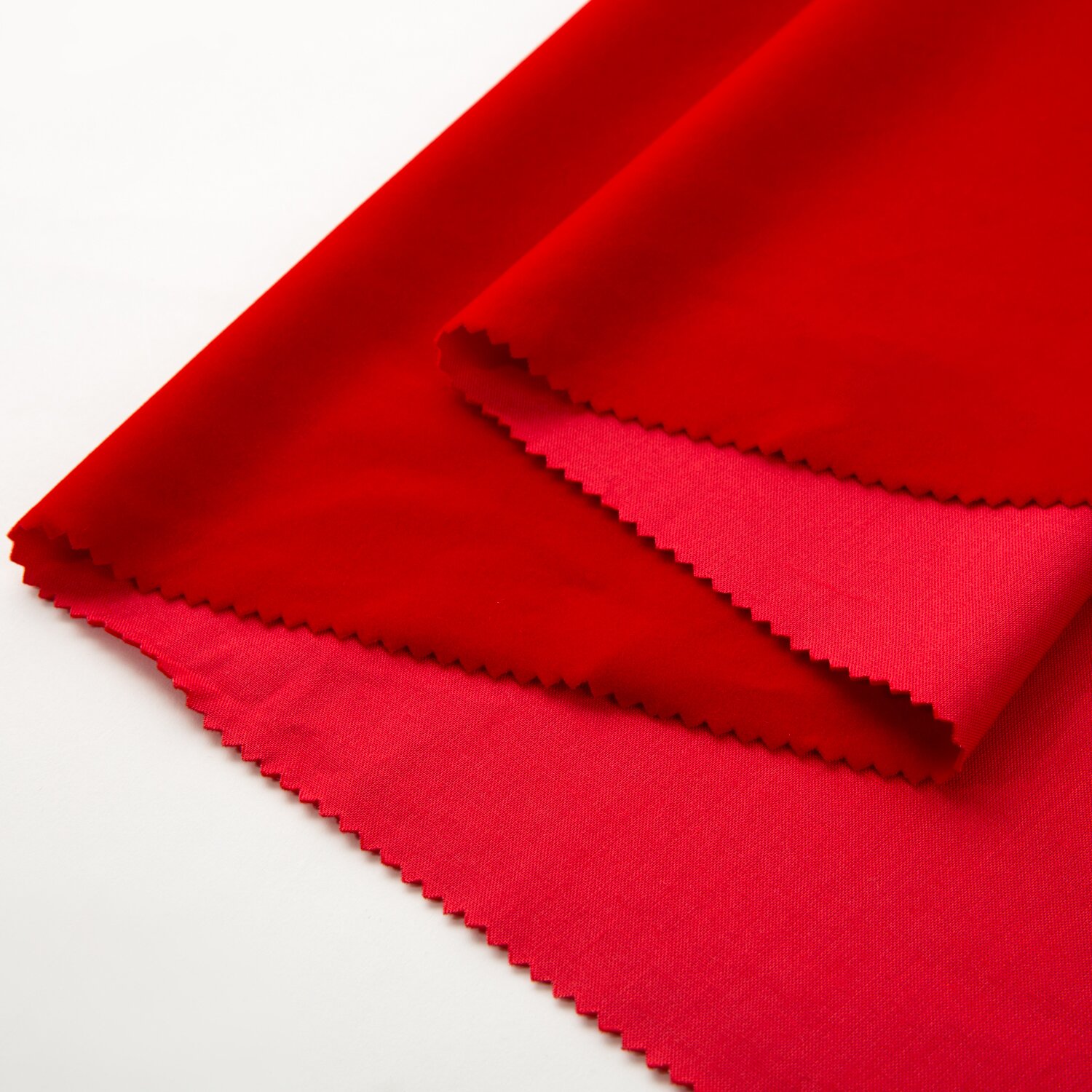
Mingqian describes production controls covering base-fabric pretreatment, in-house dyeing, adhesive coating, electrostatic flocking, drying and curing, post-finishing, and final inspection. Quality records are digitally archived and can be traced by batch number. Connecting those records to the approved sample, purchase order, inspection results, and shipment provides a practical way to verify what was made. Traceability supports production control; the supplied information does not say it provides intellectual-property protection.
The company's four-stage quality process includes incoming-material checks, in-process monitoring, finished-product testing, and pre-shipment spot checks. Mingqian also reports ISO 9001 certification and Global Recycled Standard certification for applicable recycled-fiber flocking fabrics. These credentials concern quality management and recycled-material claims, not stated protection against copying.
Confirm Rights Before Sharing or Ordering
Mingqian supports OEM/ODM development, with a stated minimum order quantity of 1,000 yards and a standard delivery time of 14 days. Before sending unreleased artwork or authorizing production, ask for written terms that identify design ownership, confidentiality obligations, authorized quantities, permitted uses, sample handling, and restrictions on reuse. A detailed technical record can make a design easier to identify, but it does not by itself establish legal ownership or prevent similar designs from being made.
Document the requirements for the intended application as well. For jewelry boxes, cosmetic packaging, and gift boxes, specify the chosen base, pile, color, surface finish, and post-processing. The available case information describes custom projects for an international luxury brand's perfume gift boxes and a premium liquor brand's packaging pouches, involving specified materials, pile structures, colors, embossing, abrasion tests, and adhesion tests. These examples show experience with customized packaging work, but do not disclose the projects' confidentiality or ownership terms.
Mingqian's company history notes technical patents beginning in 2016 and 18 patented technologies in 2020. The supplied information does not identify whether a particular customer design is patented, assigned to a customer, or governed by a separate intellectual-property agreement. Request confirmation for your specific project rather than assuming that general company patents cover your design.
Protection Measures at a Glance
| Control area | Information provided | What to document |
|---|---|---|
| Design specification | Base fabrics, pile types and heights, colors, patterns, treatments, and die-cut shapes can be customized. | Keep the full specification, approved sample, color reference, pattern, and revision history together. |
| Batch traceability | Digitally archived quality records are traceable by batch number. | Link the order, approved sample, batch, inspection results, and shipment records. |
| OEM/ODM production | Custom manufacturing is available; the stated MOQ is 1,000 yards and standard delivery is 14 days. | Set out confidentiality, ownership, production limits, authorized use, and reuse restrictions in writing. |
| Quality checks | Inspections cover incoming materials, production, finished goods, and pre-shipment checks. | Agree on acceptance criteria for color, adhesion, abrasion, dimensions, and surface appearance. |
| Intellectual-property terms | No dedicated anti-copying or customer-design ownership program is described in the supplied information. | Obtain project-specific written terms before disclosing designs or approving production. |
Frequently Asked Questions
Does documenting a fabric design stop others from copying it?
A complete specification and approved sample help identify the agreed design and compare it with production. They do not, on their own, prove legal ownership or prevent another party from making a similar product.
What should a custom flocking fabric specification include?
Record the base fabric, pile type and height, color reference, surface pattern, functional treatment, backing or lamination, width, roll length, finishing processes, die-cut geometry, sample ID, and revision. Add measurable acceptance criteria where appropriate.
Does batch traceability provide design confidentiality?
Batch traceability and quality inspections help track materials and production. The available information does not state that these controls include confidentiality, patent coverage, or ownership protection for a customer's design. Confirm those terms separately in writing.
Practical Next Steps
Prepare a complete specification and approve a reference sample before production. Attach both to the OEM/ODM order and ask that batch and inspection records be linked to them. Separately confirm confidentiality, ownership, authorized production, sample handling, and restrictions on reuse in written project terms. Mingqian reports OEM/ODM capability, ISO 9001 certification, GRS certification for applicable recycled-fiber fabrics, and batch-traceable quality inspection. For technical information or project support, contact 005@mingqianflocking.com.
About Mingqian
Guangdong Shunde Mingqian Flocking Co., Ltd., known as Mingqian, is a flocking fabric manufacturer based in Foshan, Guangdong, China. Established in 2008, the company focuses on research and development, production, and sales of flocking fabrics. It operates a self-owned manufacturing facility spanning more than 12,000 square meters, with flocking, dyeing, finishing, and testing capabilities. Its documented credentials include ISO 9001:2015 certification and Global Recycled Standard certification for applicable recycled-fiber products, with cooperation cases across multiple industries.

REPORT