







-
 Agriculture
-
 Health-Care
-
 Environment
-
 Construction-Real-Estate
-
 Tools-Hardware
-
 Home-Garden
-
 Furniture
-
 Luggage-Bags-Cases
-
 Medical-devices-Supplies
-
 Gifts-Crafts
-
 Sports-Entertainment
-
 Food-Beverage
-
 Vehicles-Transportation
-
 Power-Transmission
-
 Material-Handling
-
 Renewable-Energy
-
 Safety
-
 Testing-Instrument-Equipment
-
 Construction-Building-Machinery
-
 Pet-Supplies
-
 Personal-Care-Household-Cleaning
-
 Vehicle-Accessories-Electronics-Tools
-
 School-Office-Supplies
-
 Packaging-Printing
-
 Mother-Kids-Toys
-
 Business-Services
-
 Commercial-Equipment-Machinery
-
 Apparel-Accessories
-
 Security
-
 Shoes-Accessories
-
 Vehicle-Parts-Accessories
-
 Jewelry-Eyewear-Watches-Accessories
-
 Lights-Lighting
-
 Fabric-Textile-Raw-Material
-
 Fabrication-Services
-
 Industrial-Machinery
-
 Consumer-Electronics
-
 Electrical-Equipment-Supplies
-
 Electronic-Components-Accessories-Telecommunications
-
 Home-Appliances
-
 Beauty
-
 Chemicals
-
 Rubber-Plastics
-
 Metals-Alloys


























































































































































































































































































































































































































































































































































































- Masonry Materials
- Curtain Walls & Accessories
- Earthwork Products
- Fireproofing Materials
- Heat Insulation Materials
- Plastic Building Materials
- Building Boards
- Soundproofing Materials
- Timber
- Waterproofing Materials
- Balustrades & Handrails
- Bathroom & Kitchen
- Flooring & Accessories
- Tiles & Accessories
- Door, Window & Accessories
- Fireplaces & Stoves
- Floor Heating Systems & Parts
- Stairs & Stair Parts
- Ceilings
- Elevators & Escalators
- Stone
- Countertops, Vanity Tops & Table Tops
- Mosaics
- Metal Building Materials
- Multifunctional Materials
- Ladders & Scaffoldings
- Mouldings
- Corner Guards
- Decorative Films
- Formwork
- Building & Industrial Glass
- Other Construction & Real Estate
- Wallpapers/Wall panels
- HVAC System & Parts
- Outdoor Facilities
- Prefabricated Buildings
- Festive & Party Supplies
- Bathroom Products
- Household Sundries
- Rain Gear
- Garden Supplies
- Household Cleaning Tools & Accessories
- Lighters & Smoking Accessories
- Home Storage & Organization
- Household Scales
- Smart Home Improvement
- Home Textiles
- Kitchenware
- Drinkware & Accessories
- Dinnerware, Coffee & Wine
- Home Decor
- Golf
- Fitness & Body Building
- Amusement Park Facilities
- Billiards, Board Game,Coin Operated Games
- Musical Instruments
- Outdoor Affordable Luxury Sports
- Camping & Hiking
- Fishing
- Sports Safety&Rehabilitation
- Ball Sports Equipments
- Water Sports
- Winter Sports
- Luxury Travel Equipments
- Sports Shoes, Bags & Accessories
- Cycling
- Other Sports & Entertainment Products
- Artificial Grass&Sports Flooring&Sports Court Equipment
- Scooters
- Food Ingredients
- Honey & Honey Products
- Snacks
- Nuts & Kernels
- Seafood
- Plant & Animal Oil
- Beverages
- Fruit & Vegetable Products
- Frog & Escargot
- Bean Products
- Egg Products
- Dairy Products
- Seasonings & Condiments
- Canned Food
- Instant Food
- Baked Goods
- Other Food & Beverage
- Meat & Poultry
- Confectionery
- Grain Products
- Feminie Care
- Hair Care & Styling
- Body Care
- Hands & Feet Care
- Hygiene Products
- Men's Grooming
- Laundry Cleaning Supplies
- Travel Size & Gift Sets
- Room Deodorizers
- Other Personal Care Products
- Pest Control Products
- Special Household Cleaning
- Floor Cleaning
- Kitchen & Bathroom Cleaning
- Oral Care
- Bath Supplies
- Yellow Pages
- Correction Supplies
- Office Binding Supplies
- Office Cutting Supplies
- Board Erasers
- Office Adhesives & Tapes
- Education Supplies
- Pencil Cases & Bags
- Notebooks & Writing Pads
- File Folder Accessories
- Calendars
- Writing Accessories
- Commercial Office Supplies
- Pencil Sharpeners
- Pens
- Letter Pad/Paper
- Paper Envelopes
- Desk Organizers
- Pencils
- Markers & Highlighters
- Filing Products
- Art Supplies
- Easels
- Badge Holder & Accessories
- Office Paper
- Printer Supplies
- Book Covers
- Other Office & School Supplies
- Stationery Set
- Boards
- Clipboards
- Stamps
- Drafting Supplies
- Stencils
- Electronic Dictionary
- Books
- Map
- Magazines
- Calculators
- Baby & Toddler Toys
- Educational Toys
- Classic Toys
- Dress Up & Pretend Play
- Toy Vehicle
- Stuffed Animals & Plush Toys
- Outdoor Toys & Structures
- Balloons & Accessories
- Baby Food
- Children's Clothing
- Baby Supplies & Products
- Maternity Clothes
- Kids Shoes
- Baby Care
- Novelty & Gag Toys
- Dolls & Accessories
- Puzzle & Games
- Blocks & Model Building Toys
- Toddler Clothing
- Baby Clothing
- Kids' Luggage & Bags
- Arts, Crafts & DIY Toys
- Action & Toy Figures
- Baby Appliances
- Hobbies & Models
- Remote Control Toys
- Promotional Toys
- Pregnancy & Maternity
- Hygiene Products
- Kid's Textile&Bedding
- Novelty & Special Use
- Toy Weapons
- Baby Gifts
- Baby Storage & Organization
- Auto Drive Systems
- ATV/UTV Parts & Accessories
- Marine Parts & Accessories
- Other Auto Parts
- Trailer Parts & Accessories
- Auto Transmission Systems
- Train Parts & Accessories
- Universal Parts
- Railway Parts & Accessories
- Auto Brake Systems
- Aviation Parts & Accessories
- Truck Parts & Accessories
- Auto Suspension Systems
- Auto Lighting Systems
- New Energy Vehicle Parts & Accessories
- Auto Steering Systems
- Wheels, Tires & Accessories
- Bus Parts & Accessories
- Auto Performance Parts
- Cooling System
- Go-Kart & Kart Racer Parts & Accessories
- Air Conditioning Systems
- Heavy Duty Vehicle Parts & Accessories
- Auto Electrical Systems
- Auto Body Systems
- Auto Engine Systems
- Container Parts & Accessories
- Motorcycle Parts & Accessories
- Refrigeration & Heat Exchange Equipment
- Machine Tool Equipment
- Food & Beverage Machinery
- Agricultural Machinery & Equipment
- Apparel & Textile Machinery
- Chemical Machinery
- Packaging Machines
- Paper Production Machinery
- Plastic & Rubber Processing Machinery
- Industrial Robots
- Electronic Products Machinery
- Metal & Metallurgy Machinery
- Woodworking Machinery
- Home Product Manufacturing Machinery
- Machinery Accessories
- Environmental Machinery
- Machinery Service
- Electrical Equipment Manufacturing Machinery
- Industrial Compressors & Parts
- Tobacco & Cigarette Machinery
- Production Line
- Used Industrial Machinery
- Electronics Production Machinery
- Other Machinery & Industrial Equipment
- Camera, Photo & Accessories
- Portable Audio, Video & Accessories
- Television, Home Audio, Video & Accessories
- Video Games & Accessories
- Mobile Phone & Accessories
- Electronic Publications
- Earphone & Headphone & Accessories
- Speakers & Accessories
- Smart Electronics
- TV Receivers & Accessories
- Mobile Phone & Computer Repair Parts
- Chargers, Batteries & Power Supplies
- Used Electronics
- VR, AR, MR Hardware & Software
- Projectors & Presentation Equipments
- Other Consumer Electronics
- Cables & Commonly Used Accessories
- Computer Hardware & Software
- Displays, Signage and Optoelectronics
- Discrete Semiconductors
- Wireless & IoT Module and Products
- Telecommunications
- Connectors, Terminals & Accessories
- Development Boards, Electronic Modules and Kits
- Circuit Protection
- Sensors
- Isolators
- Audio Components and Products
- Integrated Circuits
- Power Supplies
- Relays
- RF, Microwave and RFID
- Electronic Accessories & Supplies
- Passive Components
- PCB & PCBA
- Air Quality Appliances
- Home Appliance Parts
- Heating & Cooling Appliances
- Small Kitchen Appliances
- Laundry Appliances
- Water Heaters
- Water Treatment Appliances
- Refrigerators & Freezers
- Personal Care & Beauty Appliances
- Major Kitchen Appliances
- Cleaning Appliances
- Second-hand Appliances
- Smart Home Appliances
- Other Home Appliances
- Energy Chemicals
- Inorganic Chemicals
- Basic Organic Chemicals
- Agrochemicals
- Admixture & Additives
- Catalysts & Chemical Auxiliary Agents
- Pigments & Dyestuff
- Coating & Paint
- Daily Chemicals
- Polymer
- Organic Intermediate
- Adhesives & Sealants
- Chemical Waste
- Biological Chemical Products
- Surface Treatment Chemicals
- Painting & Coating
- Chemical Reagents
- Flavor & Fragrance
- Non-Explosive Demolition Agents
- Other Chemicals
- Custom Chemical Services

How to Safeguard a Custom Luxury Car Seat Cover Leather Design
Start With a Clearly Defined Material Standard
Protecting a custom luxury car seat cover leather design begins with controlling the exact material specification used in production. A custom PVC leather is more than a selected color: its identity is created by the combined details of grain, thickness, backing, finish, hand feel, and automotive performance requirements.
An approved specification gives manufacturers, quality teams, and buyers a common standard to follow. It also makes it easier to distinguish your selected upholstery material from a standard synthetic leather product with a similar appearance.
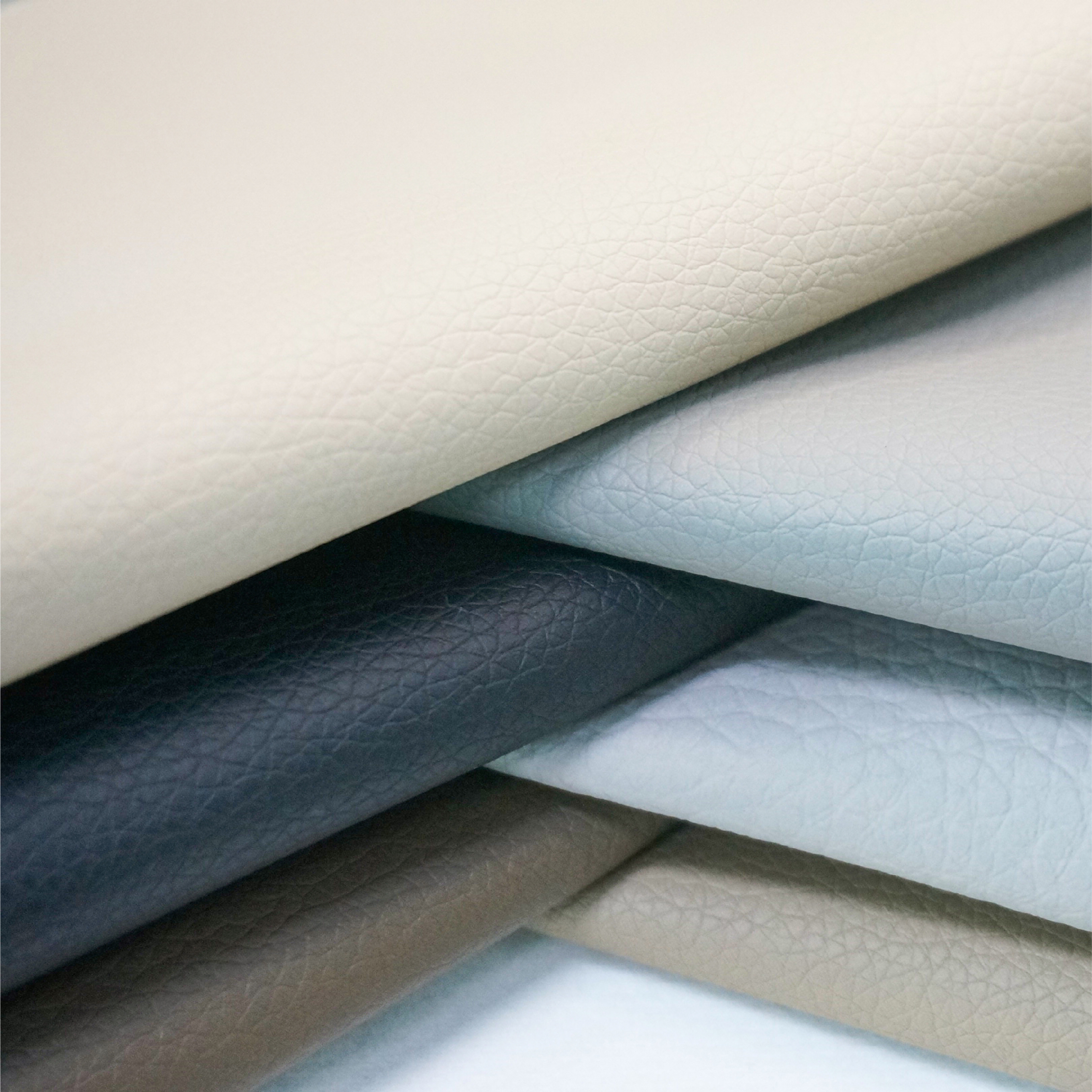
Build a Complete Custom Leather Specification
For luxury automotive seating applications, the specification should document every visible and structural feature of the approved material. This includes the PVC leather type, custom color, grain pattern, thickness, width, backing construction, surface gloss, and tactile feel.
Available construction options include customizable thicknesses from 0.8 to 1.4 mm, a standard width of 54/55 inches, and knitted, non-woven, or customized backing. Surface choices may include matte, semi-gloss, or tailored finishes, while grain patterns can include nappa, lychee, perforated, geometric, and customized embossed designs.
Key Information to Include
- Exact color standard and acceptable color-consistency range
- Selected grain, embossing design, and surface finish
- Material thickness, width, and backing type
- Hand feel and visual appearance requirements
- Performance standards for the intended automotive interior use
Use Approved Samples as Production References
Sample development is an important control step before mass production. Color matching and color-and-grain confirmation allow the customer to approve a physical reference that represents the desired car seat cover leather design.
Once approved, the sample should be retained together with the written specification. This reference can then be used to compare subsequent batches and to evaluate material supplied for seats, door panels, headrests, and armrests. Maintaining the approved sample helps preserve consistency when the project moves from development to repeat production.
Set Measurable Automotive Performance Requirements
A premium car seat cover material must meet practical requirements in addition to visual expectations. The controlled specification should state measurable criteria for abrasion resistance, scratch resistance, UV resistance, tensile strength, peeling strength, flame retardancy, odor performance, waterproofing, stain resistance, and easy-clean capability.
These requirements help ensure that the custom synthetic leather performs appropriately in automotive interiors, where exposure to sunlight, frequent contact, cleaning agents, and daily wear can affect the final product.
Maintain Inspection and Quality-Control Documentation
Inspection records support the approved design definition throughout the supply process. Quality control can cover incoming raw materials, in-process checks, laboratory testing, finished-product examination, and pre-shipment inspection.
Typical verification items include thickness, width, color uniformity, grain clarity, abrasion resistance, tensile strength, peeling strength, UV resistance, flame-retardant performance, and odor level. When these records are retained with approved samples, they provide an objective basis for judging whether future production meets the established requirements.
Customization and Verification Overview
| Control Category | Customization or Verification Option | Purpose |
|---|---|---|
| Appearance | Custom color; nappa, lychee, perforated, geometric, or custom embossed grain; matte or semi-gloss finish | Defines the visible identity of the approved luxury seat cover material |
| Material structure | 0.8–1.4 mm thickness; knitted, non-woven, or customized backing | Records the full construction rather than only the surface look |
| Automotive functionality | Abrasion, scratch, UV, flame-retardant, low-odor, waterproof, stain-resistant, and easy-clean requirements | Matches the material to its intended interior application |
| Batch consistency | Sample approval, laboratory testing, finished-product checks, and pre-shipment inspection | Provides documented evidence against the approved standard |
Project Experience and Available Credentials
Listed credentials for synthetic leather materials include GRS, USDA, and Oeko-Tex 100. In a Mexico automotive interior project, 50,000 meters of customized synthetic leather were supplied for seats, door panels, headrests, and armrests. The project specification covered color, grain, thickness, backing, abrasion resistance, UV resistance, flame retardancy, low odor, and easy-clean performance.
The customer reported stable color consistency, defined grain texture, and delivery aligned with the project requirements. This type of documented customization illustrates the value of agreeing on detailed specifications before production begins.
Important Note on Legal Protection
Material specifications, approval samples, and inspection documents are useful for controlling production quality and identifying the approved design. However, the provided information does not confirm intellectual-property registration, exclusivity rights, confidentiality agreements, or legal protection against copying.
If legal protection is required, confirm separate arrangements for confidentiality, ownership, design registration, trademark use, and exclusivity before sharing proprietary drawings, patterns, or product details with suppliers.
Frequently Asked Questions
What should be included in a custom car seat cover leather specification?
The specification should cover material type, color, grain, thickness, width, backing, finish, hand feel, and required functional performance. For PVC synthetic leather, available options include 0.8–1.4 mm thickness, 54/55-inch width, various backing constructions, and custom embossed patterns.
Can the material be confirmed before bulk production?
Yes. Sample development, color matching, and color-and-grain approval can be completed before mass production. Verification may also include raw-material inspection, in-process controls, laboratory testing, finished-product inspection, and pre-shipment checks.
Do customization and testing automatically prevent others from copying the design?
No. They establish a clear production and quality standard, but they do not by themselves provide intellectual-property, confidentiality, or exclusivity protection. Those legal terms need separate confirmation for each project.
Conclusion
To maintain control of a custom luxury car seat cover leather design, establish a detailed approved specification, retain physical reference samples, define measurable automotive performance standards, and keep complete inspection records. These steps create a reliable production benchmark for customized automotive upholstery materials.
Dongguan Cigno Leather Co., Ltd. provides OEM/ODM and customized synthetic leather production, with a stated MOQ of 100 meters and a typical delivery period of 7–30 days under its business model. The company operates under an ISO 9001 quality management system. For technical solutions or project support, please contact vicky@bozeleather.com.
About Us
Dongguan Cigno Leather Co., Ltd. is a Dongguan-based manufacturer of synthetic leather materials for furniture, automotive interiors, apparel, handbags, and footwear. Established in 2007, the company develops eco-friendly and multifunctional PU, PVC, water-based, solvent-free, and other polymer materials, with customized colors, textures, thicknesses, and functional performance available. Its factory operates six synthetic leather production lines and reports monthly capacity of approximately 6 million meters for bulk international orders. The company lists GRS and USDA certifications and has served clients across multiple industries.

REPORT