







-
 Agriculture
-
 Health-Care
-
 Environment
-
 Construction-Real-Estate
-
 Tools-Hardware
-
 Home-Garden
-
 Furniture
-
 Luggage-Bags-Cases
-
 Medical-devices-Supplies
-
 Gifts-Crafts
-
 Sports-Entertainment
-
 Food-Beverage
-
 Vehicles-Transportation
-
 Power-Transmission
-
 Material-Handling
-
 Renewable-Energy
-
 Safety
-
 Testing-Instrument-Equipment
-
 Construction-Building-Machinery
-
 Pet-Supplies
-
 Personal-Care-Household-Cleaning
-
 Vehicle-Accessories-Electronics-Tools
-
 School-Office-Supplies
-
 Packaging-Printing
-
 Mother-Kids-Toys
-
 Business-Services
-
 Commercial-Equipment-Machinery
-
 Apparel-Accessories
-
 Security
-
 Shoes-Accessories
-
 Vehicle-Parts-Accessories
-
 Jewelry-Eyewear-Watches-Accessories
-
 Lights-Lighting
-
 Fabric-Textile-Raw-Material
-
 Fabrication-Services
-
 Industrial-Machinery
-
 Consumer-Electronics
-
 Electrical-Equipment-Supplies
-
 Electronic-Components-Accessories-Telecommunications
-
 Home-Appliances
-
 Beauty
-
 Chemicals
-
 Rubber-Plastics
-
 Metals-Alloys


























































































































































































































































































































































































































































































































































































- Masonry Materials
- Curtain Walls & Accessories
- Earthwork Products
- Fireproofing Materials
- Heat Insulation Materials
- Plastic Building Materials
- Building Boards
- Soundproofing Materials
- Timber
- Waterproofing Materials
- Balustrades & Handrails
- Bathroom & Kitchen
- Flooring & Accessories
- Tiles & Accessories
- Door, Window & Accessories
- Fireplaces & Stoves
- Floor Heating Systems & Parts
- Stairs & Stair Parts
- Ceilings
- Elevators & Escalators
- Stone
- Countertops, Vanity Tops & Table Tops
- Mosaics
- Metal Building Materials
- Multifunctional Materials
- Ladders & Scaffoldings
- Mouldings
- Corner Guards
- Decorative Films
- Formwork
- Building & Industrial Glass
- Other Construction & Real Estate
- Wallpapers/Wall panels
- HVAC System & Parts
- Outdoor Facilities
- Prefabricated Buildings
- Festive & Party Supplies
- Bathroom Products
- Household Sundries
- Rain Gear
- Garden Supplies
- Household Cleaning Tools & Accessories
- Lighters & Smoking Accessories
- Home Storage & Organization
- Household Scales
- Smart Home Improvement
- Home Textiles
- Kitchenware
- Drinkware & Accessories
- Dinnerware, Coffee & Wine
- Home Decor
- Golf
- Fitness & Body Building
- Amusement Park Facilities
- Billiards, Board Game,Coin Operated Games
- Musical Instruments
- Outdoor Affordable Luxury Sports
- Camping & Hiking
- Fishing
- Sports Safety&Rehabilitation
- Ball Sports Equipments
- Water Sports
- Winter Sports
- Luxury Travel Equipments
- Sports Shoes, Bags & Accessories
- Cycling
- Other Sports & Entertainment Products
- Artificial Grass&Sports Flooring&Sports Court Equipment
- Scooters
- Food Ingredients
- Honey & Honey Products
- Snacks
- Nuts & Kernels
- Seafood
- Plant & Animal Oil
- Beverages
- Fruit & Vegetable Products
- Frog & Escargot
- Bean Products
- Egg Products
- Dairy Products
- Seasonings & Condiments
- Canned Food
- Instant Food
- Baked Goods
- Other Food & Beverage
- Meat & Poultry
- Confectionery
- Grain Products
- Feminie Care
- Hair Care & Styling
- Body Care
- Hands & Feet Care
- Hygiene Products
- Men's Grooming
- Laundry Cleaning Supplies
- Travel Size & Gift Sets
- Room Deodorizers
- Other Personal Care Products
- Pest Control Products
- Special Household Cleaning
- Floor Cleaning
- Kitchen & Bathroom Cleaning
- Oral Care
- Bath Supplies
- Yellow Pages
- Correction Supplies
- Office Binding Supplies
- Office Cutting Supplies
- Board Erasers
- Office Adhesives & Tapes
- Education Supplies
- Pencil Cases & Bags
- Notebooks & Writing Pads
- File Folder Accessories
- Calendars
- Writing Accessories
- Commercial Office Supplies
- Pencil Sharpeners
- Pens
- Letter Pad/Paper
- Paper Envelopes
- Desk Organizers
- Pencils
- Markers & Highlighters
- Filing Products
- Art Supplies
- Easels
- Badge Holder & Accessories
- Office Paper
- Printer Supplies
- Book Covers
- Other Office & School Supplies
- Stationery Set
- Boards
- Clipboards
- Stamps
- Drafting Supplies
- Stencils
- Electronic Dictionary
- Books
- Map
- Magazines
- Calculators
- Baby & Toddler Toys
- Educational Toys
- Classic Toys
- Dress Up & Pretend Play
- Toy Vehicle
- Stuffed Animals & Plush Toys
- Outdoor Toys & Structures
- Balloons & Accessories
- Baby Food
- Children's Clothing
- Baby Supplies & Products
- Maternity Clothes
- Kids Shoes
- Baby Care
- Novelty & Gag Toys
- Dolls & Accessories
- Puzzle & Games
- Blocks & Model Building Toys
- Toddler Clothing
- Baby Clothing
- Kids' Luggage & Bags
- Arts, Crafts & DIY Toys
- Action & Toy Figures
- Baby Appliances
- Hobbies & Models
- Remote Control Toys
- Promotional Toys
- Pregnancy & Maternity
- Hygiene Products
- Kid's Textile&Bedding
- Novelty & Special Use
- Toy Weapons
- Baby Gifts
- Baby Storage & Organization
- Auto Drive Systems
- ATV/UTV Parts & Accessories
- Marine Parts & Accessories
- Other Auto Parts
- Trailer Parts & Accessories
- Auto Transmission Systems
- Train Parts & Accessories
- Universal Parts
- Railway Parts & Accessories
- Auto Brake Systems
- Aviation Parts & Accessories
- Truck Parts & Accessories
- Auto Suspension Systems
- Auto Lighting Systems
- New Energy Vehicle Parts & Accessories
- Auto Steering Systems
- Wheels, Tires & Accessories
- Bus Parts & Accessories
- Auto Performance Parts
- Cooling System
- Go-Kart & Kart Racer Parts & Accessories
- Air Conditioning Systems
- Heavy Duty Vehicle Parts & Accessories
- Auto Electrical Systems
- Auto Body Systems
- Auto Engine Systems
- Container Parts & Accessories
- Motorcycle Parts & Accessories
- Refrigeration & Heat Exchange Equipment
- Machine Tool Equipment
- Food & Beverage Machinery
- Agricultural Machinery & Equipment
- Apparel & Textile Machinery
- Chemical Machinery
- Packaging Machines
- Paper Production Machinery
- Plastic & Rubber Processing Machinery
- Industrial Robots
- Electronic Products Machinery
- Metal & Metallurgy Machinery
- Woodworking Machinery
- Home Product Manufacturing Machinery
- Machinery Accessories
- Environmental Machinery
- Machinery Service
- Electrical Equipment Manufacturing Machinery
- Industrial Compressors & Parts
- Tobacco & Cigarette Machinery
- Production Line
- Used Industrial Machinery
- Electronics Production Machinery
- Other Machinery & Industrial Equipment
- Camera, Photo & Accessories
- Portable Audio, Video & Accessories
- Television, Home Audio, Video & Accessories
- Video Games & Accessories
- Mobile Phone & Accessories
- Electronic Publications
- Earphone & Headphone & Accessories
- Speakers & Accessories
- Smart Electronics
- TV Receivers & Accessories
- Mobile Phone & Computer Repair Parts
- Chargers, Batteries & Power Supplies
- Used Electronics
- VR, AR, MR Hardware & Software
- Projectors & Presentation Equipments
- Other Consumer Electronics
- Cables & Commonly Used Accessories
- Computer Hardware & Software
- Displays, Signage and Optoelectronics
- Discrete Semiconductors
- Wireless & IoT Module and Products
- Telecommunications
- Connectors, Terminals & Accessories
- Development Boards, Electronic Modules and Kits
- Circuit Protection
- Sensors
- Isolators
- Audio Components and Products
- Integrated Circuits
- Power Supplies
- Relays
- RF, Microwave and RFID
- Electronic Accessories & Supplies
- Passive Components
- PCB & PCBA
- Air Quality Appliances
- Home Appliance Parts
- Heating & Cooling Appliances
- Small Kitchen Appliances
- Laundry Appliances
- Water Heaters
- Water Treatment Appliances
- Refrigerators & Freezers
- Personal Care & Beauty Appliances
- Major Kitchen Appliances
- Cleaning Appliances
- Second-hand Appliances
- Smart Home Appliances
- Other Home Appliances
- Energy Chemicals
- Inorganic Chemicals
- Basic Organic Chemicals
- Agrochemicals
- Admixture & Additives
- Catalysts & Chemical Auxiliary Agents
- Pigments & Dyestuff
- Coating & Paint
- Daily Chemicals
- Polymer
- Organic Intermediate
- Adhesives & Sealants
- Chemical Waste
- Biological Chemical Products
- Surface Treatment Chemicals
- Painting & Coating
- Chemical Reagents
- Flavor & Fragrance
- Non-Explosive Demolition Agents
- Other Chemicals
- Custom Chemical Services

How to Select an Injection Mould for Reliable High-Volume Production
Selecting an injection mould for high-volume manufacturing requires more than choosing a tool that can form the desired part. The mould must deliver repeatable dimensions, dependable cycle performance, and sufficient durability throughout the planned production program. Key evaluation points include rated mould life, steel selection, cavity layout, alignment precision, material suitability, trial results, and quality-control procedures.
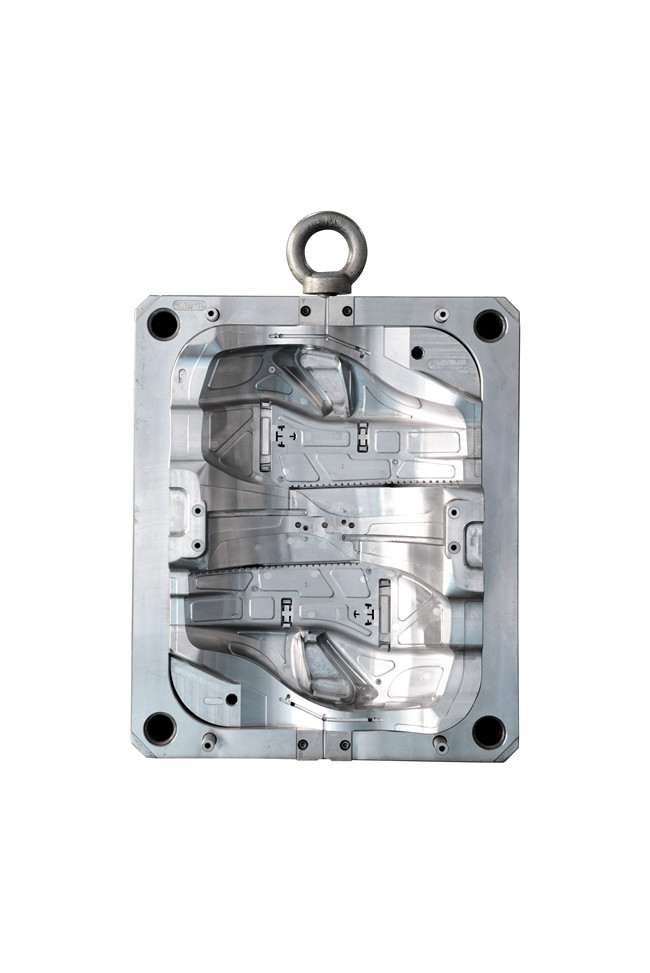
For products made with two materials, such as rigid plastic combined with a soft-touch layer, the mould also needs a proven double shot or overmolding structure. The Custom Double Shot Overmolding Mold is designed for hard-and-soft material applications and is specified for a service life of up to 800,000 shots.
Start with Production Volume and Part Requirements
The expected order quantity should guide the entire mould selection process. Compare the total projected output with the mould supplier's documented service-life rating, then allow for future production demand where appropriate. A mould rated for up to 800,000 cycles can be considered for programs that fall within that production range, provided that maintenance conditions and operating parameters are properly managed.
Part design is equally important. A standard single-material component may only require a conventional injection mould, while grips, seals, buttons, housings, and other parts with rigid and flexible sections may need a two-color injection or double shot overmolding solution.
Evaluate the Mould Structure and Material Compatibility
Double Shot Capability for Hard and Soft Materials
For two-material components, verify that the mould structure supports the intended resin combination and that the materials can bond effectively during processing. The Custom Double Shot Overmolding Mold can be configured for combinations including ABS+TPU and PP+TPE. These pairings are commonly selected when a product requires both structural strength and a softer contact surface.
High-precision alignment between the first and second injection stages is essential. Any misalignment may affect the appearance, bonding area, fit, or function of the finished component. Buyers should therefore confirm the accuracy of the mould's locating and guiding systems before approving it for mass production.
Mould Steel and Tool Durability
Tooling steel has a direct impact on wear resistance and long-term stability. This double shot mould uses 718H or 1.2738 mould steel, materials selected for precision mould applications. Along with the stated service life of up to 800,000 shots, the steel specification provides a practical basis for assessing whether the tool is suitable for repeated production cycles.
Choose a Cavity Configuration That Matches Output Targets
Production capacity depends not only on the mould's durability but also on the number of parts produced per cycle. Multi-cavity configurations are available for the Custom Double Shot Overmolding Mold and may help increase output when demand justifies the additional tooling complexity. The appropriate cavity count should be decided by considering annual volume, required cycle time, machine capacity, resin behavior, and part quality requirements.
Require Thorough Validation Before Production Release
A mould should not move directly from manufacturing to full-scale production without documented validation. Mold trial runs provide an opportunity to assess filling performance, material bonding, alignment, surface condition, and cycle stability. Dimensional testing should then confirm whether the samples meet the drawing and tolerance requirements.
Pre-shipment inspection is another important checkpoint. For precision or complex moulds, buyers may also request CMM measurement, surface-quality inspection, and repeated multi-cycle trials. These checks help identify potential concerns before the tool is installed for production.
Typical Applications and Reported Project Experience
Double shot overmolding tools can serve a broad range of applications, including consumer-electronics shells, automotive plastic components, household-appliance parts, and industrial equipment enclosures. The final mould design should reflect the operating environment, cosmetic requirements, assembly interfaces, and chosen materials of the product.
In one French consumer-electronics housing project, eight double shot overmolding moulds were supplied. The reported customer feedback highlighted good alignment and stable samples during mould trials. In a separate Italian handheld-device housing project involving three plastic injection moulds, the customer review noted accurate dimensions and a smooth finished surface.
High-Volume Injection Mould Selection Checklist
| Evaluation Area | Custom Double Shot Overmolding Mold Details | Buyer Verification Point |
|---|---|---|
| Tooling structure | Two-color injection and overmolding structure | Confirm whether the component needs one material or a hard-and-soft material design |
| Material options | Compatible with combinations such as ABS+TPU and PP+TPE | Validate the specified resins, bonding performance, and processing conditions |
| Tool life | Specified for up to 800,000 shots | Match the rated lifespan with forecast production volume |
| Tool steel | 718H or 1.2738 mould steel | Review steel suitability for the part, resin, and expected production cycles |
| Quality validation | Mould trials, dimensional testing, and pre-shipment inspection | Approve stable samples and accepted measurements before production begins |
| Capacity setup | Multi-cavity option available | Ensure cavity quantity supports output goals without compromising quality |
Frequently Asked Questions
What mould life is suitable for high-volume injection molding?
The required lifespan should be based on the total number of planned production cycles. The Custom Double Shot Overmolding Mold is specified for up to 800,000 shots, so buyers should compare that rating with their projected demand and maintenance plan.
Which materials can be used in this double shot mould?
The mould supports rigid-and-flexible material combinations, including ABS+TPU and PP+TPE. Final compatibility should be verified according to the exact resin grades and product-performance requirements.
How can I confirm that the mould is ready for mass production?
Review trial samples, dimensional reports, and pre-shipment inspection records. For demanding precision applications, CMM checks, cosmetic surface inspections, and multi-cycle mould trials can provide additional confidence.
Conclusion
A dependable high-volume injection mould should combine appropriate steel, a verified service-life rating, accurate alignment, suitable cavity design, material compatibility, and a clear inspection process. For double shot parts, stable performance during repeated trials is especially important because both injection stages must remain consistent.
Longterm Mold provides custom high-precision moulds, double shot moulds, and overmolding solutions, as well as mould development and plastic injection mass production support. Complex mould projects have a stated delivery time of 35–45 working days. For technical discussions or project support, contact rogerluo@longterm-mold.com.
About Longterm Mold
Longterm Manufacturing Solutions Limited, also known as Longterm Mold, was founded in 2010 and provides mould design, tooling, precision machining, mould manufacturing, and parts production services. The company operates with 50 employees in a 2,000 sqm factory and has monthly capacity for 15–20 injection moulds as well as tens of thousands of precision CNC-machined parts. Supporting small- and medium-batch orders across multiple industries, Longterm Mold holds ISO 9001:2015 certification for the design, manufacture, and sale of precision moulds and the sale of plastic products. The certification is applicable globally, including in the EU, USA, Australia, Italy, and France.

REPORT