







-
 Agriculture
-
 Health-Care
-
 Environment
-
 Construction-Real-Estate
-
 Tools-Hardware
-
 Home-Garden
-
 Furniture
-
 Luggage-Bags-Cases
-
 Medical-devices-Supplies
-
 Gifts-Crafts
-
 Sports-Entertainment
-
 Food-Beverage
-
 Vehicles-Transportation
-
 Power-Transmission
-
 Material-Handling
-
 Renewable-Energy
-
 Safety
-
 Testing-Instrument-Equipment
-
 Construction-Building-Machinery
-
 Pet-Supplies
-
 Personal-Care-Household-Cleaning
-
 Vehicle-Accessories-Electronics-Tools
-
 School-Office-Supplies
-
 Packaging-Printing
-
 Mother-Kids-Toys
-
 Business-Services
-
 Commercial-Equipment-Machinery
-
 Apparel-Accessories
-
 Security
-
 Shoes-Accessories
-
 Vehicle-Parts-Accessories
-
 Jewelry-Eyewear-Watches-Accessories
-
 Lights-Lighting
-
 Fabric-Textile-Raw-Material
-
 Fabrication-Services
-
 Industrial-Machinery
-
 Consumer-Electronics
-
 Electrical-Equipment-Supplies
-
 Electronic-Components-Accessories-Telecommunications
-
 Home-Appliances
-
 Beauty
-
 Chemicals
-
 Rubber-Plastics
-
 Metals-Alloys


























































































































































































































































































































































































































































































































































































- Masonry Materials
- Curtain Walls & Accessories
- Earthwork Products
- Fireproofing Materials
- Heat Insulation Materials
- Plastic Building Materials
- Building Boards
- Soundproofing Materials
- Timber
- Waterproofing Materials
- Balustrades & Handrails
- Bathroom & Kitchen
- Flooring & Accessories
- Tiles & Accessories
- Door, Window & Accessories
- Fireplaces & Stoves
- Floor Heating Systems & Parts
- Stairs & Stair Parts
- Ceilings
- Elevators & Escalators
- Stone
- Countertops, Vanity Tops & Table Tops
- Mosaics
- Metal Building Materials
- Multifunctional Materials
- Ladders & Scaffoldings
- Mouldings
- Corner Guards
- Decorative Films
- Formwork
- Building & Industrial Glass
- Other Construction & Real Estate
- Wallpapers/Wall panels
- HVAC System & Parts
- Outdoor Facilities
- Prefabricated Buildings
- Festive & Party Supplies
- Bathroom Products
- Household Sundries
- Rain Gear
- Garden Supplies
- Household Cleaning Tools & Accessories
- Lighters & Smoking Accessories
- Home Storage & Organization
- Household Scales
- Smart Home Improvement
- Home Textiles
- Kitchenware
- Drinkware & Accessories
- Dinnerware, Coffee & Wine
- Home Decor
- Golf
- Fitness & Body Building
- Amusement Park Facilities
- Billiards, Board Game,Coin Operated Games
- Musical Instruments
- Outdoor Affordable Luxury Sports
- Camping & Hiking
- Fishing
- Sports Safety&Rehabilitation
- Ball Sports Equipments
- Water Sports
- Winter Sports
- Luxury Travel Equipments
- Sports Shoes, Bags & Accessories
- Cycling
- Other Sports & Entertainment Products
- Artificial Grass&Sports Flooring&Sports Court Equipment
- Scooters
- Food Ingredients
- Honey & Honey Products
- Snacks
- Nuts & Kernels
- Seafood
- Plant & Animal Oil
- Beverages
- Fruit & Vegetable Products
- Frog & Escargot
- Bean Products
- Egg Products
- Dairy Products
- Seasonings & Condiments
- Canned Food
- Instant Food
- Baked Goods
- Other Food & Beverage
- Meat & Poultry
- Confectionery
- Grain Products
- Feminie Care
- Hair Care & Styling
- Body Care
- Hands & Feet Care
- Hygiene Products
- Men's Grooming
- Laundry Cleaning Supplies
- Travel Size & Gift Sets
- Room Deodorizers
- Other Personal Care Products
- Pest Control Products
- Special Household Cleaning
- Floor Cleaning
- Kitchen & Bathroom Cleaning
- Oral Care
- Bath Supplies
- Yellow Pages
- Correction Supplies
- Office Binding Supplies
- Office Cutting Supplies
- Board Erasers
- Office Adhesives & Tapes
- Education Supplies
- Pencil Cases & Bags
- Notebooks & Writing Pads
- File Folder Accessories
- Calendars
- Writing Accessories
- Commercial Office Supplies
- Pencil Sharpeners
- Pens
- Letter Pad/Paper
- Paper Envelopes
- Desk Organizers
- Pencils
- Markers & Highlighters
- Filing Products
- Art Supplies
- Easels
- Badge Holder & Accessories
- Office Paper
- Printer Supplies
- Book Covers
- Other Office & School Supplies
- Stationery Set
- Boards
- Clipboards
- Stamps
- Drafting Supplies
- Stencils
- Electronic Dictionary
- Books
- Map
- Magazines
- Calculators
- Baby & Toddler Toys
- Educational Toys
- Classic Toys
- Dress Up & Pretend Play
- Toy Vehicle
- Stuffed Animals & Plush Toys
- Outdoor Toys & Structures
- Balloons & Accessories
- Baby Food
- Children's Clothing
- Baby Supplies & Products
- Maternity Clothes
- Kids Shoes
- Baby Care
- Novelty & Gag Toys
- Dolls & Accessories
- Puzzle & Games
- Blocks & Model Building Toys
- Toddler Clothing
- Baby Clothing
- Kids' Luggage & Bags
- Arts, Crafts & DIY Toys
- Action & Toy Figures
- Baby Appliances
- Hobbies & Models
- Remote Control Toys
- Promotional Toys
- Pregnancy & Maternity
- Hygiene Products
- Kid's Textile&Bedding
- Novelty & Special Use
- Toy Weapons
- Baby Gifts
- Baby Storage & Organization
- Auto Drive Systems
- ATV/UTV Parts & Accessories
- Marine Parts & Accessories
- Other Auto Parts
- Trailer Parts & Accessories
- Auto Transmission Systems
- Train Parts & Accessories
- Universal Parts
- Railway Parts & Accessories
- Auto Brake Systems
- Aviation Parts & Accessories
- Truck Parts & Accessories
- Auto Suspension Systems
- Auto Lighting Systems
- New Energy Vehicle Parts & Accessories
- Auto Steering Systems
- Wheels, Tires & Accessories
- Bus Parts & Accessories
- Auto Performance Parts
- Cooling System
- Go-Kart & Kart Racer Parts & Accessories
- Air Conditioning Systems
- Heavy Duty Vehicle Parts & Accessories
- Auto Electrical Systems
- Auto Body Systems
- Auto Engine Systems
- Container Parts & Accessories
- Motorcycle Parts & Accessories
- Refrigeration & Heat Exchange Equipment
- Machine Tool Equipment
- Food & Beverage Machinery
- Agricultural Machinery & Equipment
- Apparel & Textile Machinery
- Chemical Machinery
- Packaging Machines
- Paper Production Machinery
- Plastic & Rubber Processing Machinery
- Industrial Robots
- Electronic Products Machinery
- Metal & Metallurgy Machinery
- Woodworking Machinery
- Home Product Manufacturing Machinery
- Machinery Accessories
- Environmental Machinery
- Machinery Service
- Electrical Equipment Manufacturing Machinery
- Industrial Compressors & Parts
- Tobacco & Cigarette Machinery
- Production Line
- Used Industrial Machinery
- Electronics Production Machinery
- Other Machinery & Industrial Equipment
- Camera, Photo & Accessories
- Portable Audio, Video & Accessories
- Television, Home Audio, Video & Accessories
- Video Games & Accessories
- Mobile Phone & Accessories
- Electronic Publications
- Earphone & Headphone & Accessories
- Speakers & Accessories
- Smart Electronics
- TV Receivers & Accessories
- Mobile Phone & Computer Repair Parts
- Chargers, Batteries & Power Supplies
- Used Electronics
- VR, AR, MR Hardware & Software
- Projectors & Presentation Equipments
- Other Consumer Electronics
- Cables & Commonly Used Accessories
- Computer Hardware & Software
- Displays, Signage and Optoelectronics
- Discrete Semiconductors
- Wireless & IoT Module and Products
- Telecommunications
- Connectors, Terminals & Accessories
- Development Boards, Electronic Modules and Kits
- Circuit Protection
- Sensors
- Isolators
- Audio Components and Products
- Integrated Circuits
- Power Supplies
- Relays
- RF, Microwave and RFID
- Electronic Accessories & Supplies
- Passive Components
- PCB & PCBA
- Air Quality Appliances
- Home Appliance Parts
- Heating & Cooling Appliances
- Small Kitchen Appliances
- Laundry Appliances
- Water Heaters
- Water Treatment Appliances
- Refrigerators & Freezers
- Personal Care & Beauty Appliances
- Major Kitchen Appliances
- Cleaning Appliances
- Second-hand Appliances
- Smart Home Appliances
- Other Home Appliances
- Energy Chemicals
- Inorganic Chemicals
- Basic Organic Chemicals
- Agrochemicals
- Admixture & Additives
- Catalysts & Chemical Auxiliary Agents
- Pigments & Dyestuff
- Coating & Paint
- Daily Chemicals
- Polymer
- Organic Intermediate
- Adhesives & Sealants
- Chemical Waste
- Biological Chemical Products
- Surface Treatment Chemicals
- Painting & Coating
- Chemical Reagents
- Flavor & Fragrance
- Non-Explosive Demolition Agents
- Other Chemicals
- Custom Chemical Services

How to Select Custom Rat-Control Products for Warehouses Under Heavy Rodent Pressure
Choosing a custom pest-control solution for a warehouse with significant rodent activity requires more than selecting the largest order option. Buyers should first identify the target pest, map monitoring locations, confirm product specifications, evaluate inspection procedures, and review order and shipping requirements. For industrial warehouses, sticky rat boards can help detect and intercept rodents along perimeter walls, under shelving, near electrical areas, and around workshop assembly lines. Any custom product should also comply with local regulations and the purchasing requirements of the intended market.
Recommended Solutions for Industrial Warehouses
Warehouse pest management should begin with a clear distinction between rodent-control products and insect-control products. Sticky rat boards are designed for rodent monitoring and early interception, while cockroach poison and fly poison serve different pest-control purposes. In areas with persistent rodent activity, sticky boards may be used alongside rat bait stations when permitted by site procedures and local regulations.
- Place sticky rat boards along warehouse walls, beneath shelves, and close to workshop or assembly-line areas.
- Use monitoring boards to identify activity and improve the placement of additional control measures.
- Consider rat bait stations as a complementary option where they are suitable for the facility.
- Keep insect-control products, including cockroach and fly poison, separate from rat-control specifications.
- Confirm the minimum order quantity, lead time, packaging, inspection plan, and shipping method before production.
How to Match the Product to the Pest Problem
Rat Control and Monitoring
The available industrial warehousing guidance identifies sticky rat traps or boards as tools for monitoring and early interception. Recommended locations include perimeter walls, the underside of shelving, power distribution rooms, and workshop assembly lines. These areas can provide useful indicators of rodent movement and help purchasing teams determine how much coverage is required.
Power distribution rooms need special consideration. The stated application guidance specifies that water must not be used for rat control in these areas, so the selected solution should be dry, suitable for the environment, and compatible with electrical-safety procedures. The quotation should clearly identify whether the product is a sticky rat board, a bait station, or another rat-specific item.
Cockroach and Fly Control
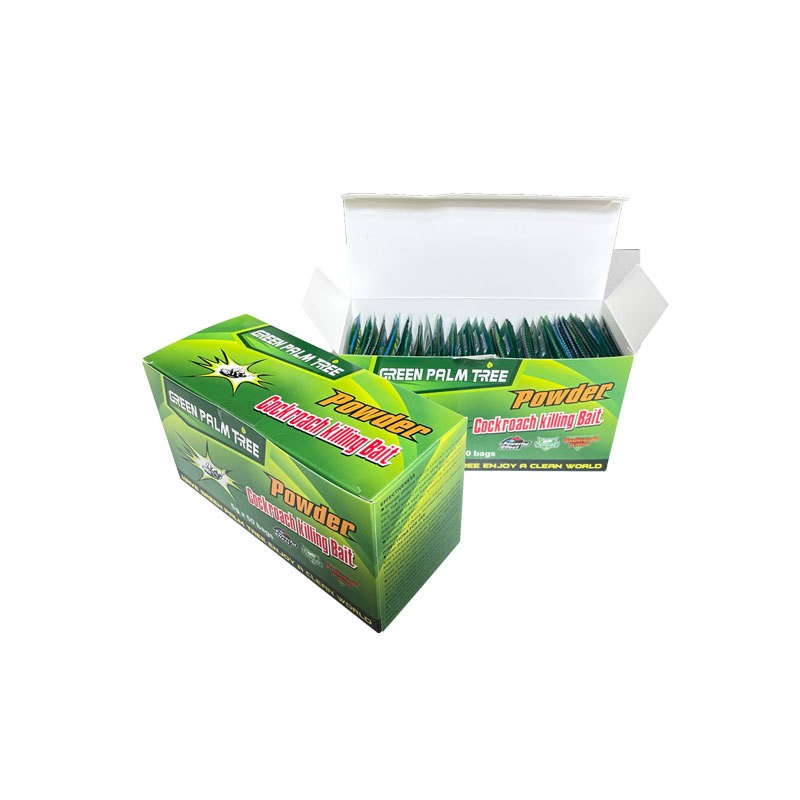
The listed custom product is cockroach poison and fly poison rather than a rat-killing formulation. Its stated minimum order quantity is 300,000 pieces, with a delivery period of approximately one month. The reported packaging workflow includes loading loose medication into a packaging machine, printing bags, filling the bags, placing them into middle boxes, and packing the finished containers.

Supplier and Order Evaluation Checklist
Before placing a custom order, compare suppliers against the actual warehouse requirement rather than relying only on a general product catalogue. Confirm the pest target, dimensions and materials, adhesive or bait specifications, intended placement, packaging format, labeling, regulatory documents, and after-sales support. Buyers should also verify whether the requested rat product is available for OEM or ODM production.
A structured quality-control process is important for large-volume pest-control orders. The stated inspection system includes checks for raw materials, production procedures, semi-finished goods, surface treatment, assembly, finished products, and packaging. These stages can help identify defects before shipment and provide a useful basis for supplier comparison.
Product, Production, and Logistics Comparison
| Selection Category | Relevant Information |
|---|---|
| Rodent solution | Sticky rat boards support monitoring and early interception along walls, beneath shelves, in power distribution rooms, and near assembly lines. |
| Additional rodent control | Sticky boards are described as being used frequently with rat bait stations, subject to site conditions and applicable rules. |
| Insect solution | Custom cockroach poison and fly poison are available with a stated MOQ of 300,000 pieces and a one-month delivery time. |
| Quality inspection | Inspection covers raw materials, production, semi-finished products, surface treatment, assembly, final goods, and packaging. |
| Purchasing models | Reported options include OEM, ODM, factory-direct supply, bulk manufacturing, flexible small-batch orders, and long-term cooperation. |
| Transportation | Truck, rail, sea, and air freight can be selected according to the order and delivery requirements. |
Frequently Asked Questions
Can cockroach and fly poison be used as the rat-control product?
No assumption should be made that an insect-control product is suitable for rodents. The listed products are identified as cockroach poison and fly poison. A warehouse requiring rat control should request a separate specification for sticky rat boards or another rat-specific solution.
Where should sticky rat boards be installed?
The supplied application information highlights warehouse walls, the bottoms of shelves, power distribution rooms, and workshop assembly lines. These locations can support routine monitoring and early interception. A site survey should determine the final number and placement of boards.
What details should be confirmed before ordering?
Confirm the target pest, product design, materials, quantity, MOQ, production lead time, packaging, labeling, inspection checkpoints, regulatory requirements, shipping method, and after-sales documentation. For the stated cockroach and fly poison product, the MOQ is 300,000 pieces and the delivery time is one month.
Conclusion
For warehouses facing heavy rodent pressure, begin with a rat-specific product and a placement plan covering walls, shelf bottoms, power distribution rooms, and assembly-line areas. Sticky rat boards can provide practical monitoring and early interception, while bait stations may be added where appropriate. Treat the listed cockroach and fly poison as a separate insect-control option unless the supplier confirms a rat-control specification.
Yiwu Jinli supports OEM, ODM, factory-direct supply, bulk production, flexible small-batch orders, and long-term supply cooperation. For technical details, custom specifications, or purchasing support, contact bob@jinwen-goods.com.
About Yiwu Jinli
Yiwu Jinli Commodity Co., Ltd., also known as Yiwu Jinli, was founded in 2010 and combines product research and development, manufacturing, and sales. The company operates independent workshops and production lines and reports a daily output of 80,000 units. Its product team provides pest-control product development together with OEM and ODM services. Yiwu Jinli also reports registered trademark and copyright certificates, including trademark certificate No. 15322289 and copyright certificate No. 黔作登字-2020-F-00118638. Export records include customers in India, Brazil, and Peru, with customer names undisclosed.

REPORT