







-
 Agriculture
-
 Health-Care
-
 Environment
-
 Construction-Real-Estate
-
 Tools-Hardware
-
 Home-Garden
-
 Furniture
-
 Luggage-Bags-Cases
-
 Medical-devices-Supplies
-
 Gifts-Crafts
-
 Sports-Entertainment
-
 Food-Beverage
-
 Vehicles-Transportation
-
 Power-Transmission
-
 Material-Handling
-
 Renewable-Energy
-
 Safety
-
 Testing-Instrument-Equipment
-
 Construction-Building-Machinery
-
 Pet-Supplies
-
 Personal-Care-Household-Cleaning
-
 Vehicle-Accessories-Electronics-Tools
-
 School-Office-Supplies
-
 Packaging-Printing
-
 Mother-Kids-Toys
-
 Business-Services
-
 Commercial-Equipment-Machinery
-
 Apparel-Accessories
-
 Security
-
 Shoes-Accessories
-
 Vehicle-Parts-Accessories
-
 Jewelry-Eyewear-Watches-Accessories
-
 Lights-Lighting
-
 Fabric-Textile-Raw-Material
-
 Fabrication-Services
-
 Industrial-Machinery
-
 Consumer-Electronics
-
 Electrical-Equipment-Supplies
-
 Electronic-Components-Accessories-Telecommunications
-
 Home-Appliances
-
 Beauty
-
 Chemicals
-
 Rubber-Plastics
-
 Metals-Alloys


























































































































































































































































































































































































































































































































































































- Masonry Materials
- Curtain Walls & Accessories
- Earthwork Products
- Fireproofing Materials
- Heat Insulation Materials
- Plastic Building Materials
- Building Boards
- Soundproofing Materials
- Timber
- Waterproofing Materials
- Balustrades & Handrails
- Bathroom & Kitchen
- Flooring & Accessories
- Tiles & Accessories
- Door, Window & Accessories
- Fireplaces & Stoves
- Floor Heating Systems & Parts
- Stairs & Stair Parts
- Ceilings
- Elevators & Escalators
- Stone
- Countertops, Vanity Tops & Table Tops
- Mosaics
- Metal Building Materials
- Multifunctional Materials
- Ladders & Scaffoldings
- Mouldings
- Corner Guards
- Decorative Films
- Formwork
- Building & Industrial Glass
- Other Construction & Real Estate
- Wallpapers/Wall panels
- HVAC System & Parts
- Outdoor Facilities
- Prefabricated Buildings
- Festive & Party Supplies
- Bathroom Products
- Household Sundries
- Rain Gear
- Garden Supplies
- Household Cleaning Tools & Accessories
- Lighters & Smoking Accessories
- Home Storage & Organization
- Household Scales
- Smart Home Improvement
- Home Textiles
- Kitchenware
- Drinkware & Accessories
- Dinnerware, Coffee & Wine
- Home Decor
- Golf
- Fitness & Body Building
- Amusement Park Facilities
- Billiards, Board Game,Coin Operated Games
- Musical Instruments
- Outdoor Affordable Luxury Sports
- Camping & Hiking
- Fishing
- Sports Safety&Rehabilitation
- Ball Sports Equipments
- Water Sports
- Winter Sports
- Luxury Travel Equipments
- Sports Shoes, Bags & Accessories
- Cycling
- Other Sports & Entertainment Products
- Artificial Grass&Sports Flooring&Sports Court Equipment
- Scooters
- Food Ingredients
- Honey & Honey Products
- Snacks
- Nuts & Kernels
- Seafood
- Plant & Animal Oil
- Beverages
- Fruit & Vegetable Products
- Frog & Escargot
- Bean Products
- Egg Products
- Dairy Products
- Seasonings & Condiments
- Canned Food
- Instant Food
- Baked Goods
- Other Food & Beverage
- Meat & Poultry
- Confectionery
- Grain Products
- Feminie Care
- Hair Care & Styling
- Body Care
- Hands & Feet Care
- Hygiene Products
- Men's Grooming
- Laundry Cleaning Supplies
- Travel Size & Gift Sets
- Room Deodorizers
- Other Personal Care Products
- Pest Control Products
- Special Household Cleaning
- Floor Cleaning
- Kitchen & Bathroom Cleaning
- Oral Care
- Bath Supplies
- Yellow Pages
- Correction Supplies
- Office Binding Supplies
- Office Cutting Supplies
- Board Erasers
- Office Adhesives & Tapes
- Education Supplies
- Pencil Cases & Bags
- Notebooks & Writing Pads
- File Folder Accessories
- Calendars
- Writing Accessories
- Commercial Office Supplies
- Pencil Sharpeners
- Pens
- Letter Pad/Paper
- Paper Envelopes
- Desk Organizers
- Pencils
- Markers & Highlighters
- Filing Products
- Art Supplies
- Easels
- Badge Holder & Accessories
- Office Paper
- Printer Supplies
- Book Covers
- Other Office & School Supplies
- Stationery Set
- Boards
- Clipboards
- Stamps
- Drafting Supplies
- Stencils
- Electronic Dictionary
- Books
- Map
- Magazines
- Calculators
- Baby & Toddler Toys
- Educational Toys
- Classic Toys
- Dress Up & Pretend Play
- Toy Vehicle
- Stuffed Animals & Plush Toys
- Outdoor Toys & Structures
- Balloons & Accessories
- Baby Food
- Children's Clothing
- Baby Supplies & Products
- Maternity Clothes
- Kids Shoes
- Baby Care
- Novelty & Gag Toys
- Dolls & Accessories
- Puzzle & Games
- Blocks & Model Building Toys
- Toddler Clothing
- Baby Clothing
- Kids' Luggage & Bags
- Arts, Crafts & DIY Toys
- Action & Toy Figures
- Baby Appliances
- Hobbies & Models
- Remote Control Toys
- Promotional Toys
- Pregnancy & Maternity
- Hygiene Products
- Kid's Textile&Bedding
- Novelty & Special Use
- Toy Weapons
- Baby Gifts
- Baby Storage & Organization
- Auto Drive Systems
- ATV/UTV Parts & Accessories
- Marine Parts & Accessories
- Other Auto Parts
- Trailer Parts & Accessories
- Auto Transmission Systems
- Train Parts & Accessories
- Universal Parts
- Railway Parts & Accessories
- Auto Brake Systems
- Aviation Parts & Accessories
- Truck Parts & Accessories
- Auto Suspension Systems
- Auto Lighting Systems
- New Energy Vehicle Parts & Accessories
- Auto Steering Systems
- Wheels, Tires & Accessories
- Bus Parts & Accessories
- Auto Performance Parts
- Cooling System
- Go-Kart & Kart Racer Parts & Accessories
- Air Conditioning Systems
- Heavy Duty Vehicle Parts & Accessories
- Auto Electrical Systems
- Auto Body Systems
- Auto Engine Systems
- Container Parts & Accessories
- Motorcycle Parts & Accessories
- Refrigeration & Heat Exchange Equipment
- Machine Tool Equipment
- Food & Beverage Machinery
- Agricultural Machinery & Equipment
- Apparel & Textile Machinery
- Chemical Machinery
- Packaging Machines
- Paper Production Machinery
- Plastic & Rubber Processing Machinery
- Industrial Robots
- Electronic Products Machinery
- Metal & Metallurgy Machinery
- Woodworking Machinery
- Home Product Manufacturing Machinery
- Machinery Accessories
- Environmental Machinery
- Machinery Service
- Electrical Equipment Manufacturing Machinery
- Industrial Compressors & Parts
- Tobacco & Cigarette Machinery
- Production Line
- Used Industrial Machinery
- Electronics Production Machinery
- Other Machinery & Industrial Equipment
- Camera, Photo & Accessories
- Portable Audio, Video & Accessories
- Television, Home Audio, Video & Accessories
- Video Games & Accessories
- Mobile Phone & Accessories
- Electronic Publications
- Earphone & Headphone & Accessories
- Speakers & Accessories
- Smart Electronics
- TV Receivers & Accessories
- Mobile Phone & Computer Repair Parts
- Chargers, Batteries & Power Supplies
- Used Electronics
- VR, AR, MR Hardware & Software
- Projectors & Presentation Equipments
- Other Consumer Electronics
- Cables & Commonly Used Accessories
- Computer Hardware & Software
- Displays, Signage and Optoelectronics
- Discrete Semiconductors
- Wireless & IoT Module and Products
- Telecommunications
- Connectors, Terminals & Accessories
- Development Boards, Electronic Modules and Kits
- Circuit Protection
- Sensors
- Isolators
- Audio Components and Products
- Integrated Circuits
- Power Supplies
- Relays
- RF, Microwave and RFID
- Electronic Accessories & Supplies
- Passive Components
- PCB & PCBA
- Air Quality Appliances
- Home Appliance Parts
- Heating & Cooling Appliances
- Small Kitchen Appliances
- Laundry Appliances
- Water Heaters
- Water Treatment Appliances
- Refrigerators & Freezers
- Personal Care & Beauty Appliances
- Major Kitchen Appliances
- Cleaning Appliances
- Second-hand Appliances
- Smart Home Appliances
- Other Home Appliances
- Energy Chemicals
- Inorganic Chemicals
- Basic Organic Chemicals
- Agrochemicals
- Admixture & Additives
- Catalysts & Chemical Auxiliary Agents
- Pigments & Dyestuff
- Coating & Paint
- Daily Chemicals
- Polymer
- Organic Intermediate
- Adhesives & Sealants
- Chemical Waste
- Biological Chemical Products
- Surface Treatment Chemicals
- Painting & Coating
- Chemical Reagents
- Flavor & Fragrance
- Non-Explosive Demolition Agents
- Other Chemicals
- Custom Chemical Services

How to Set Accurate Reorder Points for Crochet Hair Extensions
Setting a practical reorder point for crochet hair extensions requires more than counting total units in the warehouse. Stock levels should reflect actual demand for each texture, length, and color, the seven-day delivery period for ready-stock products, and an appropriate safety reserve. Customized texture, color, packaging, and private-label orders require a longer planning horizon based on the confirmed 15–30-day production schedule.
Reorder Point Essentials
A reliable inventory trigger should show when available stock is no longer enough to cover expected sales during replenishment and the additional units needed to manage uncertainty. The calculation should be performed separately for every important product variation instead of applying one average figure to the entire crochet hair extensions category.
- Measure sales independently for each texture, length, and color combination.
- Use seven days as the replenishment reference for products already in stock.
- Use the confirmed 15–30-day production period for customized orders.
- Set safety stock according to sales fluctuations, confirmed orders, quality holds, and replacement availability.
- Compare inventory requirements across crochet hairstyles, protective styling, salons, online retail, and wholesale channels.
How to Build the Calculation
1. Measure Demand by Product Variant
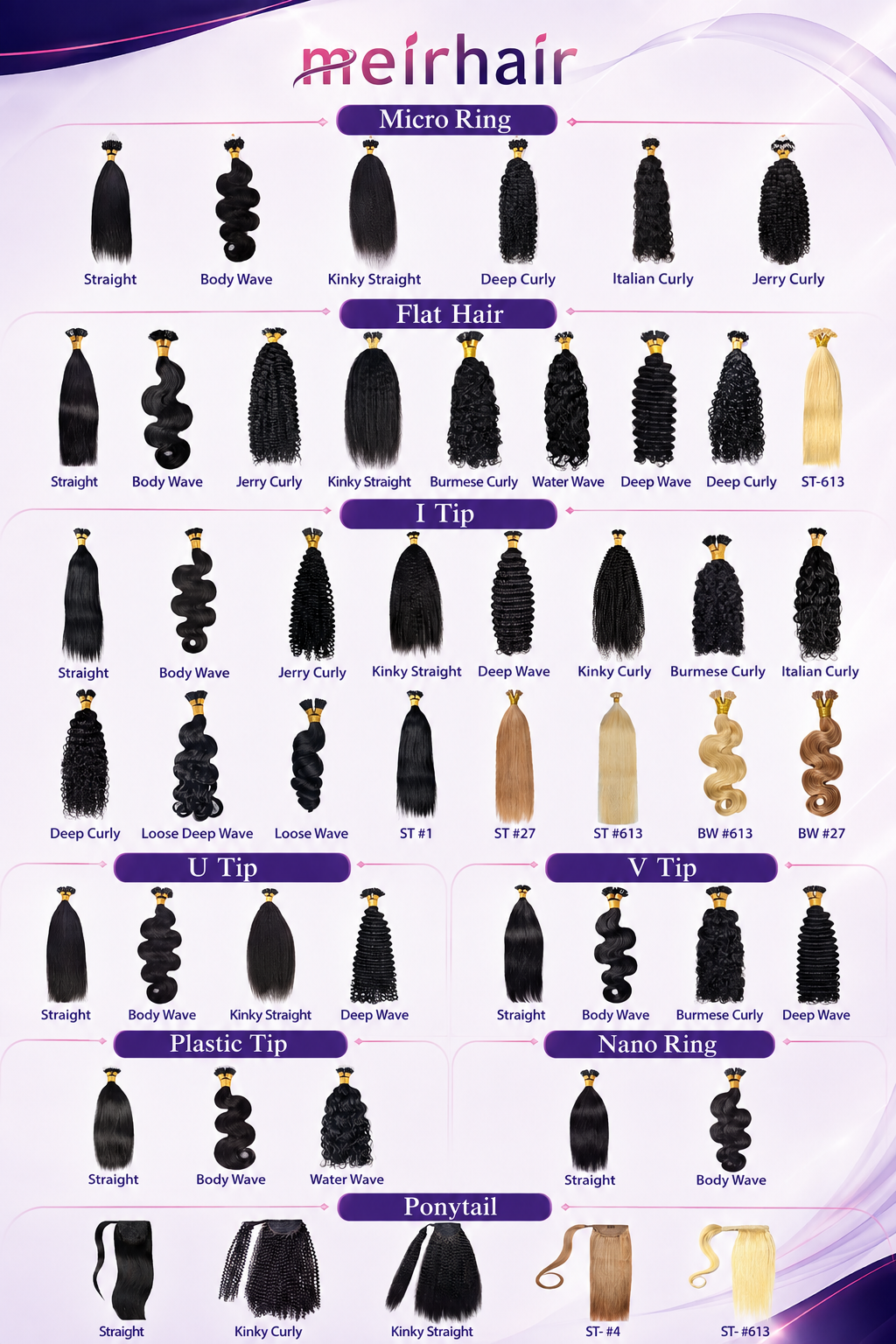
Customer preferences can vary substantially between crochet hair extension textures, so demand should be recorded at the SKU or variant level. Relevant MEIRHAIR textures include Deep Wave, Burmese Curly, Deep Curly, Loose Deep Wave, Straight, Loose Wave, Kinky Straight, Kinky Curly, Italian Curly, and Body Wave. Length and color should also be separated whenever buyers or stylists select those attributes independently.
For each variant, review recent sales, recurring wholesale orders, pending customer demand, and movement by sales channel. A texture that sells quickly in a braiding salon may move more slowly through an online retail channel. Combining these figures into a single category total can make fast-moving items appear adequately stocked while leaving slower or popular variants at the wrong inventory level.
2. Match the Lead Time to the Order Type
Ready-stock crochet hair extensions use the stated seven-day delivery time as the primary replenishment window. The reorder signal should be activated when usable inventory cannot cover the quantity expected to sell during those seven days plus the selected safety stock.
Customized products must be planned differently. Orders involving a special texture, color, package, label, or private-label specification generally require 15–30 days, depending on the style, quantity, and customization details. The confirmed production schedule for the specific order should replace the seven-day stock lead time when calculating the required coverage.
3. Count Only Usable Inventory
Warehouse quantity is not the same as sellable quantity. Inventory reserved for confirmed orders, held for quality review, damaged units, or products that do not match the customer’s required texture, length, or color should not be counted as immediately available stock.
Quality inspection covers texture, length, color, hair quality, and installation loops. Units should be added to available inventory only after they pass the relevant checks. Comparing accepted units with open orders helps prevent overstated stock figures and reduces the risk of promising products that are not yet ready for shipment.
Practical Reorder Point Formula
A simple operating model is:
Reorder point = expected demand during the replenishment period + safety stock
Before comparing this figure with warehouse quantities, subtract committed inventory and exclude units awaiting inspection. For ready-stock goods, the replenishment period is seven days. For customized goods, use the confirmed 15–30-day production window or the specific schedule provided for the order.
Safety stock should reflect the volatility of demand and the difficulty of replacing a particular variant. A widely ordered texture, color, or length may require a larger buffer than a slow-moving item. The reserve should also account for quality rejects, delayed transport, seasonal demand, pending wholesale orders, and the availability of replacement stock.
Inventory Planning by Business Use
MEIRHAIR human hair crochet extensions are designed for crochet installation and protective hairstyles. Inventory reviews can therefore include demand from braiding salons, African hair styling businesses, professional salon installation, online hair retailers, beauty supply distributors, and private-label hair brands. Installation suitability and texture selection are important planning dimensions alongside unit count.
Reported cooperation examples include a crochet human hair supply project for a beauty supply distributor in France. The application included crochet hairstyles, protective hairstyles, and professional salon installation, with customer feedback highlighting ease of installation and a broad texture range for salon and retail users. Another reported project supplied Boho braids to a United Kingdom braiding hair wholesaler, where several textures and lengths supported professional braiding services.
Reorder Treatment by Inventory Situation
| Inventory situation | Planning basis | Recommended action |
|---|---|---|
| Ready-stock crochet hair extensions | Expected variant demand during the seven-day delivery period plus safety stock | Deduct committed units and reorder when usable coverage falls below the calculated requirement |
| Customized texture or color | Demand during the confirmed 15–30-day customization period plus a suitable reserve | Verify the style, quantity, and customization specifications before releasing production |
| Inventory awaiting inspection | Excluded from immediately sellable stock | Release units only after texture, length, color, hair quality, and installation loop checks are complete |
| Private-label order | Demand coverage based on the confirmed packaging, branding, and production schedule | Align label and packaging requirements with the replenishment date |
| Bulk wholesale stock | Open wholesale orders, variant mix, order volume, destination, and transport plan | Assess international express, air freight, or sea freight according to the shipment requirements |
Frequently Asked Questions
What factors belong in a crochet hair extensions reorder point?
Include expected demand for the applicable replenishment period and a documented safety buffer. Use only stock that is available for sale, and remove confirmed allocations and units waiting for inspection. Track texture, length, and color separately whenever those characteristics influence purchasing decisions.
Can ready-stock and customized products share the same reorder point?
They should not. Ready-stock items use the stated seven-day delivery period, while customized orders generally require 15–30 days depending on the style, quantity, and requested modifications. The calculation should follow the confirmed conditions of each order.
How can a wholesaler avoid excess stock in slow-moving textures?
Review sales by texture, length, color, channel, and customer group. Set the safety buffer from observed demand instead of assigning the same quantity to every variant. Flexible small-batch purchasing and a minimum order quantity of one piece can also help reduce exposure to slow-moving inventory.
Conclusion
A realistic reorder point for crochet hair extensions combines variant-level sales data, the appropriate replenishment horizon, sellable inventory, open order commitments, inspection status, and a clearly defined safety reserve. Seven days is appropriate for ready-stock products, while customized texture, color, packaging, and private-label orders should follow their confirmed 15–30-day production schedule.
MEIRHAIR provides OEM and ODM customization, wholesale and bulk purchasing, private-label supply, ready-stock products, and flexible small-batch orders. Depending on the order and destination, shipping options include international express, air freight, sea freight, door-to-door delivery, and delivery through a customer-appointed freight forwarder. For technical assistance or supply support, contact sales@brazilianhairtop.com.
About Us
Guangzhou Ruiju E-Commerce Co., Ltd. operates MEIRHAIR, a professional human hair brand supplying human hair wigs, bundles, extensions, braiding hair, and customized hair solutions to global beauty markets. Its production capabilities support sample orders, small-batch customization, and bulk wholesale programs for wigs, bundles, braiding hair, and multiple extension systems. The company serves customers across North America, Europe, Africa, the Middle East, South America, Southeast Asia, and other international markets.
Reported cooperation projects include supply programs for wig wholesalers, beauty supply distributors, braiding hair wholesalers, and hair manufacturers in several countries.

REPORT