







-
 Agriculture
-
 Health-Care
-
 Environment
-
 Construction-Real-Estate
-
 Tools-Hardware
-
 Home-Garden
-
 Furniture
-
 Luggage-Bags-Cases
-
 Medical-devices-Supplies
-
 Gifts-Crafts
-
 Sports-Entertainment
-
 Food-Beverage
-
 Vehicles-Transportation
-
 Power-Transmission
-
 Material-Handling
-
 Renewable-Energy
-
 Safety
-
 Testing-Instrument-Equipment
-
 Construction-Building-Machinery
-
 Pet-Supplies
-
 Personal-Care-Household-Cleaning
-
 Vehicle-Accessories-Electronics-Tools
-
 School-Office-Supplies
-
 Packaging-Printing
-
 Mother-Kids-Toys
-
 Business-Services
-
 Commercial-Equipment-Machinery
-
 Apparel-Accessories
-
 Security
-
 Shoes-Accessories
-
 Vehicle-Parts-Accessories
-
 Jewelry-Eyewear-Watches-Accessories
-
 Lights-Lighting
-
 Fabric-Textile-Raw-Material
-
 Fabrication-Services
-
 Industrial-Machinery
-
 Consumer-Electronics
-
 Electrical-Equipment-Supplies
-
 Electronic-Components-Accessories-Telecommunications
-
 Home-Appliances
-
 Beauty
-
 Chemicals
-
 Rubber-Plastics
-
 Metals-Alloys


























































































































































































































































































































































































































































































































































































- Masonry Materials
- Curtain Walls & Accessories
- Earthwork Products
- Fireproofing Materials
- Heat Insulation Materials
- Plastic Building Materials
- Building Boards
- Soundproofing Materials
- Timber
- Waterproofing Materials
- Balustrades & Handrails
- Bathroom & Kitchen
- Flooring & Accessories
- Tiles & Accessories
- Door, Window & Accessories
- Fireplaces & Stoves
- Floor Heating Systems & Parts
- Stairs & Stair Parts
- Ceilings
- Elevators & Escalators
- Stone
- Countertops, Vanity Tops & Table Tops
- Mosaics
- Metal Building Materials
- Multifunctional Materials
- Ladders & Scaffoldings
- Mouldings
- Corner Guards
- Decorative Films
- Formwork
- Building & Industrial Glass
- Other Construction & Real Estate
- Wallpapers/Wall panels
- HVAC System & Parts
- Outdoor Facilities
- Prefabricated Buildings
- Festive & Party Supplies
- Bathroom Products
- Household Sundries
- Rain Gear
- Garden Supplies
- Household Cleaning Tools & Accessories
- Lighters & Smoking Accessories
- Home Storage & Organization
- Household Scales
- Smart Home Improvement
- Home Textiles
- Kitchenware
- Drinkware & Accessories
- Dinnerware, Coffee & Wine
- Home Decor
- Golf
- Fitness & Body Building
- Amusement Park Facilities
- Billiards, Board Game,Coin Operated Games
- Musical Instruments
- Outdoor Affordable Luxury Sports
- Camping & Hiking
- Fishing
- Sports Safety&Rehabilitation
- Ball Sports Equipments
- Water Sports
- Winter Sports
- Luxury Travel Equipments
- Sports Shoes, Bags & Accessories
- Cycling
- Other Sports & Entertainment Products
- Artificial Grass&Sports Flooring&Sports Court Equipment
- Scooters
- Food Ingredients
- Honey & Honey Products
- Snacks
- Nuts & Kernels
- Seafood
- Plant & Animal Oil
- Beverages
- Fruit & Vegetable Products
- Frog & Escargot
- Bean Products
- Egg Products
- Dairy Products
- Seasonings & Condiments
- Canned Food
- Instant Food
- Baked Goods
- Other Food & Beverage
- Meat & Poultry
- Confectionery
- Grain Products
- Feminie Care
- Hair Care & Styling
- Body Care
- Hands & Feet Care
- Hygiene Products
- Men's Grooming
- Laundry Cleaning Supplies
- Travel Size & Gift Sets
- Room Deodorizers
- Other Personal Care Products
- Pest Control Products
- Special Household Cleaning
- Floor Cleaning
- Kitchen & Bathroom Cleaning
- Oral Care
- Bath Supplies
- Yellow Pages
- Correction Supplies
- Office Binding Supplies
- Office Cutting Supplies
- Board Erasers
- Office Adhesives & Tapes
- Education Supplies
- Pencil Cases & Bags
- Notebooks & Writing Pads
- File Folder Accessories
- Calendars
- Writing Accessories
- Commercial Office Supplies
- Pencil Sharpeners
- Pens
- Letter Pad/Paper
- Paper Envelopes
- Desk Organizers
- Pencils
- Markers & Highlighters
- Filing Products
- Art Supplies
- Easels
- Badge Holder & Accessories
- Office Paper
- Printer Supplies
- Book Covers
- Other Office & School Supplies
- Stationery Set
- Boards
- Clipboards
- Stamps
- Drafting Supplies
- Stencils
- Electronic Dictionary
- Books
- Map
- Magazines
- Calculators
- Baby & Toddler Toys
- Educational Toys
- Classic Toys
- Dress Up & Pretend Play
- Toy Vehicle
- Stuffed Animals & Plush Toys
- Outdoor Toys & Structures
- Balloons & Accessories
- Baby Food
- Children's Clothing
- Baby Supplies & Products
- Maternity Clothes
- Kids Shoes
- Baby Care
- Novelty & Gag Toys
- Dolls & Accessories
- Puzzle & Games
- Blocks & Model Building Toys
- Toddler Clothing
- Baby Clothing
- Kids' Luggage & Bags
- Arts, Crafts & DIY Toys
- Action & Toy Figures
- Baby Appliances
- Hobbies & Models
- Remote Control Toys
- Promotional Toys
- Pregnancy & Maternity
- Hygiene Products
- Kid's Textile&Bedding
- Novelty & Special Use
- Toy Weapons
- Baby Gifts
- Baby Storage & Organization
- Auto Drive Systems
- ATV/UTV Parts & Accessories
- Marine Parts & Accessories
- Other Auto Parts
- Trailer Parts & Accessories
- Auto Transmission Systems
- Train Parts & Accessories
- Universal Parts
- Railway Parts & Accessories
- Auto Brake Systems
- Aviation Parts & Accessories
- Truck Parts & Accessories
- Auto Suspension Systems
- Auto Lighting Systems
- New Energy Vehicle Parts & Accessories
- Auto Steering Systems
- Wheels, Tires & Accessories
- Bus Parts & Accessories
- Auto Performance Parts
- Cooling System
- Go-Kart & Kart Racer Parts & Accessories
- Air Conditioning Systems
- Heavy Duty Vehicle Parts & Accessories
- Auto Electrical Systems
- Auto Body Systems
- Auto Engine Systems
- Container Parts & Accessories
- Motorcycle Parts & Accessories
- Refrigeration & Heat Exchange Equipment
- Machine Tool Equipment
- Food & Beverage Machinery
- Agricultural Machinery & Equipment
- Apparel & Textile Machinery
- Chemical Machinery
- Packaging Machines
- Paper Production Machinery
- Plastic & Rubber Processing Machinery
- Industrial Robots
- Electronic Products Machinery
- Metal & Metallurgy Machinery
- Woodworking Machinery
- Home Product Manufacturing Machinery
- Machinery Accessories
- Environmental Machinery
- Machinery Service
- Electrical Equipment Manufacturing Machinery
- Industrial Compressors & Parts
- Tobacco & Cigarette Machinery
- Production Line
- Used Industrial Machinery
- Electronics Production Machinery
- Other Machinery & Industrial Equipment
- Camera, Photo & Accessories
- Portable Audio, Video & Accessories
- Television, Home Audio, Video & Accessories
- Video Games & Accessories
- Mobile Phone & Accessories
- Electronic Publications
- Earphone & Headphone & Accessories
- Speakers & Accessories
- Smart Electronics
- TV Receivers & Accessories
- Mobile Phone & Computer Repair Parts
- Chargers, Batteries & Power Supplies
- Used Electronics
- VR, AR, MR Hardware & Software
- Projectors & Presentation Equipments
- Other Consumer Electronics
- Cables & Commonly Used Accessories
- Computer Hardware & Software
- Displays, Signage and Optoelectronics
- Discrete Semiconductors
- Wireless & IoT Module and Products
- Telecommunications
- Connectors, Terminals & Accessories
- Development Boards, Electronic Modules and Kits
- Circuit Protection
- Sensors
- Isolators
- Audio Components and Products
- Integrated Circuits
- Power Supplies
- Relays
- RF, Microwave and RFID
- Electronic Accessories & Supplies
- Passive Components
- PCB & PCBA
- Air Quality Appliances
- Home Appliance Parts
- Heating & Cooling Appliances
- Small Kitchen Appliances
- Laundry Appliances
- Water Heaters
- Water Treatment Appliances
- Refrigerators & Freezers
- Personal Care & Beauty Appliances
- Major Kitchen Appliances
- Cleaning Appliances
- Second-hand Appliances
- Smart Home Appliances
- Other Home Appliances
- Energy Chemicals
- Inorganic Chemicals
- Basic Organic Chemicals
- Agrochemicals
- Admixture & Additives
- Catalysts & Chemical Auxiliary Agents
- Pigments & Dyestuff
- Coating & Paint
- Daily Chemicals
- Polymer
- Organic Intermediate
- Adhesives & Sealants
- Chemical Waste
- Biological Chemical Products
- Surface Treatment Chemicals
- Painting & Coating
- Chemical Reagents
- Flavor & Fragrance
- Non-Explosive Demolition Agents
- Other Chemicals
- Custom Chemical Services

How to Specify Plastic Injection Tooling for Reliable Quality at Production Scale
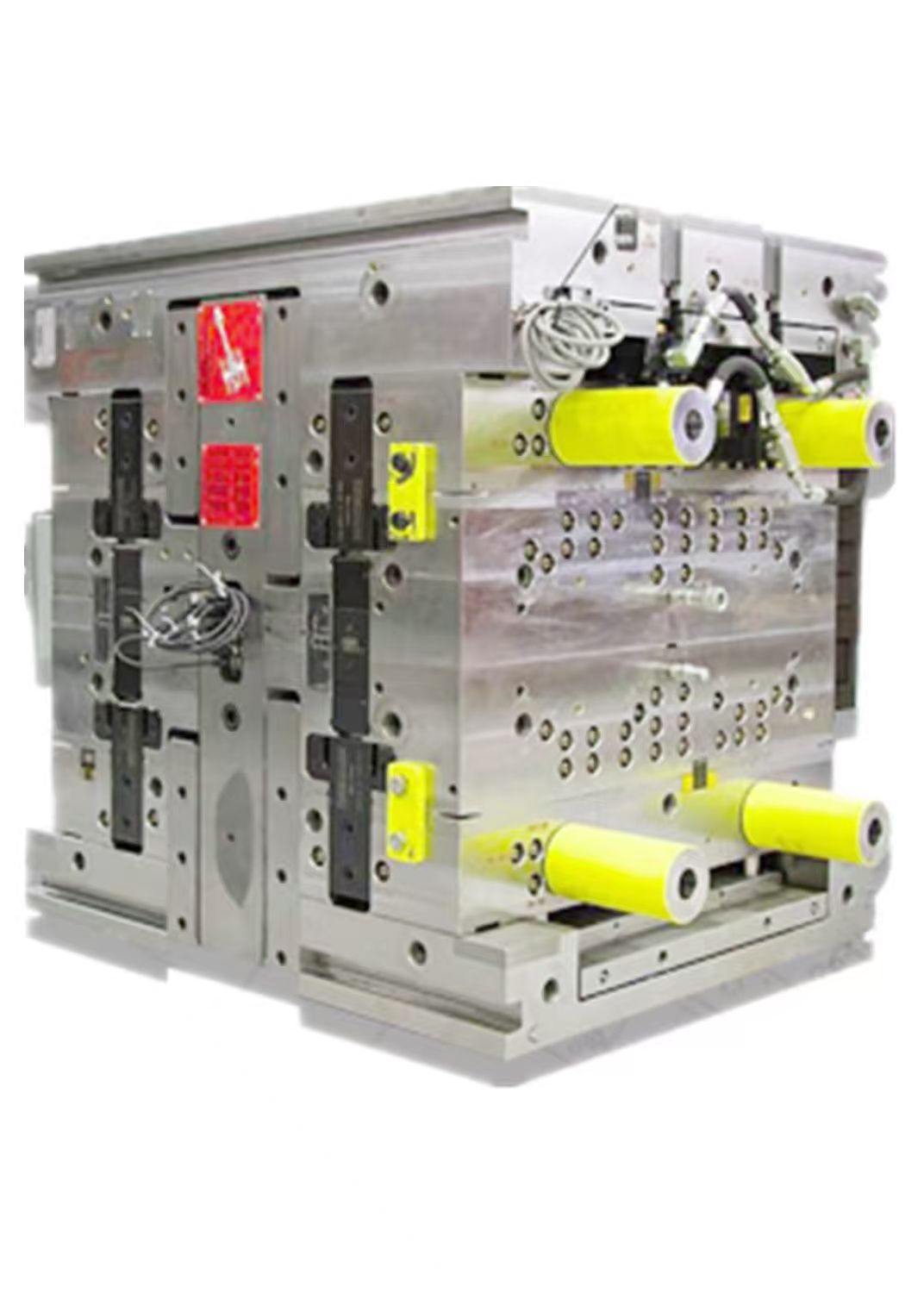
Reliable part quality across high-volume production depends on more than the mold design alone. A complete plastic tooling specification should define the mold and cavity steel, mold construction, runner system, dimensional targets, expected service life, inspection plan, and trial process. Longterm's custom plastic injection tooling is available with S50C or P20 mold bases, 718H, 1.2738, or S136 cavity steel, cold or hot runner options, a stated tolerance of +/-0.02 mm, and an expected service life of 50,000 to 1,000,000 shots.
What to Include in a Scale-Ready Tooling Specification
- Match the mold base and cavity steel to the required wear resistance, cosmetic finish, part geometry, and production quantity.
- Choose a cold runner or hot runner system based on the resin, gate design, cycle requirements, and overall tooling strategy.
- Define mold trials, dimensional measurements, sample approval, and final pre-shipment inspection before production release.
- Evaluate whether the supplier has relevant experience in consumer electronics, home appliances, automotive components, and industrial equipment.
Material and Construction Considerations
Steel selection has a direct effect on mold durability, dimensional stability, polishability, and the quality of the molded surface. Longterm identifies S50C or P20 for mold bases and 718H, 1.2738, or S136 for cavity components. The appropriate grade should be selected in relation to the product design, appearance standards, resin characteristics, and projected shot count. Treating steel selection as a separate purchasing detail can create performance gaps between the approved part and long-term production output.
Runner System and Process Definition
Runner configuration should be agreed before the mold enters detailed design. Both cold runner and hot runner arrangements are supported. The tooling record should identify the selected runner type alongside the resin, gate position, target part, molding machine conditions, and expected cycle requirements. Recording these variables makes it easier to compare trial results with the approved reference sample and to investigate variation later.
Validation, Measurement, and Production Release
The stated +/-0.02 mm tolerance can be used as a reference for reviewing critical dimensions, but the drawing and application requirements should determine the actual acceptance criteria. A controlled validation process should include mold trial testing, dimensional inspection, sample confirmation, and complete pre-shipment inspection. Measurement results and the approved samples should be associated with the final tooling revision so that production teams have a clear baseline.
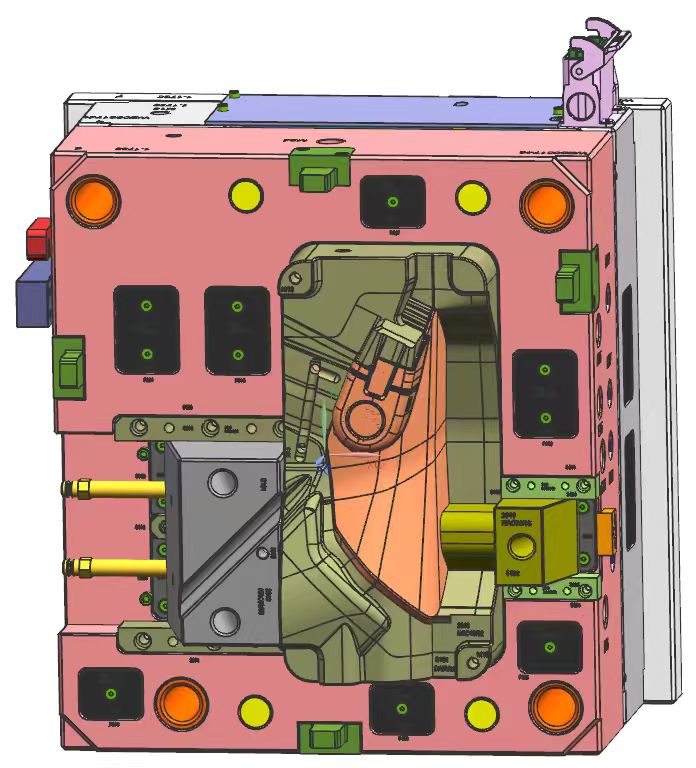
Longterm states a mold life range of 50,000 to 1,000,000 shots. The practical result will depend on steel grade, part complexity, molding parameters, material choice, maintenance frequency, and the operating environment. The company also lists online technical assistance, mold maintenance guidance, and spare parts supply after delivery.
Longterm's ISO 9001:2015 certification covers the design, manufacture, and sale of precision molds, as well as the sale of plastic products. Its reported project experience includes electronic housing tooling for an Italian manufacturer, double-shot overmolding tooling for a French product brand, home appliance tooling for a US brand distributor, and an industrial plastic component mold for an Australian manufacturer.
Specification Comparison
| Tooling area | Available specification and quality significance |
|---|---|
| Mold base and cavity material | S50C or P20 mold base with 718H, 1.2738, or S136 cavity steel. The selected grades should be recorded in the tooling documentation. |
| Runner arrangement | Cold runner and hot runner configurations are available. The selected system should be checked during mold trials. |
| Dimensional control | A stated +/-0.02 mm tolerance reference is supported by dimensional inspection and sample verification. |
| Expected service life | The stated range is 50,000 to 1,000,000 shots, subject to design, materials, molding conditions, and maintenance. |
| Quality and after-sales support | Services include mold trials, dimensional checks, pre-shipment inspection, online technical support, maintenance guidance, and spare parts supply. |
Frequently Asked Questions
Which materials should be listed in a plastic tooling specification?
The listed options are S50C or P20 for the mold base and 718H, 1.2738, or S136 for cavity steel. Final selection should account for product requirements, cosmetic expectations, resin behavior, and planned production volume.
What process confirms that a mold can make repeatable parts?
Set the dimensional requirements, run a mold trial, inspect key features, approve the resulting samples, and complete a pre-shipment inspection. Keeping the samples and measurement records with the final tool revision provides a traceable production reference.
What support can be requested after mold delivery?
Longterm lists online technical support, maintenance recommendations, and spare parts supply. Its service models include OEM custom plastic injection molds, mold making combined with injection molding, precision and overmolding projects, and mold development followed by mass production.
Conclusion
Before approving plastic injection tooling for volume production, document the steel grades, runner configuration, critical tolerance targets, expected 50,000 to 1,000,000-shot life, trial method, inspection requirements, and sample approval process. For programs that combine tooling and molding, Longterm lists mold delivery in 25 to 35 days and mass production in 7 to 15 days after sample approval under its mold development and plastic injection mass production model. Its ISO 9001:2015 certification and reported experience in electronics, appliances, and industrial parts provide additional information for supplier assessment. For technical assistance or project discussions, contact rogerluo@longterm-mold.com.
About Longterm
Longterm Manufacturing Solutions Limited, also known as Longterm Mold, was established in 2010 and supplies mold manufacturing services to customers in the United States, Europe, Australia, and other international markets. Its team includes 5 R&D engineers focused on injection mold structural design, precision CNC components, sample validation, and manufacturing process improvement. The company reports a monthly output of 15 to 20 injection molds and tens of thousands of precision CNC-machined parts. It is ISO 9001:2015 certified and serves customers across several industries.

REPORT