







-
 Agriculture
-
 Health-Care
-
 Environment
-
 Construction-Real-Estate
-
 Tools-Hardware
-
 Home-Garden
-
 Furniture
-
 Luggage-Bags-Cases
-
 Medical-devices-Supplies
-
 Gifts-Crafts
-
 Sports-Entertainment
-
 Food-Beverage
-
 Vehicles-Transportation
-
 Power-Transmission
-
 Material-Handling
-
 Renewable-Energy
-
 Safety
-
 Testing-Instrument-Equipment
-
 Construction-Building-Machinery
-
 Pet-Supplies
-
 Personal-Care-Household-Cleaning
-
 Vehicle-Accessories-Electronics-Tools
-
 School-Office-Supplies
-
 Packaging-Printing
-
 Mother-Kids-Toys
-
 Business-Services
-
 Commercial-Equipment-Machinery
-
 Apparel-Accessories
-
 Security
-
 Shoes-Accessories
-
 Vehicle-Parts-Accessories
-
 Jewelry-Eyewear-Watches-Accessories
-
 Lights-Lighting
-
 Fabric-Textile-Raw-Material
-
 Fabrication-Services
-
 Industrial-Machinery
-
 Consumer-Electronics
-
 Electrical-Equipment-Supplies
-
 Electronic-Components-Accessories-Telecommunications
-
 Home-Appliances
-
 Beauty
-
 Chemicals
-
 Rubber-Plastics
-
 Metals-Alloys


























































































































































































































































































































































































































































































































































































- Masonry Materials
- Curtain Walls & Accessories
- Earthwork Products
- Fireproofing Materials
- Heat Insulation Materials
- Plastic Building Materials
- Building Boards
- Soundproofing Materials
- Timber
- Waterproofing Materials
- Balustrades & Handrails
- Bathroom & Kitchen
- Flooring & Accessories
- Tiles & Accessories
- Door, Window & Accessories
- Fireplaces & Stoves
- Floor Heating Systems & Parts
- Stairs & Stair Parts
- Ceilings
- Elevators & Escalators
- Stone
- Countertops, Vanity Tops & Table Tops
- Mosaics
- Metal Building Materials
- Multifunctional Materials
- Ladders & Scaffoldings
- Mouldings
- Corner Guards
- Decorative Films
- Formwork
- Building & Industrial Glass
- Other Construction & Real Estate
- Wallpapers/Wall panels
- HVAC System & Parts
- Outdoor Facilities
- Prefabricated Buildings
- Festive & Party Supplies
- Bathroom Products
- Household Sundries
- Rain Gear
- Garden Supplies
- Household Cleaning Tools & Accessories
- Lighters & Smoking Accessories
- Home Storage & Organization
- Household Scales
- Smart Home Improvement
- Home Textiles
- Kitchenware
- Drinkware & Accessories
- Dinnerware, Coffee & Wine
- Home Decor
- Golf
- Fitness & Body Building
- Amusement Park Facilities
- Billiards, Board Game,Coin Operated Games
- Musical Instruments
- Outdoor Affordable Luxury Sports
- Camping & Hiking
- Fishing
- Sports Safety&Rehabilitation
- Ball Sports Equipments
- Water Sports
- Winter Sports
- Luxury Travel Equipments
- Sports Shoes, Bags & Accessories
- Cycling
- Other Sports & Entertainment Products
- Artificial Grass&Sports Flooring&Sports Court Equipment
- Scooters
- Food Ingredients
- Honey & Honey Products
- Snacks
- Nuts & Kernels
- Seafood
- Plant & Animal Oil
- Beverages
- Fruit & Vegetable Products
- Frog & Escargot
- Bean Products
- Egg Products
- Dairy Products
- Seasonings & Condiments
- Canned Food
- Instant Food
- Baked Goods
- Other Food & Beverage
- Meat & Poultry
- Confectionery
- Grain Products
- Feminie Care
- Hair Care & Styling
- Body Care
- Hands & Feet Care
- Hygiene Products
- Men's Grooming
- Laundry Cleaning Supplies
- Travel Size & Gift Sets
- Room Deodorizers
- Other Personal Care Products
- Pest Control Products
- Special Household Cleaning
- Floor Cleaning
- Kitchen & Bathroom Cleaning
- Oral Care
- Bath Supplies
- Yellow Pages
- Correction Supplies
- Office Binding Supplies
- Office Cutting Supplies
- Board Erasers
- Office Adhesives & Tapes
- Education Supplies
- Pencil Cases & Bags
- Notebooks & Writing Pads
- File Folder Accessories
- Calendars
- Writing Accessories
- Commercial Office Supplies
- Pencil Sharpeners
- Pens
- Letter Pad/Paper
- Paper Envelopes
- Desk Organizers
- Pencils
- Markers & Highlighters
- Filing Products
- Art Supplies
- Easels
- Badge Holder & Accessories
- Office Paper
- Printer Supplies
- Book Covers
- Other Office & School Supplies
- Stationery Set
- Boards
- Clipboards
- Stamps
- Drafting Supplies
- Stencils
- Electronic Dictionary
- Books
- Map
- Magazines
- Calculators
- Baby & Toddler Toys
- Educational Toys
- Classic Toys
- Dress Up & Pretend Play
- Toy Vehicle
- Stuffed Animals & Plush Toys
- Outdoor Toys & Structures
- Balloons & Accessories
- Baby Food
- Children's Clothing
- Baby Supplies & Products
- Maternity Clothes
- Kids Shoes
- Baby Care
- Novelty & Gag Toys
- Dolls & Accessories
- Puzzle & Games
- Blocks & Model Building Toys
- Toddler Clothing
- Baby Clothing
- Kids' Luggage & Bags
- Arts, Crafts & DIY Toys
- Action & Toy Figures
- Baby Appliances
- Hobbies & Models
- Remote Control Toys
- Promotional Toys
- Pregnancy & Maternity
- Hygiene Products
- Kid's Textile&Bedding
- Novelty & Special Use
- Toy Weapons
- Baby Gifts
- Baby Storage & Organization
- Auto Drive Systems
- ATV/UTV Parts & Accessories
- Marine Parts & Accessories
- Other Auto Parts
- Trailer Parts & Accessories
- Auto Transmission Systems
- Train Parts & Accessories
- Universal Parts
- Railway Parts & Accessories
- Auto Brake Systems
- Aviation Parts & Accessories
- Truck Parts & Accessories
- Auto Suspension Systems
- Auto Lighting Systems
- New Energy Vehicle Parts & Accessories
- Auto Steering Systems
- Wheels, Tires & Accessories
- Bus Parts & Accessories
- Auto Performance Parts
- Cooling System
- Go-Kart & Kart Racer Parts & Accessories
- Air Conditioning Systems
- Heavy Duty Vehicle Parts & Accessories
- Auto Electrical Systems
- Auto Body Systems
- Auto Engine Systems
- Container Parts & Accessories
- Motorcycle Parts & Accessories
- Refrigeration & Heat Exchange Equipment
- Machine Tool Equipment
- Food & Beverage Machinery
- Agricultural Machinery & Equipment
- Apparel & Textile Machinery
- Chemical Machinery
- Packaging Machines
- Paper Production Machinery
- Plastic & Rubber Processing Machinery
- Industrial Robots
- Electronic Products Machinery
- Metal & Metallurgy Machinery
- Woodworking Machinery
- Home Product Manufacturing Machinery
- Machinery Accessories
- Environmental Machinery
- Machinery Service
- Electrical Equipment Manufacturing Machinery
- Industrial Compressors & Parts
- Tobacco & Cigarette Machinery
- Production Line
- Used Industrial Machinery
- Electronics Production Machinery
- Other Machinery & Industrial Equipment
- Camera, Photo & Accessories
- Portable Audio, Video & Accessories
- Television, Home Audio, Video & Accessories
- Video Games & Accessories
- Mobile Phone & Accessories
- Electronic Publications
- Earphone & Headphone & Accessories
- Speakers & Accessories
- Smart Electronics
- TV Receivers & Accessories
- Mobile Phone & Computer Repair Parts
- Chargers, Batteries & Power Supplies
- Used Electronics
- VR, AR, MR Hardware & Software
- Projectors & Presentation Equipments
- Other Consumer Electronics
- Cables & Commonly Used Accessories
- Computer Hardware & Software
- Displays, Signage and Optoelectronics
- Discrete Semiconductors
- Wireless & IoT Module and Products
- Telecommunications
- Connectors, Terminals & Accessories
- Development Boards, Electronic Modules and Kits
- Circuit Protection
- Sensors
- Isolators
- Audio Components and Products
- Integrated Circuits
- Power Supplies
- Relays
- RF, Microwave and RFID
- Electronic Accessories & Supplies
- Passive Components
- PCB & PCBA
- Air Quality Appliances
- Home Appliance Parts
- Heating & Cooling Appliances
- Small Kitchen Appliances
- Laundry Appliances
- Water Heaters
- Water Treatment Appliances
- Refrigerators & Freezers
- Personal Care & Beauty Appliances
- Major Kitchen Appliances
- Cleaning Appliances
- Second-hand Appliances
- Smart Home Appliances
- Other Home Appliances
- Energy Chemicals
- Inorganic Chemicals
- Basic Organic Chemicals
- Agrochemicals
- Admixture & Additives
- Catalysts & Chemical Auxiliary Agents
- Pigments & Dyestuff
- Coating & Paint
- Daily Chemicals
- Polymer
- Organic Intermediate
- Adhesives & Sealants
- Chemical Waste
- Biological Chemical Products
- Surface Treatment Chemicals
- Painting & Coating
- Chemical Reagents
- Flavor & Fragrance
- Non-Explosive Demolition Agents
- Other Chemicals
- Custom Chemical Services

How to Spot Post-Payment Risks When Choosing a Sliding Door Supplier
Paying a deposit for Sliding doors is common in custom manufacturing, but buyers should make sure the supplier’s commercial documents, production arrangements, and communication process are consistent before releasing funds. A seller is not automatically unreliable because it requests advance payment; however, unclear terms, missing quality records, changing account details, or evasive responses can indicate elevated post-payment risk.
Key Checks Before Sending Payment
- Obtain written payment conditions covering the deposit percentage, remaining balance, due dates, and approved payment method.
- Confirm the exact Sliding door specification, including profiles, glass, hardware, seals, finishes, packaging, and project application.
- Request evidence of production inspection, material testing, quality-control procedures, and expected manufacturing milestones.
- Verify delivery timing, loading arrangements, transport method, and the supplier contact responsible for the order.
- Review applicable certificates and ensure they relate to the offered product or production facility.
Start With a Complete Order Record
A dependable Sliding door purchase process should connect every stage of the transaction, from quotation and technical confirmation through production, inspection, packing, and shipment. Before payment, the seller should be able to provide a written record explaining what will be manufactured, when it will be inspected, how it will be packed, and how it will be delivered.
When a supplier asks for money before providing these connected details, the buyer has limited ability to compare the eventual goods with the original agreement. Differences between the quotation, product configuration, deposit request, and delivery plan should be resolved in writing rather than accepted through verbal assurances.
Payment Requests That Deserve Extra Review
Payment terms are one of the clearest pre-payment control points. The supplied business information lists T/T arrangements for aluminium windows and doors requiring 50% D/P before manufacturing, with the balance paid before loading; sight L/C is also listed as an option. These terms should remain stable throughout the negotiation and order-confirmation process.
Buyers should pause and verify the transaction if the requested deposit changes unexpectedly, bank details are replaced without formal notice, or the balance deadline differs from the written agreement. Such inconsistencies do not prove that a supplier will disappear after payment, but they should be clarified before any transfer is made.
Verify Quality Controls, Not Just General Claims
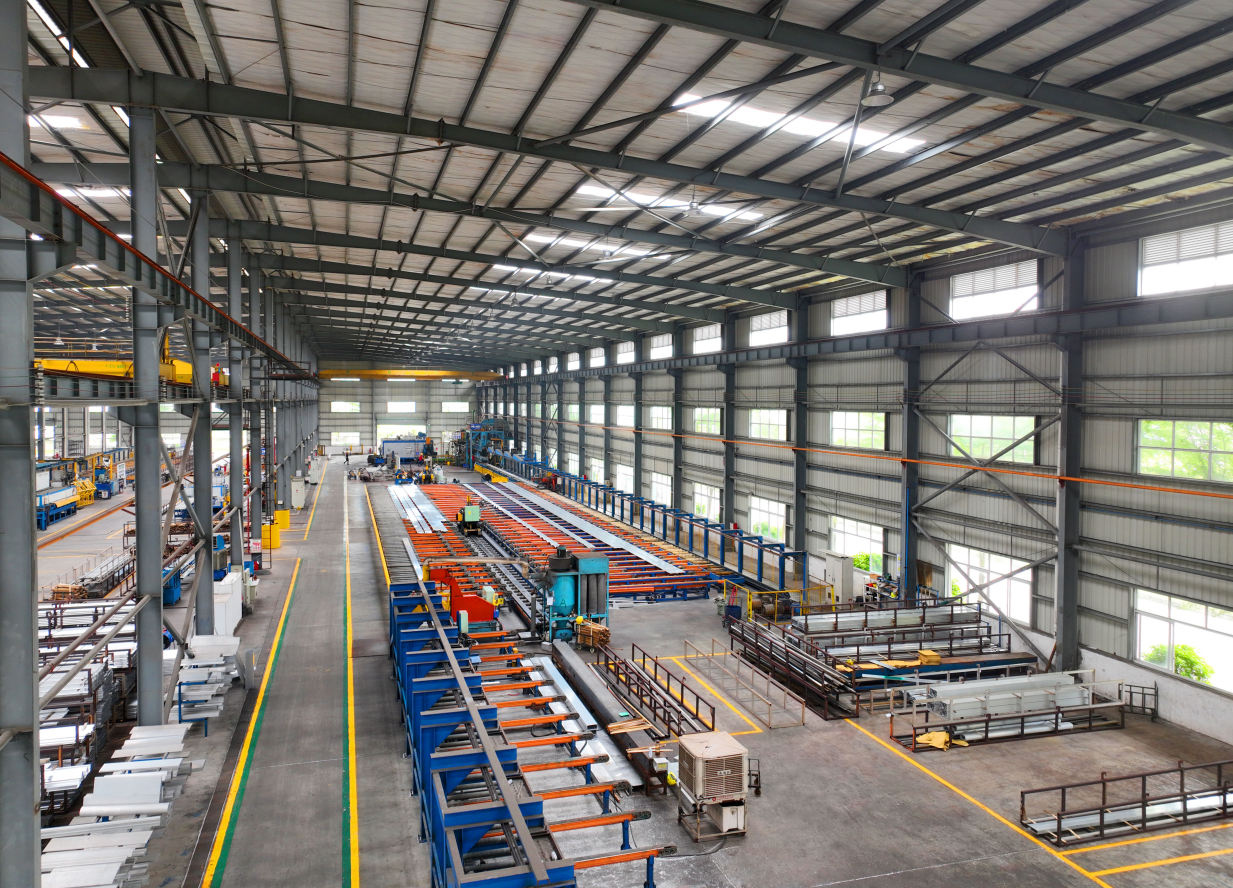
Reliable quality evidence is tied to identifiable production procedures. The supplied information refers to 100% production-line inspection, laboratory sampling and testing, and incoming raw-material inspection. A supplier should be able to explain how these checks apply to the specific Sliding door order and what documents can be provided during or after production.
The listed credentials include SIRIM, Qualicoat, SGS, a Laboratory Accreditation Certificate with CNAS L 10434, and a Quality Management System Certificate for GB/T 19001-2016/ISO 9001:2015. Buyers should request relevant supporting records instead of relying only on certificate names in marketing materials. If the seller cannot identify its inspection process or provide traceable documentation, the buyer has less visibility into execution quality.

Match Delivery Promises With Operating Evidence
Delivery commitments should be supported by a realistic production and shipping plan. The supplied business model states a 15-20 day delivery period, monthly capacity of 17,000 tons, and sea freight shipping for long-shaped materials. Before paying, ask for the estimated production completion date, inspection timing, packaging details, loading plan, and shipping arrangement for the actual order.
Customer feedback from hotel, office, residential, and building projects refers to stable production scheduling, protected logistics packaging, transparent quotations, and responsive service. These references can be useful supporting evidence, but they should not replace current order documents, direct verification, and a clear contractual record.
Communication Is Part of Risk Control
Consistent communication helps buyers monitor whether the commercial agreement matches the manufacturing plan. A qualified supplier should assign a stable contact person and respond clearly to questions about aluminium profiles, glass, hardware, sealing, packing, lead time, and shipment.
Warning signs include repeated delays in answering basic specification questions, refusal to confirm order details in writing, pressure to transfer funds before documentation is complete, or contact information that changes without explanation. These issues should prompt further due diligence before payment rather than an immediate assumption of fraud.
Pre-Payment Review Comparison
| Review Area | Practice Listed in the Supplied Information | Potential Warning Sign |
|---|---|---|
| Payment conditions | T/T terms list 50% D/P before manufacture and the balance before loading; sight L/C is also listed. | The requested deposit, account details, payment method, or timing differs from the written agreement. |
| Inspection process | Production-line 100% inspection, laboratory testing, and incoming raw-material inspection are listed. | The seller cannot explain the checks or provide records connected to the order. |
| Production and shipping | A 15-20 day delivery period and sea freight for long-shaped materials are listed. | No defined production date, packaging plan, loading schedule, or transport arrangement is available. |
| Certificates | SIRIM, Qualicoat, SGS, CNAS laboratory accreditation, ISO 9001, ISO 14001, and other credentials are listed. | The claimed certificates cannot be documented, verified, or linked to the product being supplied. |
Frequently Asked Questions
Does a deposit request mean a Sliding door supplier may disappear after payment?
No. Deposits before production are included in the supplied payment terms for aluminium windows and doors. The key issue is whether the request matches documented payment conditions, a confirmed product scope, quality arrangements, delivery commitments, and identifiable supplier contacts.
Which documents should be reviewed before paying for Sliding doors?
Review the quotation, technical product description, payment terms, inspection plan, production schedule, packing details, shipment arrangement, and relevant certification information. Any inconsistency should be addressed in writing before payment is transferred.
Are project references enough to verify a supplier?
Project references may show past experience with scheduling, packaging, communication, sealing performance, and delivery. They are most useful when combined with current order documentation and traceable quality credentials.
Conclusion
A practical way to reduce post-payment exposure is to conduct a documented payment-to-delivery review before transferring funds for Sliding doors. Align the deposit and balance terms with the written agreement, confirm quality-control and certificate evidence, verify the production and shipping schedule, and maintain communication with a named contact throughout the order.
The supplied business model includes full industrial-chain, distribution, and direct-sales arrangements, with sea freight available for long-shaped materials. For detailed technical solutions or support, please reach out to us via xh@xinhealuminium.com.
About Us
Guangdong Xinhe Aluminium Co., Ltd. manufactures building, decorative, and industrial aluminium profiles for window, door, curtain wall, furniture, and surface-treated profile applications. Founded in 1998, the company operates a 666,670 sqm factory area with 60 modern extrusion production lines ranging from 1,100 to 5,000 tons in capacity. Its listed qualifications include SIRIM and the Quality Management System Certificate for GB/T 19001-2016/ISO 9001:2015, and it serves customers across a range of industries.

REPORT