







-
 Agriculture
-
 Health-Care
-
 Environment
-
 Construction-Real-Estate
-
 Tools-Hardware
-
 Home-Garden
-
 Furniture
-
 Luggage-Bags-Cases
-
 Medical-devices-Supplies
-
 Gifts-Crafts
-
 Sports-Entertainment
-
 Food-Beverage
-
 Vehicles-Transportation
-
 Power-Transmission
-
 Material-Handling
-
 Renewable-Energy
-
 Safety
-
 Testing-Instrument-Equipment
-
 Construction-Building-Machinery
-
 Pet-Supplies
-
 Personal-Care-Household-Cleaning
-
 Vehicle-Accessories-Electronics-Tools
-
 School-Office-Supplies
-
 Packaging-Printing
-
 Mother-Kids-Toys
-
 Business-Services
-
 Commercial-Equipment-Machinery
-
 Apparel-Accessories
-
 Security
-
 Shoes-Accessories
-
 Vehicle-Parts-Accessories
-
 Jewelry-Eyewear-Watches-Accessories
-
 Lights-Lighting
-
 Fabric-Textile-Raw-Material
-
 Fabrication-Services
-
 Industrial-Machinery
-
 Consumer-Electronics
-
 Electrical-Equipment-Supplies
-
 Electronic-Components-Accessories-Telecommunications
-
 Home-Appliances
-
 Beauty
-
 Chemicals
-
 Rubber-Plastics
-
 Metals-Alloys


























































































































































































































































































































































































































































































































































































- Masonry Materials
- Curtain Walls & Accessories
- Earthwork Products
- Fireproofing Materials
- Heat Insulation Materials
- Plastic Building Materials
- Building Boards
- Soundproofing Materials
- Timber
- Waterproofing Materials
- Balustrades & Handrails
- Bathroom & Kitchen
- Flooring & Accessories
- Tiles & Accessories
- Door, Window & Accessories
- Fireplaces & Stoves
- Floor Heating Systems & Parts
- Stairs & Stair Parts
- Ceilings
- Elevators & Escalators
- Stone
- Countertops, Vanity Tops & Table Tops
- Mosaics
- Metal Building Materials
- Multifunctional Materials
- Ladders & Scaffoldings
- Mouldings
- Corner Guards
- Decorative Films
- Formwork
- Building & Industrial Glass
- Other Construction & Real Estate
- Wallpapers/Wall panels
- HVAC System & Parts
- Outdoor Facilities
- Prefabricated Buildings
- Festive & Party Supplies
- Bathroom Products
- Household Sundries
- Rain Gear
- Garden Supplies
- Household Cleaning Tools & Accessories
- Lighters & Smoking Accessories
- Home Storage & Organization
- Household Scales
- Smart Home Improvement
- Home Textiles
- Kitchenware
- Drinkware & Accessories
- Dinnerware, Coffee & Wine
- Home Decor
- Golf
- Fitness & Body Building
- Amusement Park Facilities
- Billiards, Board Game,Coin Operated Games
- Musical Instruments
- Outdoor Affordable Luxury Sports
- Camping & Hiking
- Fishing
- Sports Safety&Rehabilitation
- Ball Sports Equipments
- Water Sports
- Winter Sports
- Luxury Travel Equipments
- Sports Shoes, Bags & Accessories
- Cycling
- Other Sports & Entertainment Products
- Artificial Grass&Sports Flooring&Sports Court Equipment
- Scooters
- Food Ingredients
- Honey & Honey Products
- Snacks
- Nuts & Kernels
- Seafood
- Plant & Animal Oil
- Beverages
- Fruit & Vegetable Products
- Frog & Escargot
- Bean Products
- Egg Products
- Dairy Products
- Seasonings & Condiments
- Canned Food
- Instant Food
- Baked Goods
- Other Food & Beverage
- Meat & Poultry
- Confectionery
- Grain Products
- Feminie Care
- Hair Care & Styling
- Body Care
- Hands & Feet Care
- Hygiene Products
- Men's Grooming
- Laundry Cleaning Supplies
- Travel Size & Gift Sets
- Room Deodorizers
- Other Personal Care Products
- Pest Control Products
- Special Household Cleaning
- Floor Cleaning
- Kitchen & Bathroom Cleaning
- Oral Care
- Bath Supplies
- Yellow Pages
- Correction Supplies
- Office Binding Supplies
- Office Cutting Supplies
- Board Erasers
- Office Adhesives & Tapes
- Education Supplies
- Pencil Cases & Bags
- Notebooks & Writing Pads
- File Folder Accessories
- Calendars
- Writing Accessories
- Commercial Office Supplies
- Pencil Sharpeners
- Pens
- Letter Pad/Paper
- Paper Envelopes
- Desk Organizers
- Pencils
- Markers & Highlighters
- Filing Products
- Art Supplies
- Easels
- Badge Holder & Accessories
- Office Paper
- Printer Supplies
- Book Covers
- Other Office & School Supplies
- Stationery Set
- Boards
- Clipboards
- Stamps
- Drafting Supplies
- Stencils
- Electronic Dictionary
- Books
- Map
- Magazines
- Calculators
- Baby & Toddler Toys
- Educational Toys
- Classic Toys
- Dress Up & Pretend Play
- Toy Vehicle
- Stuffed Animals & Plush Toys
- Outdoor Toys & Structures
- Balloons & Accessories
- Baby Food
- Children's Clothing
- Baby Supplies & Products
- Maternity Clothes
- Kids Shoes
- Baby Care
- Novelty & Gag Toys
- Dolls & Accessories
- Puzzle & Games
- Blocks & Model Building Toys
- Toddler Clothing
- Baby Clothing
- Kids' Luggage & Bags
- Arts, Crafts & DIY Toys
- Action & Toy Figures
- Baby Appliances
- Hobbies & Models
- Remote Control Toys
- Promotional Toys
- Pregnancy & Maternity
- Hygiene Products
- Kid's Textile&Bedding
- Novelty & Special Use
- Toy Weapons
- Baby Gifts
- Baby Storage & Organization
- Auto Drive Systems
- ATV/UTV Parts & Accessories
- Marine Parts & Accessories
- Other Auto Parts
- Trailer Parts & Accessories
- Auto Transmission Systems
- Train Parts & Accessories
- Universal Parts
- Railway Parts & Accessories
- Auto Brake Systems
- Aviation Parts & Accessories
- Truck Parts & Accessories
- Auto Suspension Systems
- Auto Lighting Systems
- New Energy Vehicle Parts & Accessories
- Auto Steering Systems
- Wheels, Tires & Accessories
- Bus Parts & Accessories
- Auto Performance Parts
- Cooling System
- Go-Kart & Kart Racer Parts & Accessories
- Air Conditioning Systems
- Heavy Duty Vehicle Parts & Accessories
- Auto Electrical Systems
- Auto Body Systems
- Auto Engine Systems
- Container Parts & Accessories
- Motorcycle Parts & Accessories
- Refrigeration & Heat Exchange Equipment
- Machine Tool Equipment
- Food & Beverage Machinery
- Agricultural Machinery & Equipment
- Apparel & Textile Machinery
- Chemical Machinery
- Packaging Machines
- Paper Production Machinery
- Plastic & Rubber Processing Machinery
- Industrial Robots
- Electronic Products Machinery
- Metal & Metallurgy Machinery
- Woodworking Machinery
- Home Product Manufacturing Machinery
- Machinery Accessories
- Environmental Machinery
- Machinery Service
- Electrical Equipment Manufacturing Machinery
- Industrial Compressors & Parts
- Tobacco & Cigarette Machinery
- Production Line
- Used Industrial Machinery
- Electronics Production Machinery
- Other Machinery & Industrial Equipment
- Camera, Photo & Accessories
- Portable Audio, Video & Accessories
- Television, Home Audio, Video & Accessories
- Video Games & Accessories
- Mobile Phone & Accessories
- Electronic Publications
- Earphone & Headphone & Accessories
- Speakers & Accessories
- Smart Electronics
- TV Receivers & Accessories
- Mobile Phone & Computer Repair Parts
- Chargers, Batteries & Power Supplies
- Used Electronics
- VR, AR, MR Hardware & Software
- Projectors & Presentation Equipments
- Other Consumer Electronics
- Cables & Commonly Used Accessories
- Computer Hardware & Software
- Displays, Signage and Optoelectronics
- Discrete Semiconductors
- Wireless & IoT Module and Products
- Telecommunications
- Connectors, Terminals & Accessories
- Development Boards, Electronic Modules and Kits
- Circuit Protection
- Sensors
- Isolators
- Audio Components and Products
- Integrated Circuits
- Power Supplies
- Relays
- RF, Microwave and RFID
- Electronic Accessories & Supplies
- Passive Components
- PCB & PCBA
- Air Quality Appliances
- Home Appliance Parts
- Heating & Cooling Appliances
- Small Kitchen Appliances
- Laundry Appliances
- Water Heaters
- Water Treatment Appliances
- Refrigerators & Freezers
- Personal Care & Beauty Appliances
- Major Kitchen Appliances
- Cleaning Appliances
- Second-hand Appliances
- Smart Home Appliances
- Other Home Appliances
- Energy Chemicals
- Inorganic Chemicals
- Basic Organic Chemicals
- Agrochemicals
- Admixture & Additives
- Catalysts & Chemical Auxiliary Agents
- Pigments & Dyestuff
- Coating & Paint
- Daily Chemicals
- Polymer
- Organic Intermediate
- Adhesives & Sealants
- Chemical Waste
- Biological Chemical Products
- Surface Treatment Chemicals
- Painting & Coating
- Chemical Reagents
- Flavor & Fragrance
- Non-Explosive Demolition Agents
- Other Chemicals
- Custom Chemical Services

How to Stop a Factory from Reselling Your Custom Stainless Steel Flatware
The most effective way to prevent a factory from selling your custom stainless steel flatware is to establish clear contractual controls before production begins. A project-specific OEM/ODM agreement should define ownership, confidentiality, approved production quantities, tooling control, permitted sales channels, and remedies for unauthorized use. It should also state that your custom designs, molds, finishes, logos, packaging, samples, and related production materials may not be used for any other customer.
Essential Controls for Custom Flatware Projects
- Sign an OEM/ODM agreement that addresses design ownership, mold and tooling ownership, logo use, packaging files, samples, confidentiality, and resale restrictions.
- Describe the product with complete technical records, including drawings, stainless steel grades, dimensions, finishes, colors, set configurations, packaging, and revision history.
- Require the factory to produce only against approved purchase orders, and define how surplus goods, rejected pieces, unused packaging, molds, and components must be stored or disposed of.
- Use production audits, independent inspections, batch records, and shipping documentation to confirm compliance. These controls are especially useful for supermarket chains, retail programs, and premium customized tableware collections.
Build Ownership and Non-Resale Terms into the Contract
Verbal instructions are not sufficient protection when a factory is manufacturing a distinctive flatware design. The agreement should clearly distinguish the supplier’s manufacturing services from the buyer’s intellectual property and commercial ownership. Identify every customer-controlled item, including design drawings, prototypes, approved samples, molds, engraved logos, artwork, color references, and packaging layouts.
The contract should prohibit the factory from producing, displaying, marketing, transferring, or selling the custom product outside the buyer’s written instructions. It should also require written permission before the supplier uses the design for another customer, shows it in a catalog or exhibition, makes additional units, or appoints a subcontractor to handle any part of the project.
Specify the Product in Sufficient Detail
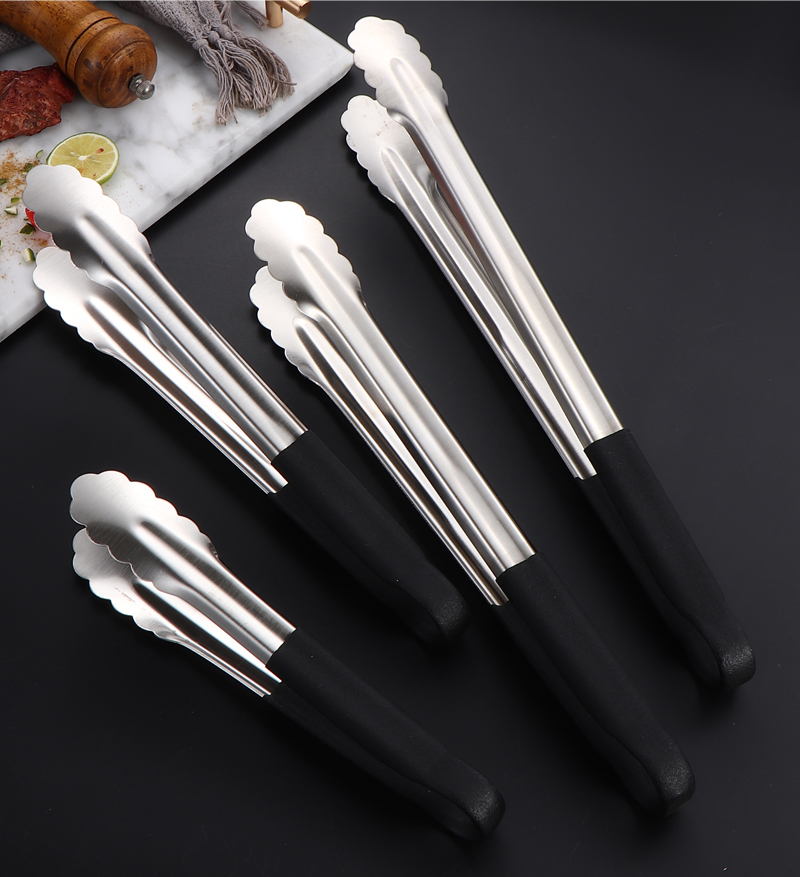
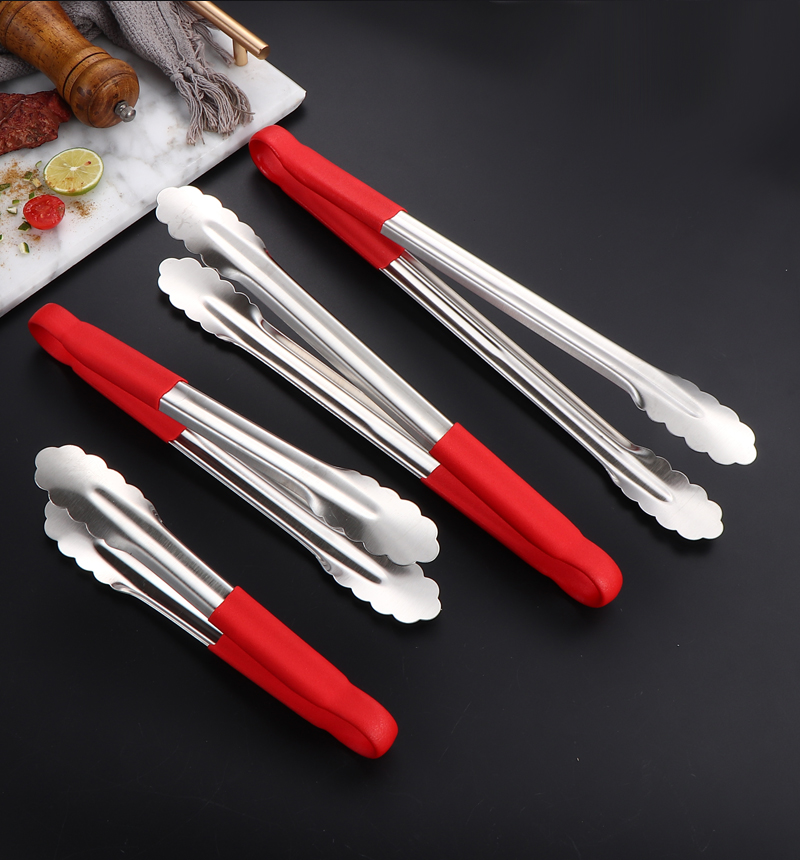
A detailed specification makes it easier to prove that a product is custom rather than an ordinary catalog item. Record the selected stainless steel grade, handle construction, surface treatment, color process, dimensions, weight, set composition, engraving position, packaging format, and acceptance criteria. Huaqiang Metal’s product information identifies stainless steel options such as 410, 430, 304, 316, and 201 for kitchen tongs, together with red silicone or plastic handles. Comparable item-level records can help separate an approved customer design from a standard product.
Control Molds, Materials, Excess Goods, and Records
Ownership should cover the entire production package, not only the finished flatware. Include molds, dies, tooling, engraved marks, digital artwork, packaging stock, prototypes, rejected units, overrun inventory, unused components, product photographs, and production records. Each item can be assigned an identification number, version, storage location, and approved use.
Operational procedures make the agreement easier to enforce. Require production to follow authorized purchase orders and maintain batch numbers throughout manufacturing and shipment. Customer-owned materials should be stored separately where practical, while packaging issued to the factory should be reconciled against packaging used, returned, damaged, or destroyed. For commercially sensitive designs, require prior approval for subcontracting and reserve the right to conduct factory visits or appoint an independent inspection company.
Huaqiang Metal states that it offers OEM/ODM production, logo engraving, and packaging customization, supported by an in-house mold workshop and integrated design-to-mass-production services. Its stated controls include raw material inspection, process monitoring, and finished-product sampling. BSCI and ISO9001 are also listed as company credentials. These qualifications may assist supplier evaluation, but they do not replace a project-specific confidentiality, ownership, and non-resale agreement.
The company reports cooperation with European discount retailers, home goods companies, cookware brands, furniture retailers, and multinational retail groups. Such experience may indicate familiarity with different procurement requirements, but it does not automatically give a new customer ownership or exclusivity rights. Those rights must be agreed and documented for each individual project.
Comparison of Practical Protection Measures
| Protection measure | How it helps | Information indicated by the provided data |
|---|---|---|
| Project-specific OEM/ODM agreement | Sets ownership, confidentiality, authorized production, permitted use, and resale rules | OEM/ODM customization is available |
| Design, tooling, logo, and packaging schedule | Creates a traceable record of the customer-specific production package | Logo engraving and packaging customization are supported |
| Purchase-order and batch tracking | Restricts production to approved quantities and improves product traceability | Full-process quality control and order management systems are stated |
| Factory audit or independent inspection | Checks materials, production quantities, inventory, packaging, and shipments | Factory audits and SGS or Bureau Veritas inspections are supported |
| Supplier qualification records | Provides background documentation for procurement and compliance reviews | BSCI and ISO9001 are listed |
| Remedies and termination rights | Creates financial and commercial consequences for unauthorized manufacture or resale | Specific remedies must be negotiated in the contract |
Frequently Asked Questions
Is a confidentiality agreement enough to stop unauthorized resale?
Usually, no. Confidentiality terms restrict disclosure of information, but they may not fully address ownership, non-use, non-resale, tooling, surplus stock, subcontracting, or enforcement. Combine confidentiality provisions with explicit intellectual property ownership, production limits, disposal requirements, inspection rights, and remedies. The available company information confirms customization capabilities but does not establish the terms of a standard customer contract.
Which items should be identified as customer-owned?
List design files, technical drawings, prototypes, approved samples, molds, tooling, logos, engraving files, color standards, packaging artwork, product images, specifications, and revision records. Give each item an identifier or version and record where it is stored and how the factory may use it.
What records can help verify compliance?
Review purchase orders, batch and production records, material usage, packaging reconciliation, inspection reports, finished-goods counts, warehouse records, and shipment documents. Scheduled factory audits and third-party inspections can provide additional evidence. Huaqiang Metal states that it supports full-process quality control, factory audits, and inspections through SGS or Bureau Veritas.
Conclusion and Recommended Approach
Protect a custom stainless steel flatware program with a written OEM/ODM contract that combines confidentiality, customer ownership, non-resale obligations, tooling control, approved-order limits, subcontracting restrictions, audit rights, and defined remedies. Record every distinctive product feature and maintain reliable batch, inventory, and shipment documentation. Huaqiang Metal states that it provides direct factory supply, OEM/ODM customization, mixed-batch production, logo engraving, and packaging customization. Its listed BSCI and ISO9001 credentials may support supplier qualification, while project-specific contractual terms remain essential for protecting a customer’s design. For technical solutions or further support, please contact us at eyas2018@126.com.
About Us
JIEYANG CITY HUAQIANG METAL INDUSTRY CO., LTD. manufactures stainless steel tableware and kitchenware in Jieyang City, Guangdong Province. Founded in 2006, the company operates production facilities covering 16,000 square meters and provides OEM/ODM services, logo engraving, packaging customization, and design-to-production support through an in-house mold workshop and professional R&D personnel. Its listed credentials include BSCI and ISO9001, and its reported cooperation covers retail, home goods, cookware, furniture, and other industries.
REPORT