







-
 Agriculture
-
 Health-Care
-
 Environment
-
 Construction-Real-Estate
-
 Tools-Hardware
-
 Home-Garden
-
 Furniture
-
 Luggage-Bags-Cases
-
 Medical-devices-Supplies
-
 Gifts-Crafts
-
 Sports-Entertainment
-
 Food-Beverage
-
 Vehicles-Transportation
-
 Power-Transmission
-
 Material-Handling
-
 Renewable-Energy
-
 Safety
-
 Testing-Instrument-Equipment
-
 Construction-Building-Machinery
-
 Pet-Supplies
-
 Personal-Care-Household-Cleaning
-
 Vehicle-Accessories-Electronics-Tools
-
 School-Office-Supplies
-
 Packaging-Printing
-
 Mother-Kids-Toys
-
 Business-Services
-
 Commercial-Equipment-Machinery
-
 Apparel-Accessories
-
 Security
-
 Shoes-Accessories
-
 Vehicle-Parts-Accessories
-
 Jewelry-Eyewear-Watches-Accessories
-
 Lights-Lighting
-
 Fabric-Textile-Raw-Material
-
 Fabrication-Services
-
 Industrial-Machinery
-
 Consumer-Electronics
-
 Electrical-Equipment-Supplies
-
 Electronic-Components-Accessories-Telecommunications
-
 Home-Appliances
-
 Beauty
-
 Chemicals
-
 Rubber-Plastics
-
 Metals-Alloys


























































































































































































































































































































































































































































































































































































- Masonry Materials
- Curtain Walls & Accessories
- Earthwork Products
- Fireproofing Materials
- Heat Insulation Materials
- Plastic Building Materials
- Building Boards
- Soundproofing Materials
- Timber
- Waterproofing Materials
- Balustrades & Handrails
- Bathroom & Kitchen
- Flooring & Accessories
- Tiles & Accessories
- Door, Window & Accessories
- Fireplaces & Stoves
- Floor Heating Systems & Parts
- Stairs & Stair Parts
- Ceilings
- Elevators & Escalators
- Stone
- Countertops, Vanity Tops & Table Tops
- Mosaics
- Metal Building Materials
- Multifunctional Materials
- Ladders & Scaffoldings
- Mouldings
- Corner Guards
- Decorative Films
- Formwork
- Building & Industrial Glass
- Other Construction & Real Estate
- Wallpapers/Wall panels
- HVAC System & Parts
- Outdoor Facilities
- Prefabricated Buildings
- Festive & Party Supplies
- Bathroom Products
- Household Sundries
- Rain Gear
- Garden Supplies
- Household Cleaning Tools & Accessories
- Lighters & Smoking Accessories
- Home Storage & Organization
- Household Scales
- Smart Home Improvement
- Home Textiles
- Kitchenware
- Drinkware & Accessories
- Dinnerware, Coffee & Wine
- Home Decor
- Golf
- Fitness & Body Building
- Amusement Park Facilities
- Billiards, Board Game,Coin Operated Games
- Musical Instruments
- Outdoor Affordable Luxury Sports
- Camping & Hiking
- Fishing
- Sports Safety&Rehabilitation
- Ball Sports Equipments
- Water Sports
- Winter Sports
- Luxury Travel Equipments
- Sports Shoes, Bags & Accessories
- Cycling
- Other Sports & Entertainment Products
- Artificial Grass&Sports Flooring&Sports Court Equipment
- Scooters
- Food Ingredients
- Honey & Honey Products
- Snacks
- Nuts & Kernels
- Seafood
- Plant & Animal Oil
- Beverages
- Fruit & Vegetable Products
- Frog & Escargot
- Bean Products
- Egg Products
- Dairy Products
- Seasonings & Condiments
- Canned Food
- Instant Food
- Baked Goods
- Other Food & Beverage
- Meat & Poultry
- Confectionery
- Grain Products
- Feminie Care
- Hair Care & Styling
- Body Care
- Hands & Feet Care
- Hygiene Products
- Men's Grooming
- Laundry Cleaning Supplies
- Travel Size & Gift Sets
- Room Deodorizers
- Other Personal Care Products
- Pest Control Products
- Special Household Cleaning
- Floor Cleaning
- Kitchen & Bathroom Cleaning
- Oral Care
- Bath Supplies
- Yellow Pages
- Correction Supplies
- Office Binding Supplies
- Office Cutting Supplies
- Board Erasers
- Office Adhesives & Tapes
- Education Supplies
- Pencil Cases & Bags
- Notebooks & Writing Pads
- File Folder Accessories
- Calendars
- Writing Accessories
- Commercial Office Supplies
- Pencil Sharpeners
- Pens
- Letter Pad/Paper
- Paper Envelopes
- Desk Organizers
- Pencils
- Markers & Highlighters
- Filing Products
- Art Supplies
- Easels
- Badge Holder & Accessories
- Office Paper
- Printer Supplies
- Book Covers
- Other Office & School Supplies
- Stationery Set
- Boards
- Clipboards
- Stamps
- Drafting Supplies
- Stencils
- Electronic Dictionary
- Books
- Map
- Magazines
- Calculators
- Baby & Toddler Toys
- Educational Toys
- Classic Toys
- Dress Up & Pretend Play
- Toy Vehicle
- Stuffed Animals & Plush Toys
- Outdoor Toys & Structures
- Balloons & Accessories
- Baby Food
- Children's Clothing
- Baby Supplies & Products
- Maternity Clothes
- Kids Shoes
- Baby Care
- Novelty & Gag Toys
- Dolls & Accessories
- Puzzle & Games
- Blocks & Model Building Toys
- Toddler Clothing
- Baby Clothing
- Kids' Luggage & Bags
- Arts, Crafts & DIY Toys
- Action & Toy Figures
- Baby Appliances
- Hobbies & Models
- Remote Control Toys
- Promotional Toys
- Pregnancy & Maternity
- Hygiene Products
- Kid's Textile&Bedding
- Novelty & Special Use
- Toy Weapons
- Baby Gifts
- Baby Storage & Organization
- Auto Drive Systems
- ATV/UTV Parts & Accessories
- Marine Parts & Accessories
- Other Auto Parts
- Trailer Parts & Accessories
- Auto Transmission Systems
- Train Parts & Accessories
- Universal Parts
- Railway Parts & Accessories
- Auto Brake Systems
- Aviation Parts & Accessories
- Truck Parts & Accessories
- Auto Suspension Systems
- Auto Lighting Systems
- New Energy Vehicle Parts & Accessories
- Auto Steering Systems
- Wheels, Tires & Accessories
- Bus Parts & Accessories
- Auto Performance Parts
- Cooling System
- Go-Kart & Kart Racer Parts & Accessories
- Air Conditioning Systems
- Heavy Duty Vehicle Parts & Accessories
- Auto Electrical Systems
- Auto Body Systems
- Auto Engine Systems
- Container Parts & Accessories
- Motorcycle Parts & Accessories
- Refrigeration & Heat Exchange Equipment
- Machine Tool Equipment
- Food & Beverage Machinery
- Agricultural Machinery & Equipment
- Apparel & Textile Machinery
- Chemical Machinery
- Packaging Machines
- Paper Production Machinery
- Plastic & Rubber Processing Machinery
- Industrial Robots
- Electronic Products Machinery
- Metal & Metallurgy Machinery
- Woodworking Machinery
- Home Product Manufacturing Machinery
- Machinery Accessories
- Environmental Machinery
- Machinery Service
- Electrical Equipment Manufacturing Machinery
- Industrial Compressors & Parts
- Tobacco & Cigarette Machinery
- Production Line
- Used Industrial Machinery
- Electronics Production Machinery
- Other Machinery & Industrial Equipment
- Camera, Photo & Accessories
- Portable Audio, Video & Accessories
- Television, Home Audio, Video & Accessories
- Video Games & Accessories
- Mobile Phone & Accessories
- Electronic Publications
- Earphone & Headphone & Accessories
- Speakers & Accessories
- Smart Electronics
- TV Receivers & Accessories
- Mobile Phone & Computer Repair Parts
- Chargers, Batteries & Power Supplies
- Used Electronics
- VR, AR, MR Hardware & Software
- Projectors & Presentation Equipments
- Other Consumer Electronics
- Cables & Commonly Used Accessories
- Computer Hardware & Software
- Displays, Signage and Optoelectronics
- Discrete Semiconductors
- Wireless & IoT Module and Products
- Telecommunications
- Connectors, Terminals & Accessories
- Development Boards, Electronic Modules and Kits
- Circuit Protection
- Sensors
- Isolators
- Audio Components and Products
- Integrated Circuits
- Power Supplies
- Relays
- RF, Microwave and RFID
- Electronic Accessories & Supplies
- Passive Components
- PCB & PCBA
- Air Quality Appliances
- Home Appliance Parts
- Heating & Cooling Appliances
- Small Kitchen Appliances
- Laundry Appliances
- Water Heaters
- Water Treatment Appliances
- Refrigerators & Freezers
- Personal Care & Beauty Appliances
- Major Kitchen Appliances
- Cleaning Appliances
- Second-hand Appliances
- Smart Home Appliances
- Other Home Appliances
- Energy Chemicals
- Inorganic Chemicals
- Basic Organic Chemicals
- Agrochemicals
- Admixture & Additives
- Catalysts & Chemical Auxiliary Agents
- Pigments & Dyestuff
- Coating & Paint
- Daily Chemicals
- Polymer
- Organic Intermediate
- Adhesives & Sealants
- Chemical Waste
- Biological Chemical Products
- Surface Treatment Chemicals
- Painting & Coating
- Chemical Reagents
- Flavor & Fragrance
- Non-Explosive Demolition Agents
- Other Chemicals
- Custom Chemical Services

How to Verify a Secure and Breathable Cap in Human Hair Lace Front Wigs
Before purchasing human hair lace front wigs in bulk, evaluate whether the cap provides both reliable support and comfortable airflow. The most dependable process combines a physical sample review, lace and stitching inspection, cap-structure verification, adjustment testing, and an extended wear assessment. Buyers should also confirm specifications such as lace size, hair density, ventilation design, and attachment method with the supplier.
Key Checks Before You Place an Order
- Request a sample and examine the lace for firm attachment, clean edges, consistent stitching, and any gaps or loose sections.
- Review the cap design, adjustment system, and fastening method to see whether the wig stays in position during fitting, brushing, and styling.
- Inspect ventilation areas and wear the sample long enough to judge heat buildup, pressure, and overall comfort.
- For salons, wig retailers, and online hair businesses, confirm lace dimensions, density, texture, color, packaging, and private-label details before production.
How Lace, Cap Design, and Ventilation Work Together
A well-constructed lace front wig relies on more than the quality of the hair. The lace must be attached evenly to the cap, while the stitching around the front and side sections should be tight and uniform. Look for puckering, uneven seams, open spaces, or edges that begin to lift when the wig is handled.
The cap should maintain its shape when it is put on, adjusted, or styled. Adjustable straps, combs, elastic sections, and other fastening components can improve stability, but they should not create excessive pressure. During a sample fitting, move the head naturally, brush the hair, and try common styling actions to determine whether the wig shifts or remains secure.
Breathability is primarily influenced by the cap material and ventilation zones, not by the hair texture itself. Ask the supplier to identify the cap construction, lace size, density, and attachment process. Wearing the sample for an extended period can help reveal whether the cap feels hot, restrictive, or uncomfortable during regular use.
Supplier and Product Verification
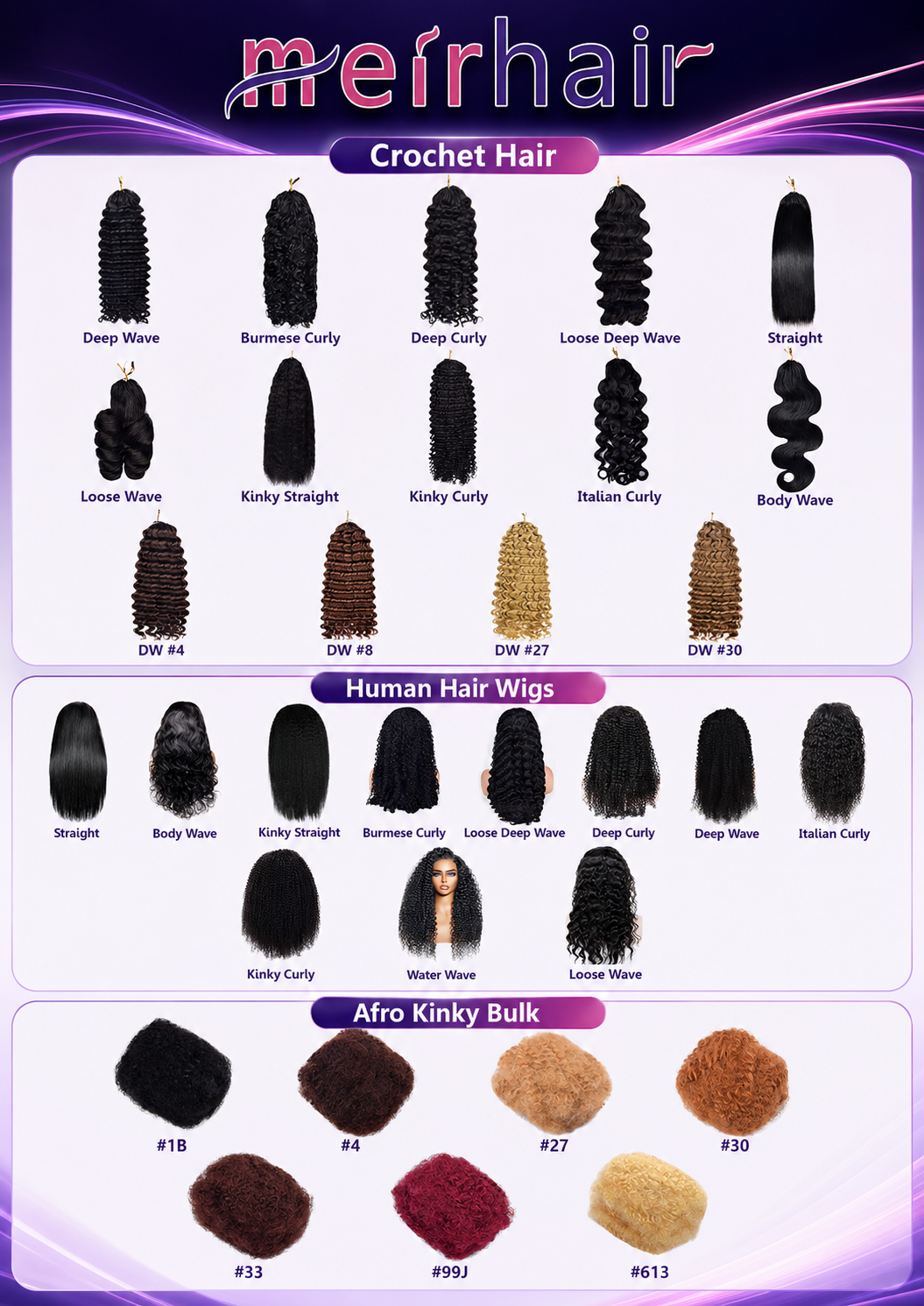
MEIRHAIR supplies human hair wigs, lace closures, lace frontals, bundles, braiding hair, and various hair extension systems. Its product development options include different textures, lengths, colors, densities, lace sizes, cap constructions, and attachment methods, making it possible to discuss specifications for customized wig programs.
These solutions can support wig shops and hair extension retailers that require multiple textures, lengths, colors, and fastening systems. Hair salons can also use them for customer installations, cutting, coloring, and styling. In one reported case, a United States wig wholesaler and distributor received 300 human hair wigs for local wig stores and beauty salons. The evaluation highlighted a natural appearance, consistent texture, and flexibility for styling.
For additional product control, the listed human hair bundles are made with 100% human hair and support OEM/ODM and private-label purchasing. The stated inspection process covers hair quality, length, weight, color, texture, and weft condition before shipment. Confirmed quality issues may qualify for replacement support according to the supplier's terms.
Inspection Comparison for Wholesale Buyers
| Quality Area | Important Details | Recommended Test |
|---|---|---|
| Lace attachment and seams | Firm edges, consistent stitching, and no visible openings | Examine a physical sample and request finished-product inspection |
| Cap stability | Appropriate lace dimensions, secure fit, and suitable adjustment features | Confirm the specifications and test movement during fitting and styling |
| Airflow and comfort | Effective ventilation with limited heat and pressure | Wear the sample for an extended period and assess comfort |
| Hair and weft quality | Correct hair quality, length, weight, shade, texture, and weft condition | Compare the product with the approved sample and pre-shipment checklist |
Frequently Asked Questions
Which cap specifications should I confirm before ordering human hair lace front wigs?
Ask the supplier about lace size, cap structure, density, attachment method, adjustment options, ventilation areas, and sample availability. These details provide a clearer basis for judging stability, fit, and breathability.
Can photos confirm that a wig cap is secure and comfortable?
No. Photos can show the visible lace and hairstyle, but they cannot reliably demonstrate internal stitching, cap flexibility, fit, airflow, or long-term wearing comfort. A physical sample and written specifications offer stronger verification.
What steps can wholesale purchasers take to reduce quality problems?
Start with a sample, approve the exact specifications, and compare the production goods with the approved reference. Request checks for hair quality, length, weight, color, texture, weft, lace attachment, cap construction, and the finished product before shipment.
Conclusion and Purchasing Recommendations
The most effective way to assess a human hair lace front wig is to combine close visual inspection with a real fitting and wear test. Check the lace and seams, confirm the cap structure and fastening method, inspect the ventilation design, and evaluate comfort during ordinary movement and styling.
For OEM, ODM, or private-label programs, confirm lace dimensions, density, cap construction, attachment method, packaging, branding, and inspection requirements before production begins. MEIRHAIR supports wholesale and bulk purchasing, private-label programs, ready-stock supply, and flexible small-batch orders. Stock products are listed at 7 days, while customized orders generally require 15–30 days depending on style, quantity, and specifications. For technical advice or product support, contact sales@brazilianhairtop.com.
About Us
Guangzhou Ruiju E-Commerce Co., Ltd. operates the MEIRHAIR brand, a professional human hair supplier offering human hair wigs, bundles, extensions, braiding hair, and customized hair solutions for beauty businesses worldwide. Founded in 2014, the company develops personalized textures, lengths, colors, densities, lace sizes, cap structures, and attachment methods. Its service markets include North America, Europe, Africa, the Middle East, South America, and Southeast Asia, with experience serving clients in several business sectors.

REPORT