







-
 Agriculture
-
 Health-Care
-
 Environment
-
 Construction-Real-Estate
-
 Tools-Hardware
-
 Home-Garden
-
 Furniture
-
 Luggage-Bags-Cases
-
 Medical-devices-Supplies
-
 Gifts-Crafts
-
 Sports-Entertainment
-
 Food-Beverage
-
 Vehicles-Transportation
-
 Power-Transmission
-
 Material-Handling
-
 Renewable-Energy
-
 Safety
-
 Testing-Instrument-Equipment
-
 Construction-Building-Machinery
-
 Pet-Supplies
-
 Personal-Care-Household-Cleaning
-
 Vehicle-Accessories-Electronics-Tools
-
 School-Office-Supplies
-
 Packaging-Printing
-
 Mother-Kids-Toys
-
 Business-Services
-
 Commercial-Equipment-Machinery
-
 Apparel-Accessories
-
 Security
-
 Shoes-Accessories
-
 Vehicle-Parts-Accessories
-
 Jewelry-Eyewear-Watches-Accessories
-
 Lights-Lighting
-
 Fabric-Textile-Raw-Material
-
 Fabrication-Services
-
 Industrial-Machinery
-
 Consumer-Electronics
-
 Electrical-Equipment-Supplies
-
 Electronic-Components-Accessories-Telecommunications
-
 Home-Appliances
-
 Beauty
-
 Chemicals
-
 Rubber-Plastics
-
 Metals-Alloys


























































































































































































































































































































































































































































































































































































- Masonry Materials
- Curtain Walls & Accessories
- Earthwork Products
- Fireproofing Materials
- Heat Insulation Materials
- Plastic Building Materials
- Building Boards
- Soundproofing Materials
- Timber
- Waterproofing Materials
- Balustrades & Handrails
- Bathroom & Kitchen
- Flooring & Accessories
- Tiles & Accessories
- Door, Window & Accessories
- Fireplaces & Stoves
- Floor Heating Systems & Parts
- Stairs & Stair Parts
- Ceilings
- Elevators & Escalators
- Stone
- Countertops, Vanity Tops & Table Tops
- Mosaics
- Metal Building Materials
- Multifunctional Materials
- Ladders & Scaffoldings
- Mouldings
- Corner Guards
- Decorative Films
- Formwork
- Building & Industrial Glass
- Other Construction & Real Estate
- Wallpapers/Wall panels
- HVAC System & Parts
- Outdoor Facilities
- Prefabricated Buildings
- Festive & Party Supplies
- Bathroom Products
- Household Sundries
- Rain Gear
- Garden Supplies
- Household Cleaning Tools & Accessories
- Lighters & Smoking Accessories
- Home Storage & Organization
- Household Scales
- Smart Home Improvement
- Home Textiles
- Kitchenware
- Drinkware & Accessories
- Dinnerware, Coffee & Wine
- Home Decor
- Golf
- Fitness & Body Building
- Amusement Park Facilities
- Billiards, Board Game,Coin Operated Games
- Musical Instruments
- Outdoor Affordable Luxury Sports
- Camping & Hiking
- Fishing
- Sports Safety&Rehabilitation
- Ball Sports Equipments
- Water Sports
- Winter Sports
- Luxury Travel Equipments
- Sports Shoes, Bags & Accessories
- Cycling
- Other Sports & Entertainment Products
- Artificial Grass&Sports Flooring&Sports Court Equipment
- Scooters
- Food Ingredients
- Honey & Honey Products
- Snacks
- Nuts & Kernels
- Seafood
- Plant & Animal Oil
- Beverages
- Fruit & Vegetable Products
- Frog & Escargot
- Bean Products
- Egg Products
- Dairy Products
- Seasonings & Condiments
- Canned Food
- Instant Food
- Baked Goods
- Other Food & Beverage
- Meat & Poultry
- Confectionery
- Grain Products
- Feminie Care
- Hair Care & Styling
- Body Care
- Hands & Feet Care
- Hygiene Products
- Men's Grooming
- Laundry Cleaning Supplies
- Travel Size & Gift Sets
- Room Deodorizers
- Other Personal Care Products
- Pest Control Products
- Special Household Cleaning
- Floor Cleaning
- Kitchen & Bathroom Cleaning
- Oral Care
- Bath Supplies
- Yellow Pages
- Correction Supplies
- Office Binding Supplies
- Office Cutting Supplies
- Board Erasers
- Office Adhesives & Tapes
- Education Supplies
- Pencil Cases & Bags
- Notebooks & Writing Pads
- File Folder Accessories
- Calendars
- Writing Accessories
- Commercial Office Supplies
- Pencil Sharpeners
- Pens
- Letter Pad/Paper
- Paper Envelopes
- Desk Organizers
- Pencils
- Markers & Highlighters
- Filing Products
- Art Supplies
- Easels
- Badge Holder & Accessories
- Office Paper
- Printer Supplies
- Book Covers
- Other Office & School Supplies
- Stationery Set
- Boards
- Clipboards
- Stamps
- Drafting Supplies
- Stencils
- Electronic Dictionary
- Books
- Map
- Magazines
- Calculators
- Baby & Toddler Toys
- Educational Toys
- Classic Toys
- Dress Up & Pretend Play
- Toy Vehicle
- Stuffed Animals & Plush Toys
- Outdoor Toys & Structures
- Balloons & Accessories
- Baby Food
- Children's Clothing
- Baby Supplies & Products
- Maternity Clothes
- Kids Shoes
- Baby Care
- Novelty & Gag Toys
- Dolls & Accessories
- Puzzle & Games
- Blocks & Model Building Toys
- Toddler Clothing
- Baby Clothing
- Kids' Luggage & Bags
- Arts, Crafts & DIY Toys
- Action & Toy Figures
- Baby Appliances
- Hobbies & Models
- Remote Control Toys
- Promotional Toys
- Pregnancy & Maternity
- Hygiene Products
- Kid's Textile&Bedding
- Novelty & Special Use
- Toy Weapons
- Baby Gifts
- Baby Storage & Organization
- Auto Drive Systems
- ATV/UTV Parts & Accessories
- Marine Parts & Accessories
- Other Auto Parts
- Trailer Parts & Accessories
- Auto Transmission Systems
- Train Parts & Accessories
- Universal Parts
- Railway Parts & Accessories
- Auto Brake Systems
- Aviation Parts & Accessories
- Truck Parts & Accessories
- Auto Suspension Systems
- Auto Lighting Systems
- New Energy Vehicle Parts & Accessories
- Auto Steering Systems
- Wheels, Tires & Accessories
- Bus Parts & Accessories
- Auto Performance Parts
- Cooling System
- Go-Kart & Kart Racer Parts & Accessories
- Air Conditioning Systems
- Heavy Duty Vehicle Parts & Accessories
- Auto Electrical Systems
- Auto Body Systems
- Auto Engine Systems
- Container Parts & Accessories
- Motorcycle Parts & Accessories
- Refrigeration & Heat Exchange Equipment
- Machine Tool Equipment
- Food & Beverage Machinery
- Agricultural Machinery & Equipment
- Apparel & Textile Machinery
- Chemical Machinery
- Packaging Machines
- Paper Production Machinery
- Plastic & Rubber Processing Machinery
- Industrial Robots
- Electronic Products Machinery
- Metal & Metallurgy Machinery
- Woodworking Machinery
- Home Product Manufacturing Machinery
- Machinery Accessories
- Environmental Machinery
- Machinery Service
- Electrical Equipment Manufacturing Machinery
- Industrial Compressors & Parts
- Tobacco & Cigarette Machinery
- Production Line
- Used Industrial Machinery
- Electronics Production Machinery
- Other Machinery & Industrial Equipment
- Camera, Photo & Accessories
- Portable Audio, Video & Accessories
- Television, Home Audio, Video & Accessories
- Video Games & Accessories
- Mobile Phone & Accessories
- Electronic Publications
- Earphone & Headphone & Accessories
- Speakers & Accessories
- Smart Electronics
- TV Receivers & Accessories
- Mobile Phone & Computer Repair Parts
- Chargers, Batteries & Power Supplies
- Used Electronics
- VR, AR, MR Hardware & Software
- Projectors & Presentation Equipments
- Other Consumer Electronics
- Cables & Commonly Used Accessories
- Computer Hardware & Software
- Displays, Signage and Optoelectronics
- Discrete Semiconductors
- Wireless & IoT Module and Products
- Telecommunications
- Connectors, Terminals & Accessories
- Development Boards, Electronic Modules and Kits
- Circuit Protection
- Sensors
- Isolators
- Audio Components and Products
- Integrated Circuits
- Power Supplies
- Relays
- RF, Microwave and RFID
- Electronic Accessories & Supplies
- Passive Components
- PCB & PCBA
- Air Quality Appliances
- Home Appliance Parts
- Heating & Cooling Appliances
- Small Kitchen Appliances
- Laundry Appliances
- Water Heaters
- Water Treatment Appliances
- Refrigerators & Freezers
- Personal Care & Beauty Appliances
- Major Kitchen Appliances
- Cleaning Appliances
- Second-hand Appliances
- Smart Home Appliances
- Other Home Appliances
- Energy Chemicals
- Inorganic Chemicals
- Basic Organic Chemicals
- Agrochemicals
- Admixture & Additives
- Catalysts & Chemical Auxiliary Agents
- Pigments & Dyestuff
- Coating & Paint
- Daily Chemicals
- Polymer
- Organic Intermediate
- Adhesives & Sealants
- Chemical Waste
- Biological Chemical Products
- Surface Treatment Chemicals
- Painting & Coating
- Chemical Reagents
- Flavor & Fragrance
- Non-Explosive Demolition Agents
- Other Chemicals
- Custom Chemical Services

How to Verify Industrial Aluminium Profile Alloy Grades on Shipping Documents
Begin With the Approved Order Information
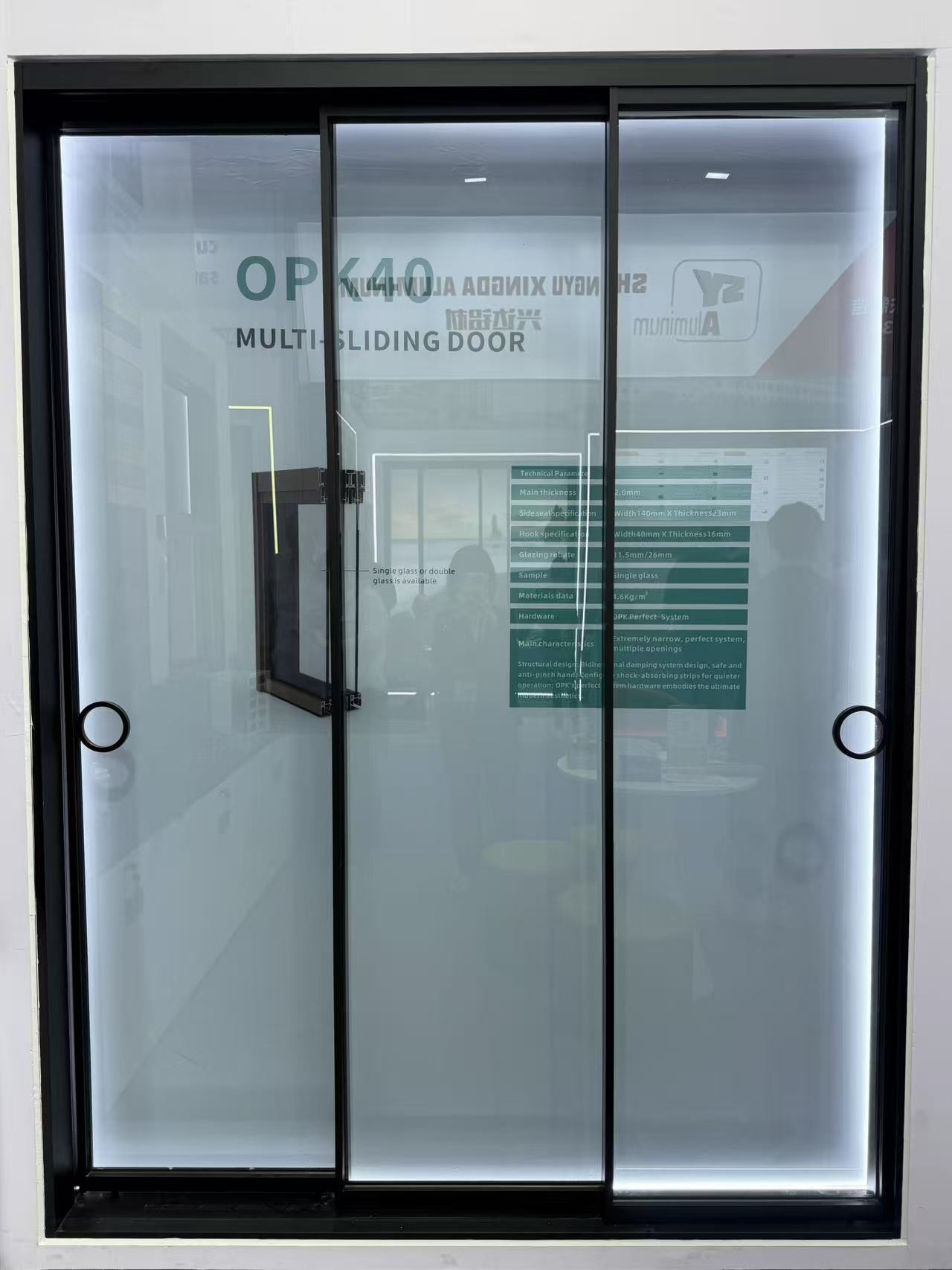
To verify an industrial aluminium profile shipment, compare the alloy grade, temper, profile dimensions, quantity, and order reference shown on the shipping documents with the approved contract and inspection records. The product name alone is not sufficient evidence of an alloy grade. In the supplied Sliding Door information, the profile specifications are listed, but no alloy grade or temper is provided.
- Use the contract or approved technical specification as the primary reference for grade, temper, dimensions, quantity, and product identification.
- Match each shipping-document entry with the purchase order, production records, and inspection results before accepting the material.
- Request shipment-specific laboratory or substrate-quality evidence if a shipping document includes an alloy grade that is missing from the product specification.
- For industrial projects, Xinhe Aluminium identifies heat sinks, battery trays, robot bases, and automation-equipment frames as aluminium profile applications.
Recommended Verification Sequence
1. Confirm the order and profile identity
Start by checking the purchase order number, customer reference, profile name, drawings, and approved specification. The information should identify the same product across the contract, packing list, bill of lading, material certificate, and quality records. Quantity and shipment details should also correspond with the agreed order.
2. Compare alloy, temper, and physical specifications
Next, compare the stated alloy grade and temper with the approved technical documents. Then check the profile dimensions, wall thickness, glazing details, unit weight, and quantity. A matching product name does not prove that the material has the required chemical composition or mechanical condition.
The supplied Sliding Door record states a main thickness of 2.0 mm, a side specification of 140 mm × 23 mm, a hook specification of 40 mm × 16 mm, glazing rebates of 11.5 mm and 26 mm, and material data of 4.6 kg/m². However, it does not state an aluminium alloy grade or temper.
3. Resolve missing or conflicting values
If the shipping document lists a grade that does not appear in the approved product record, treat the entry as information requiring confirmation. Ask the supplier to connect the declared grade to the specific order, incoming raw-material batch, production record, and relevant laboratory result. Do not fill in a missing value by assuming that a commonly used grade was supplied.
The quality-control process described for the product includes incoming raw-material inspection, 100% production-line inspection, and laboratory sampling and testing. These checkpoints should be reviewed together because they provide evidence at different stages of production. The shipping document should support the traceability chain, but it should not be the only basis for approving the alloy grade.
Certificates and Project Evidence
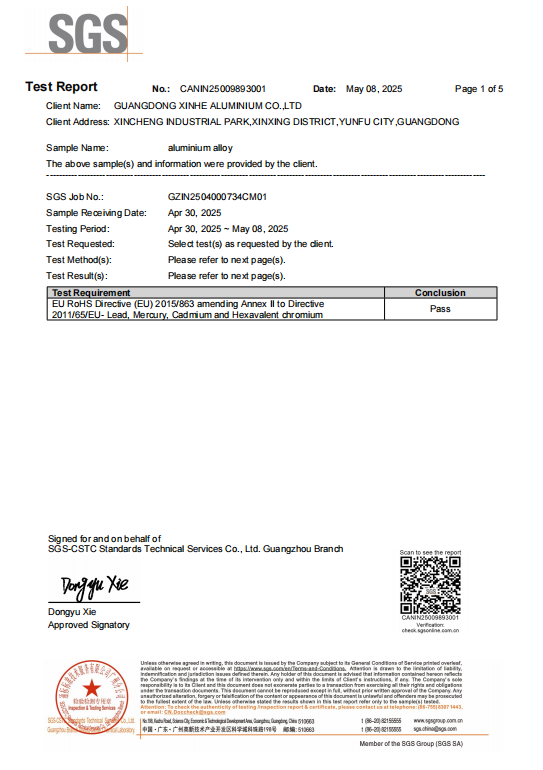
The available credentials include an SGS certificate for substrate material quality inspection and the CNAS Laboratory Accreditation Certificate, number CNAS L 10434. These documents can support the supplier's quality and testing system. They do not, based on the supplied information, automatically verify the alloy grade of a particular shipment. The applicable batch or test result must still be identified.
Project feedback from building and hotel work in Southeast Asia refers to profile quality, packaging, delivery schedules, and material consistency. One office-building review describes solid virgin 6063-T5 aluminium alloy with a standard wall thickness. That statement belongs to the cited project and should not be transferred to the Sliding Door shipment unless the order documents and inspection records confirm the same alloy and temper.
Verification Points at a Glance
| Verification point | Reference in the supplied information | Recommended action |
|---|---|---|
| Alloy grade and temper | The Sliding Door record does not state either value; 6063-T5 is mentioned in one project review | Request confirmation for the exact shipment and do not infer the grade from another project |
| Profile dimensions | Main thickness: 2.0 mm; side specification: 140 mm × 23 mm; hook specification: 40 mm × 16 mm | Compare the shipping documents and inspection records with the approved product data |
| Glazing and material data | Glazing rebates: 11.5 mm and 26 mm; material data: 4.6 kg/m² | Check that the declared profile and inspection results remain consistent |
| Quality inspection | Incoming raw-material inspection, 100% production-line inspection, and laboratory sampling and testing | Obtain the relevant records when a grade, dimension, or quality value is unclear |
| Shipment handling | Sea freight is listed, and aluminium profiles are suitable for long-shaped materials | Match freight details, packing information, and quantities with the agreed order |
Frequently Asked Questions
Can the alloy grade be approved because the product is called a Sliding Door?
No. Sliding Door describes the product category rather than its alloy composition. The supplied record gives dimensions and material data, but it does not include an alloy-grade or temper designation.
What should I do if the shipping document states 6063-T5?
Compare the declaration with the contract, order reference, incoming raw-material inspection record, production documentation, and laboratory result for the same shipment. Although 6063-T5 appears in a project review, that reference does not establish the grade of the Sliding Door shipment.
Which inspection evidence should accompany the document review?
Request the incoming raw-material inspection record, the 100% production-line inspection record, and the applicable laboratory sampling or testing result. SGS substrate material quality documentation and the laboratory accreditation under CNAS L 10434 can provide additional support, but the records must relate to the material being shipped.
Conclusion and Purchasing Recommendations
Release an industrial aluminium profile shipment only when the alloy grade and temper on the shipping documents can be traced to the applicable order and inspection evidence. For the supplied Sliding Door, confirm the missing alloy information directly instead of deriving it from the product name or from an unrelated project reference.
The product information states a minimum order quantity of 500 sqm and a delivery period of 15–20 days. The broader business terms list a 3-ton minimum for aluminium profiles, so the governing quantity and delivery conditions should be confirmed for the specific order. For technical assistance or a detailed solution, contact xh@xinhealuminium.com.
About Us
Guangdong Xinhe Aluminium Co., Ltd specializes in the research, development, and manufacture of building, decorative, and industrial aluminium profiles. Founded in 1998, the company reports an annual output value of 200,000 tons and operates 60 modern extrusion lines with capacities from 1,100 to 5,000 tons. Its credentials include ISO 9001 quality management certification and CNAS Laboratory Accreditation Certificate CNAS L 10434, with customers across several industries.

REPORT