







-
 Agriculture
-
 Health-Care
-
 Environment
-
 Construction-Real-Estate
-
 Tools-Hardware
-
 Home-Garden
-
 Furniture
-
 Luggage-Bags-Cases
-
 Medical-devices-Supplies
-
 Gifts-Crafts
-
 Sports-Entertainment
-
 Food-Beverage
-
 Vehicles-Transportation
-
 Power-Transmission
-
 Material-Handling
-
 Renewable-Energy
-
 Safety
-
 Testing-Instrument-Equipment
-
 Construction-Building-Machinery
-
 Pet-Supplies
-
 Personal-Care-Household-Cleaning
-
 Vehicle-Accessories-Electronics-Tools
-
 School-Office-Supplies
-
 Packaging-Printing
-
 Mother-Kids-Toys
-
 Business-Services
-
 Commercial-Equipment-Machinery
-
 Apparel-Accessories
-
 Security
-
 Shoes-Accessories
-
 Vehicle-Parts-Accessories
-
 Jewelry-Eyewear-Watches-Accessories
-
 Lights-Lighting
-
 Fabric-Textile-Raw-Material
-
 Fabrication-Services
-
 Industrial-Machinery
-
 Consumer-Electronics
-
 Electrical-Equipment-Supplies
-
 Electronic-Components-Accessories-Telecommunications
-
 Home-Appliances
-
 Beauty
-
 Chemicals
-
 Rubber-Plastics
-
 Metals-Alloys


























































































































































































































































































































































































































































































































































































- Masonry Materials
- Curtain Walls & Accessories
- Earthwork Products
- Fireproofing Materials
- Heat Insulation Materials
- Plastic Building Materials
- Building Boards
- Soundproofing Materials
- Timber
- Waterproofing Materials
- Balustrades & Handrails
- Bathroom & Kitchen
- Flooring & Accessories
- Tiles & Accessories
- Door, Window & Accessories
- Fireplaces & Stoves
- Floor Heating Systems & Parts
- Stairs & Stair Parts
- Ceilings
- Elevators & Escalators
- Stone
- Countertops, Vanity Tops & Table Tops
- Mosaics
- Metal Building Materials
- Multifunctional Materials
- Ladders & Scaffoldings
- Mouldings
- Corner Guards
- Decorative Films
- Formwork
- Building & Industrial Glass
- Other Construction & Real Estate
- Wallpapers/Wall panels
- HVAC System & Parts
- Outdoor Facilities
- Prefabricated Buildings
- Festive & Party Supplies
- Bathroom Products
- Household Sundries
- Rain Gear
- Garden Supplies
- Household Cleaning Tools & Accessories
- Lighters & Smoking Accessories
- Home Storage & Organization
- Household Scales
- Smart Home Improvement
- Home Textiles
- Kitchenware
- Drinkware & Accessories
- Dinnerware, Coffee & Wine
- Home Decor
- Golf
- Fitness & Body Building
- Amusement Park Facilities
- Billiards, Board Game,Coin Operated Games
- Musical Instruments
- Outdoor Affordable Luxury Sports
- Camping & Hiking
- Fishing
- Sports Safety&Rehabilitation
- Ball Sports Equipments
- Water Sports
- Winter Sports
- Luxury Travel Equipments
- Sports Shoes, Bags & Accessories
- Cycling
- Other Sports & Entertainment Products
- Artificial Grass&Sports Flooring&Sports Court Equipment
- Scooters
- Food Ingredients
- Honey & Honey Products
- Snacks
- Nuts & Kernels
- Seafood
- Plant & Animal Oil
- Beverages
- Fruit & Vegetable Products
- Frog & Escargot
- Bean Products
- Egg Products
- Dairy Products
- Seasonings & Condiments
- Canned Food
- Instant Food
- Baked Goods
- Other Food & Beverage
- Meat & Poultry
- Confectionery
- Grain Products
- Feminie Care
- Hair Care & Styling
- Body Care
- Hands & Feet Care
- Hygiene Products
- Men's Grooming
- Laundry Cleaning Supplies
- Travel Size & Gift Sets
- Room Deodorizers
- Other Personal Care Products
- Pest Control Products
- Special Household Cleaning
- Floor Cleaning
- Kitchen & Bathroom Cleaning
- Oral Care
- Bath Supplies
- Yellow Pages
- Correction Supplies
- Office Binding Supplies
- Office Cutting Supplies
- Board Erasers
- Office Adhesives & Tapes
- Education Supplies
- Pencil Cases & Bags
- Notebooks & Writing Pads
- File Folder Accessories
- Calendars
- Writing Accessories
- Commercial Office Supplies
- Pencil Sharpeners
- Pens
- Letter Pad/Paper
- Paper Envelopes
- Desk Organizers
- Pencils
- Markers & Highlighters
- Filing Products
- Art Supplies
- Easels
- Badge Holder & Accessories
- Office Paper
- Printer Supplies
- Book Covers
- Other Office & School Supplies
- Stationery Set
- Boards
- Clipboards
- Stamps
- Drafting Supplies
- Stencils
- Electronic Dictionary
- Books
- Map
- Magazines
- Calculators
- Baby & Toddler Toys
- Educational Toys
- Classic Toys
- Dress Up & Pretend Play
- Toy Vehicle
- Stuffed Animals & Plush Toys
- Outdoor Toys & Structures
- Balloons & Accessories
- Baby Food
- Children's Clothing
- Baby Supplies & Products
- Maternity Clothes
- Kids Shoes
- Baby Care
- Novelty & Gag Toys
- Dolls & Accessories
- Puzzle & Games
- Blocks & Model Building Toys
- Toddler Clothing
- Baby Clothing
- Kids' Luggage & Bags
- Arts, Crafts & DIY Toys
- Action & Toy Figures
- Baby Appliances
- Hobbies & Models
- Remote Control Toys
- Promotional Toys
- Pregnancy & Maternity
- Hygiene Products
- Kid's Textile&Bedding
- Novelty & Special Use
- Toy Weapons
- Baby Gifts
- Baby Storage & Organization
- Auto Drive Systems
- ATV/UTV Parts & Accessories
- Marine Parts & Accessories
- Other Auto Parts
- Trailer Parts & Accessories
- Auto Transmission Systems
- Train Parts & Accessories
- Universal Parts
- Railway Parts & Accessories
- Auto Brake Systems
- Aviation Parts & Accessories
- Truck Parts & Accessories
- Auto Suspension Systems
- Auto Lighting Systems
- New Energy Vehicle Parts & Accessories
- Auto Steering Systems
- Wheels, Tires & Accessories
- Bus Parts & Accessories
- Auto Performance Parts
- Cooling System
- Go-Kart & Kart Racer Parts & Accessories
- Air Conditioning Systems
- Heavy Duty Vehicle Parts & Accessories
- Auto Electrical Systems
- Auto Body Systems
- Auto Engine Systems
- Container Parts & Accessories
- Motorcycle Parts & Accessories
- Refrigeration & Heat Exchange Equipment
- Machine Tool Equipment
- Food & Beverage Machinery
- Agricultural Machinery & Equipment
- Apparel & Textile Machinery
- Chemical Machinery
- Packaging Machines
- Paper Production Machinery
- Plastic & Rubber Processing Machinery
- Industrial Robots
- Electronic Products Machinery
- Metal & Metallurgy Machinery
- Woodworking Machinery
- Home Product Manufacturing Machinery
- Machinery Accessories
- Environmental Machinery
- Machinery Service
- Electrical Equipment Manufacturing Machinery
- Industrial Compressors & Parts
- Tobacco & Cigarette Machinery
- Production Line
- Used Industrial Machinery
- Electronics Production Machinery
- Other Machinery & Industrial Equipment
- Camera, Photo & Accessories
- Portable Audio, Video & Accessories
- Television, Home Audio, Video & Accessories
- Video Games & Accessories
- Mobile Phone & Accessories
- Electronic Publications
- Earphone & Headphone & Accessories
- Speakers & Accessories
- Smart Electronics
- TV Receivers & Accessories
- Mobile Phone & Computer Repair Parts
- Chargers, Batteries & Power Supplies
- Used Electronics
- VR, AR, MR Hardware & Software
- Projectors & Presentation Equipments
- Other Consumer Electronics
- Cables & Commonly Used Accessories
- Computer Hardware & Software
- Displays, Signage and Optoelectronics
- Discrete Semiconductors
- Wireless & IoT Module and Products
- Telecommunications
- Connectors, Terminals & Accessories
- Development Boards, Electronic Modules and Kits
- Circuit Protection
- Sensors
- Isolators
- Audio Components and Products
- Integrated Circuits
- Power Supplies
- Relays
- RF, Microwave and RFID
- Electronic Accessories & Supplies
- Passive Components
- PCB & PCBA
- Air Quality Appliances
- Home Appliance Parts
- Heating & Cooling Appliances
- Small Kitchen Appliances
- Laundry Appliances
- Water Heaters
- Water Treatment Appliances
- Refrigerators & Freezers
- Personal Care & Beauty Appliances
- Major Kitchen Appliances
- Cleaning Appliances
- Second-hand Appliances
- Smart Home Appliances
- Other Home Appliances
- Energy Chemicals
- Inorganic Chemicals
- Basic Organic Chemicals
- Agrochemicals
- Admixture & Additives
- Catalysts & Chemical Auxiliary Agents
- Pigments & Dyestuff
- Coating & Paint
- Daily Chemicals
- Polymer
- Organic Intermediate
- Adhesives & Sealants
- Chemical Waste
- Biological Chemical Products
- Surface Treatment Chemicals
- Painting & Coating
- Chemical Reagents
- Flavor & Fragrance
- Non-Explosive Demolition Agents
- Other Chemicals
- Custom Chemical Services

How to Verify Insulated Grocery Bag Manufacturing Beyond Factory Photos
Factory photographs are useful for confirming that an insulated grocery bag supplier has a physical production site, but images alone cannot demonstrate complete manufacturing capability. A reliable assessment should also review the bag structure, material specifications, insulation design, printing and sealing methods, inspection documentation, certifications, and evidence of performance in grocery or cold-chain distribution.
What Buyers Should Verify
- Factory images may show production buildings, equipment, and staff, but they do not independently confirm thermal performance, seal strength, dimensional accuracy, or batch-to-batch consistency.
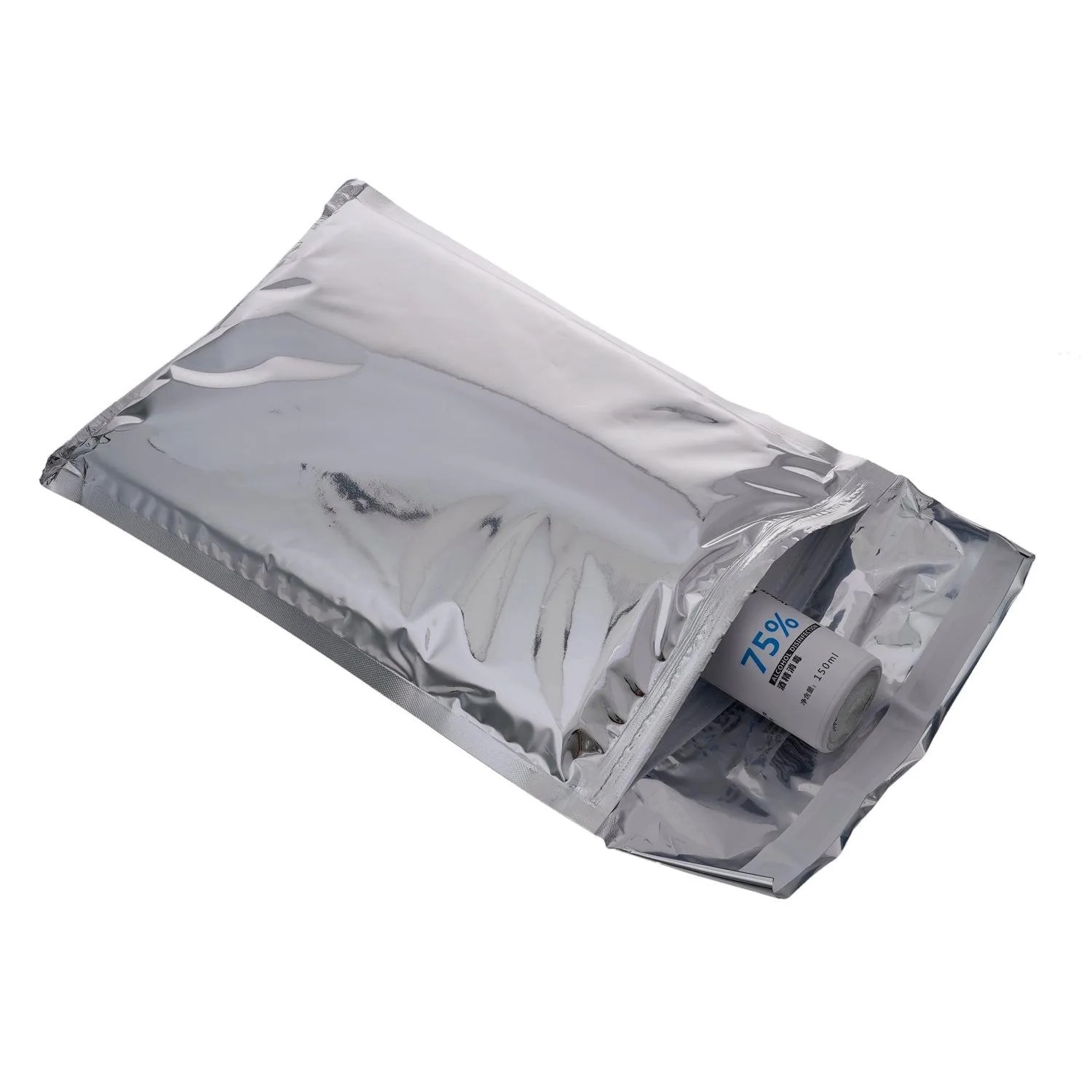
- The specified metallised foil mailer combines a reflective outer film, a 20 mm full-face sponge insulation layer, and a wipe-clean PE inner film for chilled food, medicine, perishables, and samples.
- A two-rib zipper enables repeated access, while the peel-and-seal adhesive strip supports closed shipment. The flat, no-gusset design also helps reduce storage volume.
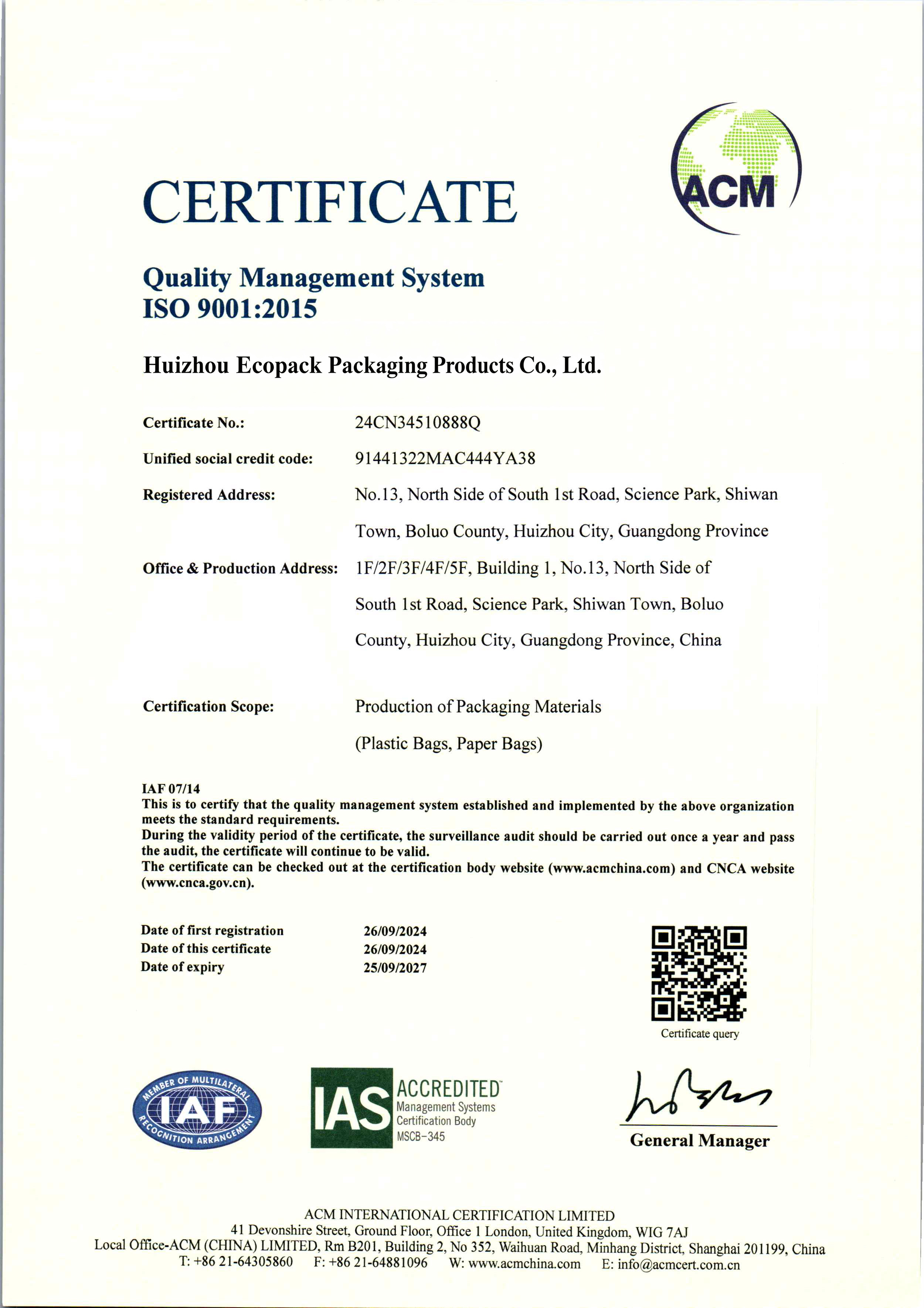
- Useful production records include incoming-material, in-process, and pre-shipment inspections managed within an ISO 9001:2015 quality system, together with AQL sampling of finished bags.
Construction and Functional Design
An insulated grocery bag should be evaluated as a complete packaging system rather than judged from a photograph of the factory. According to the specified Ecopack construction, the exterior uses metallised film, the middle contains a 20 mm sponge layer covering the full face, and the inner surface is made from PE film. The reflective outer layer and central insulation are intended to slow heat transfer, while the inner film provides a surface that can be wiped clean.
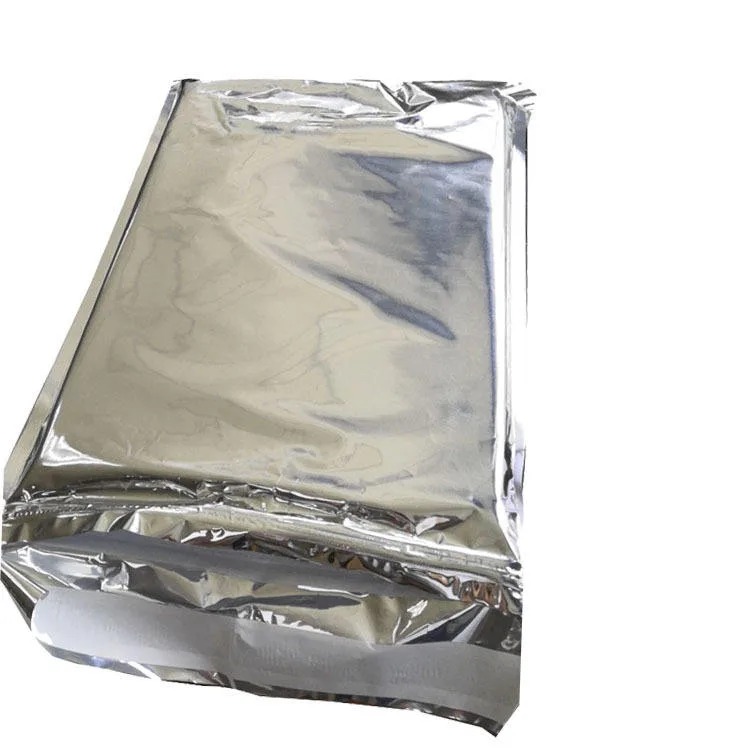
The mailer is produced in a flat, no-gusset format with custom W x H dimensions and S, M, L, and XL size options. Three sides are welded closed. Its dual closure arrangement consists of a two-rib zipper and a peel-and-seal adhesive strip, providing both reusable access and a secure shipment seal. These design details require product specifications and sample inspection because they cannot be proven by general factory images.
Customization and Process Control
Printing can be produced in one or two colours on the metallised film, with a white underlayer when the artwork requires it. Buyers can also discuss dimensions, sponge density, film gauge, matt silver appearance, and print treatment. These variables are important indicators of manufacturing capability because each one requires defined process settings and quality checks.
The intended application should be checked alongside the construction. Ecopack describes insulated solutions for grocery and cold-chain last-mile delivery, including a dedicated gel-pack sleeve, waterproof inner membrane, and colour-coded temperature band. The listed applications include medicine, chilled food, perishables, and samples. The final design should therefore be matched to the product temperature range, route duration, loading method, and handling environment.
Quality Evidence and Commercial Experience
Documented quality controls provide stronger support than facility photographs alone. Huizhou Ecopack Packaging Products Co., Ltd. states that its ISO 9001:2015 system includes inspections of incoming materials, production-stage work, and finished orders before shipment. The listed checks cover appearance, dimensions, print registration, seal strength, and lamination bond, while AQL sampling is used for finished products.
The supplier also reports FSC Chain of Custody certification for specified paper and packaging materials. In addition, a documented United States distributor case describes the use of insulated mailers for cold shipping at an annual volume of 10 million pieces. The case highlights protection from heat transfer, lower storage and shipping space than rigid foam packaging, and reduced waste. Such experience demonstrates commercial relevance, but it should be supplemented with testing for the buyer's specific product and delivery conditions.
Evidence Comparison
| Evidence or Feature | What It May Confirm | What It Does Not Prove by Itself |
|---|---|---|
| Factory photographs | Presence of a physical facility, equipment, production areas, or personnel | Material performance, inspection outcomes, or consistent results across lots |
| Construction specifications | Metallised outer film, 20 mm sponge, PE inner layer, welded edges, and closure configuration | Thermal performance for a particular route, load, temperature, or duration |
| Quality records and certification | Defined inspection stages and checks for appearance, dimensions, printing, seals, and lamination | Compliance with an unstated buyer standard or the validity of an unverified test result |
| Application records and customer cases | Reported use for chilled food, medicine, perishables, samples, and commercial cold shipping | Universal suitability for every grocery item, climate, route, or handling process |
Frequently Asked Questions
Are factory photos sufficient to verify insulated grocery bag production?
No. Photos can help establish that a physical manufacturing operation exists, but buyers also need construction data, process details, quality records, certification evidence, samples, and application information.
What materials are used in the specified insulated mailer?
The stated structure consists of metallised film on the outside, a 20 mm full-face sponge layer in the middle, and PE film on the inside. The bag has welded edges, a two-rib zipper, and a peel-and-seal adhesive strip.
Which inspections are carried out?
Quality checks are described at the incoming-material, in-process, and pre-shipment stages. Finished goods are subject to AQL sampling, including inspection of appearance, dimensions, print registration, seal strength, and lamination bond.
Conclusion and Buyer Recommendations
Factory photos should be treated as initial supporting evidence rather than final proof of insulated grocery bag capability. Buyers should request and compare the complete construction, closure method, customization options, inspection procedures, certification documents, samples, and relevant cold-chain experience. Huizhou Ecopack Packaging Products Co., Ltd. identifies itself as a manufacturer and exporter with in-house R&D, printing, lamination, bag making, and inspection capabilities. Samples are stated to require 3 to 5 working days before production begins after artwork approval. For technical guidance or customized solutions, contact manager@ecoppack.com.
About the Manufacturer
Huizhou Ecopack Packaging Products Co., Ltd. is a flexible packaging manufacturer based in Guangdong, China. Founded in 2011, the company produces custom composite pouches and bags for insulated mailers, thermal packaging, coffee, pet food, spout, kraft, compostable, and ESD applications. It reports operating a factory site of more than 10,000 square meters and production capacity exceeding 500,000 pouches per day. Reported certifications include ISO 9001:2015 Quality Management System and FSC Chain of Custody, with customers across several industries.

REPORT