







-
 Agriculture
-
 Health-Care
-
 Environment
-
 Construction-Real-Estate
-
 Tools-Hardware
-
 Home-Garden
-
 Furniture
-
 Luggage-Bags-Cases
-
 Medical-devices-Supplies
-
 Gifts-Crafts
-
 Sports-Entertainment
-
 Food-Beverage
-
 Vehicles-Transportation
-
 Power-Transmission
-
 Material-Handling
-
 Renewable-Energy
-
 Safety
-
 Testing-Instrument-Equipment
-
 Construction-Building-Machinery
-
 Pet-Supplies
-
 Personal-Care-Household-Cleaning
-
 Vehicle-Accessories-Electronics-Tools
-
 School-Office-Supplies
-
 Packaging-Printing
-
 Mother-Kids-Toys
-
 Business-Services
-
 Commercial-Equipment-Machinery
-
 Apparel-Accessories
-
 Security
-
 Shoes-Accessories
-
 Vehicle-Parts-Accessories
-
 Jewelry-Eyewear-Watches-Accessories
-
 Lights-Lighting
-
 Fabric-Textile-Raw-Material
-
 Fabrication-Services
-
 Industrial-Machinery
-
 Consumer-Electronics
-
 Electrical-Equipment-Supplies
-
 Electronic-Components-Accessories-Telecommunications
-
 Home-Appliances
-
 Beauty
-
 Chemicals
-
 Rubber-Plastics
-
 Metals-Alloys


























































































































































































































































































































































































































































































































































































- Masonry Materials
- Curtain Walls & Accessories
- Earthwork Products
- Fireproofing Materials
- Heat Insulation Materials
- Plastic Building Materials
- Building Boards
- Soundproofing Materials
- Timber
- Waterproofing Materials
- Balustrades & Handrails
- Bathroom & Kitchen
- Flooring & Accessories
- Tiles & Accessories
- Door, Window & Accessories
- Fireplaces & Stoves
- Floor Heating Systems & Parts
- Stairs & Stair Parts
- Ceilings
- Elevators & Escalators
- Stone
- Countertops, Vanity Tops & Table Tops
- Mosaics
- Metal Building Materials
- Multifunctional Materials
- Ladders & Scaffoldings
- Mouldings
- Corner Guards
- Decorative Films
- Formwork
- Building & Industrial Glass
- Other Construction & Real Estate
- Wallpapers/Wall panels
- HVAC System & Parts
- Outdoor Facilities
- Prefabricated Buildings
- Festive & Party Supplies
- Bathroom Products
- Household Sundries
- Rain Gear
- Garden Supplies
- Household Cleaning Tools & Accessories
- Lighters & Smoking Accessories
- Home Storage & Organization
- Household Scales
- Smart Home Improvement
- Home Textiles
- Kitchenware
- Drinkware & Accessories
- Dinnerware, Coffee & Wine
- Home Decor
- Golf
- Fitness & Body Building
- Amusement Park Facilities
- Billiards, Board Game,Coin Operated Games
- Musical Instruments
- Outdoor Affordable Luxury Sports
- Camping & Hiking
- Fishing
- Sports Safety&Rehabilitation
- Ball Sports Equipments
- Water Sports
- Winter Sports
- Luxury Travel Equipments
- Sports Shoes, Bags & Accessories
- Cycling
- Other Sports & Entertainment Products
- Artificial Grass&Sports Flooring&Sports Court Equipment
- Scooters
- Food Ingredients
- Honey & Honey Products
- Snacks
- Nuts & Kernels
- Seafood
- Plant & Animal Oil
- Beverages
- Fruit & Vegetable Products
- Frog & Escargot
- Bean Products
- Egg Products
- Dairy Products
- Seasonings & Condiments
- Canned Food
- Instant Food
- Baked Goods
- Other Food & Beverage
- Meat & Poultry
- Confectionery
- Grain Products
- Feminie Care
- Hair Care & Styling
- Body Care
- Hands & Feet Care
- Hygiene Products
- Men's Grooming
- Laundry Cleaning Supplies
- Travel Size & Gift Sets
- Room Deodorizers
- Other Personal Care Products
- Pest Control Products
- Special Household Cleaning
- Floor Cleaning
- Kitchen & Bathroom Cleaning
- Oral Care
- Bath Supplies
- Yellow Pages
- Correction Supplies
- Office Binding Supplies
- Office Cutting Supplies
- Board Erasers
- Office Adhesives & Tapes
- Education Supplies
- Pencil Cases & Bags
- Notebooks & Writing Pads
- File Folder Accessories
- Calendars
- Writing Accessories
- Commercial Office Supplies
- Pencil Sharpeners
- Pens
- Letter Pad/Paper
- Paper Envelopes
- Desk Organizers
- Pencils
- Markers & Highlighters
- Filing Products
- Art Supplies
- Easels
- Badge Holder & Accessories
- Office Paper
- Printer Supplies
- Book Covers
- Other Office & School Supplies
- Stationery Set
- Boards
- Clipboards
- Stamps
- Drafting Supplies
- Stencils
- Electronic Dictionary
- Books
- Map
- Magazines
- Calculators
- Baby & Toddler Toys
- Educational Toys
- Classic Toys
- Dress Up & Pretend Play
- Toy Vehicle
- Stuffed Animals & Plush Toys
- Outdoor Toys & Structures
- Balloons & Accessories
- Baby Food
- Children's Clothing
- Baby Supplies & Products
- Maternity Clothes
- Kids Shoes
- Baby Care
- Novelty & Gag Toys
- Dolls & Accessories
- Puzzle & Games
- Blocks & Model Building Toys
- Toddler Clothing
- Baby Clothing
- Kids' Luggage & Bags
- Arts, Crafts & DIY Toys
- Action & Toy Figures
- Baby Appliances
- Hobbies & Models
- Remote Control Toys
- Promotional Toys
- Pregnancy & Maternity
- Hygiene Products
- Kid's Textile&Bedding
- Novelty & Special Use
- Toy Weapons
- Baby Gifts
- Baby Storage & Organization
- Auto Drive Systems
- ATV/UTV Parts & Accessories
- Marine Parts & Accessories
- Other Auto Parts
- Trailer Parts & Accessories
- Auto Transmission Systems
- Train Parts & Accessories
- Universal Parts
- Railway Parts & Accessories
- Auto Brake Systems
- Aviation Parts & Accessories
- Truck Parts & Accessories
- Auto Suspension Systems
- Auto Lighting Systems
- New Energy Vehicle Parts & Accessories
- Auto Steering Systems
- Wheels, Tires & Accessories
- Bus Parts & Accessories
- Auto Performance Parts
- Cooling System
- Go-Kart & Kart Racer Parts & Accessories
- Air Conditioning Systems
- Heavy Duty Vehicle Parts & Accessories
- Auto Electrical Systems
- Auto Body Systems
- Auto Engine Systems
- Container Parts & Accessories
- Motorcycle Parts & Accessories
- Refrigeration & Heat Exchange Equipment
- Machine Tool Equipment
- Food & Beverage Machinery
- Agricultural Machinery & Equipment
- Apparel & Textile Machinery
- Chemical Machinery
- Packaging Machines
- Paper Production Machinery
- Plastic & Rubber Processing Machinery
- Industrial Robots
- Electronic Products Machinery
- Metal & Metallurgy Machinery
- Woodworking Machinery
- Home Product Manufacturing Machinery
- Machinery Accessories
- Environmental Machinery
- Machinery Service
- Electrical Equipment Manufacturing Machinery
- Industrial Compressors & Parts
- Tobacco & Cigarette Machinery
- Production Line
- Used Industrial Machinery
- Electronics Production Machinery
- Other Machinery & Industrial Equipment
- Camera, Photo & Accessories
- Portable Audio, Video & Accessories
- Television, Home Audio, Video & Accessories
- Video Games & Accessories
- Mobile Phone & Accessories
- Electronic Publications
- Earphone & Headphone & Accessories
- Speakers & Accessories
- Smart Electronics
- TV Receivers & Accessories
- Mobile Phone & Computer Repair Parts
- Chargers, Batteries & Power Supplies
- Used Electronics
- VR, AR, MR Hardware & Software
- Projectors & Presentation Equipments
- Other Consumer Electronics
- Cables & Commonly Used Accessories
- Computer Hardware & Software
- Displays, Signage and Optoelectronics
- Discrete Semiconductors
- Wireless & IoT Module and Products
- Telecommunications
- Connectors, Terminals & Accessories
- Development Boards, Electronic Modules and Kits
- Circuit Protection
- Sensors
- Isolators
- Audio Components and Products
- Integrated Circuits
- Power Supplies
- Relays
- RF, Microwave and RFID
- Electronic Accessories & Supplies
- Passive Components
- PCB & PCBA
- Air Quality Appliances
- Home Appliance Parts
- Heating & Cooling Appliances
- Small Kitchen Appliances
- Laundry Appliances
- Water Heaters
- Water Treatment Appliances
- Refrigerators & Freezers
- Personal Care & Beauty Appliances
- Major Kitchen Appliances
- Cleaning Appliances
- Second-hand Appliances
- Smart Home Appliances
- Other Home Appliances
- Energy Chemicals
- Inorganic Chemicals
- Basic Organic Chemicals
- Agrochemicals
- Admixture & Additives
- Catalysts & Chemical Auxiliary Agents
- Pigments & Dyestuff
- Coating & Paint
- Daily Chemicals
- Polymer
- Organic Intermediate
- Adhesives & Sealants
- Chemical Waste
- Biological Chemical Products
- Surface Treatment Chemicals
- Painting & Coating
- Chemical Reagents
- Flavor & Fragrance
- Non-Explosive Demolition Agents
- Other Chemicals
- Custom Chemical Services

How to Wash-Test a Hoodie with Rubber Transfer Patches
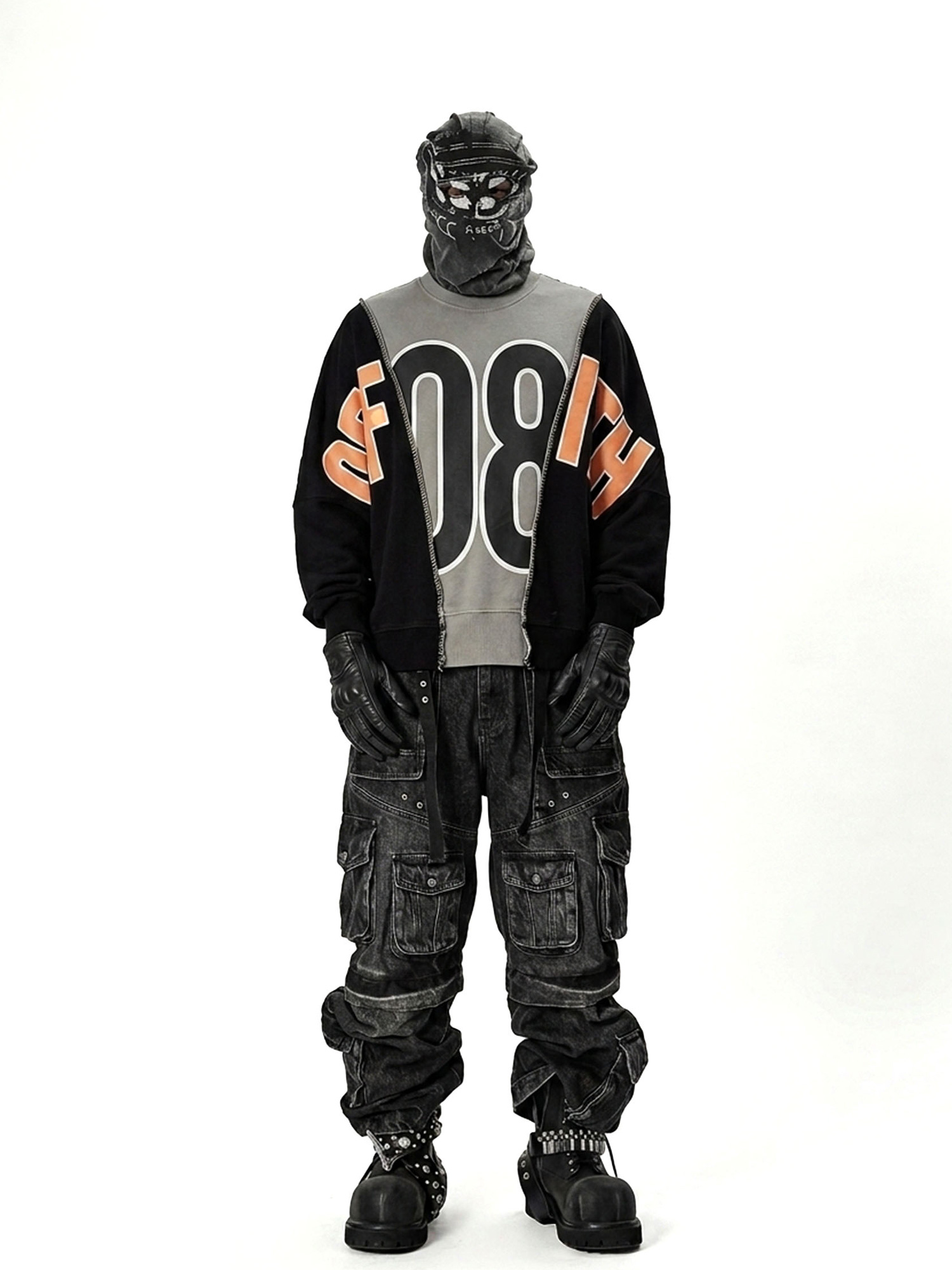
Testing a hoodie sample decorated with rubber transfer patches requires more than checking whether the garment looks clean after laundering. The evaluation should confirm that the patch remains firmly attached, visually stable, and properly aligned while the hoodie retains its approved size, shape, color, and construction. Use the buyer's care instructions and quality standards to define the wash sequence, number of cycles, and acceptance criteria.
Recommended Wash Evaluation
Begin by examining the unwashed sample and recording the patch position, length, width, edge profile, surface finish, and key garment measurements. Photograph the front, back, patch area, seams, cuffs, waistband, and any other details that may change during laundering. Keep an approved unwashed sample available for direct comparison throughout the assessment.
After each planned wash stage, inspect the rubber transfer patch and the surrounding fabric. Pay close attention to adhesion failure, lifted edges, bubbles, peeling, movement, and separation between the patch and hoodie surface. The decoration should remain securely bonded without visible gaps or deformation.
What to Inspect After Laundering
Patch Appearance and Durability
Review the face of the patch under consistent lighting. Look for cracking, dullness, gloss variation, color change, distorted lettering or graphics, loss of detail, and changes to the original outline. The patch should maintain the appearance and profile shown on the approved reference sample.
Color and Surface Interaction
Check for dye migration in both directions. Color from the hoodie should not stain the rubber patch, and the patch should not bleed onto the garment. Compare the washed sample with the unwashed reference to identify localized staining, faded areas, or a visible color difference around the decorated zone.
Hoodie Construction and Measurements
The garment itself must be assessed as part of the wash test. Measure the body, sleeves, cuffs, waistband, and patch location again, then check for shrinkage, twisting, seam movement, fabric distortion, and surface changes. Inspect whether the patch remains centered and whether the surrounding material has puckered or stretched.

Documentation and Production Approval
Use the same lighting, camera position, measurement points, and inspection sequence for every wash stage. Record the wash temperature, cycle, detergent, drying method, number of washes, sample identification, and observed defects. Flexing or rubbing checks may be added when they are included in the buyer's approved protocol; no specific laboratory method should be assumed without a defined requirement.
Approve the sample only when both the rubber transfer and the complete hoodie meet the agreed appearance, adhesion, color, dimensional, and construction limits. A repeatable record is especially important for brands placing recurring orders or releasing multiple drops.
| Evaluation category | Points to record | Approval objective |
|---|---|---|
| Patch bonding | Edge lift, peeling, bubbles, separation, and unwanted movement | The patch remains firmly attached across the tested area |
| Patch finish | Cracks, deformation, gloss variation, color change, and missing detail | The washed appearance matches the approved reference |
| Color behavior | Bleeding from the patch and transfer from the hoodie fabric | No unacceptable staining or visible migration is present |
| Garment stability | Body, sleeve, cuff, waistband, seam, and patch-area measurements | Dimensional changes remain within buyer-approved limits |
| Test records | Photos, measurements, wash settings, cycle count, and defect notes | Results can be traced and used for production decisions |
Frequently Asked Questions
What are the most important defects to check on a rubber transfer patch?
Inspect the perimeter for lifting, peeling, bubbling, and adhesive separation. Examine the surface for cracking, distortion, dullness, color change, and loss of graphic detail.
Does the wash test need to include the hoodie fabric?
Yes. Patch performance alone does not confirm product quality. Check shrinkage, twisting, seam stability, fabric texture, color migration, cuff shape, waistband shape, and the alignment of the decorated area.
What should be used as the comparison standard?
Compare every washed stage with an approved unwashed reference and the original recorded measurements. The buyer's care label, technical pack, and quality requirements should determine the final acceptance limits.
Practical Recommendation
A complete assessment should combine adhesion testing, appearance review, color-transfer inspection, garment measurement, and seam evaluation. This approach identifies decoration failures as well as changes caused by the hoodie fabric or construction. For brands requiring repeatable development and production support, DOLUXE provides Tech Pack reproduction, sample development, garment washing and distressing, Puff Print, and 3D embroidery services.
DOLUXE has supported a United Kingdom Shopify retailer and DTC brand with private-label development, small-batch fast reorders, and replenishment of successful products. With orders of 1,000 pieces per SKU and 24 annual drops, consistent patch application and documented wash performance were important for maintaining product quality across releases.
DOLUXE operates an independent R&D and design team and develops more than 500 new designs each year. Its quality controls include pre-production sample approval, mid-production inspection, and final AQL 2.5 inspection based on ISO 2859-1. For technical guidance or project support, contact yutianfang88@gmail.com.
About Us
Dongguan City Dule Garment Co.,Ltd, operating under the DOLUXE brand, is a professional OEM/ODM streetwear and heavyweight apparel manufacturer established in 2007 and headquartered in Humen Town, Dongguan, Guangdong. The company operates two factories totaling 15,000 square meters, with 130+ skilled workers and annual capacity of 1.2 million pieces. Its product range includes heavyweight hoodies, heavyweight T-shirts, sweatshirts, cargo pants, streetwear jackets, denim, shorts, vests, tracksuits, and matching sets. It has served clients across multiple industries.

REPORT