







-
 Agriculture
-
 Health-Care
-
 Environment
-
 Construction-Real-Estate
-
 Tools-Hardware
-
 Home-Garden
-
 Furniture
-
 Luggage-Bags-Cases
-
 Medical-devices-Supplies
-
 Gifts-Crafts
-
 Sports-Entertainment
-
 Food-Beverage
-
 Vehicles-Transportation
-
 Power-Transmission
-
 Material-Handling
-
 Renewable-Energy
-
 Safety
-
 Testing-Instrument-Equipment
-
 Construction-Building-Machinery
-
 Pet-Supplies
-
 Personal-Care-Household-Cleaning
-
 Vehicle-Accessories-Electronics-Tools
-
 School-Office-Supplies
-
 Packaging-Printing
-
 Mother-Kids-Toys
-
 Business-Services
-
 Commercial-Equipment-Machinery
-
 Apparel-Accessories
-
 Security
-
 Shoes-Accessories
-
 Vehicle-Parts-Accessories
-
 Jewelry-Eyewear-Watches-Accessories
-
 Lights-Lighting
-
 Fabric-Textile-Raw-Material
-
 Fabrication-Services
-
 Industrial-Machinery
-
 Consumer-Electronics
-
 Electrical-Equipment-Supplies
-
 Electronic-Components-Accessories-Telecommunications
-
 Home-Appliances
-
 Beauty
-
 Chemicals
-
 Rubber-Plastics
-
 Metals-Alloys


























































































































































































































































































































































































































































































































































































- Masonry Materials
- Curtain Walls & Accessories
- Earthwork Products
- Fireproofing Materials
- Heat Insulation Materials
- Plastic Building Materials
- Building Boards
- Soundproofing Materials
- Timber
- Waterproofing Materials
- Balustrades & Handrails
- Bathroom & Kitchen
- Flooring & Accessories
- Tiles & Accessories
- Door, Window & Accessories
- Fireplaces & Stoves
- Floor Heating Systems & Parts
- Stairs & Stair Parts
- Ceilings
- Elevators & Escalators
- Stone
- Countertops, Vanity Tops & Table Tops
- Mosaics
- Metal Building Materials
- Multifunctional Materials
- Ladders & Scaffoldings
- Mouldings
- Corner Guards
- Decorative Films
- Formwork
- Building & Industrial Glass
- Other Construction & Real Estate
- Wallpapers/Wall panels
- HVAC System & Parts
- Outdoor Facilities
- Prefabricated Buildings
- Festive & Party Supplies
- Bathroom Products
- Household Sundries
- Rain Gear
- Garden Supplies
- Household Cleaning Tools & Accessories
- Lighters & Smoking Accessories
- Home Storage & Organization
- Household Scales
- Smart Home Improvement
- Home Textiles
- Kitchenware
- Drinkware & Accessories
- Dinnerware, Coffee & Wine
- Home Decor
- Golf
- Fitness & Body Building
- Amusement Park Facilities
- Billiards, Board Game,Coin Operated Games
- Musical Instruments
- Outdoor Affordable Luxury Sports
- Camping & Hiking
- Fishing
- Sports Safety&Rehabilitation
- Ball Sports Equipments
- Water Sports
- Winter Sports
- Luxury Travel Equipments
- Sports Shoes, Bags & Accessories
- Cycling
- Other Sports & Entertainment Products
- Artificial Grass&Sports Flooring&Sports Court Equipment
- Scooters
- Food Ingredients
- Honey & Honey Products
- Snacks
- Nuts & Kernels
- Seafood
- Plant & Animal Oil
- Beverages
- Fruit & Vegetable Products
- Frog & Escargot
- Bean Products
- Egg Products
- Dairy Products
- Seasonings & Condiments
- Canned Food
- Instant Food
- Baked Goods
- Other Food & Beverage
- Meat & Poultry
- Confectionery
- Grain Products
- Feminie Care
- Hair Care & Styling
- Body Care
- Hands & Feet Care
- Hygiene Products
- Men's Grooming
- Laundry Cleaning Supplies
- Travel Size & Gift Sets
- Room Deodorizers
- Other Personal Care Products
- Pest Control Products
- Special Household Cleaning
- Floor Cleaning
- Kitchen & Bathroom Cleaning
- Oral Care
- Bath Supplies
- Yellow Pages
- Correction Supplies
- Office Binding Supplies
- Office Cutting Supplies
- Board Erasers
- Office Adhesives & Tapes
- Education Supplies
- Pencil Cases & Bags
- Notebooks & Writing Pads
- File Folder Accessories
- Calendars
- Writing Accessories
- Commercial Office Supplies
- Pencil Sharpeners
- Pens
- Letter Pad/Paper
- Paper Envelopes
- Desk Organizers
- Pencils
- Markers & Highlighters
- Filing Products
- Art Supplies
- Easels
- Badge Holder & Accessories
- Office Paper
- Printer Supplies
- Book Covers
- Other Office & School Supplies
- Stationery Set
- Boards
- Clipboards
- Stamps
- Drafting Supplies
- Stencils
- Electronic Dictionary
- Books
- Map
- Magazines
- Calculators
- Baby & Toddler Toys
- Educational Toys
- Classic Toys
- Dress Up & Pretend Play
- Toy Vehicle
- Stuffed Animals & Plush Toys
- Outdoor Toys & Structures
- Balloons & Accessories
- Baby Food
- Children's Clothing
- Baby Supplies & Products
- Maternity Clothes
- Kids Shoes
- Baby Care
- Novelty & Gag Toys
- Dolls & Accessories
- Puzzle & Games
- Blocks & Model Building Toys
- Toddler Clothing
- Baby Clothing
- Kids' Luggage & Bags
- Arts, Crafts & DIY Toys
- Action & Toy Figures
- Baby Appliances
- Hobbies & Models
- Remote Control Toys
- Promotional Toys
- Pregnancy & Maternity
- Hygiene Products
- Kid's Textile&Bedding
- Novelty & Special Use
- Toy Weapons
- Baby Gifts
- Baby Storage & Organization
- Auto Drive Systems
- ATV/UTV Parts & Accessories
- Marine Parts & Accessories
- Other Auto Parts
- Trailer Parts & Accessories
- Auto Transmission Systems
- Train Parts & Accessories
- Universal Parts
- Railway Parts & Accessories
- Auto Brake Systems
- Aviation Parts & Accessories
- Truck Parts & Accessories
- Auto Suspension Systems
- Auto Lighting Systems
- New Energy Vehicle Parts & Accessories
- Auto Steering Systems
- Wheels, Tires & Accessories
- Bus Parts & Accessories
- Auto Performance Parts
- Cooling System
- Go-Kart & Kart Racer Parts & Accessories
- Air Conditioning Systems
- Heavy Duty Vehicle Parts & Accessories
- Auto Electrical Systems
- Auto Body Systems
- Auto Engine Systems
- Container Parts & Accessories
- Motorcycle Parts & Accessories
- Refrigeration & Heat Exchange Equipment
- Machine Tool Equipment
- Food & Beverage Machinery
- Agricultural Machinery & Equipment
- Apparel & Textile Machinery
- Chemical Machinery
- Packaging Machines
- Paper Production Machinery
- Plastic & Rubber Processing Machinery
- Industrial Robots
- Electronic Products Machinery
- Metal & Metallurgy Machinery
- Woodworking Machinery
- Home Product Manufacturing Machinery
- Machinery Accessories
- Environmental Machinery
- Machinery Service
- Electrical Equipment Manufacturing Machinery
- Industrial Compressors & Parts
- Tobacco & Cigarette Machinery
- Production Line
- Used Industrial Machinery
- Electronics Production Machinery
- Other Machinery & Industrial Equipment
- Camera, Photo & Accessories
- Portable Audio, Video & Accessories
- Television, Home Audio, Video & Accessories
- Video Games & Accessories
- Mobile Phone & Accessories
- Electronic Publications
- Earphone & Headphone & Accessories
- Speakers & Accessories
- Smart Electronics
- TV Receivers & Accessories
- Mobile Phone & Computer Repair Parts
- Chargers, Batteries & Power Supplies
- Used Electronics
- VR, AR, MR Hardware & Software
- Projectors & Presentation Equipments
- Other Consumer Electronics
- Cables & Commonly Used Accessories
- Computer Hardware & Software
- Displays, Signage and Optoelectronics
- Discrete Semiconductors
- Wireless & IoT Module and Products
- Telecommunications
- Connectors, Terminals & Accessories
- Development Boards, Electronic Modules and Kits
- Circuit Protection
- Sensors
- Isolators
- Audio Components and Products
- Integrated Circuits
- Power Supplies
- Relays
- RF, Microwave and RFID
- Electronic Accessories & Supplies
- Passive Components
- PCB & PCBA
- Air Quality Appliances
- Home Appliance Parts
- Heating & Cooling Appliances
- Small Kitchen Appliances
- Laundry Appliances
- Water Heaters
- Water Treatment Appliances
- Refrigerators & Freezers
- Personal Care & Beauty Appliances
- Major Kitchen Appliances
- Cleaning Appliances
- Second-hand Appliances
- Smart Home Appliances
- Other Home Appliances
- Energy Chemicals
- Inorganic Chemicals
- Basic Organic Chemicals
- Agrochemicals
- Admixture & Additives
- Catalysts & Chemical Auxiliary Agents
- Pigments & Dyestuff
- Coating & Paint
- Daily Chemicals
- Polymer
- Organic Intermediate
- Adhesives & Sealants
- Chemical Waste
- Biological Chemical Products
- Surface Treatment Chemicals
- Painting & Coating
- Chemical Reagents
- Flavor & Fragrance
- Non-Explosive Demolition Agents
- Other Chemicals
- Custom Chemical Services

How Transport Simulation Checks Expose Packaging Risks in Bathtub Caddy Samples
Transport simulation checks provide a practical way to evaluate whether the packaging used for the TX-BCSG bathtub caddy can withstand handling, movement, stacking, and exposure during shipment. Because the available information defines the product and logistics specifications but does not include completed simulation results, the findings below describe the weaknesses that these inspections are designed to identify rather than reporting confirmed failures.
Key Inspection Priorities
- Review the outer carton for crushed corners, distortion, split panels, or other changes after simulated handling.
- Examine the OPP bag, individual box, and carton closures for tearing, opening, abrasion, moisture, and contamination.
- Verify that four products remain correctly positioned within the carton and that the 304 SUS surface is protected from rubbing or impact.
- Match inspection photographs and shipping documents with each sample so that damage can be associated with a specific transport stage.
Product and Packaging Reference Points
The TX-BCSG is a 304 SUS bathtub caddy available in regular chrome and gold finishes, with additional colors available on request. Its product dimensions are W700/970 × D170 mm. Each unit has a gross weight of 2,750 g and is packaged in an OPP bag before being placed in an individual box.

Four individual units are packed into one carton. The carton measures 57 × 33.5 × 21 cm and has a gross weight of 12.85 kg. These figures establish the reference load for a sample inspection. If the outer carton cannot retain its shape under handling pressure, the packaging system may not provide adequate protection for the combined product weight.
Outer Carton Performance
Carton condition should be checked before and after the transport simulation. Compressed corners, bowed surfaces, broken seams, punctures, and separated panels can indicate that the box is vulnerable to compression or impact. Inspectors should document the location of every defect and compare it with the condition of the individual boxes inside.
A damaged carton does not automatically mean that the bathtub caddy is unusable, but it signals a reduced protection margin. Repeated deformation at the same carton position may point to insufficient board strength, poor load distribution, or excessive movement during handling.
Internal Movement and Surface Protection
The sample should also be opened to determine whether each caddy remains stable inside its OPP bag and individual box. Excess clearance can allow the product to shift, strike the package walls, or rub against another unit. This is especially important for chrome and gold finishes, where friction may create scratches, scuffing, or visible loss of appearance.
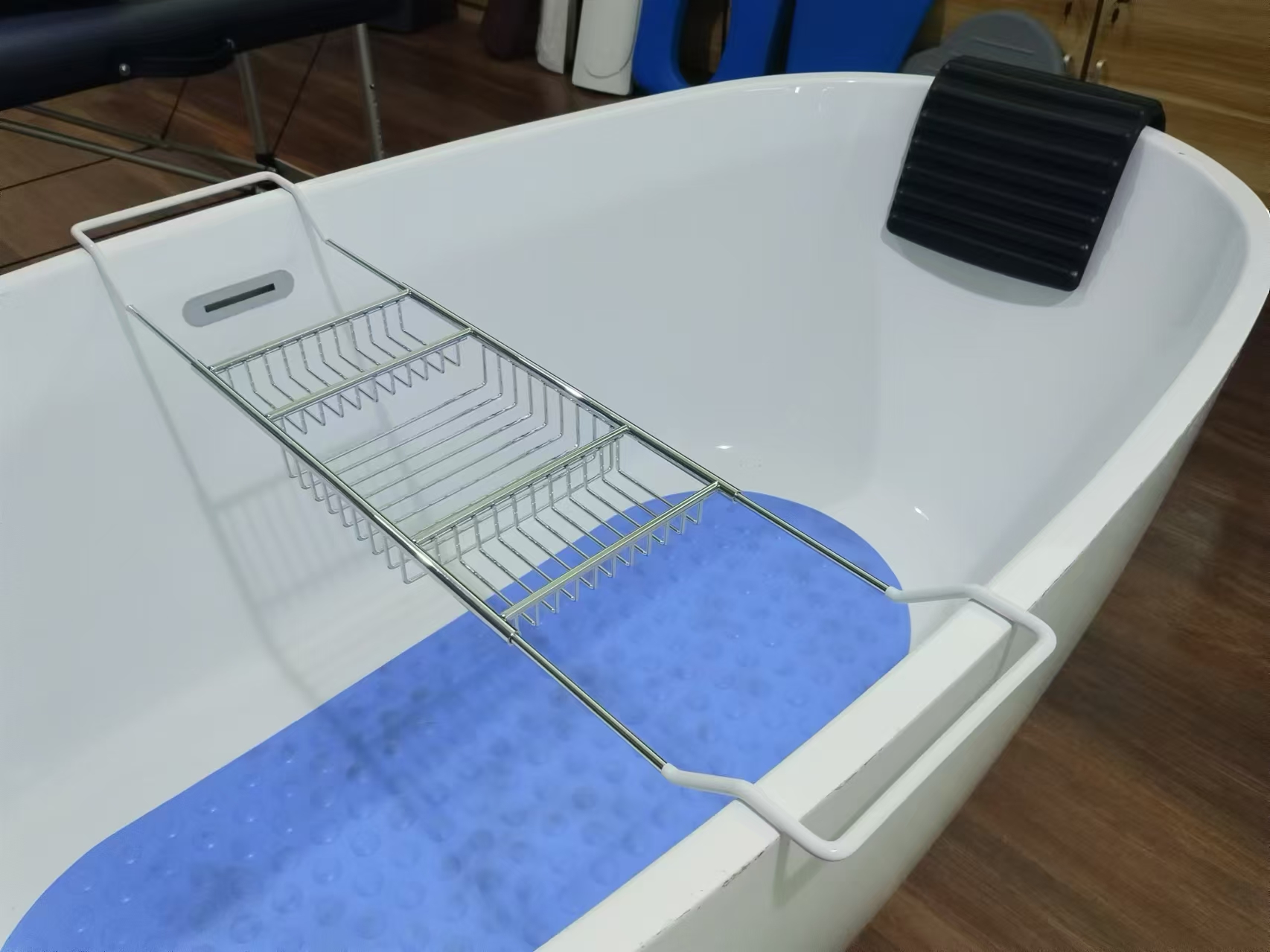
Inspectors should record the product position, contact points, signs of abrasion, and any change to the 304 SUS surface. A functional product can still represent a packaging failure if its finish is damaged or if the package does not consistently hold it in place.
Closure, Moisture, and Package Integrity
Packaging integrity includes the condition of the OPP bag, the individual box, the carton closure, and any protective materials used inside. A torn bag, open box, failed tape seal, wet carton, or visible contamination should be recorded even when the stainless-steel product appears intact. Moisture entry can weaken carton materials and create additional risk during storage or onward delivery.
The manufacturer’s stated quality process includes production inspection and finished-product appearance inspection before packaging. Transport simulation adds another control point by showing whether the packaged product remains in acceptable condition after shipment-related stress.
Traceability During Transport Evaluation
Physical inspection becomes more useful when it is connected to shipment records. HTH states that shipments are photographed and that bill of lading numbers and shipping order numbers are supplied after booking. Arrival updates covering port receipt, customs clearance, and warehousing can help identify when a package condition changed.

These records do not replace a laboratory transport test, but they create an evidence trail for sample findings. Missing photographs or incomplete shipment references make it harder to determine whether damage resulted from packing, loading, ocean or air transit, customs handling, or warehouse operations.
HTH lists ISO9001 for all products and SGS testing for the EVA pillow and specified shower seat models. This information offers supplier-quality context, but the supplied material does not state that these certifications specifically validate the TX-BCSG bathtub caddy or its transport packaging.
A United States importer or distributor has worked with the manufacturer on a shower seat product for more than 10 years. The case includes shipment rescheduling during delays, consistent quality-control metrics, and advance notice of raw-material price changes. It supports the company’s experience with customer coordination, but it does not constitute a documented transport-simulation result for the bathtub caddy.
Inspection Findings at a Glance
| Inspection area | Reference information | Potential weakness shown by failure |
|---|---|---|
| Carton structure | 57 × 33.5 × 21 cm carton, four units, 12.85 kg gross weight | Crushed corners, split panels, or deformation may show inadequate resistance to handling and compression |
| Individual packaging | OPP bag plus individual box; 2,750 g gross weight per unit | Torn bags, failed closures, wet cartons, or crushed boxes indicate insufficient package integrity |
| Product restraint | 304 SUS construction; W700/970 × D170 mm; chrome or gold finishes | Shifting, rubbing, scratches, or finish loss suggest inadequate separation or internal restraint |
| Shipment documentation | Photographs, bill of lading number, shipping order number, and arrival-stage updates | Incomplete records prevent reliable identification of the transport stage linked to damage |
Frequently Asked Questions
What is the first weakness a packaging sample check can identify?
It can quickly show visible damage to the carton, individual box, OPP bag, closures, and product finish after simulated handling. Results should be assessed against the stated package weight, dimensions, and carton quantity.
Which TX-BCSG specifications should be included in the inspection record?
Record the OPP-bag-and-box format, 2,750 g single-unit gross weight, four-unit carton quantity, 57 × 33.5 × 21 cm carton size, 12.85 kg carton gross weight, and any change to the 304 SUS appearance.
Why are logistics records useful after a sample check?
Shipment photographs, bill of lading numbers, shipping order numbers, and updates for port arrival, customs clearance, and warehousing help connect a physical defect with the relevant logistics activity.
Conclusion and Recommendations
For the TX-BCSG bathtub caddy, transport simulation checks should evaluate carton strength, internal stability, closure performance, moisture exposure, surface condition, and shipment traceability. The available information does not document actual simulation failures, so each weakness should be confirmed through recorded before-and-after sample evidence.
The product has a stated MOQ of 50 pieces, a delivery period of 10–30 days depending on order quantity, and a one-year product guarantee with one-on-one after-sales service. HTH supports FBA sea freight, air freight, and land freight, with shipment records provided during the logistics process. For detailed technical solutions or support, please contact us at tongxin@tongxinyz.com.
About Us
Foshan City Heart to Heart Household Wares Manufacturer designs, manufactures, and sells PU products such as bathtub pillows, shower chairs, backrests, cushions, armrests, medical instrument accessories, and furniture and automotive parts. Founded in 2002, the company operates a 5,000 sqm factory and reports monthly production capacity of approximately 50,000 pieces. Its stated credentials include ISO9001 and SGS certifications, and it serves customers in several industries.

REPORT