







-
 Agriculture
-
 Health-Care
-
 Environment
-
 Construction-Real-Estate
-
 Tools-Hardware
-
 Home-Garden
-
 Furniture
-
 Luggage-Bags-Cases
-
 Medical-devices-Supplies
-
 Gifts-Crafts
-
 Sports-Entertainment
-
 Food-Beverage
-
 Vehicles-Transportation
-
 Power-Transmission
-
 Material-Handling
-
 Renewable-Energy
-
 Safety
-
 Testing-Instrument-Equipment
-
 Construction-Building-Machinery
-
 Pet-Supplies
-
 Personal-Care-Household-Cleaning
-
 Vehicle-Accessories-Electronics-Tools
-
 School-Office-Supplies
-
 Packaging-Printing
-
 Mother-Kids-Toys
-
 Business-Services
-
 Commercial-Equipment-Machinery
-
 Apparel-Accessories
-
 Security
-
 Shoes-Accessories
-
 Vehicle-Parts-Accessories
-
 Jewelry-Eyewear-Watches-Accessories
-
 Lights-Lighting
-
 Fabric-Textile-Raw-Material
-
 Fabrication-Services
-
 Industrial-Machinery
-
 Consumer-Electronics
-
 Electrical-Equipment-Supplies
-
 Electronic-Components-Accessories-Telecommunications
-
 Home-Appliances
-
 Beauty
-
 Chemicals
-
 Rubber-Plastics
-
 Metals-Alloys


























































































































































































































































































































































































































































































































































































- Masonry Materials
- Curtain Walls & Accessories
- Earthwork Products
- Fireproofing Materials
- Heat Insulation Materials
- Plastic Building Materials
- Building Boards
- Soundproofing Materials
- Timber
- Waterproofing Materials
- Balustrades & Handrails
- Bathroom & Kitchen
- Flooring & Accessories
- Tiles & Accessories
- Door, Window & Accessories
- Fireplaces & Stoves
- Floor Heating Systems & Parts
- Stairs & Stair Parts
- Ceilings
- Elevators & Escalators
- Stone
- Countertops, Vanity Tops & Table Tops
- Mosaics
- Metal Building Materials
- Multifunctional Materials
- Ladders & Scaffoldings
- Mouldings
- Corner Guards
- Decorative Films
- Formwork
- Building & Industrial Glass
- Other Construction & Real Estate
- Wallpapers/Wall panels
- HVAC System & Parts
- Outdoor Facilities
- Prefabricated Buildings
- Festive & Party Supplies
- Bathroom Products
- Household Sundries
- Rain Gear
- Garden Supplies
- Household Cleaning Tools & Accessories
- Lighters & Smoking Accessories
- Home Storage & Organization
- Household Scales
- Smart Home Improvement
- Home Textiles
- Kitchenware
- Drinkware & Accessories
- Dinnerware, Coffee & Wine
- Home Decor
- Golf
- Fitness & Body Building
- Amusement Park Facilities
- Billiards, Board Game,Coin Operated Games
- Musical Instruments
- Outdoor Affordable Luxury Sports
- Camping & Hiking
- Fishing
- Sports Safety&Rehabilitation
- Ball Sports Equipments
- Water Sports
- Winter Sports
- Luxury Travel Equipments
- Sports Shoes, Bags & Accessories
- Cycling
- Other Sports & Entertainment Products
- Artificial Grass&Sports Flooring&Sports Court Equipment
- Scooters
- Food Ingredients
- Honey & Honey Products
- Snacks
- Nuts & Kernels
- Seafood
- Plant & Animal Oil
- Beverages
- Fruit & Vegetable Products
- Frog & Escargot
- Bean Products
- Egg Products
- Dairy Products
- Seasonings & Condiments
- Canned Food
- Instant Food
- Baked Goods
- Other Food & Beverage
- Meat & Poultry
- Confectionery
- Grain Products
- Feminie Care
- Hair Care & Styling
- Body Care
- Hands & Feet Care
- Hygiene Products
- Men's Grooming
- Laundry Cleaning Supplies
- Travel Size & Gift Sets
- Room Deodorizers
- Other Personal Care Products
- Pest Control Products
- Special Household Cleaning
- Floor Cleaning
- Kitchen & Bathroom Cleaning
- Oral Care
- Bath Supplies
- Yellow Pages
- Correction Supplies
- Office Binding Supplies
- Office Cutting Supplies
- Board Erasers
- Office Adhesives & Tapes
- Education Supplies
- Pencil Cases & Bags
- Notebooks & Writing Pads
- File Folder Accessories
- Calendars
- Writing Accessories
- Commercial Office Supplies
- Pencil Sharpeners
- Pens
- Letter Pad/Paper
- Paper Envelopes
- Desk Organizers
- Pencils
- Markers & Highlighters
- Filing Products
- Art Supplies
- Easels
- Badge Holder & Accessories
- Office Paper
- Printer Supplies
- Book Covers
- Other Office & School Supplies
- Stationery Set
- Boards
- Clipboards
- Stamps
- Drafting Supplies
- Stencils
- Electronic Dictionary
- Books
- Map
- Magazines
- Calculators
- Baby & Toddler Toys
- Educational Toys
- Classic Toys
- Dress Up & Pretend Play
- Toy Vehicle
- Stuffed Animals & Plush Toys
- Outdoor Toys & Structures
- Balloons & Accessories
- Baby Food
- Children's Clothing
- Baby Supplies & Products
- Maternity Clothes
- Kids Shoes
- Baby Care
- Novelty & Gag Toys
- Dolls & Accessories
- Puzzle & Games
- Blocks & Model Building Toys
- Toddler Clothing
- Baby Clothing
- Kids' Luggage & Bags
- Arts, Crafts & DIY Toys
- Action & Toy Figures
- Baby Appliances
- Hobbies & Models
- Remote Control Toys
- Promotional Toys
- Pregnancy & Maternity
- Hygiene Products
- Kid's Textile&Bedding
- Novelty & Special Use
- Toy Weapons
- Baby Gifts
- Baby Storage & Organization
- Auto Drive Systems
- ATV/UTV Parts & Accessories
- Marine Parts & Accessories
- Other Auto Parts
- Trailer Parts & Accessories
- Auto Transmission Systems
- Train Parts & Accessories
- Universal Parts
- Railway Parts & Accessories
- Auto Brake Systems
- Aviation Parts & Accessories
- Truck Parts & Accessories
- Auto Suspension Systems
- Auto Lighting Systems
- New Energy Vehicle Parts & Accessories
- Auto Steering Systems
- Wheels, Tires & Accessories
- Bus Parts & Accessories
- Auto Performance Parts
- Cooling System
- Go-Kart & Kart Racer Parts & Accessories
- Air Conditioning Systems
- Heavy Duty Vehicle Parts & Accessories
- Auto Electrical Systems
- Auto Body Systems
- Auto Engine Systems
- Container Parts & Accessories
- Motorcycle Parts & Accessories
- Refrigeration & Heat Exchange Equipment
- Machine Tool Equipment
- Food & Beverage Machinery
- Agricultural Machinery & Equipment
- Apparel & Textile Machinery
- Chemical Machinery
- Packaging Machines
- Paper Production Machinery
- Plastic & Rubber Processing Machinery
- Industrial Robots
- Electronic Products Machinery
- Metal & Metallurgy Machinery
- Woodworking Machinery
- Home Product Manufacturing Machinery
- Machinery Accessories
- Environmental Machinery
- Machinery Service
- Electrical Equipment Manufacturing Machinery
- Industrial Compressors & Parts
- Tobacco & Cigarette Machinery
- Production Line
- Used Industrial Machinery
- Electronics Production Machinery
- Other Machinery & Industrial Equipment
- Camera, Photo & Accessories
- Portable Audio, Video & Accessories
- Television, Home Audio, Video & Accessories
- Video Games & Accessories
- Mobile Phone & Accessories
- Electronic Publications
- Earphone & Headphone & Accessories
- Speakers & Accessories
- Smart Electronics
- TV Receivers & Accessories
- Mobile Phone & Computer Repair Parts
- Chargers, Batteries & Power Supplies
- Used Electronics
- VR, AR, MR Hardware & Software
- Projectors & Presentation Equipments
- Other Consumer Electronics
- Cables & Commonly Used Accessories
- Computer Hardware & Software
- Displays, Signage and Optoelectronics
- Discrete Semiconductors
- Wireless & IoT Module and Products
- Telecommunications
- Connectors, Terminals & Accessories
- Development Boards, Electronic Modules and Kits
- Circuit Protection
- Sensors
- Isolators
- Audio Components and Products
- Integrated Circuits
- Power Supplies
- Relays
- RF, Microwave and RFID
- Electronic Accessories & Supplies
- Passive Components
- PCB & PCBA
- Air Quality Appliances
- Home Appliance Parts
- Heating & Cooling Appliances
- Small Kitchen Appliances
- Laundry Appliances
- Water Heaters
- Water Treatment Appliances
- Refrigerators & Freezers
- Personal Care & Beauty Appliances
- Major Kitchen Appliances
- Cleaning Appliances
- Second-hand Appliances
- Smart Home Appliances
- Other Home Appliances
- Energy Chemicals
- Inorganic Chemicals
- Basic Organic Chemicals
- Agrochemicals
- Admixture & Additives
- Catalysts & Chemical Auxiliary Agents
- Pigments & Dyestuff
- Coating & Paint
- Daily Chemicals
- Polymer
- Organic Intermediate
- Adhesives & Sealants
- Chemical Waste
- Biological Chemical Products
- Surface Treatment Chemicals
- Painting & Coating
- Chemical Reagents
- Flavor & Fragrance
- Non-Explosive Demolition Agents
- Other Chemicals
- Custom Chemical Services

Intellectual Property Clauses for Crochet Hair Human Hair Projects
A well-drafted intellectual property clause for a crochet hair human hair project should clarify ownership, confidentiality, brand usage, approvals, infringement risk, records, and post-termination responsibilities. These terms are especially important when a project includes customized textures, colors, packaging, labels, private-label branding, or exclusive product specifications.
Essential Contract Protections
- Separate buyer-owned assets, supplier-owned know-how, and newly developed project materials.
- Protect product samples, texture formulas, color references, dimensions, pricing, customer details, and private-label information.
- Restrict the use of trademarks, logos, labels, packaging, photographs, and marketing content to approved purposes and sales channels.
- Require written approval for samples, specifications, packaging, branding, and material changes before manufacturing or market release.
- Define responsibility for third-party claims and explain available remedies, including replacement, modification, or discontinuation.
How to Structure the Intellectual Property Terms
1. Identify Each Protected Asset
A crochet hair human hair arrangement can involve product design, wholesale supply, OEM/ODM development, private-label production, and salon distribution. The agreement should list the relevant assets rather than relying on broad wording. These may include crochet hair specifications, Afro kinky bulk hair characteristics, Boho braiding hair references, samples, color charts, texture descriptions, packaging artwork, labels, product photographs, and promotional files.
Each asset should be classified as buyer-provided content, supplier pre-existing material, or a deliverable created specifically for the project. This classification reduces disputes over whether general manufacturing knowledge has been transferred along with a customized product.
2. Define Ownership, Licenses, and Exclusivity
Buyer-supplied trademarks, logos, packaging designs, artwork, product instructions, and proprietary specifications should normally remain the buyer’s property. The supplier’s existing production methods, standard product concepts, technical experience, and general manufacturing processes should remain with the supplier unless the parties sign a separate assignment.
The contract should state whether customized deliverables belong to the buyer, remain with the supplier, or are jointly controlled. If the buyer receives a license instead of ownership, the agreement should identify its duration, territory, permitted sales channels, exclusivity, and restrictions on sublicensing or reuse.
3. Protect Confidential Project Information
Confidentiality provisions should cover samples, texture and color requirements, length and density specifications, attachment details where relevant, packaging files, customer information, order quantities, pricing, sourcing data, and development records. The supplier should disclose this information only to personnel and subcontractors who need it to perform the approved work.
Those personnel and subcontractors should be subject to confidentiality obligations that are at least as protective as the main agreement. The clause should also explain how information must be returned, deleted, or retained when the project ends, subject to legally required recordkeeping.
4. Control Brand and Marketing Use
Brand-use provisions should prohibit unauthorized use of the buyer’s business name, trademarks, logos, labels, packaging, product images, and promotional copy. The agreement can identify permitted channels such as online stores, social-commerce platforms, retailers, beauty supply distributors, and salon materials.
Any public announcement, portfolio display, customer reference, online listing, or promotional statement about the customized project should require prior written permission. This prevents a supplier from presenting private-label work as an approved public case study without authorization.
5. Allocate Infringement Responsibility
Responsibility for third-party intellectual property claims should follow the source of the disputed material. The buyer should confirm that its trademarks, artwork, instructions, and supplied content are authorized for use. The supplier should address the originality or authorized use of supplier-created packaging, images, designs, and other project materials.
The agreement should establish prompt notice procedures, cooperation requirements, control of the defense, and approval rights for any settlement. It should also identify practical remedies, such as replacing the disputed material, modifying the product, removing the content, stopping use, or discontinuing the affected item.
6. Use Written Approvals and Project Records
Production should begin only after written confirmation of the relevant samples and specifications. Useful records include approved photographs, texture descriptions, color references, length and density details, packaging files, labels, invoices, inspection reports, and documented change requests.
Maintaining an approval trail improves traceability for wholesalers, distributors, salons, online retailers, and private-label hair companies. It also helps distinguish an approved variation from an unauthorized change during manufacturing or marketing.
7. Address Termination and Continuing Rights
Termination provisions should explain how the parties will handle unfinished samples, production materials, confidential information, unused packaging, digital files, and remaining inventory. They should require the removal of unauthorized listings and clarify whether protected materials must be returned or permanently deleted.
The parties should also state whether the supplier may continue using generic, non-confidential manufacturing knowledge after termination. This distinction protects the buyer’s project-specific information without preventing the supplier from applying its general technical expertise to unrelated work.
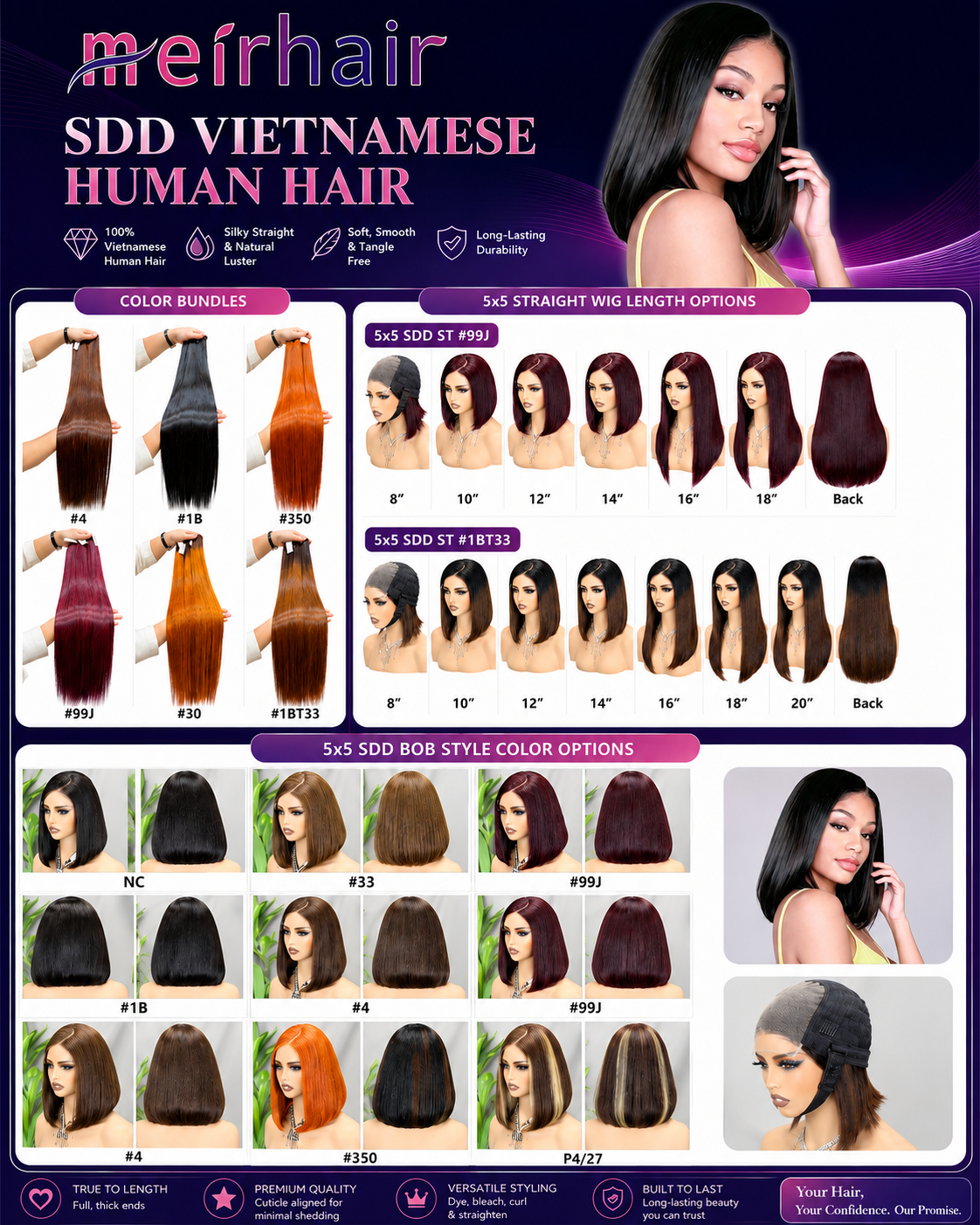
MEIRHAIR’s documented business activities include OEM/ODM customization, private-label and customized brand supply, wholesale and bulk orders, ready-stock supply, and flexible small-batch orders. Connecting intellectual property terms to the selected order model helps define the exact customization scope and permitted use of project materials.
The company’s cooperation records include crochet human hair wholesale supply for a beauty supply distributor in France and Boho braids supply for a braiding hair wholesaler in the United Kingdom. These examples relate to crochet hairstyles, protective hairstyles, professional salon installation, and multiple braiding styles, making them useful contexts for defining product, branding, and usage rights.
Clause Coverage Comparison
| Contract Topic | Recommended Provisions |
|---|---|
| Ownership and licensing | Identify buyer materials, supplier materials, customized deliverables, packaging, labels, and project files, then define ownership or license scope. |
| Confidential information | Protect samples, textures, colors, lengths, densities, prices, customer data, private-label details, and product development records. |
| Brand and content use | Control trademarks, logos, product images, packaging, online listings, marketing content, and public references to the project. |
| Approval and change management | Require written approval for samples, colors, textures, packaging, labels, specifications, and any production changes. |
| Third-party infringement | Link responsibility to the party that supplied the disputed material and establish notice, defense, cooperation, replacement, and modification procedures. |
| Termination and post-project use | Cover confidential information, unfinished work, unused packaging, inventory, digital files, unauthorized listings, and general non-confidential know-how. |
Frequently Asked Questions
What intellectual property should be named in the agreement?
The agreement should identify crochet hair specifications, texture and color requirements, samples, packaging artwork, labels, trademarks, logos, product images, marketing materials, private-label information, and project-specific development files.
Who owns customized crochet hair designs and packaging?
Ownership should be determined separately for buyer-supplied materials, supplier pre-existing assets, and newly created deliverables. The contract should also state whether the buyer receives ownership, an exclusive license, or a restricted-use license.
What should happen if a third party alleges infringement?
The agreement should assign responsibility according to the source of the disputed material. It should require prompt notice and cooperation, define who manages the response, and list remedies such as replacement, modification, removal, discontinuation, or another agreed solution.
Conclusion and Practical Recommendations
The strongest crochet hair human hair agreements combine clear ownership rules with confidentiality, brand controls, written approvals, infringement procedures, and termination obligations. The language should reflect whether the parties are working under an OEM/ODM arrangement, private-label program, wholesale order, ready-stock purchase, or flexible small-batch model.
For detailed technical solutions or support, please reach out to us via sales@brazilianhairtop.com.
About Us
Guangzhou Ruiju E-Commerce Co., Ltd. operates MEIRHAIR, a human hair brand supplying human hair wigs, Vietnamese human hair wigs, bundles, braiding hair, hair extensions, and customized hair solutions for global beauty markets.
Established in 2014, the company supports product development and customization involving textures, lengths, colors, densities, lace sizes, cap structures, attachment methods, packaging, and private-label branding. Its product range includes Boho braiding hair, crochet hair, Afro kinky bulk hair, wigs, bundles, and multiple extension systems.
Its cooperation records include projects for wholesalers, distributors, beauty supply businesses, and braiding-related customers across multiple industries.

REPORT