







-
 Agriculture
-
 Health-Care
-
 Environment
-
 Construction-Real-Estate
-
 Tools-Hardware
-
 Home-Garden
-
 Furniture
-
 Luggage-Bags-Cases
-
 Medical-devices-Supplies
-
 Gifts-Crafts
-
 Sports-Entertainment
-
 Food-Beverage
-
 Vehicles-Transportation
-
 Power-Transmission
-
 Material-Handling
-
 Renewable-Energy
-
 Safety
-
 Testing-Instrument-Equipment
-
 Construction-Building-Machinery
-
 Pet-Supplies
-
 Personal-Care-Household-Cleaning
-
 Vehicle-Accessories-Electronics-Tools
-
 School-Office-Supplies
-
 Packaging-Printing
-
 Mother-Kids-Toys
-
 Business-Services
-
 Commercial-Equipment-Machinery
-
 Apparel-Accessories
-
 Security
-
 Shoes-Accessories
-
 Vehicle-Parts-Accessories
-
 Jewelry-Eyewear-Watches-Accessories
-
 Lights-Lighting
-
 Fabric-Textile-Raw-Material
-
 Fabrication-Services
-
 Industrial-Machinery
-
 Consumer-Electronics
-
 Electrical-Equipment-Supplies
-
 Electronic-Components-Accessories-Telecommunications
-
 Home-Appliances
-
 Beauty
-
 Chemicals
-
 Rubber-Plastics
-
 Metals-Alloys


























































































































































































































































































































































































































































































































































































- Masonry Materials
- Curtain Walls & Accessories
- Earthwork Products
- Fireproofing Materials
- Heat Insulation Materials
- Plastic Building Materials
- Building Boards
- Soundproofing Materials
- Timber
- Waterproofing Materials
- Balustrades & Handrails
- Bathroom & Kitchen
- Flooring & Accessories
- Tiles & Accessories
- Door, Window & Accessories
- Fireplaces & Stoves
- Floor Heating Systems & Parts
- Stairs & Stair Parts
- Ceilings
- Elevators & Escalators
- Stone
- Countertops, Vanity Tops & Table Tops
- Mosaics
- Metal Building Materials
- Multifunctional Materials
- Ladders & Scaffoldings
- Mouldings
- Corner Guards
- Decorative Films
- Formwork
- Building & Industrial Glass
- Other Construction & Real Estate
- Wallpapers/Wall panels
- HVAC System & Parts
- Outdoor Facilities
- Prefabricated Buildings
- Festive & Party Supplies
- Bathroom Products
- Household Sundries
- Rain Gear
- Garden Supplies
- Household Cleaning Tools & Accessories
- Lighters & Smoking Accessories
- Home Storage & Organization
- Household Scales
- Smart Home Improvement
- Home Textiles
- Kitchenware
- Drinkware & Accessories
- Dinnerware, Coffee & Wine
- Home Decor
- Golf
- Fitness & Body Building
- Amusement Park Facilities
- Billiards, Board Game,Coin Operated Games
- Musical Instruments
- Outdoor Affordable Luxury Sports
- Camping & Hiking
- Fishing
- Sports Safety&Rehabilitation
- Ball Sports Equipments
- Water Sports
- Winter Sports
- Luxury Travel Equipments
- Sports Shoes, Bags & Accessories
- Cycling
- Other Sports & Entertainment Products
- Artificial Grass&Sports Flooring&Sports Court Equipment
- Scooters
- Food Ingredients
- Honey & Honey Products
- Snacks
- Nuts & Kernels
- Seafood
- Plant & Animal Oil
- Beverages
- Fruit & Vegetable Products
- Frog & Escargot
- Bean Products
- Egg Products
- Dairy Products
- Seasonings & Condiments
- Canned Food
- Instant Food
- Baked Goods
- Other Food & Beverage
- Meat & Poultry
- Confectionery
- Grain Products
- Feminie Care
- Hair Care & Styling
- Body Care
- Hands & Feet Care
- Hygiene Products
- Men's Grooming
- Laundry Cleaning Supplies
- Travel Size & Gift Sets
- Room Deodorizers
- Other Personal Care Products
- Pest Control Products
- Special Household Cleaning
- Floor Cleaning
- Kitchen & Bathroom Cleaning
- Oral Care
- Bath Supplies
- Yellow Pages
- Correction Supplies
- Office Binding Supplies
- Office Cutting Supplies
- Board Erasers
- Office Adhesives & Tapes
- Education Supplies
- Pencil Cases & Bags
- Notebooks & Writing Pads
- File Folder Accessories
- Calendars
- Writing Accessories
- Commercial Office Supplies
- Pencil Sharpeners
- Pens
- Letter Pad/Paper
- Paper Envelopes
- Desk Organizers
- Pencils
- Markers & Highlighters
- Filing Products
- Art Supplies
- Easels
- Badge Holder & Accessories
- Office Paper
- Printer Supplies
- Book Covers
- Other Office & School Supplies
- Stationery Set
- Boards
- Clipboards
- Stamps
- Drafting Supplies
- Stencils
- Electronic Dictionary
- Books
- Map
- Magazines
- Calculators
- Baby & Toddler Toys
- Educational Toys
- Classic Toys
- Dress Up & Pretend Play
- Toy Vehicle
- Stuffed Animals & Plush Toys
- Outdoor Toys & Structures
- Balloons & Accessories
- Baby Food
- Children's Clothing
- Baby Supplies & Products
- Maternity Clothes
- Kids Shoes
- Baby Care
- Novelty & Gag Toys
- Dolls & Accessories
- Puzzle & Games
- Blocks & Model Building Toys
- Toddler Clothing
- Baby Clothing
- Kids' Luggage & Bags
- Arts, Crafts & DIY Toys
- Action & Toy Figures
- Baby Appliances
- Hobbies & Models
- Remote Control Toys
- Promotional Toys
- Pregnancy & Maternity
- Hygiene Products
- Kid's Textile&Bedding
- Novelty & Special Use
- Toy Weapons
- Baby Gifts
- Baby Storage & Organization
- Auto Drive Systems
- ATV/UTV Parts & Accessories
- Marine Parts & Accessories
- Other Auto Parts
- Trailer Parts & Accessories
- Auto Transmission Systems
- Train Parts & Accessories
- Universal Parts
- Railway Parts & Accessories
- Auto Brake Systems
- Aviation Parts & Accessories
- Truck Parts & Accessories
- Auto Suspension Systems
- Auto Lighting Systems
- New Energy Vehicle Parts & Accessories
- Auto Steering Systems
- Wheels, Tires & Accessories
- Bus Parts & Accessories
- Auto Performance Parts
- Cooling System
- Go-Kart & Kart Racer Parts & Accessories
- Air Conditioning Systems
- Heavy Duty Vehicle Parts & Accessories
- Auto Electrical Systems
- Auto Body Systems
- Auto Engine Systems
- Container Parts & Accessories
- Motorcycle Parts & Accessories
- Refrigeration & Heat Exchange Equipment
- Machine Tool Equipment
- Food & Beverage Machinery
- Agricultural Machinery & Equipment
- Apparel & Textile Machinery
- Chemical Machinery
- Packaging Machines
- Paper Production Machinery
- Plastic & Rubber Processing Machinery
- Industrial Robots
- Electronic Products Machinery
- Metal & Metallurgy Machinery
- Woodworking Machinery
- Home Product Manufacturing Machinery
- Machinery Accessories
- Environmental Machinery
- Machinery Service
- Electrical Equipment Manufacturing Machinery
- Industrial Compressors & Parts
- Tobacco & Cigarette Machinery
- Production Line
- Used Industrial Machinery
- Electronics Production Machinery
- Other Machinery & Industrial Equipment
- Camera, Photo & Accessories
- Portable Audio, Video & Accessories
- Television, Home Audio, Video & Accessories
- Video Games & Accessories
- Mobile Phone & Accessories
- Electronic Publications
- Earphone & Headphone & Accessories
- Speakers & Accessories
- Smart Electronics
- TV Receivers & Accessories
- Mobile Phone & Computer Repair Parts
- Chargers, Batteries & Power Supplies
- Used Electronics
- VR, AR, MR Hardware & Software
- Projectors & Presentation Equipments
- Other Consumer Electronics
- Cables & Commonly Used Accessories
- Computer Hardware & Software
- Displays, Signage and Optoelectronics
- Discrete Semiconductors
- Wireless & IoT Module and Products
- Telecommunications
- Connectors, Terminals & Accessories
- Development Boards, Electronic Modules and Kits
- Circuit Protection
- Sensors
- Isolators
- Audio Components and Products
- Integrated Circuits
- Power Supplies
- Relays
- RF, Microwave and RFID
- Electronic Accessories & Supplies
- Passive Components
- PCB & PCBA
- Air Quality Appliances
- Home Appliance Parts
- Heating & Cooling Appliances
- Small Kitchen Appliances
- Laundry Appliances
- Water Heaters
- Water Treatment Appliances
- Refrigerators & Freezers
- Personal Care & Beauty Appliances
- Major Kitchen Appliances
- Cleaning Appliances
- Second-hand Appliances
- Smart Home Appliances
- Other Home Appliances
- Energy Chemicals
- Inorganic Chemicals
- Basic Organic Chemicals
- Agrochemicals
- Admixture & Additives
- Catalysts & Chemical Auxiliary Agents
- Pigments & Dyestuff
- Coating & Paint
- Daily Chemicals
- Polymer
- Organic Intermediate
- Adhesives & Sealants
- Chemical Waste
- Biological Chemical Products
- Surface Treatment Chemicals
- Painting & Coating
- Chemical Reagents
- Flavor & Fragrance
- Non-Explosive Demolition Agents
- Other Chemicals
- Custom Chemical Services

Is the BA-909A+ Reliable for Soldering in a Cold Workshop?
The BA-909A+ offers adjustable soldering and hot-air temperatures, but the available specifications do not confirm how consistently it performs in a cold workshop. No minimum ambient temperature, cold-start test, or measured heat-stability data is provided. Its soldering iron operates from 200°C to 480°C, while the hot-air gun covers 100°C to 450°C and the unit has a maximum power consumption of 800W.
Performance Overview
- The soldering iron provides a 200°C to 480°C temperature range.
- The hot-air gun operates between 100°C and 450°C and delivers airflow of up to 120 L/min.
- Product documentation does not list cold-start duration, minimum ambient temperature, or temperature deviation in low-temperature workshops.
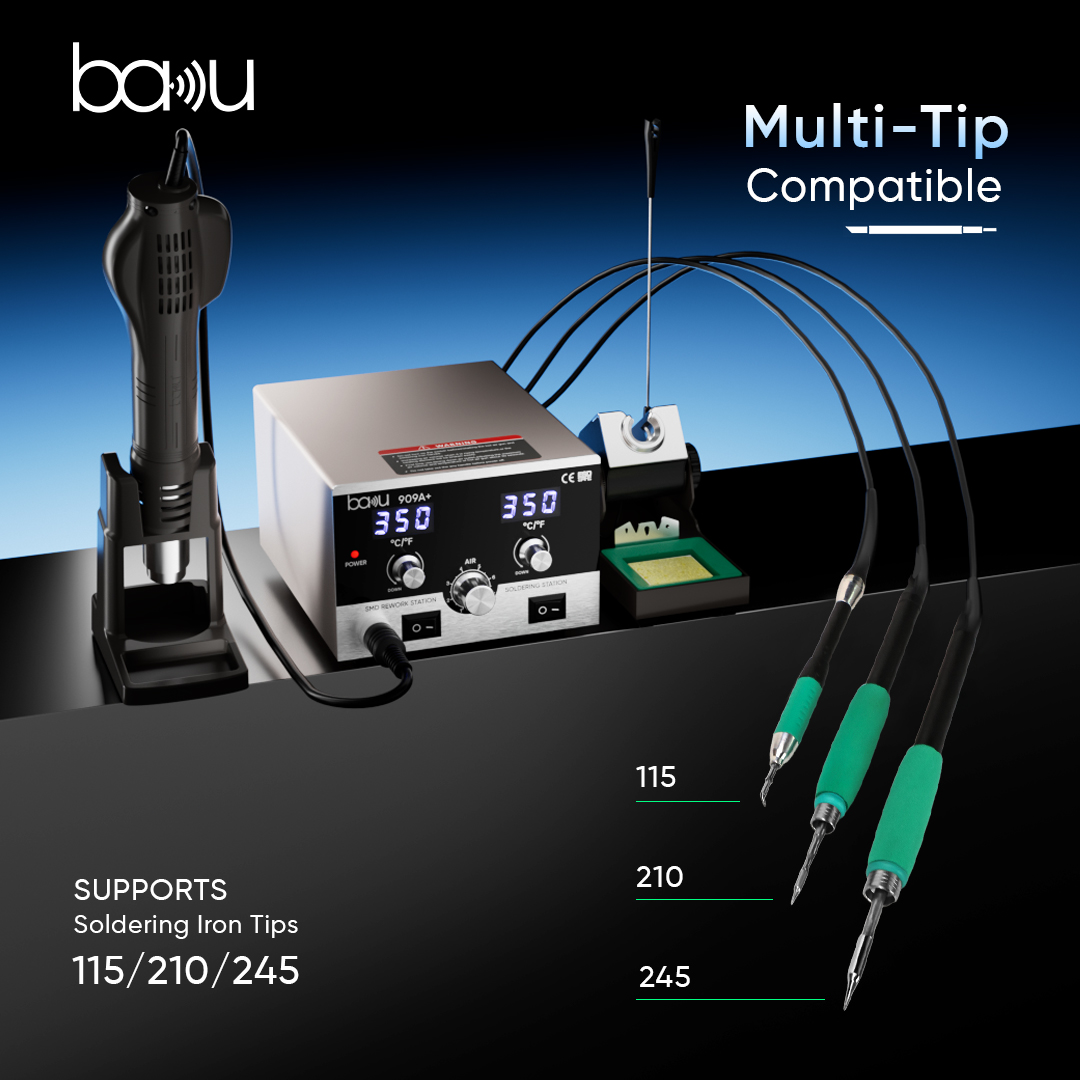
- The station is designed for mobile phone, tablet, laptop, computer motherboard, and electronics training applications.
Design and Operating Principles
Built as a combined soldering and hot-air repair platform, the BA-909A+ measures 175 x 145 x 110 mm and weighs 3.5 kg. An LED microcomputer-controlled display shows the operating settings. The hot-air section uses a brushless fan with rotary airflow control and reaches a stated maximum of 120 L/min.
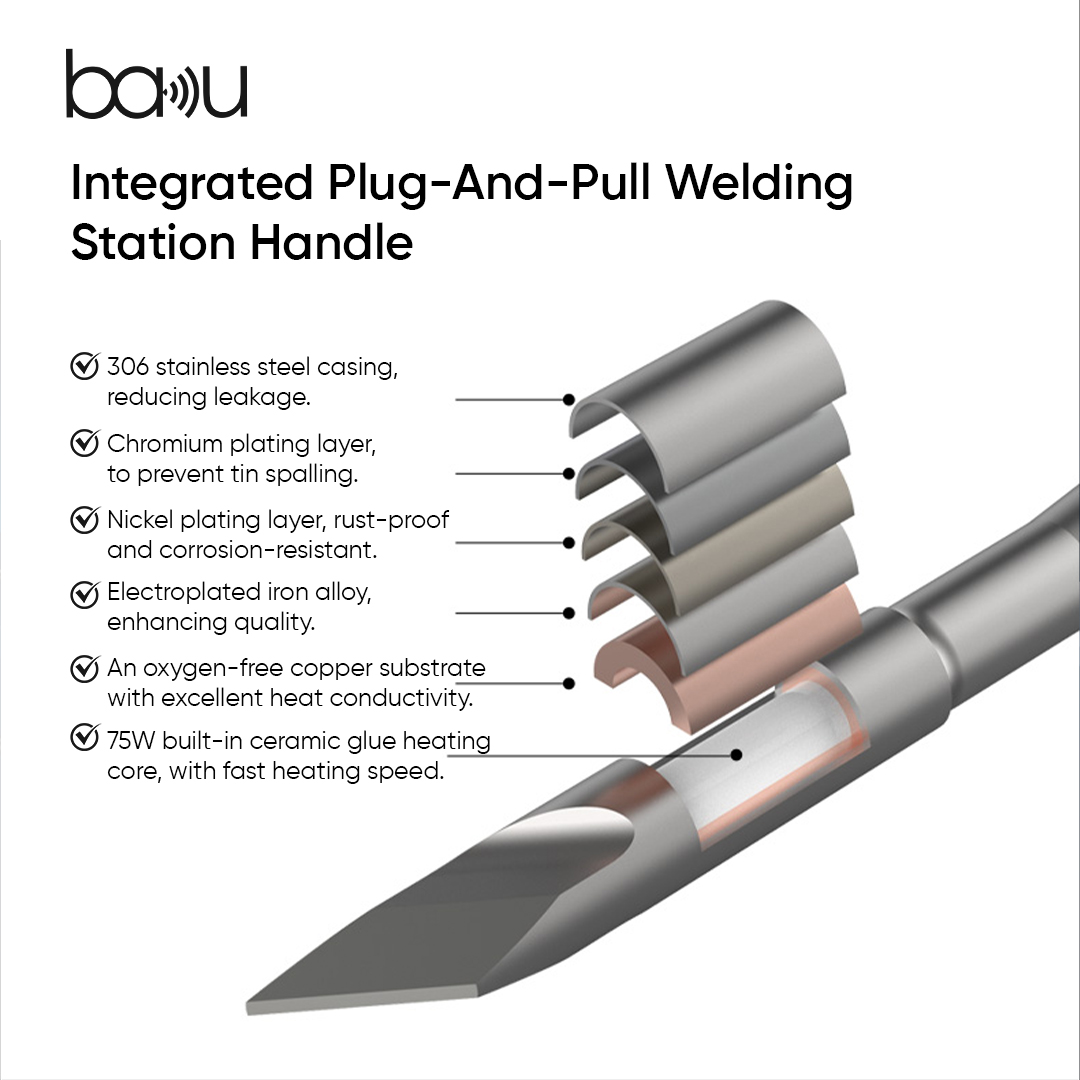
What Cold-Weather Users Should Check
The documented specifications confirm the available temperature settings, but they do not prove that those temperatures remain stable in a cold environment. Before starting repair work, operators should allow the station adequate warm-up time and verify the actual tip or airflow temperature. Buyers should also ask the supplier about ambient-temperature compensation, cold-start behavior, heat-up time, and acceptable temperature variation.
The BA-909A+ can support motherboard chip repair, screen separation, solder removal, component replacement, laptop motherboard work, graphics-card servicing, and circuit-board troubleshooting. Its specified operating noise is below 45 dB.
Manufacturer Capability and Certifications
Guangdong BAKU Technology Development Co., Ltd. states that it operates an independent R&D laboratory staffed by structural, hardware, and testing engineers. Its development capabilities cover industrial design, mechanical development, PCB debugging, and reliability evaluation. The company also reports aging, temperature-control, and ESD testing facilities, together with ownership of 25 design patents.
The documented certifications include CE certificate 2022SZ0629222 for solder stations sold in the European Union and FCC certificate LCS1410130250E for the United States. Reported customer applications include a mobile phone repair shop in the Philippines, a vocational training organization in Malaysia, a Saudi Arabian wholesaler, and a computer repair workshop in Mexico.
Specification Comparison
| Evaluation item | Published BA-909A+ information | Meaning for cold workshops |
|---|---|---|
| Soldering iron range | 200°C to 480°C | Wide adjustable range, but low-ambient stability is unconfirmed |
| Hot-air temperature | 100°C to 450°C | Adjustable output, with no published cold-start data |
| Maximum power | 800W | Power capacity is stated, while warm-up time is unavailable |
| Hot-air volume | Up to 120 L/min | High stated airflow, but its response to cold conditions is not documented |
| Technical support | One-year online after-sales service | Users can request confirmation for specific ambient conditions |
Frequently Asked Questions
Is a minimum operating temperature specified for the BA-909A+?
No. The available information gives the soldering and hot-air temperature ranges but does not define a minimum ambient temperature or provide cold-workshop validation results.
What temperatures can the station reach?
The soldering iron can be set from 200°C to 480°C. The hot-air gun can be adjusted from 100°C to 450°C.
What information should be requested before purchase?
Request the expected cold-start time, minimum ambient operating limit, temperature stability, and measured temperature deviation under the conditions where the station will be used.
Conclusion and Purchasing Advice
The BA-909A+ combines broad temperature adjustment, an 800W maximum power rating, and dual-tool functionality for electronics repair and training. Nevertheless, the current specifications are insufficient to verify stable heat output in a cold workshop. Wholesale, OEM, and ODM buyers should obtain written confirmation from BAKU before ordering for low-temperature facilities. The listed MOQ is 50 units, delivery is 7–15 days, and online after-sales support is available for one year. Technical inquiries can be sent to hanker002@bakutool.com.
About the Manufacturer
Guangdong BAKU Technology Development Co., Ltd. was established in 2003 and develops professional electronic repair equipment across more than 30 categories, including precision screwdrivers, flux, multimeters, and soldering machines. The company maintains an independent R&D laboratory, supports integrated product development, and reports 25 design patents. Its CE and FCC certifications cover solder stations, while its reported cooperation network includes repair businesses, training institutions, wholesalers, and computer service workshops in several countries.

REPORT