







-
 Agriculture
-
 Health-Care
-
 Environment
-
 Construction-Real-Estate
-
 Tools-Hardware
-
 Home-Garden
-
 Furniture
-
 Luggage-Bags-Cases
-
 Medical-devices-Supplies
-
 Gifts-Crafts
-
 Sports-Entertainment
-
 Food-Beverage
-
 Vehicles-Transportation
-
 Power-Transmission
-
 Material-Handling
-
 Renewable-Energy
-
 Safety
-
 Testing-Instrument-Equipment
-
 Construction-Building-Machinery
-
 Pet-Supplies
-
 Personal-Care-Household-Cleaning
-
 Vehicle-Accessories-Electronics-Tools
-
 School-Office-Supplies
-
 Packaging-Printing
-
 Mother-Kids-Toys
-
 Business-Services
-
 Commercial-Equipment-Machinery
-
 Apparel-Accessories
-
 Security
-
 Shoes-Accessories
-
 Vehicle-Parts-Accessories
-
 Jewelry-Eyewear-Watches-Accessories
-
 Lights-Lighting
-
 Fabric-Textile-Raw-Material
-
 Fabrication-Services
-
 Industrial-Machinery
-
 Consumer-Electronics
-
 Electrical-Equipment-Supplies
-
 Electronic-Components-Accessories-Telecommunications
-
 Home-Appliances
-
 Beauty
-
 Chemicals
-
 Rubber-Plastics
-
 Metals-Alloys


























































































































































































































































































































































































































































































































































































- Masonry Materials
- Curtain Walls & Accessories
- Earthwork Products
- Fireproofing Materials
- Heat Insulation Materials
- Plastic Building Materials
- Building Boards
- Soundproofing Materials
- Timber
- Waterproofing Materials
- Balustrades & Handrails
- Bathroom & Kitchen
- Flooring & Accessories
- Tiles & Accessories
- Door, Window & Accessories
- Fireplaces & Stoves
- Floor Heating Systems & Parts
- Stairs & Stair Parts
- Ceilings
- Elevators & Escalators
- Stone
- Countertops, Vanity Tops & Table Tops
- Mosaics
- Metal Building Materials
- Multifunctional Materials
- Ladders & Scaffoldings
- Mouldings
- Corner Guards
- Decorative Films
- Formwork
- Building & Industrial Glass
- Other Construction & Real Estate
- Wallpapers/Wall panels
- HVAC System & Parts
- Outdoor Facilities
- Prefabricated Buildings
- Festive & Party Supplies
- Bathroom Products
- Household Sundries
- Rain Gear
- Garden Supplies
- Household Cleaning Tools & Accessories
- Lighters & Smoking Accessories
- Home Storage & Organization
- Household Scales
- Smart Home Improvement
- Home Textiles
- Kitchenware
- Drinkware & Accessories
- Dinnerware, Coffee & Wine
- Home Decor
- Golf
- Fitness & Body Building
- Amusement Park Facilities
- Billiards, Board Game,Coin Operated Games
- Musical Instruments
- Outdoor Affordable Luxury Sports
- Camping & Hiking
- Fishing
- Sports Safety&Rehabilitation
- Ball Sports Equipments
- Water Sports
- Winter Sports
- Luxury Travel Equipments
- Sports Shoes, Bags & Accessories
- Cycling
- Other Sports & Entertainment Products
- Artificial Grass&Sports Flooring&Sports Court Equipment
- Scooters
- Food Ingredients
- Honey & Honey Products
- Snacks
- Nuts & Kernels
- Seafood
- Plant & Animal Oil
- Beverages
- Fruit & Vegetable Products
- Frog & Escargot
- Bean Products
- Egg Products
- Dairy Products
- Seasonings & Condiments
- Canned Food
- Instant Food
- Baked Goods
- Other Food & Beverage
- Meat & Poultry
- Confectionery
- Grain Products
- Feminie Care
- Hair Care & Styling
- Body Care
- Hands & Feet Care
- Hygiene Products
- Men's Grooming
- Laundry Cleaning Supplies
- Travel Size & Gift Sets
- Room Deodorizers
- Other Personal Care Products
- Pest Control Products
- Special Household Cleaning
- Floor Cleaning
- Kitchen & Bathroom Cleaning
- Oral Care
- Bath Supplies
- Yellow Pages
- Correction Supplies
- Office Binding Supplies
- Office Cutting Supplies
- Board Erasers
- Office Adhesives & Tapes
- Education Supplies
- Pencil Cases & Bags
- Notebooks & Writing Pads
- File Folder Accessories
- Calendars
- Writing Accessories
- Commercial Office Supplies
- Pencil Sharpeners
- Pens
- Letter Pad/Paper
- Paper Envelopes
- Desk Organizers
- Pencils
- Markers & Highlighters
- Filing Products
- Art Supplies
- Easels
- Badge Holder & Accessories
- Office Paper
- Printer Supplies
- Book Covers
- Other Office & School Supplies
- Stationery Set
- Boards
- Clipboards
- Stamps
- Drafting Supplies
- Stencils
- Electronic Dictionary
- Books
- Map
- Magazines
- Calculators
- Baby & Toddler Toys
- Educational Toys
- Classic Toys
- Dress Up & Pretend Play
- Toy Vehicle
- Stuffed Animals & Plush Toys
- Outdoor Toys & Structures
- Balloons & Accessories
- Baby Food
- Children's Clothing
- Baby Supplies & Products
- Maternity Clothes
- Kids Shoes
- Baby Care
- Novelty & Gag Toys
- Dolls & Accessories
- Puzzle & Games
- Blocks & Model Building Toys
- Toddler Clothing
- Baby Clothing
- Kids' Luggage & Bags
- Arts, Crafts & DIY Toys
- Action & Toy Figures
- Baby Appliances
- Hobbies & Models
- Remote Control Toys
- Promotional Toys
- Pregnancy & Maternity
- Hygiene Products
- Kid's Textile&Bedding
- Novelty & Special Use
- Toy Weapons
- Baby Gifts
- Baby Storage & Organization
- Auto Drive Systems
- ATV/UTV Parts & Accessories
- Marine Parts & Accessories
- Other Auto Parts
- Trailer Parts & Accessories
- Auto Transmission Systems
- Train Parts & Accessories
- Universal Parts
- Railway Parts & Accessories
- Auto Brake Systems
- Aviation Parts & Accessories
- Truck Parts & Accessories
- Auto Suspension Systems
- Auto Lighting Systems
- New Energy Vehicle Parts & Accessories
- Auto Steering Systems
- Wheels, Tires & Accessories
- Bus Parts & Accessories
- Auto Performance Parts
- Cooling System
- Go-Kart & Kart Racer Parts & Accessories
- Air Conditioning Systems
- Heavy Duty Vehicle Parts & Accessories
- Auto Electrical Systems
- Auto Body Systems
- Auto Engine Systems
- Container Parts & Accessories
- Motorcycle Parts & Accessories
- Refrigeration & Heat Exchange Equipment
- Machine Tool Equipment
- Food & Beverage Machinery
- Agricultural Machinery & Equipment
- Apparel & Textile Machinery
- Chemical Machinery
- Packaging Machines
- Paper Production Machinery
- Plastic & Rubber Processing Machinery
- Industrial Robots
- Electronic Products Machinery
- Metal & Metallurgy Machinery
- Woodworking Machinery
- Home Product Manufacturing Machinery
- Machinery Accessories
- Environmental Machinery
- Machinery Service
- Electrical Equipment Manufacturing Machinery
- Industrial Compressors & Parts
- Tobacco & Cigarette Machinery
- Production Line
- Used Industrial Machinery
- Electronics Production Machinery
- Other Machinery & Industrial Equipment
- Camera, Photo & Accessories
- Portable Audio, Video & Accessories
- Television, Home Audio, Video & Accessories
- Video Games & Accessories
- Mobile Phone & Accessories
- Electronic Publications
- Earphone & Headphone & Accessories
- Speakers & Accessories
- Smart Electronics
- TV Receivers & Accessories
- Mobile Phone & Computer Repair Parts
- Chargers, Batteries & Power Supplies
- Used Electronics
- VR, AR, MR Hardware & Software
- Projectors & Presentation Equipments
- Other Consumer Electronics
- Cables & Commonly Used Accessories
- Computer Hardware & Software
- Displays, Signage and Optoelectronics
- Discrete Semiconductors
- Wireless & IoT Module and Products
- Telecommunications
- Connectors, Terminals & Accessories
- Development Boards, Electronic Modules and Kits
- Circuit Protection
- Sensors
- Isolators
- Audio Components and Products
- Integrated Circuits
- Power Supplies
- Relays
- RF, Microwave and RFID
- Electronic Accessories & Supplies
- Passive Components
- PCB & PCBA
- Air Quality Appliances
- Home Appliance Parts
- Heating & Cooling Appliances
- Small Kitchen Appliances
- Laundry Appliances
- Water Heaters
- Water Treatment Appliances
- Refrigerators & Freezers
- Personal Care & Beauty Appliances
- Major Kitchen Appliances
- Cleaning Appliances
- Second-hand Appliances
- Smart Home Appliances
- Other Home Appliances
- Energy Chemicals
- Inorganic Chemicals
- Basic Organic Chemicals
- Agrochemicals
- Admixture & Additives
- Catalysts & Chemical Auxiliary Agents
- Pigments & Dyestuff
- Coating & Paint
- Daily Chemicals
- Polymer
- Organic Intermediate
- Adhesives & Sealants
- Chemical Waste
- Biological Chemical Products
- Surface Treatment Chemicals
- Painting & Coating
- Chemical Reagents
- Flavor & Fragrance
- Non-Explosive Demolition Agents
- Other Chemicals
- Custom Chemical Services

Is This Ceramic Sugar Bowl Safe for Open Flames and Thermal Shock?
The available product information does not establish that this ceramic sugar bowl is suitable for open-flame heating or sudden exposure to high temperatures. Because the listing identifies it as a sugar bowl rather than a heat-rated cooking vessel, users should not place it over a flame or subject it to abrupt temperature changes until the supplier provides product-specific technical confirmation.
Safety Assessment at a Glance
- The product is described as a sugar bowl, and no cooking-pot classification is shown.
- The listing does not state the ceramic composition, maximum service temperature, oven rating, open-flame approval, or thermal-shock resistance.
- Household applications include western meals, afternoon tea, family gatherings, entertaining, and gifting, but none confirms direct heating.
- Commercial applications such as hotel rooms, buffets, banquets, restaurants, clubs, yachts, and events also do not prove that the item is designed for flame exposure.
Why Direct-Flame Use Cannot Be Confirmed
A ceramic item’s ability to tolerate an open flame depends on several documented factors, including the clay body, glaze, wall thickness, thermal expansion behavior, maximum operating temperature, and resistance to rapid temperature changes. None of these specifications appears in the supplied product record. As a result, the available information cannot support a claim that this item will remain intact under high heat shock.
Product details list a minimum order quantity of one piece and a 90-day delivery period for export to the United States. An SGS report is mentioned in the quality inspection field, and after-sales terms provide an exchange for quality problems reported within seven days of receipt. These commercial details describe purchasing and service arrangements; they are not evidence that the sugar bowl has been tested for direct flame or thermal shock.
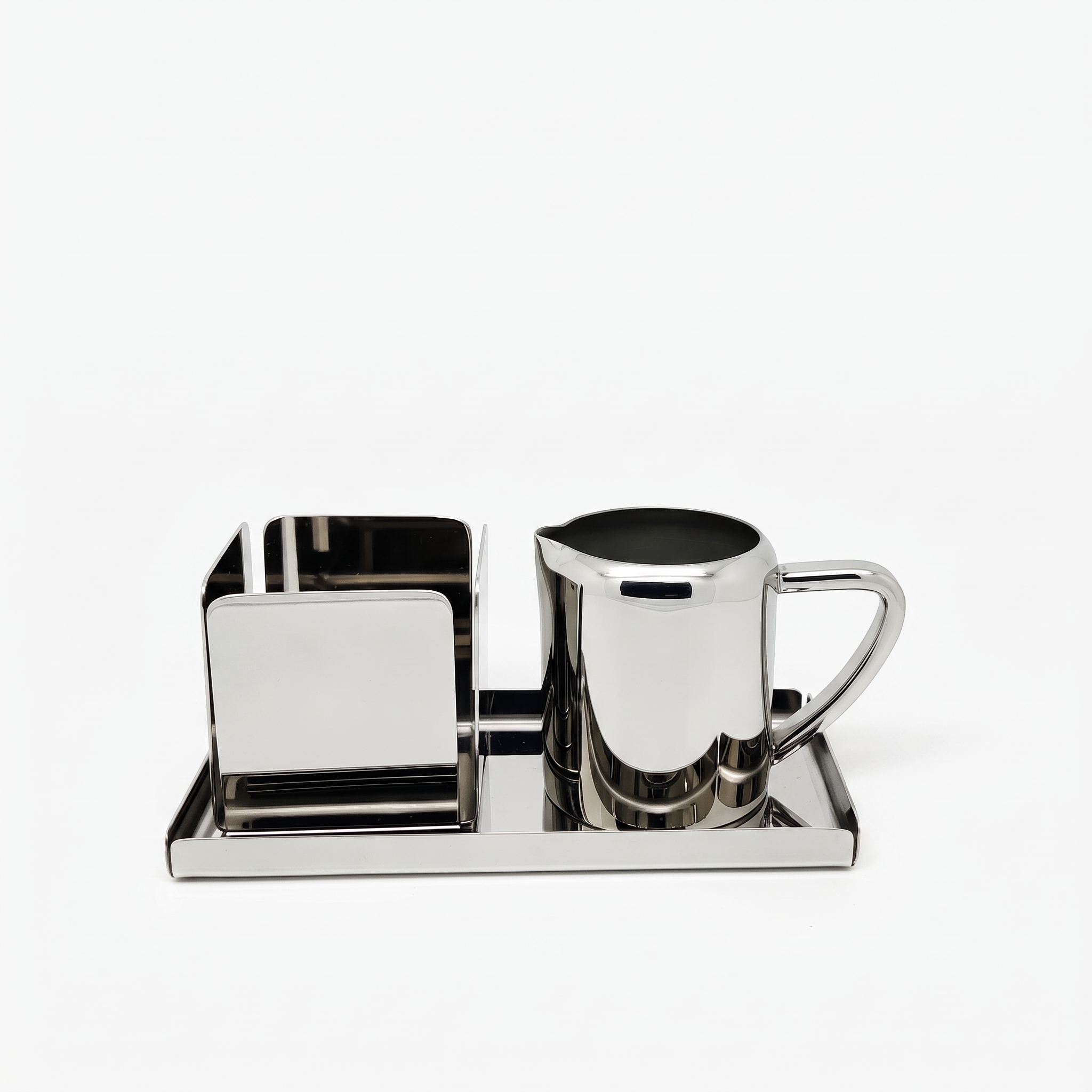
Product Claims and Certification Context
Gold Spark presents related products for residential use and frequent hospitality applications. The available descriptions refer to dishwasher safety, wear resistance, and the ability to retain a mirror finish over extended use. These qualities may be relevant to tableware durability, but they do not demonstrate resistance to direct flame, stovetop heating, or abrupt temperature changes.
The listed certifications include SGS certificate GZHL2608046657CW for table knives and SGS certificate GZHL2608046655CW for table spoons and table forks in the European Union. Since these certificates apply to identified tableware products, they should not be interpreted as thermal certification for this ceramic sugar bowl. Gold Spark also records hotel equipment supply experience in China, Hong Kong, Cambodia, Mongolia, and Macao, but industry experience does not replace testing for this specific product.
Evidence Review
| Review category | Information currently available | What it means for heating use |
|---|---|---|
| Product classification | Sugar bowl | Does not establish that the item is a flame-safe cooking vessel |
| Thermal and material data | No ceramic composition, temperature limit, or test results provided | Open-flame and thermal-shock performance remain unverified |
| Inspection documentation | SGS report referenced | The report scope and tested properties are not identified |
| Listed applications | Meals, tea service, hospitality, restaurants, and events | These uses do not specify direct heating or flame contact |
| After-sales policy | Quality-related exchange terms are listed | A replacement policy cannot confirm safe operating temperatures |
Frequently Asked Questions
Can the ceramic pot be used directly over an open flame?
Direct-flame use is not confirmed by the available documentation. No flame rating, maximum temperature, or heating instruction is included, so the item should be treated as unsuitable for this purpose unless the supplier verifies otherwise.
Is it resistant to high heat shock?
There is no thermal-shock test result, temperature-change limit, or material specification in the product record. Its ability to withstand a rapid transition from cold to high heat therefore cannot be established.
Which documents should be requested before using it for heating?
Ask for documentation specific to this product covering ceramic composition, maximum operating temperature, oven and open-flame approval, thermal-shock test data, and compatible heating equipment. The SGS certificates currently referenced concern knives, spoons, and forks rather than this item.
Conclusion and Practical Recommendation
The current evidence is not sufficient to verify that this ceramic sugar bowl can withstand an open flame or sudden high-temperature exposure. Its documented role is tableware for serving and hospitality settings, not a heat-rated cooking container. Avoid direct-flame use and rapid temperature changes until Gold Spark supplies product-specific thermal data. The supplier lists a one-piece minimum order, inspection documentation, and quality-related replacement support under its order terms, but these services do not substitute for thermal validation. For technical clarification, contact Gold Spark at goldspark@vip.163.com.
About Gold Spark
Gold Spark Global Sourcng Co., Ltd. is headquartered in Hong Kong with operations supported from Shenzhen. Founded in 2002, the company specializes in high-end hotel supply chains and connects international hotel brands with selected Chinese manufacturers. Its organization includes one professional R&D and design team and 10 factories, with customization available for customer requirements. The product range covers hotel supplies, kitchen equipment, daily necessities, hardware, electronic items, ceramic, glass, and plastic products, together with related support services. The company lists SGS certifications for specified tableware products and reports hotel equipment supply projects across various markets.

REPORT