







-
 Agriculture
-
 Health-Care
-
 Environment
-
 Construction-Real-Estate
-
 Tools-Hardware
-
 Home-Garden
-
 Furniture
-
 Luggage-Bags-Cases
-
 Medical-devices-Supplies
-
 Gifts-Crafts
-
 Sports-Entertainment
-
 Food-Beverage
-
 Vehicles-Transportation
-
 Power-Transmission
-
 Material-Handling
-
 Renewable-Energy
-
 Safety
-
 Testing-Instrument-Equipment
-
 Construction-Building-Machinery
-
 Pet-Supplies
-
 Personal-Care-Household-Cleaning
-
 Vehicle-Accessories-Electronics-Tools
-
 School-Office-Supplies
-
 Packaging-Printing
-
 Mother-Kids-Toys
-
 Business-Services
-
 Commercial-Equipment-Machinery
-
 Apparel-Accessories
-
 Security
-
 Shoes-Accessories
-
 Vehicle-Parts-Accessories
-
 Jewelry-Eyewear-Watches-Accessories
-
 Lights-Lighting
-
 Fabric-Textile-Raw-Material
-
 Fabrication-Services
-
 Industrial-Machinery
-
 Consumer-Electronics
-
 Electrical-Equipment-Supplies
-
 Electronic-Components-Accessories-Telecommunications
-
 Home-Appliances
-
 Beauty
-
 Chemicals
-
 Rubber-Plastics
-
 Metals-Alloys


























































































































































































































































































































































































































































































































































































- Masonry Materials
- Curtain Walls & Accessories
- Earthwork Products
- Fireproofing Materials
- Heat Insulation Materials
- Plastic Building Materials
- Building Boards
- Soundproofing Materials
- Timber
- Waterproofing Materials
- Balustrades & Handrails
- Bathroom & Kitchen
- Flooring & Accessories
- Tiles & Accessories
- Door, Window & Accessories
- Fireplaces & Stoves
- Floor Heating Systems & Parts
- Stairs & Stair Parts
- Ceilings
- Elevators & Escalators
- Stone
- Countertops, Vanity Tops & Table Tops
- Mosaics
- Metal Building Materials
- Multifunctional Materials
- Ladders & Scaffoldings
- Mouldings
- Corner Guards
- Decorative Films
- Formwork
- Building & Industrial Glass
- Other Construction & Real Estate
- Wallpapers/Wall panels
- HVAC System & Parts
- Outdoor Facilities
- Prefabricated Buildings
- Festive & Party Supplies
- Bathroom Products
- Household Sundries
- Rain Gear
- Garden Supplies
- Household Cleaning Tools & Accessories
- Lighters & Smoking Accessories
- Home Storage & Organization
- Household Scales
- Smart Home Improvement
- Home Textiles
- Kitchenware
- Drinkware & Accessories
- Dinnerware, Coffee & Wine
- Home Decor
- Golf
- Fitness & Body Building
- Amusement Park Facilities
- Billiards, Board Game,Coin Operated Games
- Musical Instruments
- Outdoor Affordable Luxury Sports
- Camping & Hiking
- Fishing
- Sports Safety&Rehabilitation
- Ball Sports Equipments
- Water Sports
- Winter Sports
- Luxury Travel Equipments
- Sports Shoes, Bags & Accessories
- Cycling
- Other Sports & Entertainment Products
- Artificial Grass&Sports Flooring&Sports Court Equipment
- Scooters
- Food Ingredients
- Honey & Honey Products
- Snacks
- Nuts & Kernels
- Seafood
- Plant & Animal Oil
- Beverages
- Fruit & Vegetable Products
- Frog & Escargot
- Bean Products
- Egg Products
- Dairy Products
- Seasonings & Condiments
- Canned Food
- Instant Food
- Baked Goods
- Other Food & Beverage
- Meat & Poultry
- Confectionery
- Grain Products
- Feminie Care
- Hair Care & Styling
- Body Care
- Hands & Feet Care
- Hygiene Products
- Men's Grooming
- Laundry Cleaning Supplies
- Travel Size & Gift Sets
- Room Deodorizers
- Other Personal Care Products
- Pest Control Products
- Special Household Cleaning
- Floor Cleaning
- Kitchen & Bathroom Cleaning
- Oral Care
- Bath Supplies
- Yellow Pages
- Correction Supplies
- Office Binding Supplies
- Office Cutting Supplies
- Board Erasers
- Office Adhesives & Tapes
- Education Supplies
- Pencil Cases & Bags
- Notebooks & Writing Pads
- File Folder Accessories
- Calendars
- Writing Accessories
- Commercial Office Supplies
- Pencil Sharpeners
- Pens
- Letter Pad/Paper
- Paper Envelopes
- Desk Organizers
- Pencils
- Markers & Highlighters
- Filing Products
- Art Supplies
- Easels
- Badge Holder & Accessories
- Office Paper
- Printer Supplies
- Book Covers
- Other Office & School Supplies
- Stationery Set
- Boards
- Clipboards
- Stamps
- Drafting Supplies
- Stencils
- Electronic Dictionary
- Books
- Map
- Magazines
- Calculators
- Baby & Toddler Toys
- Educational Toys
- Classic Toys
- Dress Up & Pretend Play
- Toy Vehicle
- Stuffed Animals & Plush Toys
- Outdoor Toys & Structures
- Balloons & Accessories
- Baby Food
- Children's Clothing
- Baby Supplies & Products
- Maternity Clothes
- Kids Shoes
- Baby Care
- Novelty & Gag Toys
- Dolls & Accessories
- Puzzle & Games
- Blocks & Model Building Toys
- Toddler Clothing
- Baby Clothing
- Kids' Luggage & Bags
- Arts, Crafts & DIY Toys
- Action & Toy Figures
- Baby Appliances
- Hobbies & Models
- Remote Control Toys
- Promotional Toys
- Pregnancy & Maternity
- Hygiene Products
- Kid's Textile&Bedding
- Novelty & Special Use
- Toy Weapons
- Baby Gifts
- Baby Storage & Organization
- Auto Drive Systems
- ATV/UTV Parts & Accessories
- Marine Parts & Accessories
- Other Auto Parts
- Trailer Parts & Accessories
- Auto Transmission Systems
- Train Parts & Accessories
- Universal Parts
- Railway Parts & Accessories
- Auto Brake Systems
- Aviation Parts & Accessories
- Truck Parts & Accessories
- Auto Suspension Systems
- Auto Lighting Systems
- New Energy Vehicle Parts & Accessories
- Auto Steering Systems
- Wheels, Tires & Accessories
- Bus Parts & Accessories
- Auto Performance Parts
- Cooling System
- Go-Kart & Kart Racer Parts & Accessories
- Air Conditioning Systems
- Heavy Duty Vehicle Parts & Accessories
- Auto Electrical Systems
- Auto Body Systems
- Auto Engine Systems
- Container Parts & Accessories
- Motorcycle Parts & Accessories
- Refrigeration & Heat Exchange Equipment
- Machine Tool Equipment
- Food & Beverage Machinery
- Agricultural Machinery & Equipment
- Apparel & Textile Machinery
- Chemical Machinery
- Packaging Machines
- Paper Production Machinery
- Plastic & Rubber Processing Machinery
- Industrial Robots
- Electronic Products Machinery
- Metal & Metallurgy Machinery
- Woodworking Machinery
- Home Product Manufacturing Machinery
- Machinery Accessories
- Environmental Machinery
- Machinery Service
- Electrical Equipment Manufacturing Machinery
- Industrial Compressors & Parts
- Tobacco & Cigarette Machinery
- Production Line
- Used Industrial Machinery
- Electronics Production Machinery
- Other Machinery & Industrial Equipment
- Camera, Photo & Accessories
- Portable Audio, Video & Accessories
- Television, Home Audio, Video & Accessories
- Video Games & Accessories
- Mobile Phone & Accessories
- Electronic Publications
- Earphone & Headphone & Accessories
- Speakers & Accessories
- Smart Electronics
- TV Receivers & Accessories
- Mobile Phone & Computer Repair Parts
- Chargers, Batteries & Power Supplies
- Used Electronics
- VR, AR, MR Hardware & Software
- Projectors & Presentation Equipments
- Other Consumer Electronics
- Cables & Commonly Used Accessories
- Computer Hardware & Software
- Displays, Signage and Optoelectronics
- Discrete Semiconductors
- Wireless & IoT Module and Products
- Telecommunications
- Connectors, Terminals & Accessories
- Development Boards, Electronic Modules and Kits
- Circuit Protection
- Sensors
- Isolators
- Audio Components and Products
- Integrated Circuits
- Power Supplies
- Relays
- RF, Microwave and RFID
- Electronic Accessories & Supplies
- Passive Components
- PCB & PCBA
- Air Quality Appliances
- Home Appliance Parts
- Heating & Cooling Appliances
- Small Kitchen Appliances
- Laundry Appliances
- Water Heaters
- Water Treatment Appliances
- Refrigerators & Freezers
- Personal Care & Beauty Appliances
- Major Kitchen Appliances
- Cleaning Appliances
- Second-hand Appliances
- Smart Home Appliances
- Other Home Appliances
- Energy Chemicals
- Inorganic Chemicals
- Basic Organic Chemicals
- Agrochemicals
- Admixture & Additives
- Catalysts & Chemical Auxiliary Agents
- Pigments & Dyestuff
- Coating & Paint
- Daily Chemicals
- Polymer
- Organic Intermediate
- Adhesives & Sealants
- Chemical Waste
- Biological Chemical Products
- Surface Treatment Chemicals
- Painting & Coating
- Chemical Reagents
- Flavor & Fragrance
- Non-Explosive Demolition Agents
- Other Chemicals
- Custom Chemical Services

Key Factory Audit Questions to Uncover Labor Risks in Aluminum Casement Door Manufacturing
Conducting labor risk audits at an aluminum casement door manufacturing facility requires evaluating working hour accuracy, machine safety controls, personal protective equipment (PPE) compliance, and contract validity. Auditors evaluate structural fabrication lines, material handling stations, and extrusion machinery operation to detect unrecorded overtime, missing safety gear, or uncertified workers operating equipment such as aluminum profile saws and 2.0mm sash assembly presses.
Key Takeaways & Core Solutions
- Shift & Overtime Verification: Cross-check extrusion run-times during peak production of Aluminium Casement Door profiles against employee timecards to detect forced labor or uncompensated shift extensions.
- Material Handling & Occupational Health: Validate mandatory PPE compliance for workers lifting 4.5Kg/m² glass panels, 1.2mm frame extrusions, and 2.0mm sash aluminum sections.
- Machinery Safety & Operator Training: Review technical qualification logs for personnel managing automatic cutting saws and corner-crimping machinery used in casement door manufacturing.
- Governance & Facility Standards: Compare labor audit results with international management system accreditations including ISO 9001, ISO 14001, and national laboratory certifications (CNAS L 10434).
- Application Scenario Compliance: Ensure specialized labor standards are maintained across diverse product applications, including indoor glass partitions, office pantries, sunrooms, and exterior coastal casement door systems.
Detailed Technical Line Analysis & Risk Diagnostics
Identifying potential labor violations within an Aluminium Casement Door fabrication plant requires targeted line-item inquiries. Operational risks regularly occur where automated metal-working machinery meets manual assembly tasks. Inspectors must request direct time-card records adjacent to output metrics from profile cutting lines, thermal break assembly areas, and hardware mounting stations utilizing OPK system components. Discrepancies between machinery run-times and recorded labor hours frequently indicate unrecorded overtime shifts.
Health and safety audits also focus on physical ergonomics across the factory floor. Standard structural profiles—featuring frame thicknesses of 1.2mm and sash thicknesses of 2.0mm—require manual positioning into fabrication jigs. Moving heavy single or insulated glazing units creates significant laceration and strain risks. Audit protocols must verify whether workers receive level-5 cut-resistant gloves, pneumatic suction lifters, and ear protection during continuous cutting and milling operations.
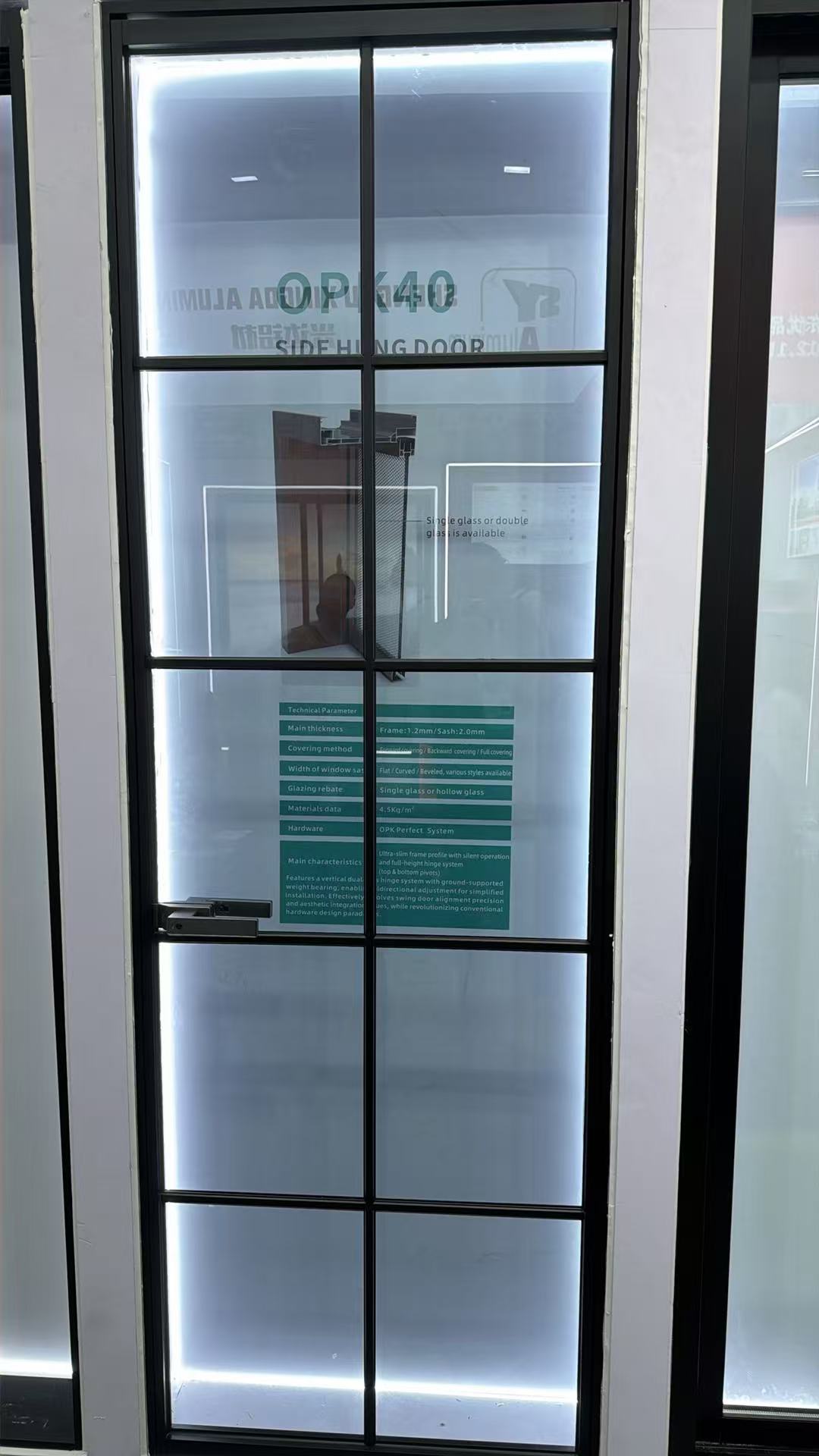
Audit questions must further address subcontracted and temporary worker protections. In large-scale structural installations like the Wan Guo Building Project or resort construction jobs, consistent output relies on skilled craftsmen assembling full-height pivot hinge systems and complex glazing configurations. Auditors should demand proof of equal pay scales, formal employment contracts, and direct wage disbursement records without third-party deductions.
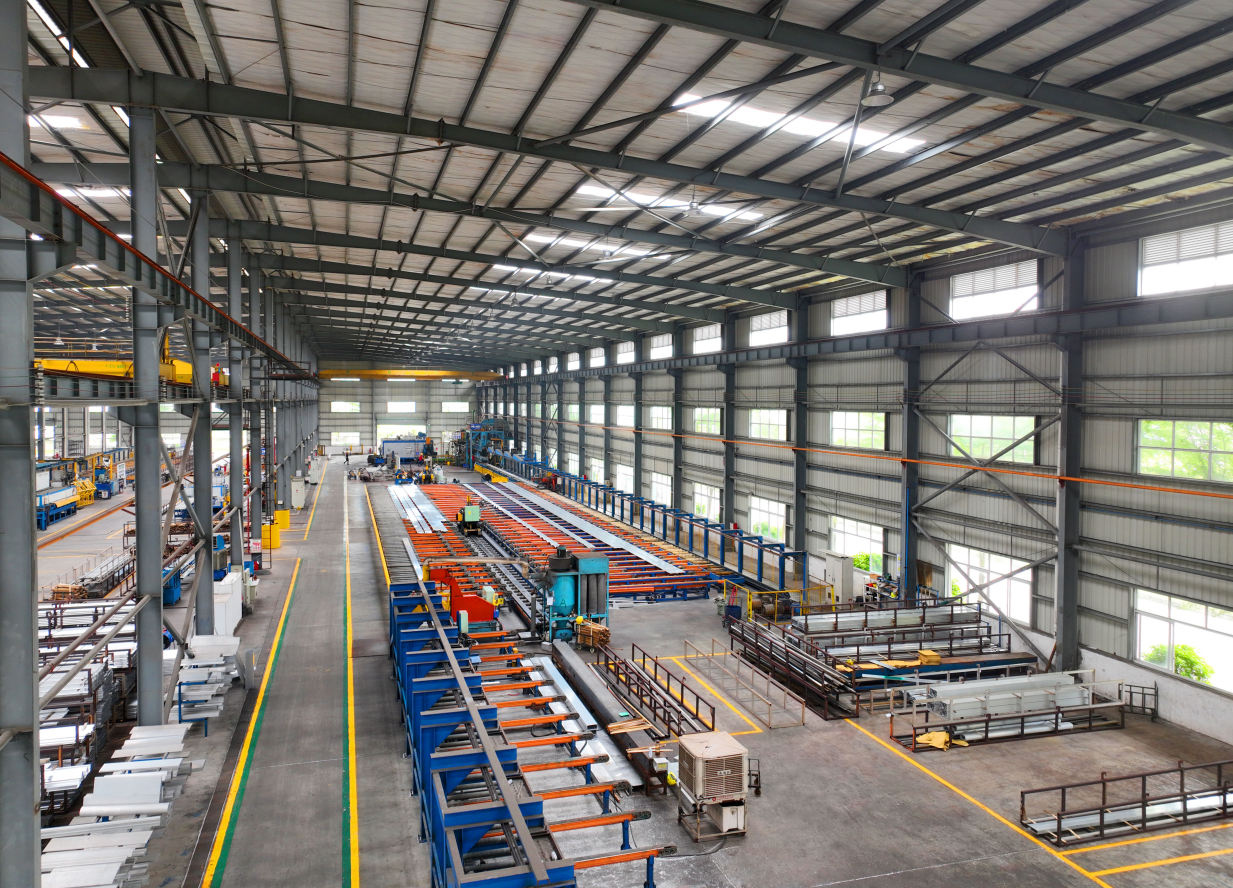
Operational Governance & Compliance Standards
Manufacturing facilities that implement international quality management frameworks maintain transparent labor structures and lower accident rates. Industry leaders such as Guangdong Xinhe Aluminium Co., Ltd enforce systematic safety oversight across their production footprint. Plants audited under SGS, Qualicoat, SIRIM, and CNAS national accredited laboratory frameworks demonstrate higher compliance scores through standardized equipment maintenance routines and mandatory operator safety briefings.

Risk Assessment & Solution Comparison
Evaluating manufacturing facilities requires contrasting compliant operational benchmarks with high-risk factory indicators across essential labor parameter categories.
| Evaluation Category | High-Risk Indicators | Compliant Manufacturing Standard | Verification Method |
|---|---|---|---|
| Working Hours & Overtime | Manual timesheets, excessive overtime exceeding 12 hours/week, unrecorded weekend shifts. | Biometric timekeeping, automated shift capping, 100% transparent overtime pay rates. | Cross-reference electronic gate logs with payroll statements and extrusion machine run-times. |
| Workplace Safety & Equipment | Bypassed safety sensors on aluminum saws, missing cut-resistant gloves for handling 4.5Kg/m² glass. | Mandatory PPE enforcement, automated emergency shut-offs, OPK hardware assembly safety protocols. | Physical floor inspection and unannounced safety audit observations during sash assembly. |
| Labor Governance & Contracts | Undocumented workers, missing insurance, lack of formal contracts for piece-rate workers. | 100% direct contract execution, social security compliance, adherence to ISO 9001 governance. | HR file sampling and direct, confidential worker interviews across shift tiers. |
| Quality & Technical Training | Uncertified operators running 1,100 to 5,000-ton press lines or profile coating systems. | Certified craftsman technical teams, regular R&D safety training, CNAS lab technical standards. | Review training certificates, skill assessment logs, and technical qualification records. |
Frequently Asked Questions (FAQ)
What safety equipment is mandatory during casement door sash assembly?
Workers handling casement door components require cut-resistant level-5 gloves for glass installation, eye protection during profile cutting, hearing protection near extrusion lines, and steel-toe boots during heavy frame transport.
How can auditors uncover hidden overtime on aluminum profile production lines?
Auditors cross-examine electricity consumption records and extrusion press operational logs against submitted labor timecards. Discrepancies between energy usage spikes and recorded worker hours highlight unrecorded overtime shifts.
Why are ISO management system certifications relevant to factory labor safety?
ISO 9001 and ISO 14001 frameworks mandate structured operational procedures, preventive maintenance routines, and occupational risk controls that reduce workplace injuries and enforce transparent management practices.
Final Summary & Sourcing Guidance
Identifying labor risks at a casement door manufacturing facility requires evaluating working hour logs, safety compliance during heavy material handling, machine guarding standards, and verified employment contracts. Facility buyers and project managers must prioritize suppliers operating full industrial chains with transparent governance structures, standardized delivery timelines (such as 15-20 days), and accredited quality systems. Selecting certified manufacturing partners ensures both ethical procurement and consistent structural product performance for commercial and residential applications. For detailed technical solutions or support, please reach out to us via xh@xinhealuminium.com.
About Us
Guangdong Xinhe Aluminium Co., Ltd is an enterprise specializing in aluminum alloy architectural, decorative, and industrial profiles. Established in 1998, the company operates a 666,670 sqm facility with 1,200 employees and an annual output capacity of 200,000 tons powered by 60 modern extrusion lines. Xinhe maintains an independent CNAS national accredited laboratory and holds global certifications including ISO 9001, ISO 14001, Qualicoat, and SIRIM, delivering engineering solutions to international markets.

REPORT