







-
 Agriculture
-
 Health-Care
-
 Environment
-
 Construction-Real-Estate
-
 Tools-Hardware
-
 Home-Garden
-
 Furniture
-
 Luggage-Bags-Cases
-
 Medical-devices-Supplies
-
 Gifts-Crafts
-
 Sports-Entertainment
-
 Food-Beverage
-
 Vehicles-Transportation
-
 Power-Transmission
-
 Material-Handling
-
 Renewable-Energy
-
 Safety
-
 Testing-Instrument-Equipment
-
 Construction-Building-Machinery
-
 Pet-Supplies
-
 Personal-Care-Household-Cleaning
-
 Vehicle-Accessories-Electronics-Tools
-
 School-Office-Supplies
-
 Packaging-Printing
-
 Mother-Kids-Toys
-
 Business-Services
-
 Commercial-Equipment-Machinery
-
 Apparel-Accessories
-
 Security
-
 Shoes-Accessories
-
 Vehicle-Parts-Accessories
-
 Jewelry-Eyewear-Watches-Accessories
-
 Lights-Lighting
-
 Fabric-Textile-Raw-Material
-
 Fabrication-Services
-
 Industrial-Machinery
-
 Consumer-Electronics
-
 Electrical-Equipment-Supplies
-
 Electronic-Components-Accessories-Telecommunications
-
 Home-Appliances
-
 Beauty
-
 Chemicals
-
 Rubber-Plastics
-
 Metals-Alloys


























































































































































































































































































































































































































































































































































































- Masonry Materials
- Curtain Walls & Accessories
- Earthwork Products
- Fireproofing Materials
- Heat Insulation Materials
- Plastic Building Materials
- Building Boards
- Soundproofing Materials
- Timber
- Waterproofing Materials
- Balustrades & Handrails
- Bathroom & Kitchen
- Flooring & Accessories
- Tiles & Accessories
- Door, Window & Accessories
- Fireplaces & Stoves
- Floor Heating Systems & Parts
- Stairs & Stair Parts
- Ceilings
- Elevators & Escalators
- Stone
- Countertops, Vanity Tops & Table Tops
- Mosaics
- Metal Building Materials
- Multifunctional Materials
- Ladders & Scaffoldings
- Mouldings
- Corner Guards
- Decorative Films
- Formwork
- Building & Industrial Glass
- Other Construction & Real Estate
- Wallpapers/Wall panels
- HVAC System & Parts
- Outdoor Facilities
- Prefabricated Buildings
- Festive & Party Supplies
- Bathroom Products
- Household Sundries
- Rain Gear
- Garden Supplies
- Household Cleaning Tools & Accessories
- Lighters & Smoking Accessories
- Home Storage & Organization
- Household Scales
- Smart Home Improvement
- Home Textiles
- Kitchenware
- Drinkware & Accessories
- Dinnerware, Coffee & Wine
- Home Decor
- Golf
- Fitness & Body Building
- Amusement Park Facilities
- Billiards, Board Game,Coin Operated Games
- Musical Instruments
- Outdoor Affordable Luxury Sports
- Camping & Hiking
- Fishing
- Sports Safety&Rehabilitation
- Ball Sports Equipments
- Water Sports
- Winter Sports
- Luxury Travel Equipments
- Sports Shoes, Bags & Accessories
- Cycling
- Other Sports & Entertainment Products
- Artificial Grass&Sports Flooring&Sports Court Equipment
- Scooters
- Food Ingredients
- Honey & Honey Products
- Snacks
- Nuts & Kernels
- Seafood
- Plant & Animal Oil
- Beverages
- Fruit & Vegetable Products
- Frog & Escargot
- Bean Products
- Egg Products
- Dairy Products
- Seasonings & Condiments
- Canned Food
- Instant Food
- Baked Goods
- Other Food & Beverage
- Meat & Poultry
- Confectionery
- Grain Products
- Feminie Care
- Hair Care & Styling
- Body Care
- Hands & Feet Care
- Hygiene Products
- Men's Grooming
- Laundry Cleaning Supplies
- Travel Size & Gift Sets
- Room Deodorizers
- Other Personal Care Products
- Pest Control Products
- Special Household Cleaning
- Floor Cleaning
- Kitchen & Bathroom Cleaning
- Oral Care
- Bath Supplies
- Yellow Pages
- Correction Supplies
- Office Binding Supplies
- Office Cutting Supplies
- Board Erasers
- Office Adhesives & Tapes
- Education Supplies
- Pencil Cases & Bags
- Notebooks & Writing Pads
- File Folder Accessories
- Calendars
- Writing Accessories
- Commercial Office Supplies
- Pencil Sharpeners
- Pens
- Letter Pad/Paper
- Paper Envelopes
- Desk Organizers
- Pencils
- Markers & Highlighters
- Filing Products
- Art Supplies
- Easels
- Badge Holder & Accessories
- Office Paper
- Printer Supplies
- Book Covers
- Other Office & School Supplies
- Stationery Set
- Boards
- Clipboards
- Stamps
- Drafting Supplies
- Stencils
- Electronic Dictionary
- Books
- Map
- Magazines
- Calculators
- Baby & Toddler Toys
- Educational Toys
- Classic Toys
- Dress Up & Pretend Play
- Toy Vehicle
- Stuffed Animals & Plush Toys
- Outdoor Toys & Structures
- Balloons & Accessories
- Baby Food
- Children's Clothing
- Baby Supplies & Products
- Maternity Clothes
- Kids Shoes
- Baby Care
- Novelty & Gag Toys
- Dolls & Accessories
- Puzzle & Games
- Blocks & Model Building Toys
- Toddler Clothing
- Baby Clothing
- Kids' Luggage & Bags
- Arts, Crafts & DIY Toys
- Action & Toy Figures
- Baby Appliances
- Hobbies & Models
- Remote Control Toys
- Promotional Toys
- Pregnancy & Maternity
- Hygiene Products
- Kid's Textile&Bedding
- Novelty & Special Use
- Toy Weapons
- Baby Gifts
- Baby Storage & Organization
- Auto Drive Systems
- ATV/UTV Parts & Accessories
- Marine Parts & Accessories
- Other Auto Parts
- Trailer Parts & Accessories
- Auto Transmission Systems
- Train Parts & Accessories
- Universal Parts
- Railway Parts & Accessories
- Auto Brake Systems
- Aviation Parts & Accessories
- Truck Parts & Accessories
- Auto Suspension Systems
- Auto Lighting Systems
- New Energy Vehicle Parts & Accessories
- Auto Steering Systems
- Wheels, Tires & Accessories
- Bus Parts & Accessories
- Auto Performance Parts
- Cooling System
- Go-Kart & Kart Racer Parts & Accessories
- Air Conditioning Systems
- Heavy Duty Vehicle Parts & Accessories
- Auto Electrical Systems
- Auto Body Systems
- Auto Engine Systems
- Container Parts & Accessories
- Motorcycle Parts & Accessories
- Refrigeration & Heat Exchange Equipment
- Machine Tool Equipment
- Food & Beverage Machinery
- Agricultural Machinery & Equipment
- Apparel & Textile Machinery
- Chemical Machinery
- Packaging Machines
- Paper Production Machinery
- Plastic & Rubber Processing Machinery
- Industrial Robots
- Electronic Products Machinery
- Metal & Metallurgy Machinery
- Woodworking Machinery
- Home Product Manufacturing Machinery
- Machinery Accessories
- Environmental Machinery
- Machinery Service
- Electrical Equipment Manufacturing Machinery
- Industrial Compressors & Parts
- Tobacco & Cigarette Machinery
- Production Line
- Used Industrial Machinery
- Electronics Production Machinery
- Other Machinery & Industrial Equipment
- Camera, Photo & Accessories
- Portable Audio, Video & Accessories
- Television, Home Audio, Video & Accessories
- Video Games & Accessories
- Mobile Phone & Accessories
- Electronic Publications
- Earphone & Headphone & Accessories
- Speakers & Accessories
- Smart Electronics
- TV Receivers & Accessories
- Mobile Phone & Computer Repair Parts
- Chargers, Batteries & Power Supplies
- Used Electronics
- VR, AR, MR Hardware & Software
- Projectors & Presentation Equipments
- Other Consumer Electronics
- Cables & Commonly Used Accessories
- Computer Hardware & Software
- Displays, Signage and Optoelectronics
- Discrete Semiconductors
- Wireless & IoT Module and Products
- Telecommunications
- Connectors, Terminals & Accessories
- Development Boards, Electronic Modules and Kits
- Circuit Protection
- Sensors
- Isolators
- Audio Components and Products
- Integrated Circuits
- Power Supplies
- Relays
- RF, Microwave and RFID
- Electronic Accessories & Supplies
- Passive Components
- PCB & PCBA
- Air Quality Appliances
- Home Appliance Parts
- Heating & Cooling Appliances
- Small Kitchen Appliances
- Laundry Appliances
- Water Heaters
- Water Treatment Appliances
- Refrigerators & Freezers
- Personal Care & Beauty Appliances
- Major Kitchen Appliances
- Cleaning Appliances
- Second-hand Appliances
- Smart Home Appliances
- Other Home Appliances
- Energy Chemicals
- Inorganic Chemicals
- Basic Organic Chemicals
- Agrochemicals
- Admixture & Additives
- Catalysts & Chemical Auxiliary Agents
- Pigments & Dyestuff
- Coating & Paint
- Daily Chemicals
- Polymer
- Organic Intermediate
- Adhesives & Sealants
- Chemical Waste
- Biological Chemical Products
- Surface Treatment Chemicals
- Painting & Coating
- Chemical Reagents
- Flavor & Fragrance
- Non-Explosive Demolition Agents
- Other Chemicals
- Custom Chemical Services

Navigating Hidden Costs in Low-MOQ Swivel Heated Towel Rack Orders
While sourcing small quantities of swivel heated towel racks appears ideal for niche commercial projects or boutique renovations, purchasing below standard factory production thresholds introduces several unexpected financial burdens. Understanding how low Minimum Order Quantity (MOQ) requests affect overall procurement budgets is essential for project managers, distributors, and sanitary ware importers.
Where Small Batch Purchases Make Sense
Small-volume purchasing remains viable for specialized installations where targeted deployment is necessary despite higher per-unit expenses. Key applications include:
- Boutique Homestays & Resorts: Customizing smaller batches to match distinct interior design themes.
- Senior Care Facilities: Equipping specific accessible units with constant-temperature safety warming racks.
- High-End Residential Upgrades: Retrofitting selective luxury bathrooms during tailored architectural renovations.
Manufacturing Economics & Technical Considerations
Modern swivel electric towel racks—such as the ODO-R6B-2 series—are engineered using premium 304 stainless steel and efficient carbon fiber heating elements. Operating at roughly 0.05 kWh per hour, these units provide precise temperature regulation between 45°C and 70°C. However, producing small batches creates significant financial friction at the manufacturing level.
Tooling adjustments, machinery calibration, and surface finishing runs (such as PVD Grey, Matte Black, Brushed Brass, or Chrome plating) require identical setup time regardless of whether a production batch contains 10 units or 1,000 units. In low-volume orders, these fixed overhead expenses must be absorbed by fewer items, raising the baseline cost per unit.
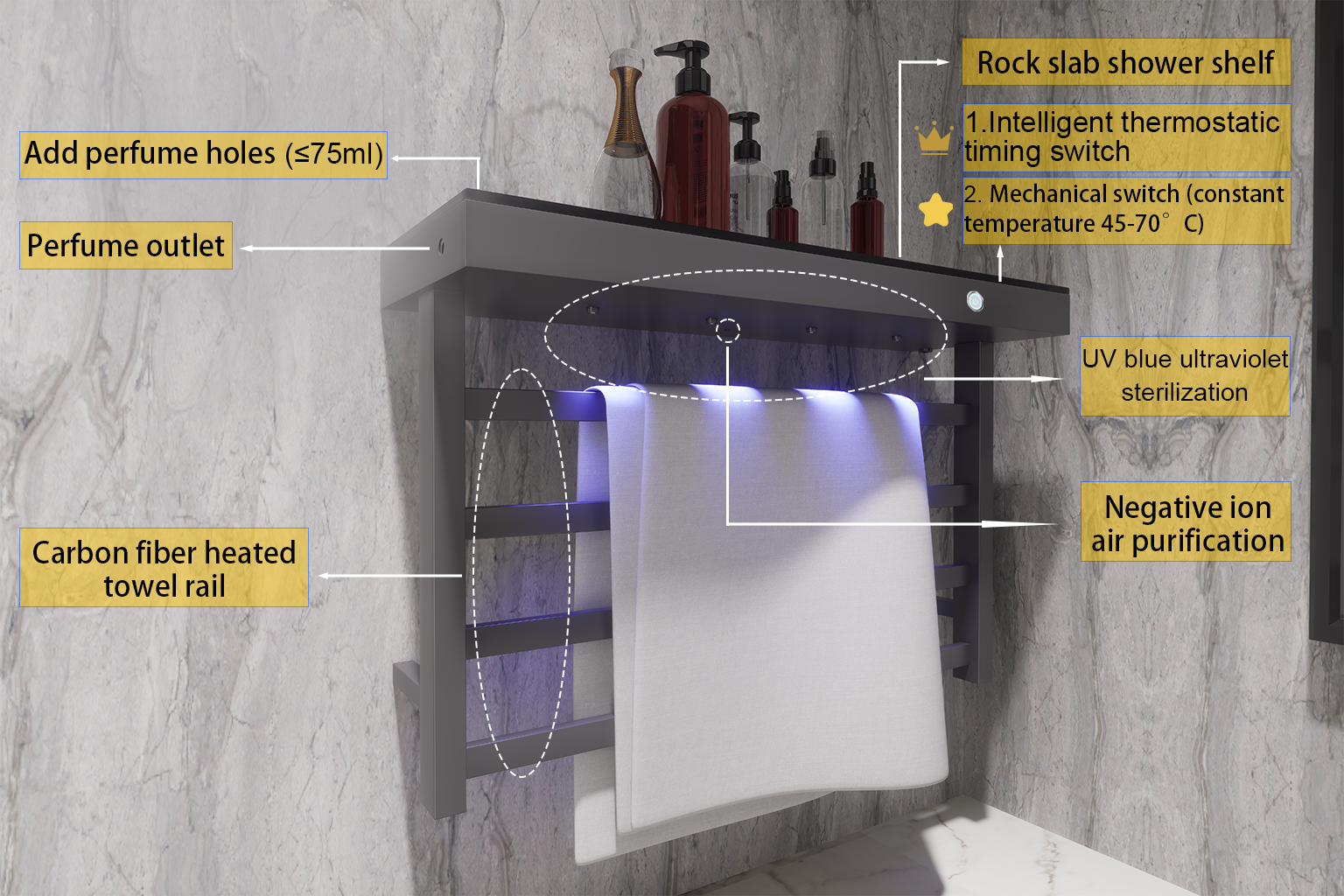
Furthermore, maintaining compliance standards and patent protections—such as Utility Model Patent Certificate 16423119 for rotating mechanisms, CE-LVD certification (e.g., FTS22LC-8881S), and IP44 moisture resistance—requires ongoing quality management. Major commercial ventures, including the Sydney Senior Care Center Project (130 sets) and the Hanoi High-end Residential Project (150 sets), successfully balanced unit prices by aligning order sizes with optimal factory production setup limits.
Key Drivers of Hidden Low-MOQ Costs
1. Logistics and Freight Inflation
Shipping small batches via Air Express or Air Freight dramatically increases per-unit logistics expenses compared to consolidated Ocean Freight (FCL/LCL). Low order volumes fail to maximize shipping container space, forfeiting volume discounts.
2. Electrical and Finish Customization Surcharges
Specifying region-specific voltages (110V-120V vs. 220V-240V) or non-standard finishes in low quantities deprives manufacturers of bulk material purchasing power, resulting in unamortized setup surcharges.
3. Packaging and Handling Overhead
Standard packaging is optimized for 10 pcs/carton master boxes. Purchasing fewer items requires manual split-carton repacking, extra pearl foam protective layer additions, and localized handling fees.
Comparative Breakdown: Small MOQ vs. Standard Bulk Orders
| Operational Dimension | Small MOQ Order (< 50 PCS) | Standard Bulk Order (≥ 50 PCS / Base MOQ) |
|---|---|---|
| Per-Unit Manufacturing Cost | Higher due to unamortized setup fees & custom finish surcharges | Optimized through economies of scale and continuous assembly runs |
| Logistics & Freight Efficiency | Elevated per-unit cost via International Express or Air Delivery | Economical per-unit rates via Ocean Freight (FCL / LCL) or Rail/Road |
| Packaging & Repacking | Incurs split-box fees and extra pearl foam packaging overhead | Standardized master cartons (10 pcs/carton, 640*200*420mm) |
| Customization & Features | Restricted to standard stock; custom specs require surcharge | Full OEM/ODM flexibility (1-12h timers, custom voltages, PVD finishes) |
| Payment Method Flexibility | PayPal, Western Union, or Credit Card for expedited settlement | T/T (30% deposit + 70% B/L), Sight L/C, or Alibaba Trade Assurance |
Frequently Asked Questions
What is the typical minimum order quantity for factory-direct swivel heated towel racks?
Standard factory MOQ is generally 50 pieces per model. However, sample evaluation batches can be delivered within 3 to 7 days prior to committing to full manufacturing orders.
Why do custom electrical specifications raise unit prices on small orders?
Adapting electrical configurations (such as 110V vs. 220V ratings or regional plug types) necessitates dedicated wiring assembly, specialized safety testing, and separate production line checks, which inflate per-unit costs when allocated over small quantities.
How can buyers reduce freight expense when purchasing low quantities?
Buyers can consolidate small towel rack shipments with complementary sanitary items—such as floor drains or stainless steel shower niches—into a single LCL sea freight container, avoiding expensive express air delivery rates.
Optimization Strategies & Final Recommendations
To eliminate unnecessary procurement expenses, buyers should aim to meet standard factory order thresholds of at least 50 units. Meeting this volume unlocks standard 10 pcs/carton packaging efficiency (640*200*420mm), opens full OEM/ODM customization options, and ensures reliable production turnaround times between 20 and 45 days. Ensuring strict adherence to 14-step quality control systems, a 2-Year Product Warranty, and predictable spare-parts availability guarantees long-term project profitability. For customized technical solutions or sourcing assistance, contact us directly at charlene@seosodo.com.
About Us
Foshan Pinshi Sanitary Ware Co., Ltd. is a leading modern sanitary ware manufacturer established in 2014 under the brand name ODO. Spanning a 20,000-square-meter facility with over 200 skilled workers across 20 specialized assembly lines, ODO achieves a monthly capacity of 100,000 units. Every product undergoes 14 rigorous quality inspections and fully complies with international CE safety standards. With over 50 patents and more than 200 new designs introduced annually, ODO exports 80% of its total output to Europe, the Middle East, North America, and Southeast Asia.

REPORT