







-
 Agriculture
-
 Health-Care
-
 Environment
-
 Construction-Real-Estate
-
 Tools-Hardware
-
 Home-Garden
-
 Furniture
-
 Luggage-Bags-Cases
-
 Medical-devices-Supplies
-
 Gifts-Crafts
-
 Sports-Entertainment
-
 Food-Beverage
-
 Vehicles-Transportation
-
 Power-Transmission
-
 Material-Handling
-
 Renewable-Energy
-
 Safety
-
 Testing-Instrument-Equipment
-
 Construction-Building-Machinery
-
 Pet-Supplies
-
 Personal-Care-Household-Cleaning
-
 Vehicle-Accessories-Electronics-Tools
-
 School-Office-Supplies
-
 Packaging-Printing
-
 Mother-Kids-Toys
-
 Business-Services
-
 Commercial-Equipment-Machinery
-
 Apparel-Accessories
-
 Security
-
 Shoes-Accessories
-
 Vehicle-Parts-Accessories
-
 Jewelry-Eyewear-Watches-Accessories
-
 Lights-Lighting
-
 Fabric-Textile-Raw-Material
-
 Fabrication-Services
-
 Industrial-Machinery
-
 Consumer-Electronics
-
 Electrical-Equipment-Supplies
-
 Electronic-Components-Accessories-Telecommunications
-
 Home-Appliances
-
 Beauty
-
 Chemicals
-
 Rubber-Plastics
-
 Metals-Alloys


























































































































































































































































































































































































































































































































































































- Masonry Materials
- Curtain Walls & Accessories
- Earthwork Products
- Fireproofing Materials
- Heat Insulation Materials
- Plastic Building Materials
- Building Boards
- Soundproofing Materials
- Timber
- Waterproofing Materials
- Balustrades & Handrails
- Bathroom & Kitchen
- Flooring & Accessories
- Tiles & Accessories
- Door, Window & Accessories
- Fireplaces & Stoves
- Floor Heating Systems & Parts
- Stairs & Stair Parts
- Ceilings
- Elevators & Escalators
- Stone
- Countertops, Vanity Tops & Table Tops
- Mosaics
- Metal Building Materials
- Multifunctional Materials
- Ladders & Scaffoldings
- Mouldings
- Corner Guards
- Decorative Films
- Formwork
- Building & Industrial Glass
- Other Construction & Real Estate
- Wallpapers/Wall panels
- HVAC System & Parts
- Outdoor Facilities
- Prefabricated Buildings
- Festive & Party Supplies
- Bathroom Products
- Household Sundries
- Rain Gear
- Garden Supplies
- Household Cleaning Tools & Accessories
- Lighters & Smoking Accessories
- Home Storage & Organization
- Household Scales
- Smart Home Improvement
- Home Textiles
- Kitchenware
- Drinkware & Accessories
- Dinnerware, Coffee & Wine
- Home Decor
- Golf
- Fitness & Body Building
- Amusement Park Facilities
- Billiards, Board Game,Coin Operated Games
- Musical Instruments
- Outdoor Affordable Luxury Sports
- Camping & Hiking
- Fishing
- Sports Safety&Rehabilitation
- Ball Sports Equipments
- Water Sports
- Winter Sports
- Luxury Travel Equipments
- Sports Shoes, Bags & Accessories
- Cycling
- Other Sports & Entertainment Products
- Artificial Grass&Sports Flooring&Sports Court Equipment
- Scooters
- Food Ingredients
- Honey & Honey Products
- Snacks
- Nuts & Kernels
- Seafood
- Plant & Animal Oil
- Beverages
- Fruit & Vegetable Products
- Frog & Escargot
- Bean Products
- Egg Products
- Dairy Products
- Seasonings & Condiments
- Canned Food
- Instant Food
- Baked Goods
- Other Food & Beverage
- Meat & Poultry
- Confectionery
- Grain Products
- Feminie Care
- Hair Care & Styling
- Body Care
- Hands & Feet Care
- Hygiene Products
- Men's Grooming
- Laundry Cleaning Supplies
- Travel Size & Gift Sets
- Room Deodorizers
- Other Personal Care Products
- Pest Control Products
- Special Household Cleaning
- Floor Cleaning
- Kitchen & Bathroom Cleaning
- Oral Care
- Bath Supplies
- Yellow Pages
- Correction Supplies
- Office Binding Supplies
- Office Cutting Supplies
- Board Erasers
- Office Adhesives & Tapes
- Education Supplies
- Pencil Cases & Bags
- Notebooks & Writing Pads
- File Folder Accessories
- Calendars
- Writing Accessories
- Commercial Office Supplies
- Pencil Sharpeners
- Pens
- Letter Pad/Paper
- Paper Envelopes
- Desk Organizers
- Pencils
- Markers & Highlighters
- Filing Products
- Art Supplies
- Easels
- Badge Holder & Accessories
- Office Paper
- Printer Supplies
- Book Covers
- Other Office & School Supplies
- Stationery Set
- Boards
- Clipboards
- Stamps
- Drafting Supplies
- Stencils
- Electronic Dictionary
- Books
- Map
- Magazines
- Calculators
- Baby & Toddler Toys
- Educational Toys
- Classic Toys
- Dress Up & Pretend Play
- Toy Vehicle
- Stuffed Animals & Plush Toys
- Outdoor Toys & Structures
- Balloons & Accessories
- Baby Food
- Children's Clothing
- Baby Supplies & Products
- Maternity Clothes
- Kids Shoes
- Baby Care
- Novelty & Gag Toys
- Dolls & Accessories
- Puzzle & Games
- Blocks & Model Building Toys
- Toddler Clothing
- Baby Clothing
- Kids' Luggage & Bags
- Arts, Crafts & DIY Toys
- Action & Toy Figures
- Baby Appliances
- Hobbies & Models
- Remote Control Toys
- Promotional Toys
- Pregnancy & Maternity
- Hygiene Products
- Kid's Textile&Bedding
- Novelty & Special Use
- Toy Weapons
- Baby Gifts
- Baby Storage & Organization
- Auto Drive Systems
- ATV/UTV Parts & Accessories
- Marine Parts & Accessories
- Other Auto Parts
- Trailer Parts & Accessories
- Auto Transmission Systems
- Train Parts & Accessories
- Universal Parts
- Railway Parts & Accessories
- Auto Brake Systems
- Aviation Parts & Accessories
- Truck Parts & Accessories
- Auto Suspension Systems
- Auto Lighting Systems
- New Energy Vehicle Parts & Accessories
- Auto Steering Systems
- Wheels, Tires & Accessories
- Bus Parts & Accessories
- Auto Performance Parts
- Cooling System
- Go-Kart & Kart Racer Parts & Accessories
- Air Conditioning Systems
- Heavy Duty Vehicle Parts & Accessories
- Auto Electrical Systems
- Auto Body Systems
- Auto Engine Systems
- Container Parts & Accessories
- Motorcycle Parts & Accessories
- Refrigeration & Heat Exchange Equipment
- Machine Tool Equipment
- Food & Beverage Machinery
- Agricultural Machinery & Equipment
- Apparel & Textile Machinery
- Chemical Machinery
- Packaging Machines
- Paper Production Machinery
- Plastic & Rubber Processing Machinery
- Industrial Robots
- Electronic Products Machinery
- Metal & Metallurgy Machinery
- Woodworking Machinery
- Home Product Manufacturing Machinery
- Machinery Accessories
- Environmental Machinery
- Machinery Service
- Electrical Equipment Manufacturing Machinery
- Industrial Compressors & Parts
- Tobacco & Cigarette Machinery
- Production Line
- Used Industrial Machinery
- Electronics Production Machinery
- Other Machinery & Industrial Equipment
- Camera, Photo & Accessories
- Portable Audio, Video & Accessories
- Television, Home Audio, Video & Accessories
- Video Games & Accessories
- Mobile Phone & Accessories
- Electronic Publications
- Earphone & Headphone & Accessories
- Speakers & Accessories
- Smart Electronics
- TV Receivers & Accessories
- Mobile Phone & Computer Repair Parts
- Chargers, Batteries & Power Supplies
- Used Electronics
- VR, AR, MR Hardware & Software
- Projectors & Presentation Equipments
- Other Consumer Electronics
- Cables & Commonly Used Accessories
- Computer Hardware & Software
- Displays, Signage and Optoelectronics
- Discrete Semiconductors
- Wireless & IoT Module and Products
- Telecommunications
- Connectors, Terminals & Accessories
- Development Boards, Electronic Modules and Kits
- Circuit Protection
- Sensors
- Isolators
- Audio Components and Products
- Integrated Circuits
- Power Supplies
- Relays
- RF, Microwave and RFID
- Electronic Accessories & Supplies
- Passive Components
- PCB & PCBA
- Air Quality Appliances
- Home Appliance Parts
- Heating & Cooling Appliances
- Small Kitchen Appliances
- Laundry Appliances
- Water Heaters
- Water Treatment Appliances
- Refrigerators & Freezers
- Personal Care & Beauty Appliances
- Major Kitchen Appliances
- Cleaning Appliances
- Second-hand Appliances
- Smart Home Appliances
- Other Home Appliances
- Energy Chemicals
- Inorganic Chemicals
- Basic Organic Chemicals
- Agrochemicals
- Admixture & Additives
- Catalysts & Chemical Auxiliary Agents
- Pigments & Dyestuff
- Coating & Paint
- Daily Chemicals
- Polymer
- Organic Intermediate
- Adhesives & Sealants
- Chemical Waste
- Biological Chemical Products
- Surface Treatment Chemicals
- Painting & Coating
- Chemical Reagents
- Flavor & Fragrance
- Non-Explosive Demolition Agents
- Other Chemicals
- Custom Chemical Services

Pressure Washer Gun Safety Features to Check Before Purchase
Selecting a safe pressure washer gun requires more than comparing water pressure. Before ordering, review the model’s verified pressure rating, fitting design, construction materials, filtration, spray adjustment, intended application, and inspection documentation. These checks help reduce the likelihood of leaks, accidental disconnection, blocked flow, and equipment mismatch.
Essential Safety Checks for Buyers
Begin with the specifications for the exact gun or accessory you plan to purchase. Do not rely on a general product category rating, because pressure limits can vary between water guns, foam cannons, lances, and other attachments.
- Confirm the documented pressure rating and use the gun only with a compatible pressure washer. The referenced brass snow foam cannon is listed at 18 MPa.
- Examine the connection system. A correctly matched 1/4 quick-connect fitting can make accessory replacement faster while supporting a secure connection.
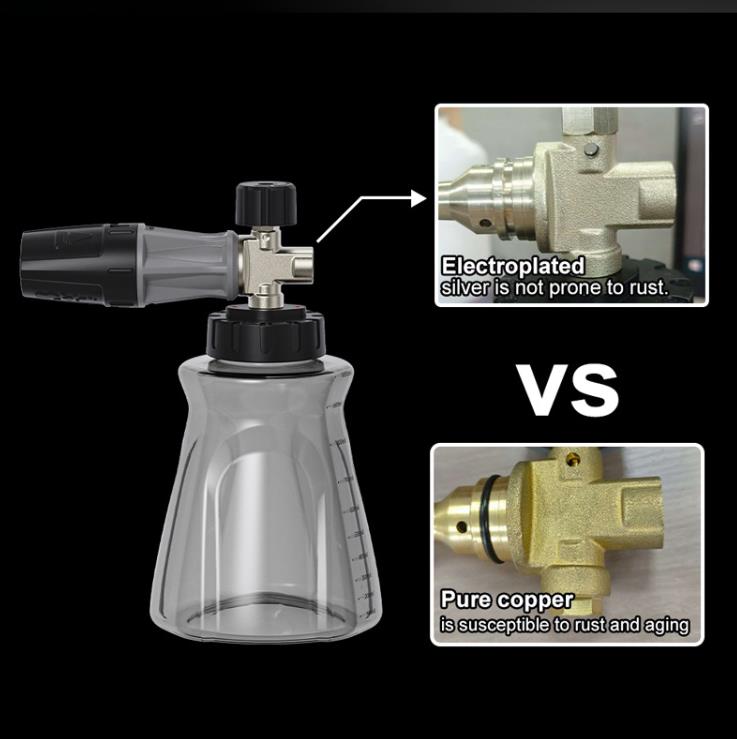
- Review the body and internal components. The listed snow foam cannon uses brass metal and a single steel filter net, giving buyers clear specifications to verify during sampling and delivery inspection.
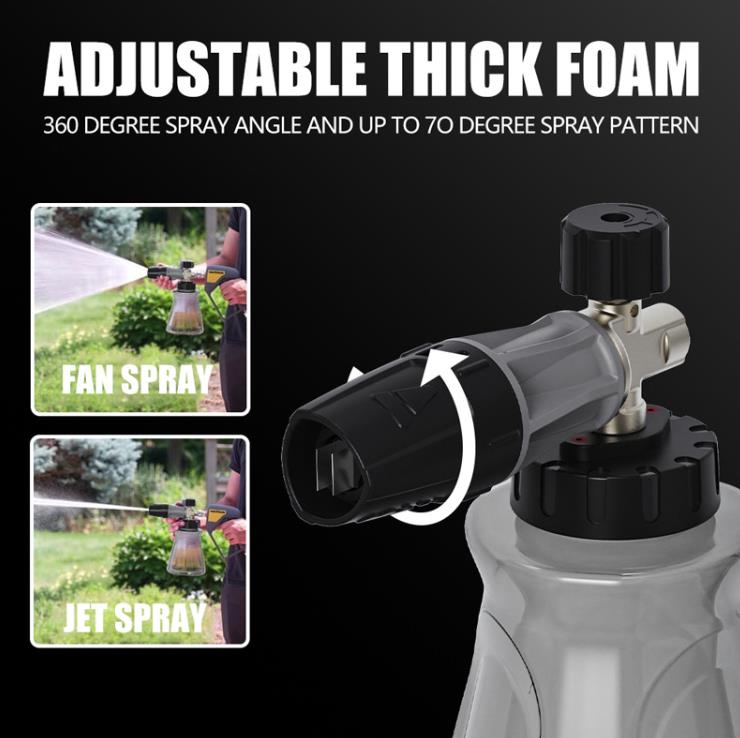
- Choose spray functions according to the work. Adjustable spray modes may be useful for vehicle washing, courtyard cleaning, balcony stain removal, and construction equipment dust removal.
How Each Feature Supports Safer Operation
Pressure rating and equipment compatibility
A pressure washer gun directs pressurized water through its housing, trigger or control assembly, outlet, and inlet connection. The stated working pressure should be compared with the operating requirements of the washer. The available product information gives an 18 MPa rating for the brass snow foam cannon, but buyers should obtain the rating for the specific gun being ordered rather than applying this number to every model.
Connection security
Fittings deserve a separate inspection because an incorrect interface can cause leakage, prevent complete assembly, or allow the accessory to detach. The product record identifies a 1/4 quick connect. Confirm that the connector matches the washer, hose, and selected accessory, then check that it locks fully before starting the machine. Compatible fittings also simplify switching between a water gun, foam lance, and pump accessory.
Materials, nozzle design, and filtration
Material details should be stated clearly in the quotation, specification sheet, or approved sample. The referenced configuration includes a brass body, a 1.2 mm orifice nozzle, one steel filter net, and either a plastic tube or rubber tube. Comparing the delivered goods with these agreed details helps identify substitutions that could affect durability or operating performance.
A filter can help limit larger contaminants entering the fluid path, but it must be installed correctly and kept clean. Before repeat purchasing, ask about the filter location, cleaning procedure, replacement availability, tube material, and nozzle specification. A filter should support maintenance control; it does not replace proper water quality or routine inspection.
Inspection and application suitability
Inspection records are another important purchasing safeguard. The product information describes the snow foam cannon as fully inspected, and the company profile also refers to full inspection within its business offering. Buyers should request the inspection scope for the exact pressure washer gun, including any pressure-resistance, leakage, connection-fit, or configuration checks. An inspection statement should not be assumed to include tests that are not identified in the order documents.
Safety also depends on selecting the right attachment for the task. The high-pressure water gun is described for car body cleaning, courtyard floors, balcony stains, and construction equipment dust. A separate undercarriage cleaner is intended to direct water toward vehicle chassis, suspension components, and wheels. Therefore, application area, spray control, and handling requirements should be assessed alongside pressure specifications.
An industry case involving car-washing accessory distributors in America describes use across vehicle cleaning, courtyard floors, balconies, and construction equipment. Adjustable water spray modes were included in the application description, making spray control another feature worth confirming during procurement.
Purchasing Comparison Checklist
| Inspection area | Reference information | Buyer action |
|---|---|---|
| Pressure rating | The brass snow foam cannon is listed at 18 MPa | Obtain the rating for the exact gun and ensure it suits the pressure washer |
| Connection system | A 1/4 quick connect is specified | Verify interface size, locking engagement, compatibility, and leakage performance |
| Construction material | Brass metal is listed for the snow foam cannon | Check the supplied material against the approved specification or sample |
| Filtration | One steel filter net is specified | Confirm its presence, position, cleaning method, and replacement requirements |
| Inspection status | Full inspection is stated | Request the actual inspection scope and related records for the selected model |
| Spray adjustment | Adjustable water spray modes are listed for the high-pressure water gun | Confirm the available adjustment range and suitability for the cleaning job |
Frequently Asked Questions
What pressure information should be confirmed first?
Check the documented pressure rating of the exact model and compare it with the washer’s operating requirements. Although the referenced snow foam cannon is rated at 18 MPa, that figure should not be transferred to another pressure washer gun without written confirmation.
Can a quick-connect fitting improve safety?
Yes, when the connector size and interface are correct. The listed snow foam cannon uses a 1/4 quick connect. Confirm complete engagement, inspect the locking condition, and check for leaks before applying operating pressure.
Does a full-inspection claim guarantee safe operation?
It is a useful quality indicator, but the scope must be clarified. Ask whether the inspection covers pressure resistance, leakage, connection fit, component configuration, and any other requirements written into the purchase order.
Conclusion and Supplier Support
Before buying a pressure washer gun, prioritize a verified pressure rating, compatible connections, clearly defined materials, practical filtration, suitable spray adjustment, and documented inspection coverage. For project sourcing, Yiwu Zanchy provides OEM and ODM manufacturing, factory-direct supply, bulk production, flexible small-batch orders, and export-oriented manufacturing. For technical consultation or purchasing assistance, contact sales8@zanchy.com.
About Yiwu Zanchy
Yiwu Zanchy Mechatronics Co. Ltd. is an integrated manufacturer and exporter specializing in high-pressure cleaning machine accessories. Its product range includes water guns, foam lances, spray nozzles, pressure hoses, quick connectors, pump accessories, and filter accessories. Founded in 2019, the company has more than 50 professional employees and operates a 3,000 sqm factory. Its independent R&D team develops accessory structures, optimizes materials, upgrades products, and conducts performance, corrosion-resistance, pressure-resistance, and aging tests.

REPORT