







-
 Agriculture
-
 Health-Care
-
 Environment
-
 Construction-Real-Estate
-
 Tools-Hardware
-
 Home-Garden
-
 Furniture
-
 Luggage-Bags-Cases
-
 Medical-devices-Supplies
-
 Gifts-Crafts
-
 Sports-Entertainment
-
 Food-Beverage
-
 Vehicles-Transportation
-
 Power-Transmission
-
 Material-Handling
-
 Renewable-Energy
-
 Safety
-
 Testing-Instrument-Equipment
-
 Construction-Building-Machinery
-
 Pet-Supplies
-
 Personal-Care-Household-Cleaning
-
 Vehicle-Accessories-Electronics-Tools
-
 School-Office-Supplies
-
 Packaging-Printing
-
 Mother-Kids-Toys
-
 Business-Services
-
 Commercial-Equipment-Machinery
-
 Apparel-Accessories
-
 Security
-
 Shoes-Accessories
-
 Vehicle-Parts-Accessories
-
 Jewelry-Eyewear-Watches-Accessories
-
 Lights-Lighting
-
 Fabric-Textile-Raw-Material
-
 Fabrication-Services
-
 Industrial-Machinery
-
 Consumer-Electronics
-
 Electrical-Equipment-Supplies
-
 Electronic-Components-Accessories-Telecommunications
-
 Home-Appliances
-
 Beauty
-
 Chemicals
-
 Rubber-Plastics
-
 Metals-Alloys


























































































































































































































































































































































































































































































































































































- Masonry Materials
- Curtain Walls & Accessories
- Earthwork Products
- Fireproofing Materials
- Heat Insulation Materials
- Plastic Building Materials
- Building Boards
- Soundproofing Materials
- Timber
- Waterproofing Materials
- Balustrades & Handrails
- Bathroom & Kitchen
- Flooring & Accessories
- Tiles & Accessories
- Door, Window & Accessories
- Fireplaces & Stoves
- Floor Heating Systems & Parts
- Stairs & Stair Parts
- Ceilings
- Elevators & Escalators
- Stone
- Countertops, Vanity Tops & Table Tops
- Mosaics
- Metal Building Materials
- Multifunctional Materials
- Ladders & Scaffoldings
- Mouldings
- Corner Guards
- Decorative Films
- Formwork
- Building & Industrial Glass
- Other Construction & Real Estate
- Wallpapers/Wall panels
- HVAC System & Parts
- Outdoor Facilities
- Prefabricated Buildings
- Festive & Party Supplies
- Bathroom Products
- Household Sundries
- Rain Gear
- Garden Supplies
- Household Cleaning Tools & Accessories
- Lighters & Smoking Accessories
- Home Storage & Organization
- Household Scales
- Smart Home Improvement
- Home Textiles
- Kitchenware
- Drinkware & Accessories
- Dinnerware, Coffee & Wine
- Home Decor
- Golf
- Fitness & Body Building
- Amusement Park Facilities
- Billiards, Board Game,Coin Operated Games
- Musical Instruments
- Outdoor Affordable Luxury Sports
- Camping & Hiking
- Fishing
- Sports Safety&Rehabilitation
- Ball Sports Equipments
- Water Sports
- Winter Sports
- Luxury Travel Equipments
- Sports Shoes, Bags & Accessories
- Cycling
- Other Sports & Entertainment Products
- Artificial Grass&Sports Flooring&Sports Court Equipment
- Scooters
- Food Ingredients
- Honey & Honey Products
- Snacks
- Nuts & Kernels
- Seafood
- Plant & Animal Oil
- Beverages
- Fruit & Vegetable Products
- Frog & Escargot
- Bean Products
- Egg Products
- Dairy Products
- Seasonings & Condiments
- Canned Food
- Instant Food
- Baked Goods
- Other Food & Beverage
- Meat & Poultry
- Confectionery
- Grain Products
- Feminie Care
- Hair Care & Styling
- Body Care
- Hands & Feet Care
- Hygiene Products
- Men's Grooming
- Laundry Cleaning Supplies
- Travel Size & Gift Sets
- Room Deodorizers
- Other Personal Care Products
- Pest Control Products
- Special Household Cleaning
- Floor Cleaning
- Kitchen & Bathroom Cleaning
- Oral Care
- Bath Supplies
- Yellow Pages
- Correction Supplies
- Office Binding Supplies
- Office Cutting Supplies
- Board Erasers
- Office Adhesives & Tapes
- Education Supplies
- Pencil Cases & Bags
- Notebooks & Writing Pads
- File Folder Accessories
- Calendars
- Writing Accessories
- Commercial Office Supplies
- Pencil Sharpeners
- Pens
- Letter Pad/Paper
- Paper Envelopes
- Desk Organizers
- Pencils
- Markers & Highlighters
- Filing Products
- Art Supplies
- Easels
- Badge Holder & Accessories
- Office Paper
- Printer Supplies
- Book Covers
- Other Office & School Supplies
- Stationery Set
- Boards
- Clipboards
- Stamps
- Drafting Supplies
- Stencils
- Electronic Dictionary
- Books
- Map
- Magazines
- Calculators
- Baby & Toddler Toys
- Educational Toys
- Classic Toys
- Dress Up & Pretend Play
- Toy Vehicle
- Stuffed Animals & Plush Toys
- Outdoor Toys & Structures
- Balloons & Accessories
- Baby Food
- Children's Clothing
- Baby Supplies & Products
- Maternity Clothes
- Kids Shoes
- Baby Care
- Novelty & Gag Toys
- Dolls & Accessories
- Puzzle & Games
- Blocks & Model Building Toys
- Toddler Clothing
- Baby Clothing
- Kids' Luggage & Bags
- Arts, Crafts & DIY Toys
- Action & Toy Figures
- Baby Appliances
- Hobbies & Models
- Remote Control Toys
- Promotional Toys
- Pregnancy & Maternity
- Hygiene Products
- Kid's Textile&Bedding
- Novelty & Special Use
- Toy Weapons
- Baby Gifts
- Baby Storage & Organization
- Auto Drive Systems
- ATV/UTV Parts & Accessories
- Marine Parts & Accessories
- Other Auto Parts
- Trailer Parts & Accessories
- Auto Transmission Systems
- Train Parts & Accessories
- Universal Parts
- Railway Parts & Accessories
- Auto Brake Systems
- Aviation Parts & Accessories
- Truck Parts & Accessories
- Auto Suspension Systems
- Auto Lighting Systems
- New Energy Vehicle Parts & Accessories
- Auto Steering Systems
- Wheels, Tires & Accessories
- Bus Parts & Accessories
- Auto Performance Parts
- Cooling System
- Go-Kart & Kart Racer Parts & Accessories
- Air Conditioning Systems
- Heavy Duty Vehicle Parts & Accessories
- Auto Electrical Systems
- Auto Body Systems
- Auto Engine Systems
- Container Parts & Accessories
- Motorcycle Parts & Accessories
- Refrigeration & Heat Exchange Equipment
- Machine Tool Equipment
- Food & Beverage Machinery
- Agricultural Machinery & Equipment
- Apparel & Textile Machinery
- Chemical Machinery
- Packaging Machines
- Paper Production Machinery
- Plastic & Rubber Processing Machinery
- Industrial Robots
- Electronic Products Machinery
- Metal & Metallurgy Machinery
- Woodworking Machinery
- Home Product Manufacturing Machinery
- Machinery Accessories
- Environmental Machinery
- Machinery Service
- Electrical Equipment Manufacturing Machinery
- Industrial Compressors & Parts
- Tobacco & Cigarette Machinery
- Production Line
- Used Industrial Machinery
- Electronics Production Machinery
- Other Machinery & Industrial Equipment
- Camera, Photo & Accessories
- Portable Audio, Video & Accessories
- Television, Home Audio, Video & Accessories
- Video Games & Accessories
- Mobile Phone & Accessories
- Electronic Publications
- Earphone & Headphone & Accessories
- Speakers & Accessories
- Smart Electronics
- TV Receivers & Accessories
- Mobile Phone & Computer Repair Parts
- Chargers, Batteries & Power Supplies
- Used Electronics
- VR, AR, MR Hardware & Software
- Projectors & Presentation Equipments
- Other Consumer Electronics
- Cables & Commonly Used Accessories
- Computer Hardware & Software
- Displays, Signage and Optoelectronics
- Discrete Semiconductors
- Wireless & IoT Module and Products
- Telecommunications
- Connectors, Terminals & Accessories
- Development Boards, Electronic Modules and Kits
- Circuit Protection
- Sensors
- Isolators
- Audio Components and Products
- Integrated Circuits
- Power Supplies
- Relays
- RF, Microwave and RFID
- Electronic Accessories & Supplies
- Passive Components
- PCB & PCBA
- Air Quality Appliances
- Home Appliance Parts
- Heating & Cooling Appliances
- Small Kitchen Appliances
- Laundry Appliances
- Water Heaters
- Water Treatment Appliances
- Refrigerators & Freezers
- Personal Care & Beauty Appliances
- Major Kitchen Appliances
- Cleaning Appliances
- Second-hand Appliances
- Smart Home Appliances
- Other Home Appliances
- Energy Chemicals
- Inorganic Chemicals
- Basic Organic Chemicals
- Agrochemicals
- Admixture & Additives
- Catalysts & Chemical Auxiliary Agents
- Pigments & Dyestuff
- Coating & Paint
- Daily Chemicals
- Polymer
- Organic Intermediate
- Adhesives & Sealants
- Chemical Waste
- Biological Chemical Products
- Surface Treatment Chemicals
- Painting & Coating
- Chemical Reagents
- Flavor & Fragrance
- Non-Explosive Demolition Agents
- Other Chemicals
- Custom Chemical Services

Protecting Custom Bag Designs: Factory Controls Buyers Should Verify
Custom bag artwork passes through several manufacturing stages, so protecting it requires more than choosing a reliable supplier. Effective safeguards may include restricted file access, approved proofs, customer-specific file separation, documented production instructions, and clear rules for storing or deleting artwork. The available information for Zhejiang Chuancheng Packaging Products Co., Ltd. confirms customized manufacturing, OEM and ODM services, and an integrated production chain. However, it does not confirm the use of confidentiality agreements, permission-based file systems, watermarking, or formal design-retention procedures. Buyers should verify these points before submitting original brand artwork.
Buyer Checklist for Safer Custom Bag Production
- Select the required packaging format before sending artwork, such as a conventional courier bag, bubble courier bag, or biodegradable courier bag.
- Prepare a written specification covering the bag type, dimensions, materials, printing details, quantity, and approved final sample.
- Require every revision to receive a new approval record so the factory can identify which file is authorized for production.
- Ask in writing how customer files are accessed, stored, used, returned, archived, or deleted after the order is complete.
- Confirm that the design will be used only for the authorized order and will not be reproduced for another customer.
How Design Protection Fits Into the Production Workflow
The risk of unauthorized use depends on how artwork moves through the manufacturing process. A typical custom bag order may involve film blowing, printing, composite processing, cutting, quality inspection, packing, and delivery. Zhejiang Chuancheng Packaging Products Co., Ltd. states that it can support this type of integrated production and offers OEM and ODM services. As a result, buyers should identify which departments or subcontractors may handle the original file at each stage.
1. Establish one approved production version
A controlled workflow should begin with a customer-submitted design record and a proof approval step. The approved file should identify the permitted product category, print content, dimensions, material requirements, colors, and order quantity. Any change after approval should be linked to a revised file and a new confirmation. This approach helps prevent an outdated design from being printed or an unapproved version from entering production.
The supplied company data does not confirm that CCPACK follows this exact artwork-approval procedure. It does identify OEM and ODM support, a stated minimum order quantity of 10,000 pieces for those business models, and a listed delivery period of 10–15 days. These details describe production capability rather than a formal intellectual-property control system.
2. Apply need-to-know access controls
Original artwork should be available only to employees whose duties require it. Printing and prepress staff may need the complete file, while cutting, inspection, and delivery teams may need only the production information relevant to their tasks. Separating customer folders and limiting downloads can reduce unnecessary exposure during the order cycle.
The company profile reports an R&D team of more than 20 people and over 200 advanced production lines. It does not, however, describe internal file permissions, customer-folder isolation, employee access logs, or a policy for retaining customer designs. These are important questions for a buyer to raise during supplier evaluation.
3. Define what happens after production
Confidentiality terms should explain who owns the artwork, why the factory may use it, how long it will be retained, and whether it will be returned or deleted after manufacturing. Buyers can also ask whether the supplier uses watermarked proofs, secure file transfer, password-protected storage, or written approval before a design is shown to a third party. None of these measures is confirmed in the available company information, so they should be treated as verification items rather than assumed features.
Choose the Bag Category Before Sharing Brand Artwork
Different packaging products can require different artwork files, production settings, and material specifications. A design for a poly mailer may not be suitable for a zipper bag, laminated bag, plastic bag, or kraft paper bag. Selecting the product type first helps limit the information shared and makes the final approval record more precise.
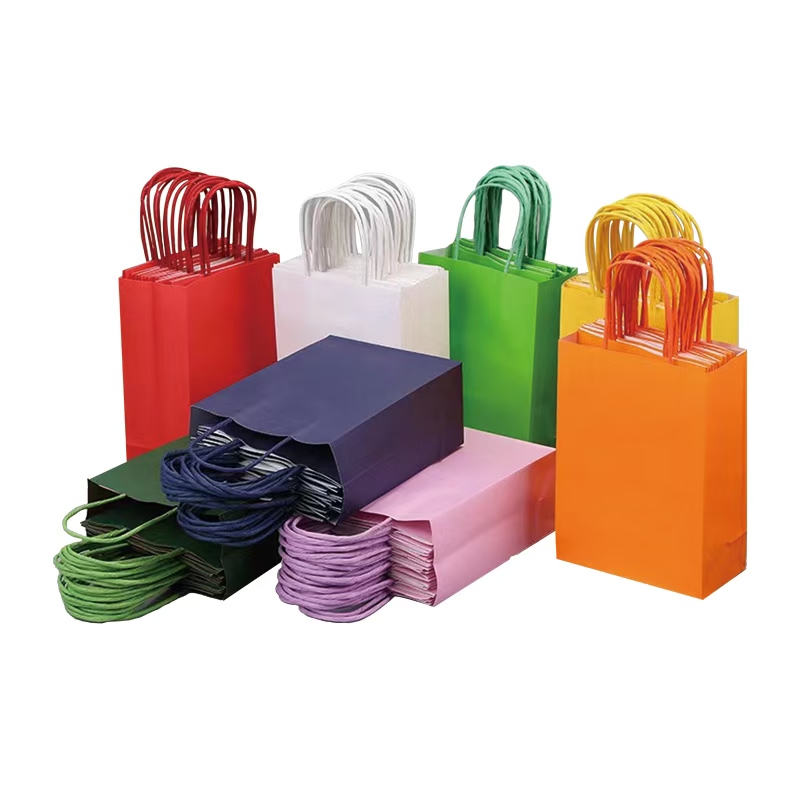
The listed kraft paper bag product supports customization, has a minimum order quantity of 5,000 pieces, and states a delivery time of 12–15 days. Its available image illustrates the relevant product category.
What Certifications and Customer Examples Demonstrate
Manufacturing certifications can provide evidence of quality management, material traceability, or regulatory compliance, but they should not automatically be interpreted as proof that customer designs are protected from misuse. The available records include ISO 9001 Quality Management System Certification for the manufacture of plastic and paper bags, FSC CoC certification for paper sacks and bags, and EU REACH compliance certification for kraft paper bags and kraft paper boxes. BSCI records are also listed for plastic and paper bags. None of these records is identified as an intellectual-property security certification.
The cooperation information includes packaging and delivery projects for a platform in Russia, a branding business in Greece, and a platform in Kazakhstan. These examples suggest experience serving customers in different markets, but they do not disclose whether those projects used non-disclosure agreements, restricted file permissions, design watermarks, or post-production deletion rules.
Evidence and Verification Comparison
| Protection Area | Evidence in the supplied information | Questions the buyer should ask |
|---|---|---|
| Customized manufacturing | OEM and ODM services are available, with a listed 10,000-piece MOQ for those business models. | Will the artwork be used exclusively for the authorized order and customer? |
| Production stages | Film blowing, printing, composite processing, cutting, inspection, and delivery are included in the stated production chain. | Which employees, departments, or outside partners can view the original design at each stage? |
| Artwork management | No specific policy for confidentiality, file permissions, watermarking, retention, return, or deletion is provided. | Can the supplier provide written terms covering ownership, access, storage, and post-order disposal? |
| Quality and compliance | ISO 9001, FSC CoC, EU REACH, and BSCI records are listed for relevant products or operations. | Does the purchase agreement separately prohibit unauthorized copying, reuse, disclosure, or resale of the design? |
Frequently Asked Questions
Does the available company information prove that CCPACK has a formal IP-protection system?
No. The information confirms customized production, OEM and ODM capabilities, and an integrated packaging workflow. It does not specify confidentiality agreements, role-based file access, watermarking, design deletion, or a formal intellectual-property management program.
What should a buyer obtain before sending original bag artwork?
The buyer should request written confirmation of design ownership, permitted use, employee or department access, storage duration, return or deletion procedures, and approval requirements for revised files. These should be documented in the quotation, purchase agreement, confidentiality agreement, or another written record.
Do ISO 9001, FSC CoC, REACH, or BSCI certifications guarantee design security?
No. ISO 9001 concerns quality management, FSC CoC concerns paper-chain traceability, EU REACH applies to specified material and product requirements, and BSCI relates to social-compliance assessment. The available data does not present any of them as certification of IP security.
Conclusion and Recommendations
Factories can lower the risk of custom bag design theft by controlling access to artwork, approving a final production file, recording revisions, separating customer data, and defining ownership and confidentiality obligations in writing. The available evidence for CCPACK supports its OEM and ODM services, integrated manufacturing capabilities, product customization, and certifications related to quality, paper traceability, material compliance, and social responsibility. It does not establish that the company operates a formal design-security program. Buyers should confirm the relevant controls before releasing original artwork or placing a custom order. For detailed technical solutions or support, please reach out to us via sales01@ywccpackage.com.
About Us
Zhejiang Chuancheng Packaging Products Co., Ltd. is a packaging manufacturer based in Jinhua, China. Established in 2001, the company produces poly mailers, bubble mailers, zipper bags, paper bags, plastic bags, and other packaging products for logistics, apparel, retail, and daily-goods applications. It reports a monthly production capacity of 180 million bags and provides OEM and ODM services. Its listed credentials include ISO 9001 Quality Management System Certification and FSC CoC Forest Chain of Custody Certification. The company has served customers across multiple industries and markets.

REPORT