







-
 Agriculture
-
 Health-Care
-
 Environment
-
 Construction-Real-Estate
-
 Tools-Hardware
-
 Home-Garden
-
 Furniture
-
 Luggage-Bags-Cases
-
 Medical-devices-Supplies
-
 Gifts-Crafts
-
 Sports-Entertainment
-
 Food-Beverage
-
 Vehicles-Transportation
-
 Power-Transmission
-
 Material-Handling
-
 Renewable-Energy
-
 Safety
-
 Testing-Instrument-Equipment
-
 Construction-Building-Machinery
-
 Pet-Supplies
-
 Personal-Care-Household-Cleaning
-
 Vehicle-Accessories-Electronics-Tools
-
 School-Office-Supplies
-
 Packaging-Printing
-
 Mother-Kids-Toys
-
 Business-Services
-
 Commercial-Equipment-Machinery
-
 Apparel-Accessories
-
 Security
-
 Shoes-Accessories
-
 Vehicle-Parts-Accessories
-
 Jewelry-Eyewear-Watches-Accessories
-
 Lights-Lighting
-
 Fabric-Textile-Raw-Material
-
 Fabrication-Services
-
 Industrial-Machinery
-
 Consumer-Electronics
-
 Electrical-Equipment-Supplies
-
 Electronic-Components-Accessories-Telecommunications
-
 Home-Appliances
-
 Beauty
-
 Chemicals
-
 Rubber-Plastics
-
 Metals-Alloys


























































































































































































































































































































































































































































































































































































- Masonry Materials
- Curtain Walls & Accessories
- Earthwork Products
- Fireproofing Materials
- Heat Insulation Materials
- Plastic Building Materials
- Building Boards
- Soundproofing Materials
- Timber
- Waterproofing Materials
- Balustrades & Handrails
- Bathroom & Kitchen
- Flooring & Accessories
- Tiles & Accessories
- Door, Window & Accessories
- Fireplaces & Stoves
- Floor Heating Systems & Parts
- Stairs & Stair Parts
- Ceilings
- Elevators & Escalators
- Stone
- Countertops, Vanity Tops & Table Tops
- Mosaics
- Metal Building Materials
- Multifunctional Materials
- Ladders & Scaffoldings
- Mouldings
- Corner Guards
- Decorative Films
- Formwork
- Building & Industrial Glass
- Other Construction & Real Estate
- Wallpapers/Wall panels
- HVAC System & Parts
- Outdoor Facilities
- Prefabricated Buildings
- Festive & Party Supplies
- Bathroom Products
- Household Sundries
- Rain Gear
- Garden Supplies
- Household Cleaning Tools & Accessories
- Lighters & Smoking Accessories
- Home Storage & Organization
- Household Scales
- Smart Home Improvement
- Home Textiles
- Kitchenware
- Drinkware & Accessories
- Dinnerware, Coffee & Wine
- Home Decor
- Golf
- Fitness & Body Building
- Amusement Park Facilities
- Billiards, Board Game,Coin Operated Games
- Musical Instruments
- Outdoor Affordable Luxury Sports
- Camping & Hiking
- Fishing
- Sports Safety&Rehabilitation
- Ball Sports Equipments
- Water Sports
- Winter Sports
- Luxury Travel Equipments
- Sports Shoes, Bags & Accessories
- Cycling
- Other Sports & Entertainment Products
- Artificial Grass&Sports Flooring&Sports Court Equipment
- Scooters
- Food Ingredients
- Honey & Honey Products
- Snacks
- Nuts & Kernels
- Seafood
- Plant & Animal Oil
- Beverages
- Fruit & Vegetable Products
- Frog & Escargot
- Bean Products
- Egg Products
- Dairy Products
- Seasonings & Condiments
- Canned Food
- Instant Food
- Baked Goods
- Other Food & Beverage
- Meat & Poultry
- Confectionery
- Grain Products
- Feminie Care
- Hair Care & Styling
- Body Care
- Hands & Feet Care
- Hygiene Products
- Men's Grooming
- Laundry Cleaning Supplies
- Travel Size & Gift Sets
- Room Deodorizers
- Other Personal Care Products
- Pest Control Products
- Special Household Cleaning
- Floor Cleaning
- Kitchen & Bathroom Cleaning
- Oral Care
- Bath Supplies
- Yellow Pages
- Correction Supplies
- Office Binding Supplies
- Office Cutting Supplies
- Board Erasers
- Office Adhesives & Tapes
- Education Supplies
- Pencil Cases & Bags
- Notebooks & Writing Pads
- File Folder Accessories
- Calendars
- Writing Accessories
- Commercial Office Supplies
- Pencil Sharpeners
- Pens
- Letter Pad/Paper
- Paper Envelopes
- Desk Organizers
- Pencils
- Markers & Highlighters
- Filing Products
- Art Supplies
- Easels
- Badge Holder & Accessories
- Office Paper
- Printer Supplies
- Book Covers
- Other Office & School Supplies
- Stationery Set
- Boards
- Clipboards
- Stamps
- Drafting Supplies
- Stencils
- Electronic Dictionary
- Books
- Map
- Magazines
- Calculators
- Baby & Toddler Toys
- Educational Toys
- Classic Toys
- Dress Up & Pretend Play
- Toy Vehicle
- Stuffed Animals & Plush Toys
- Outdoor Toys & Structures
- Balloons & Accessories
- Baby Food
- Children's Clothing
- Baby Supplies & Products
- Maternity Clothes
- Kids Shoes
- Baby Care
- Novelty & Gag Toys
- Dolls & Accessories
- Puzzle & Games
- Blocks & Model Building Toys
- Toddler Clothing
- Baby Clothing
- Kids' Luggage & Bags
- Arts, Crafts & DIY Toys
- Action & Toy Figures
- Baby Appliances
- Hobbies & Models
- Remote Control Toys
- Promotional Toys
- Pregnancy & Maternity
- Hygiene Products
- Kid's Textile&Bedding
- Novelty & Special Use
- Toy Weapons
- Baby Gifts
- Baby Storage & Organization
- Auto Drive Systems
- ATV/UTV Parts & Accessories
- Marine Parts & Accessories
- Other Auto Parts
- Trailer Parts & Accessories
- Auto Transmission Systems
- Train Parts & Accessories
- Universal Parts
- Railway Parts & Accessories
- Auto Brake Systems
- Aviation Parts & Accessories
- Truck Parts & Accessories
- Auto Suspension Systems
- Auto Lighting Systems
- New Energy Vehicle Parts & Accessories
- Auto Steering Systems
- Wheels, Tires & Accessories
- Bus Parts & Accessories
- Auto Performance Parts
- Cooling System
- Go-Kart & Kart Racer Parts & Accessories
- Air Conditioning Systems
- Heavy Duty Vehicle Parts & Accessories
- Auto Electrical Systems
- Auto Body Systems
- Auto Engine Systems
- Container Parts & Accessories
- Motorcycle Parts & Accessories
- Refrigeration & Heat Exchange Equipment
- Machine Tool Equipment
- Food & Beverage Machinery
- Agricultural Machinery & Equipment
- Apparel & Textile Machinery
- Chemical Machinery
- Packaging Machines
- Paper Production Machinery
- Plastic & Rubber Processing Machinery
- Industrial Robots
- Electronic Products Machinery
- Metal & Metallurgy Machinery
- Woodworking Machinery
- Home Product Manufacturing Machinery
- Machinery Accessories
- Environmental Machinery
- Machinery Service
- Electrical Equipment Manufacturing Machinery
- Industrial Compressors & Parts
- Tobacco & Cigarette Machinery
- Production Line
- Used Industrial Machinery
- Electronics Production Machinery
- Other Machinery & Industrial Equipment
- Camera, Photo & Accessories
- Portable Audio, Video & Accessories
- Television, Home Audio, Video & Accessories
- Video Games & Accessories
- Mobile Phone & Accessories
- Electronic Publications
- Earphone & Headphone & Accessories
- Speakers & Accessories
- Smart Electronics
- TV Receivers & Accessories
- Mobile Phone & Computer Repair Parts
- Chargers, Batteries & Power Supplies
- Used Electronics
- VR, AR, MR Hardware & Software
- Projectors & Presentation Equipments
- Other Consumer Electronics
- Cables & Commonly Used Accessories
- Computer Hardware & Software
- Displays, Signage and Optoelectronics
- Discrete Semiconductors
- Wireless & IoT Module and Products
- Telecommunications
- Connectors, Terminals & Accessories
- Development Boards, Electronic Modules and Kits
- Circuit Protection
- Sensors
- Isolators
- Audio Components and Products
- Integrated Circuits
- Power Supplies
- Relays
- RF, Microwave and RFID
- Electronic Accessories & Supplies
- Passive Components
- PCB & PCBA
- Air Quality Appliances
- Home Appliance Parts
- Heating & Cooling Appliances
- Small Kitchen Appliances
- Laundry Appliances
- Water Heaters
- Water Treatment Appliances
- Refrigerators & Freezers
- Personal Care & Beauty Appliances
- Major Kitchen Appliances
- Cleaning Appliances
- Second-hand Appliances
- Smart Home Appliances
- Other Home Appliances
- Energy Chemicals
- Inorganic Chemicals
- Basic Organic Chemicals
- Agrochemicals
- Admixture & Additives
- Catalysts & Chemical Auxiliary Agents
- Pigments & Dyestuff
- Coating & Paint
- Daily Chemicals
- Polymer
- Organic Intermediate
- Adhesives & Sealants
- Chemical Waste
- Biological Chemical Products
- Surface Treatment Chemicals
- Painting & Coating
- Chemical Reagents
- Flavor & Fragrance
- Non-Explosive Demolition Agents
- Other Chemicals
- Custom Chemical Services

Resolving Post-Delivery Quality Issues in Aluminum Skirting and Edge Profiles: A Technical Guide
When B2B buyers receive shipments of aluminum skirting and edge trim, handling post-delivery non-conformities efficiently relies on robust quality frameworks, precise batch tracing, and structured claim workflows. Addressing problems such as anodizing inconsistencies, surface scratches, or dimensional variations involves systematic technical verification paired with standardized export contract remedies.
Key Defect Resolution Strategies
>- Rigorous Arrival Inspections: Receiving personnel should immediately cross-check wall thickness, cross-sectional geometry, anodizing film depth, and protective surface coatings against technical data sheets.
- Structured Batch Evidence Logging: Claim verification requires high-resolution visual evidence (photos/videos), production line batch numbers, and exact counts of non-conforming items per bundle.
- Industry-Specific Operational Mitigation: Tailored support schemes assist residential project developers, cabinet producers, door hardware manufacturers, and regional distributors in preventing site delays.
- Standardized Contractual Remedies: Dispute resolutions leverage standardized export frameworks, accommodating FOB logistics agreements and financial adjustments via SWIFT transfers.
Promptly identifying issues like profile warping, mechanical scratches, or coating imperfections ensures rapid resolution and minimizes disruption down the supply chain.
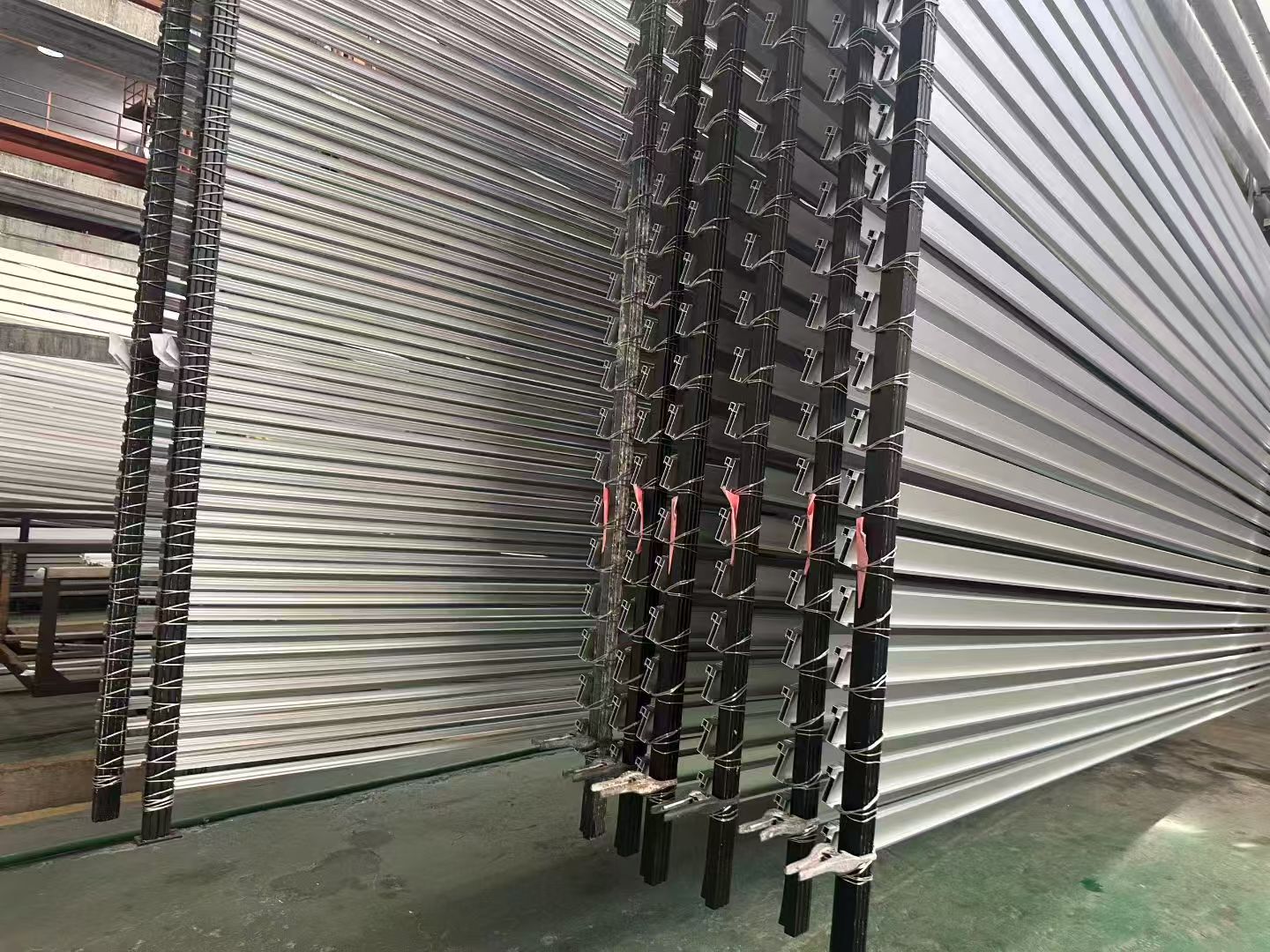
Technical Evaluation & Root-Cause Investigation
When physical or structural anomalies surface post-shipment, manufacturers conduct in-depth engineering analyses. Non-conformities generally divide into surface blemishes (like anodizing stains or abrasive drag marks), dimensional deviations (such as profile distortion or wall thickness tolerances), and machining mistakes (such as inaccurate CNC drilling or misaligned handle cuts). Quality control procedures governed by Quality Management System Certificate 00224Q22942R5M guide these evaluations.
Upon receiving a formal discrepancy report, technical supervisors examine raw material logs and surface treatment parameters. Because extrusion, anodizing, brushing, polishing, and CNC fabrication occur in-house, complete lot traceability is maintained for every batch. If dimensional errors exceed specified engineering limits, engineers determine whether localized re-machining is feasible or if full replacement manufacturing is required.
Differentiating transit damage from factory defects involves reviewing outer crate integrity and container load configurations. While maritime, rail, and multimodal shipping incidents follow freight carrier insurance claim paths, manufacturing faults trigger factory replacement policies supported by Occupational Health and Safety Management System Certificate 00225S21748R1M compliance.

Defect Management & Action Matrix
The table below summarizes standard claim processing workflows categorized by defect category, diagnostic approach, underlying cause, and corrective action.
| Anomaly Category | Diagnostic Method | Root Cause | Corrective Action |
|---|---|---|---|
| Surface Scratch / Scuffing | Visual inspection under standardized lighting & protective film check | Transport vibration or degraded packaging material | Supply of replacement profiles or touch-up cost reimbursement |
| Dimensional Variance | Vernier caliper & laser profile measurement | Die wear or unbalanced cooling during extrusion | Expedited priority remanufacturing with air freight delivery |
| Anodizing / Finish Imperfection | Film thickness testing & spectrophotometric analysis | Chemical tank imbalance or voltage fluctuation | Full batch re-production or SWIFT credit note adjustment |
| Machining / CNC Deviation | Test assembly fit with slim aluminum frame profile hardware | Tool offset drift or improper fixture clamping | Express dispatch of precision-machined replacement parts |
Frequently Asked Questions
What documentation is necessary to process a defect claim for aluminum trim profiles?
Buyers need to submit high-resolution photographs and video clips detailing the defect, clear images of packaging crate labels, batch tracking codes, and a detailed piece count of affected items. Submitting claims within 30 calendar days of delivery accelerates the review period.
How are replacement profiles handled for approved quality claims?
Once approved, replacement profiles are assigned top priority in the production schedule. Replacement shipments are dispatched via priority sea freight under FOB terms or via express courier services based on project urgency.
Are minor cosmetic flaws covered under standard trade contracts?
Imperfections comply with pre-agreed international tolerance standards. Blemishes undetectable from a 1-meter viewing distance under normal light, or located on concealed surfaces during final assembly, are typically acceptable unless strict zero-defect parameters were explicitly contracted.
Conclusion & Direct Support
Implementing rigorous receiving inspections alongside documented quality logging streamlines the resolution of post-delivery aluminum profile defects. Leveraging full batch traceability ensures quick remediation via direct product replacement or financial adjustments under FOB delivery terms. For technical support or claim consultations, please email us at mebel@mebel-alu.com.
About Us
Mebel-Alu Furniture Profile (Hong Kong) Co., Ltd is a specialized manufacturer of high-precision aluminum profile systems designed for contemporary interior applications. Founded in 2008, the company operates a 300,000 m² production facility with a staff of 300 professionals, executing comprehensive in-house extrusion, anodizing, brushing, polishing, and CNC machining processes. Certified under Quality Management System Certificate 00224Q22942R5M, the facility achieves a monthly capacity of 5,000 tons of aluminum extrusions to serve global architectural and furniture clients.

REPORT