







-
 Agriculture
-
 Health-Care
-
 Environment
-
 Construction-Real-Estate
-
 Tools-Hardware
-
 Home-Garden
-
 Furniture
-
 Luggage-Bags-Cases
-
 Medical-devices-Supplies
-
 Gifts-Crafts
-
 Sports-Entertainment
-
 Food-Beverage
-
 Vehicles-Transportation
-
 Power-Transmission
-
 Material-Handling
-
 Renewable-Energy
-
 Safety
-
 Testing-Instrument-Equipment
-
 Construction-Building-Machinery
-
 Pet-Supplies
-
 Personal-Care-Household-Cleaning
-
 Vehicle-Accessories-Electronics-Tools
-
 School-Office-Supplies
-
 Packaging-Printing
-
 Mother-Kids-Toys
-
 Business-Services
-
 Commercial-Equipment-Machinery
-
 Apparel-Accessories
-
 Security
-
 Shoes-Accessories
-
 Vehicle-Parts-Accessories
-
 Jewelry-Eyewear-Watches-Accessories
-
 Lights-Lighting
-
 Fabric-Textile-Raw-Material
-
 Fabrication-Services
-
 Industrial-Machinery
-
 Consumer-Electronics
-
 Electrical-Equipment-Supplies
-
 Electronic-Components-Accessories-Telecommunications
-
 Home-Appliances
-
 Beauty
-
 Chemicals
-
 Rubber-Plastics
-
 Metals-Alloys


























































































































































































































































































































































































































































































































































































- Masonry Materials
- Curtain Walls & Accessories
- Earthwork Products
- Fireproofing Materials
- Heat Insulation Materials
- Plastic Building Materials
- Building Boards
- Soundproofing Materials
- Timber
- Waterproofing Materials
- Balustrades & Handrails
- Bathroom & Kitchen
- Flooring & Accessories
- Tiles & Accessories
- Door, Window & Accessories
- Fireplaces & Stoves
- Floor Heating Systems & Parts
- Stairs & Stair Parts
- Ceilings
- Elevators & Escalators
- Stone
- Countertops, Vanity Tops & Table Tops
- Mosaics
- Metal Building Materials
- Multifunctional Materials
- Ladders & Scaffoldings
- Mouldings
- Corner Guards
- Decorative Films
- Formwork
- Building & Industrial Glass
- Other Construction & Real Estate
- Wallpapers/Wall panels
- HVAC System & Parts
- Outdoor Facilities
- Prefabricated Buildings
- Festive & Party Supplies
- Bathroom Products
- Household Sundries
- Rain Gear
- Garden Supplies
- Household Cleaning Tools & Accessories
- Lighters & Smoking Accessories
- Home Storage & Organization
- Household Scales
- Smart Home Improvement
- Home Textiles
- Kitchenware
- Drinkware & Accessories
- Dinnerware, Coffee & Wine
- Home Decor
- Golf
- Fitness & Body Building
- Amusement Park Facilities
- Billiards, Board Game,Coin Operated Games
- Musical Instruments
- Outdoor Affordable Luxury Sports
- Camping & Hiking
- Fishing
- Sports Safety&Rehabilitation
- Ball Sports Equipments
- Water Sports
- Winter Sports
- Luxury Travel Equipments
- Sports Shoes, Bags & Accessories
- Cycling
- Other Sports & Entertainment Products
- Artificial Grass&Sports Flooring&Sports Court Equipment
- Scooters
- Food Ingredients
- Honey & Honey Products
- Snacks
- Nuts & Kernels
- Seafood
- Plant & Animal Oil
- Beverages
- Fruit & Vegetable Products
- Frog & Escargot
- Bean Products
- Egg Products
- Dairy Products
- Seasonings & Condiments
- Canned Food
- Instant Food
- Baked Goods
- Other Food & Beverage
- Meat & Poultry
- Confectionery
- Grain Products
- Feminie Care
- Hair Care & Styling
- Body Care
- Hands & Feet Care
- Hygiene Products
- Men's Grooming
- Laundry Cleaning Supplies
- Travel Size & Gift Sets
- Room Deodorizers
- Other Personal Care Products
- Pest Control Products
- Special Household Cleaning
- Floor Cleaning
- Kitchen & Bathroom Cleaning
- Oral Care
- Bath Supplies
- Yellow Pages
- Correction Supplies
- Office Binding Supplies
- Office Cutting Supplies
- Board Erasers
- Office Adhesives & Tapes
- Education Supplies
- Pencil Cases & Bags
- Notebooks & Writing Pads
- File Folder Accessories
- Calendars
- Writing Accessories
- Commercial Office Supplies
- Pencil Sharpeners
- Pens
- Letter Pad/Paper
- Paper Envelopes
- Desk Organizers
- Pencils
- Markers & Highlighters
- Filing Products
- Art Supplies
- Easels
- Badge Holder & Accessories
- Office Paper
- Printer Supplies
- Book Covers
- Other Office & School Supplies
- Stationery Set
- Boards
- Clipboards
- Stamps
- Drafting Supplies
- Stencils
- Electronic Dictionary
- Books
- Map
- Magazines
- Calculators
- Baby & Toddler Toys
- Educational Toys
- Classic Toys
- Dress Up & Pretend Play
- Toy Vehicle
- Stuffed Animals & Plush Toys
- Outdoor Toys & Structures
- Balloons & Accessories
- Baby Food
- Children's Clothing
- Baby Supplies & Products
- Maternity Clothes
- Kids Shoes
- Baby Care
- Novelty & Gag Toys
- Dolls & Accessories
- Puzzle & Games
- Blocks & Model Building Toys
- Toddler Clothing
- Baby Clothing
- Kids' Luggage & Bags
- Arts, Crafts & DIY Toys
- Action & Toy Figures
- Baby Appliances
- Hobbies & Models
- Remote Control Toys
- Promotional Toys
- Pregnancy & Maternity
- Hygiene Products
- Kid's Textile&Bedding
- Novelty & Special Use
- Toy Weapons
- Baby Gifts
- Baby Storage & Organization
- Auto Drive Systems
- ATV/UTV Parts & Accessories
- Marine Parts & Accessories
- Other Auto Parts
- Trailer Parts & Accessories
- Auto Transmission Systems
- Train Parts & Accessories
- Universal Parts
- Railway Parts & Accessories
- Auto Brake Systems
- Aviation Parts & Accessories
- Truck Parts & Accessories
- Auto Suspension Systems
- Auto Lighting Systems
- New Energy Vehicle Parts & Accessories
- Auto Steering Systems
- Wheels, Tires & Accessories
- Bus Parts & Accessories
- Auto Performance Parts
- Cooling System
- Go-Kart & Kart Racer Parts & Accessories
- Air Conditioning Systems
- Heavy Duty Vehicle Parts & Accessories
- Auto Electrical Systems
- Auto Body Systems
- Auto Engine Systems
- Container Parts & Accessories
- Motorcycle Parts & Accessories
- Refrigeration & Heat Exchange Equipment
- Machine Tool Equipment
- Food & Beverage Machinery
- Agricultural Machinery & Equipment
- Apparel & Textile Machinery
- Chemical Machinery
- Packaging Machines
- Paper Production Machinery
- Plastic & Rubber Processing Machinery
- Industrial Robots
- Electronic Products Machinery
- Metal & Metallurgy Machinery
- Woodworking Machinery
- Home Product Manufacturing Machinery
- Machinery Accessories
- Environmental Machinery
- Machinery Service
- Electrical Equipment Manufacturing Machinery
- Industrial Compressors & Parts
- Tobacco & Cigarette Machinery
- Production Line
- Used Industrial Machinery
- Electronics Production Machinery
- Other Machinery & Industrial Equipment
- Camera, Photo & Accessories
- Portable Audio, Video & Accessories
- Television, Home Audio, Video & Accessories
- Video Games & Accessories
- Mobile Phone & Accessories
- Electronic Publications
- Earphone & Headphone & Accessories
- Speakers & Accessories
- Smart Electronics
- TV Receivers & Accessories
- Mobile Phone & Computer Repair Parts
- Chargers, Batteries & Power Supplies
- Used Electronics
- VR, AR, MR Hardware & Software
- Projectors & Presentation Equipments
- Other Consumer Electronics
- Cables & Commonly Used Accessories
- Computer Hardware & Software
- Displays, Signage and Optoelectronics
- Discrete Semiconductors
- Wireless & IoT Module and Products
- Telecommunications
- Connectors, Terminals & Accessories
- Development Boards, Electronic Modules and Kits
- Circuit Protection
- Sensors
- Isolators
- Audio Components and Products
- Integrated Circuits
- Power Supplies
- Relays
- RF, Microwave and RFID
- Electronic Accessories & Supplies
- Passive Components
- PCB & PCBA
- Air Quality Appliances
- Home Appliance Parts
- Heating & Cooling Appliances
- Small Kitchen Appliances
- Laundry Appliances
- Water Heaters
- Water Treatment Appliances
- Refrigerators & Freezers
- Personal Care & Beauty Appliances
- Major Kitchen Appliances
- Cleaning Appliances
- Second-hand Appliances
- Smart Home Appliances
- Other Home Appliances
- Energy Chemicals
- Inorganic Chemicals
- Basic Organic Chemicals
- Agrochemicals
- Admixture & Additives
- Catalysts & Chemical Auxiliary Agents
- Pigments & Dyestuff
- Coating & Paint
- Daily Chemicals
- Polymer
- Organic Intermediate
- Adhesives & Sealants
- Chemical Waste
- Biological Chemical Products
- Surface Treatment Chemicals
- Painting & Coating
- Chemical Reagents
- Flavor & Fragrance
- Non-Explosive Demolition Agents
- Other Chemicals
- Custom Chemical Services

Sample Inspection Guide for Cast Resin Dry Type Transformers
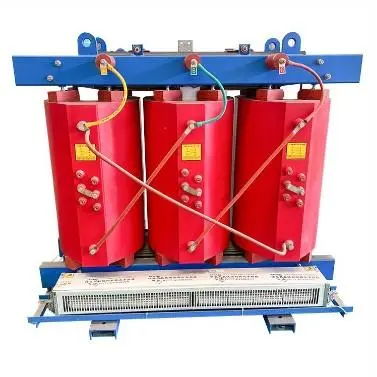
Sample inspections of cast resin dry type transformers should combine physical examination, test-document review, and operational checks. For a 500 kVA, 15 kV / 0.55 kV unit, inspectors should verify that the transformer matches the approved design, that its cast-resin windings are free from visible defects, and that supporting systems such as temperature monitoring and forced-air cooling work as intended before shipment.
Inspection Priorities for Cast Resin Transformers
A visual inspection is usually the first step. Examine accessible resin-cast winding surfaces for cracks, air voids, chips, contamination, discoloration, or other signs of manufacturing and handling damage. Inspect winding assemblies, terminals, internal connections, and the protective enclosure for correct installation and visible irregularities. All observations should be checked against approved drawings, nameplate data, and project inspection records.
Visual checks are important, but they cannot prove the electrical condition of a transformer. Electrical performance must be confirmed through applicable factory acceptance, routine, and type-test documentation, together with the approved project test plan.
Key Electrical Records to Review
Review the test results associated with the individual transformer being inspected. The records should cover winding resistance, voltage or turns ratio, insulation resistance, and dielectric performance where required. Confirm that the reported values and test identification correspond to the inspected unit rather than relying only on general product literature.
The available product information states that the transformer undergoes full inspection before delivery and references compliance with IEEE and IEC standards. However, it does not provide numerical acceptance limits for each electrical test. Therefore, pass/fail criteria must come from the approved technical specification, contractual requirements, and applicable test procedures.
Rated Data to Confirm
The listed cast resin dry type distribution transformer has a 500 kVA rating, a 15 kV primary voltage, and a 0.55 kV secondary voltage. It is a three-phase unit with aluminum windings, Dyn11 vector group, 4% impedance, AN/AF cooling, and an NLTC tapping range of ±2 × 2.5%. Compare these details with the transformer nameplate and approved drawings to ensure the supplied configuration is correct.
Cooling, Temperature Control, and Enclosure Checks
For an AN/AF-cooled transformer, verify that the temperature controller and cooling fans are installed, accessible, and operational. Confirm fan operation and controller indications according to the approved control documentation. Alarm temperatures, fan start points, and other settings should not be assumed, because the supplied product data does not state these values.
The shipping inspection should also include the protective enclosure, ventilation arrangements, visible cable connections, accessories, and overall completeness. Check for transport damage, loose components, missing items, or differences from the approved configuration before release for shipment.
Sample Check Summary
| Inspection area | Items to verify | Reference evidence |
|---|---|---|
| Cast-resin windings | Cracks, voids, contamination, surface damage, and assembly quality | Approved drawings and inspection records |
| Electrical performance | Winding resistance, ratio, insulation resistance, and dielectric test results | FAT, routine-test, type-test, and project test documents |
| Cooling and controls | AN/AF arrangement, temperature controller, cooling fans, alarms, and settings | Approved control drawings and project requirements |
| Nameplate data | 500 kVA, 15 kV / 0.55 kV, Dyn11, 4% impedance, and tap range | Nameplate, approved technical drawings, and product parameters |
| Pre-shipment condition | Enclosure integrity, accessory completeness, internal connections, and transport condition | Pre-shipment inspection checklist |
Project Experience and Certification Context
Vziman describes a retrofit project involving epoxy resin cast dry-type transformers in the basement distribution system of a high-rise residential complex in Malaysia. The project account refers to forced-air cooling and intelligent temperature management, reporting stable service in hot and humid conditions. This experience may provide useful application context, but it does not replace unit-specific inspection evidence or test records.
The company also lists a UDEM certificate for substations, transformers, and switchgear, as well as CNAS accreditation related to test results for a specified oil-immersed transformer model. The CNAS listing is presented as technical support and is not a replacement for mandatory local certification. These documents alone should not be treated as proof of acceptance for a particular cast resin dry type transformer.
Frequently Asked Questions
What visible defects can a sample check identify?
Inspect resin-cast winding surfaces for cracks, voids, dirt, foreign material, impact marks, and other visible abnormalities. Also compare the winding arrangement and connections with approved drawings. Electrical tests remain necessary because visual inspection cannot confirm electrical performance.
Which electrical tests should be reviewed?
Check documented evidence for winding resistance, turns ratio, insulation resistance, and dielectric performance as required by the approved inspection plan. Use project specifications and applicable procedures for acceptance limits, since the product summary does not give individual thresholds.
How should the cooling system be checked?
Confirm that the specified temperature controller and cooling fans are supplied and function correctly. Verify alarm and fan-control settings against approved project documents rather than applying assumed values.
Final Recommendations
An effective sample inspection of a cast resin dry type transformer includes a detailed visual review, verification of unit-specific electrical test records, confirmation of rated data, and functional testing of temperature-control and fan systems. For the 500 kVA, 15 kV / 0.55 kV configuration, every finding should be compared with approved drawings and project requirements. The manufacturer lists FAT, routine testing, type testing, full pre-shipment inspection, and a 72-hour global technical response. For technical support, contact support@vziman.com.
About Us
Zhejiang Vziman Electric Power Technology Co., Ltd. is the parent company of Zhejiang Vziman Electric Group Co., Ltd. Its business covers the development, manufacture, and service of transformers, switchgear, distribution equipment, power automation products, and engineering support. The company reports an R&D team with more than 30 senior electrical engineers and industrial designers, along with projects across a range of industries. Its listed certifications include UDEM and CNAS; the CNAS listing applies only to the specified oil-immersed transformer model.

REPORT