







-
 Agriculture
-
 Health-Care
-
 Environment
-
 Construction-Real-Estate
-
 Tools-Hardware
-
 Home-Garden
-
 Furniture
-
 Luggage-Bags-Cases
-
 Medical-devices-Supplies
-
 Gifts-Crafts
-
 Sports-Entertainment
-
 Food-Beverage
-
 Vehicles-Transportation
-
 Power-Transmission
-
 Material-Handling
-
 Renewable-Energy
-
 Safety
-
 Testing-Instrument-Equipment
-
 Construction-Building-Machinery
-
 Pet-Supplies
-
 Personal-Care-Household-Cleaning
-
 Vehicle-Accessories-Electronics-Tools
-
 School-Office-Supplies
-
 Packaging-Printing
-
 Mother-Kids-Toys
-
 Business-Services
-
 Commercial-Equipment-Machinery
-
 Apparel-Accessories
-
 Security
-
 Shoes-Accessories
-
 Vehicle-Parts-Accessories
-
 Jewelry-Eyewear-Watches-Accessories
-
 Lights-Lighting
-
 Fabric-Textile-Raw-Material
-
 Fabrication-Services
-
 Industrial-Machinery
-
 Consumer-Electronics
-
 Electrical-Equipment-Supplies
-
 Electronic-Components-Accessories-Telecommunications
-
 Home-Appliances
-
 Beauty
-
 Chemicals
-
 Rubber-Plastics
-
 Metals-Alloys


























































































































































































































































































































































































































































































































































































- Masonry Materials
- Curtain Walls & Accessories
- Earthwork Products
- Fireproofing Materials
- Heat Insulation Materials
- Plastic Building Materials
- Building Boards
- Soundproofing Materials
- Timber
- Waterproofing Materials
- Balustrades & Handrails
- Bathroom & Kitchen
- Flooring & Accessories
- Tiles & Accessories
- Door, Window & Accessories
- Fireplaces & Stoves
- Floor Heating Systems & Parts
- Stairs & Stair Parts
- Ceilings
- Elevators & Escalators
- Stone
- Countertops, Vanity Tops & Table Tops
- Mosaics
- Metal Building Materials
- Multifunctional Materials
- Ladders & Scaffoldings
- Mouldings
- Corner Guards
- Decorative Films
- Formwork
- Building & Industrial Glass
- Other Construction & Real Estate
- Wallpapers/Wall panels
- HVAC System & Parts
- Outdoor Facilities
- Prefabricated Buildings
- Festive & Party Supplies
- Bathroom Products
- Household Sundries
- Rain Gear
- Garden Supplies
- Household Cleaning Tools & Accessories
- Lighters & Smoking Accessories
- Home Storage & Organization
- Household Scales
- Smart Home Improvement
- Home Textiles
- Kitchenware
- Drinkware & Accessories
- Dinnerware, Coffee & Wine
- Home Decor
- Golf
- Fitness & Body Building
- Amusement Park Facilities
- Billiards, Board Game,Coin Operated Games
- Musical Instruments
- Outdoor Affordable Luxury Sports
- Camping & Hiking
- Fishing
- Sports Safety&Rehabilitation
- Ball Sports Equipments
- Water Sports
- Winter Sports
- Luxury Travel Equipments
- Sports Shoes, Bags & Accessories
- Cycling
- Other Sports & Entertainment Products
- Artificial Grass&Sports Flooring&Sports Court Equipment
- Scooters
- Food Ingredients
- Honey & Honey Products
- Snacks
- Nuts & Kernels
- Seafood
- Plant & Animal Oil
- Beverages
- Fruit & Vegetable Products
- Frog & Escargot
- Bean Products
- Egg Products
- Dairy Products
- Seasonings & Condiments
- Canned Food
- Instant Food
- Baked Goods
- Other Food & Beverage
- Meat & Poultry
- Confectionery
- Grain Products
- Feminie Care
- Hair Care & Styling
- Body Care
- Hands & Feet Care
- Hygiene Products
- Men's Grooming
- Laundry Cleaning Supplies
- Travel Size & Gift Sets
- Room Deodorizers
- Other Personal Care Products
- Pest Control Products
- Special Household Cleaning
- Floor Cleaning
- Kitchen & Bathroom Cleaning
- Oral Care
- Bath Supplies
- Yellow Pages
- Correction Supplies
- Office Binding Supplies
- Office Cutting Supplies
- Board Erasers
- Office Adhesives & Tapes
- Education Supplies
- Pencil Cases & Bags
- Notebooks & Writing Pads
- File Folder Accessories
- Calendars
- Writing Accessories
- Commercial Office Supplies
- Pencil Sharpeners
- Pens
- Letter Pad/Paper
- Paper Envelopes
- Desk Organizers
- Pencils
- Markers & Highlighters
- Filing Products
- Art Supplies
- Easels
- Badge Holder & Accessories
- Office Paper
- Printer Supplies
- Book Covers
- Other Office & School Supplies
- Stationery Set
- Boards
- Clipboards
- Stamps
- Drafting Supplies
- Stencils
- Electronic Dictionary
- Books
- Map
- Magazines
- Calculators
- Baby & Toddler Toys
- Educational Toys
- Classic Toys
- Dress Up & Pretend Play
- Toy Vehicle
- Stuffed Animals & Plush Toys
- Outdoor Toys & Structures
- Balloons & Accessories
- Baby Food
- Children's Clothing
- Baby Supplies & Products
- Maternity Clothes
- Kids Shoes
- Baby Care
- Novelty & Gag Toys
- Dolls & Accessories
- Puzzle & Games
- Blocks & Model Building Toys
- Toddler Clothing
- Baby Clothing
- Kids' Luggage & Bags
- Arts, Crafts & DIY Toys
- Action & Toy Figures
- Baby Appliances
- Hobbies & Models
- Remote Control Toys
- Promotional Toys
- Pregnancy & Maternity
- Hygiene Products
- Kid's Textile&Bedding
- Novelty & Special Use
- Toy Weapons
- Baby Gifts
- Baby Storage & Organization
- Auto Drive Systems
- ATV/UTV Parts & Accessories
- Marine Parts & Accessories
- Other Auto Parts
- Trailer Parts & Accessories
- Auto Transmission Systems
- Train Parts & Accessories
- Universal Parts
- Railway Parts & Accessories
- Auto Brake Systems
- Aviation Parts & Accessories
- Truck Parts & Accessories
- Auto Suspension Systems
- Auto Lighting Systems
- New Energy Vehicle Parts & Accessories
- Auto Steering Systems
- Wheels, Tires & Accessories
- Bus Parts & Accessories
- Auto Performance Parts
- Cooling System
- Go-Kart & Kart Racer Parts & Accessories
- Air Conditioning Systems
- Heavy Duty Vehicle Parts & Accessories
- Auto Electrical Systems
- Auto Body Systems
- Auto Engine Systems
- Container Parts & Accessories
- Motorcycle Parts & Accessories
- Refrigeration & Heat Exchange Equipment
- Machine Tool Equipment
- Food & Beverage Machinery
- Agricultural Machinery & Equipment
- Apparel & Textile Machinery
- Chemical Machinery
- Packaging Machines
- Paper Production Machinery
- Plastic & Rubber Processing Machinery
- Industrial Robots
- Electronic Products Machinery
- Metal & Metallurgy Machinery
- Woodworking Machinery
- Home Product Manufacturing Machinery
- Machinery Accessories
- Environmental Machinery
- Machinery Service
- Electrical Equipment Manufacturing Machinery
- Industrial Compressors & Parts
- Tobacco & Cigarette Machinery
- Production Line
- Used Industrial Machinery
- Electronics Production Machinery
- Other Machinery & Industrial Equipment
- Camera, Photo & Accessories
- Portable Audio, Video & Accessories
- Television, Home Audio, Video & Accessories
- Video Games & Accessories
- Mobile Phone & Accessories
- Electronic Publications
- Earphone & Headphone & Accessories
- Speakers & Accessories
- Smart Electronics
- TV Receivers & Accessories
- Mobile Phone & Computer Repair Parts
- Chargers, Batteries & Power Supplies
- Used Electronics
- VR, AR, MR Hardware & Software
- Projectors & Presentation Equipments
- Other Consumer Electronics
- Cables & Commonly Used Accessories
- Computer Hardware & Software
- Displays, Signage and Optoelectronics
- Discrete Semiconductors
- Wireless & IoT Module and Products
- Telecommunications
- Connectors, Terminals & Accessories
- Development Boards, Electronic Modules and Kits
- Circuit Protection
- Sensors
- Isolators
- Audio Components and Products
- Integrated Circuits
- Power Supplies
- Relays
- RF, Microwave and RFID
- Electronic Accessories & Supplies
- Passive Components
- PCB & PCBA
- Air Quality Appliances
- Home Appliance Parts
- Heating & Cooling Appliances
- Small Kitchen Appliances
- Laundry Appliances
- Water Heaters
- Water Treatment Appliances
- Refrigerators & Freezers
- Personal Care & Beauty Appliances
- Major Kitchen Appliances
- Cleaning Appliances
- Second-hand Appliances
- Smart Home Appliances
- Other Home Appliances
- Energy Chemicals
- Inorganic Chemicals
- Basic Organic Chemicals
- Agrochemicals
- Admixture & Additives
- Catalysts & Chemical Auxiliary Agents
- Pigments & Dyestuff
- Coating & Paint
- Daily Chemicals
- Polymer
- Organic Intermediate
- Adhesives & Sealants
- Chemical Waste
- Biological Chemical Products
- Surface Treatment Chemicals
- Painting & Coating
- Chemical Reagents
- Flavor & Fragrance
- Non-Explosive Demolition Agents
- Other Chemicals
- Custom Chemical Services

Sea Freight vs Rail Freight: Choosing the Best Transport for Glass Sliding Wardrobe Door Aluminum Frames
Deciding between maritime transport and railway logistics for shipping glass sliding wardrobe door aluminum frames requires evaluating project lead times, order volumes, and geographical destinations. While ocean freight provides maximum cost efficiency for large bulk volumes across global ports, rail freight offers a faster overland alternative across Eurasian corridors for time-sensitive deliveries.
Executive Summary & Main Takeaways
- Cost-Effective Maritime Shipping: Ocean freight offers optimal containerized shipping rates under standard FOB terms, serving major seaports across Europe, Southeast Asia, South America, and the Middle East.
- Accelerated Rail Logistics: Overland rail networks shorten transit times for inland Eurasian trade, bridging the speed and cost gap between air freight and sea freight.
- Industry Applications: Precision extruded aluminum profiles serve premium cabinet makers, door manufacturers, hardware distributors, and residential construction developers requiring commercial volume shipments.
- Protective Packaging Standards: High-grade 6063 T5 aluminum extrusions require individual protective wrapping, bundle strapping, and moisture-resistant packaging to prevent surface damage during multimodal transit.
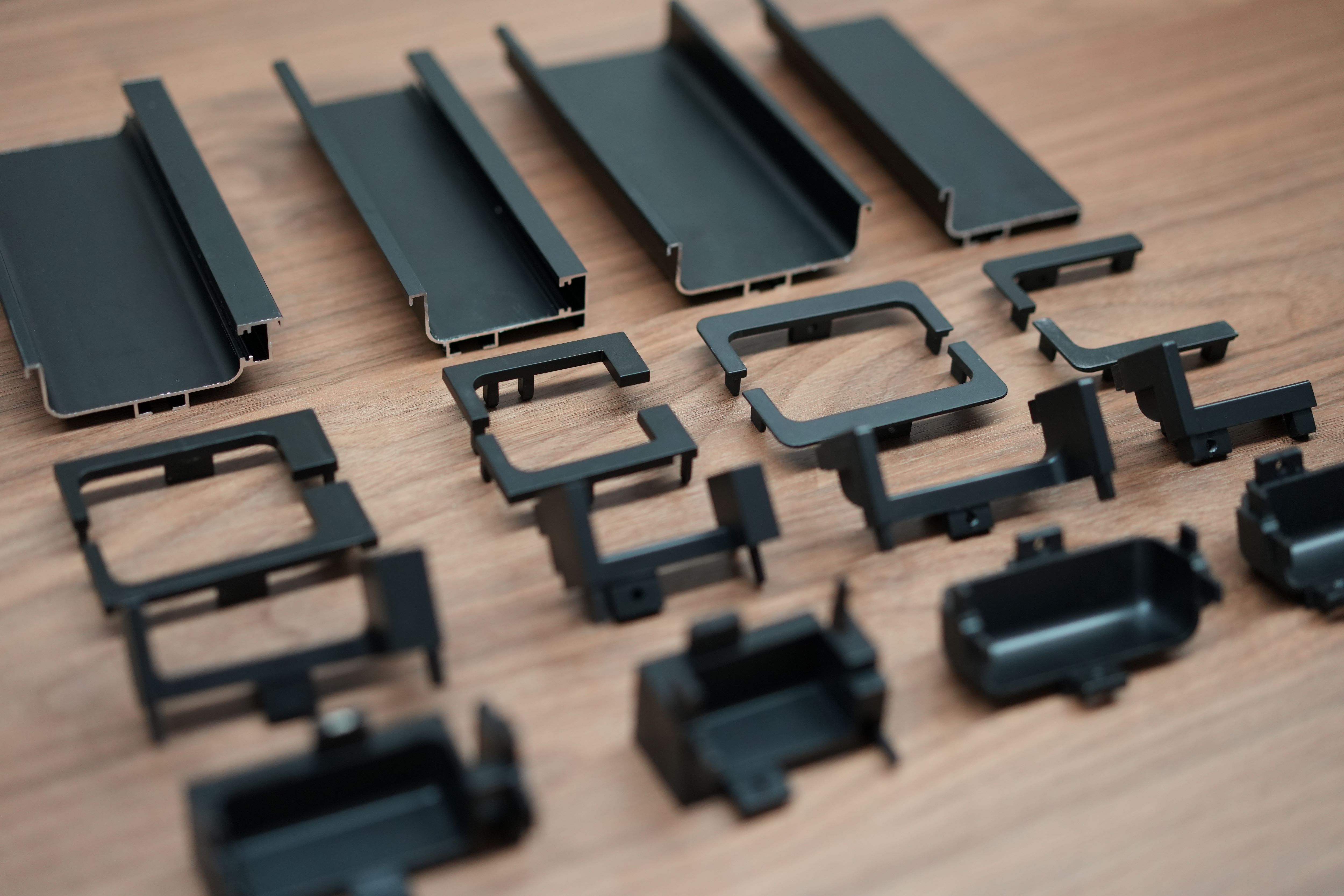
In-Depth Technical & Logistics Analysis
Determining the right shipping route for aluminum glass sliding wardrobe door frames requires analyzing structural load attributes, route exposure risks, and schedule constraints. Aluminum extrusions utilizing 6063 T5 temper feature excellent strength-to-weight ratios; however, improper stacking or handling during transport can cause surface scratches or physical deformation.
Sea freight provides complete containerization options (FCL and LCL), effectively shielding cargo from harsh atmospheric conditions. For high-volume buyers, ocean transit drastically lowers per-unit shipping expenses, though importers must account for potential harbor bottlenecks and weather disruptions by building extra buffer time into their supply chains.
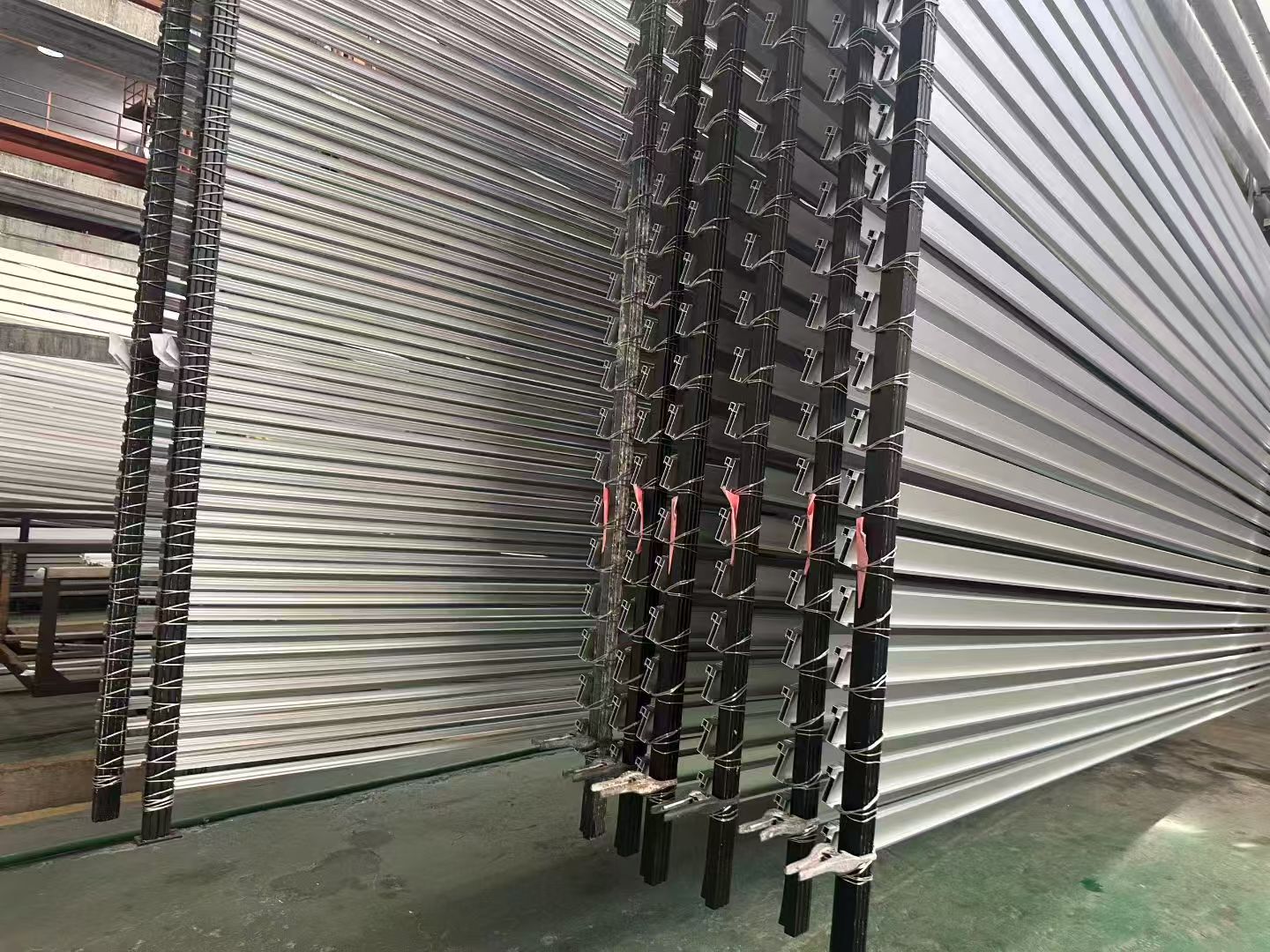
Conversely, rail freight serves as an efficient overland corridor connecting Asian manufacturing hubs directly with European commercial centers. Railway shipping significantly cuts transit duration while offering secure containerized transport. Certified manufacturing operations compliant with Quality Management System Certificate (00224Q22942R5M) and Occupational Health and Safety Management System Certificate (00225S21748R1M) guarantee that exported profile frames fulfill rigid international packaging and quality standards across all freight modes.

Comparative Logistics Matrix
| Logistics Criteria | Ocean Shipping (Sea Freight) | Rail Transit (Rail Freight) |
|---|---|---|
| Transit Speed | Standard (Extended Lead Time) | Accelerated (Moderate Lead Time) |
| Cost Performance | Lowest Cost per Unit for Bulk Cargo | Moderate (Higher than Sea, Lower than Air) |
| Geographic Reach | Global Deep-Water Seaports | Eurasian Direct Overland Corridors |
| Capacity Suitability | Best for Large FCL Bulk Orders (MOQ 12,000 KG) | Ideal for Urgent Mid-to-Large Volumes |
| Trade Term Alignment | FOB Ocean Container Logistics | FOB Railway Container Logistics |
Frequently Asked Questions
Q: What lead time should be expected for bulk aluminum profile orders?
A: Manufacturing and dispatch typically require a 40-day production lead time under FOB terms, covering extrusion, custom surface finishing, quality inspection, and export packaging.
Q: How are aluminum wardrobe door frames protected during transit?
A: Extrusions are wrapped with individual protective film, strapped into dense bundles, and secured with outer protective framing to safeguard against moisture, abrasion, and impact inside intermodal containers.
Q: What is the minimum order quantity (MOQ) for international shipments?
A: The baseline MOQ for export orders is 12,000 KG, optimized for full container loading across ocean and rail freight networks.
Final Recommendations
Choosing between sea and rail transportation ultimately depends on delivery urgency and final location. For maximum cost savings on large-scale international shipments, ocean freight remains the premier solution. For inland European destinations requiring faster turnaround times, rail freight offers a dependable, time-effective alternative. Planning around standard 40-day production schedules and FOB requirements ensures efficient delivery. For tailored logistics advice or profile specifications, contact our team at mebel@mebel-alu.com.
About Us
Mebel-Alu Furniture Profile (Hong Kong) Co., Ltd is a premier manufacturer of engineered aluminum profile systems for modern cabinetry and interior architecture. Founded in 2008, our 300,000 Sqm facility houses 300 skilled workers and yields a monthly production capacity of 5,000 tons. Operating strictly under Quality Management System Certificate (00224Q22942R5M) standards, we export high-precision sliding door profiles and furniture hardware to global markets.

REPORT