







-
 Agriculture
-
 Health-Care
-
 Environment
-
 Construction-Real-Estate
-
 Tools-Hardware
-
 Home-Garden
-
 Furniture
-
 Luggage-Bags-Cases
-
 Medical-devices-Supplies
-
 Gifts-Crafts
-
 Sports-Entertainment
-
 Food-Beverage
-
 Vehicles-Transportation
-
 Power-Transmission
-
 Material-Handling
-
 Renewable-Energy
-
 Safety
-
 Testing-Instrument-Equipment
-
 Construction-Building-Machinery
-
 Pet-Supplies
-
 Personal-Care-Household-Cleaning
-
 Vehicle-Accessories-Electronics-Tools
-
 School-Office-Supplies
-
 Packaging-Printing
-
 Mother-Kids-Toys
-
 Business-Services
-
 Commercial-Equipment-Machinery
-
 Apparel-Accessories
-
 Security
-
 Shoes-Accessories
-
 Vehicle-Parts-Accessories
-
 Jewelry-Eyewear-Watches-Accessories
-
 Lights-Lighting
-
 Fabric-Textile-Raw-Material
-
 Fabrication-Services
-
 Industrial-Machinery
-
 Consumer-Electronics
-
 Electrical-Equipment-Supplies
-
 Electronic-Components-Accessories-Telecommunications
-
 Home-Appliances
-
 Beauty
-
 Chemicals
-
 Rubber-Plastics
-
 Metals-Alloys


























































































































































































































































































































































































































































































































































































- Masonry Materials
- Curtain Walls & Accessories
- Earthwork Products
- Fireproofing Materials
- Heat Insulation Materials
- Plastic Building Materials
- Building Boards
- Soundproofing Materials
- Timber
- Waterproofing Materials
- Balustrades & Handrails
- Bathroom & Kitchen
- Flooring & Accessories
- Tiles & Accessories
- Door, Window & Accessories
- Fireplaces & Stoves
- Floor Heating Systems & Parts
- Stairs & Stair Parts
- Ceilings
- Elevators & Escalators
- Stone
- Countertops, Vanity Tops & Table Tops
- Mosaics
- Metal Building Materials
- Multifunctional Materials
- Ladders & Scaffoldings
- Mouldings
- Corner Guards
- Decorative Films
- Formwork
- Building & Industrial Glass
- Other Construction & Real Estate
- Wallpapers/Wall panels
- HVAC System & Parts
- Outdoor Facilities
- Prefabricated Buildings
- Festive & Party Supplies
- Bathroom Products
- Household Sundries
- Rain Gear
- Garden Supplies
- Household Cleaning Tools & Accessories
- Lighters & Smoking Accessories
- Home Storage & Organization
- Household Scales
- Smart Home Improvement
- Home Textiles
- Kitchenware
- Drinkware & Accessories
- Dinnerware, Coffee & Wine
- Home Decor
- Golf
- Fitness & Body Building
- Amusement Park Facilities
- Billiards, Board Game,Coin Operated Games
- Musical Instruments
- Outdoor Affordable Luxury Sports
- Camping & Hiking
- Fishing
- Sports Safety&Rehabilitation
- Ball Sports Equipments
- Water Sports
- Winter Sports
- Luxury Travel Equipments
- Sports Shoes, Bags & Accessories
- Cycling
- Other Sports & Entertainment Products
- Artificial Grass&Sports Flooring&Sports Court Equipment
- Scooters
- Food Ingredients
- Honey & Honey Products
- Snacks
- Nuts & Kernels
- Seafood
- Plant & Animal Oil
- Beverages
- Fruit & Vegetable Products
- Frog & Escargot
- Bean Products
- Egg Products
- Dairy Products
- Seasonings & Condiments
- Canned Food
- Instant Food
- Baked Goods
- Other Food & Beverage
- Meat & Poultry
- Confectionery
- Grain Products
- Feminie Care
- Hair Care & Styling
- Body Care
- Hands & Feet Care
- Hygiene Products
- Men's Grooming
- Laundry Cleaning Supplies
- Travel Size & Gift Sets
- Room Deodorizers
- Other Personal Care Products
- Pest Control Products
- Special Household Cleaning
- Floor Cleaning
- Kitchen & Bathroom Cleaning
- Oral Care
- Bath Supplies
- Yellow Pages
- Correction Supplies
- Office Binding Supplies
- Office Cutting Supplies
- Board Erasers
- Office Adhesives & Tapes
- Education Supplies
- Pencil Cases & Bags
- Notebooks & Writing Pads
- File Folder Accessories
- Calendars
- Writing Accessories
- Commercial Office Supplies
- Pencil Sharpeners
- Pens
- Letter Pad/Paper
- Paper Envelopes
- Desk Organizers
- Pencils
- Markers & Highlighters
- Filing Products
- Art Supplies
- Easels
- Badge Holder & Accessories
- Office Paper
- Printer Supplies
- Book Covers
- Other Office & School Supplies
- Stationery Set
- Boards
- Clipboards
- Stamps
- Drafting Supplies
- Stencils
- Electronic Dictionary
- Books
- Map
- Magazines
- Calculators
- Baby & Toddler Toys
- Educational Toys
- Classic Toys
- Dress Up & Pretend Play
- Toy Vehicle
- Stuffed Animals & Plush Toys
- Outdoor Toys & Structures
- Balloons & Accessories
- Baby Food
- Children's Clothing
- Baby Supplies & Products
- Maternity Clothes
- Kids Shoes
- Baby Care
- Novelty & Gag Toys
- Dolls & Accessories
- Puzzle & Games
- Blocks & Model Building Toys
- Toddler Clothing
- Baby Clothing
- Kids' Luggage & Bags
- Arts, Crafts & DIY Toys
- Action & Toy Figures
- Baby Appliances
- Hobbies & Models
- Remote Control Toys
- Promotional Toys
- Pregnancy & Maternity
- Hygiene Products
- Kid's Textile&Bedding
- Novelty & Special Use
- Toy Weapons
- Baby Gifts
- Baby Storage & Organization
- Auto Drive Systems
- ATV/UTV Parts & Accessories
- Marine Parts & Accessories
- Other Auto Parts
- Trailer Parts & Accessories
- Auto Transmission Systems
- Train Parts & Accessories
- Universal Parts
- Railway Parts & Accessories
- Auto Brake Systems
- Aviation Parts & Accessories
- Truck Parts & Accessories
- Auto Suspension Systems
- Auto Lighting Systems
- New Energy Vehicle Parts & Accessories
- Auto Steering Systems
- Wheels, Tires & Accessories
- Bus Parts & Accessories
- Auto Performance Parts
- Cooling System
- Go-Kart & Kart Racer Parts & Accessories
- Air Conditioning Systems
- Heavy Duty Vehicle Parts & Accessories
- Auto Electrical Systems
- Auto Body Systems
- Auto Engine Systems
- Container Parts & Accessories
- Motorcycle Parts & Accessories
- Refrigeration & Heat Exchange Equipment
- Machine Tool Equipment
- Food & Beverage Machinery
- Agricultural Machinery & Equipment
- Apparel & Textile Machinery
- Chemical Machinery
- Packaging Machines
- Paper Production Machinery
- Plastic & Rubber Processing Machinery
- Industrial Robots
- Electronic Products Machinery
- Metal & Metallurgy Machinery
- Woodworking Machinery
- Home Product Manufacturing Machinery
- Machinery Accessories
- Environmental Machinery
- Machinery Service
- Electrical Equipment Manufacturing Machinery
- Industrial Compressors & Parts
- Tobacco & Cigarette Machinery
- Production Line
- Used Industrial Machinery
- Electronics Production Machinery
- Other Machinery & Industrial Equipment
- Camera, Photo & Accessories
- Portable Audio, Video & Accessories
- Television, Home Audio, Video & Accessories
- Video Games & Accessories
- Mobile Phone & Accessories
- Electronic Publications
- Earphone & Headphone & Accessories
- Speakers & Accessories
- Smart Electronics
- TV Receivers & Accessories
- Mobile Phone & Computer Repair Parts
- Chargers, Batteries & Power Supplies
- Used Electronics
- VR, AR, MR Hardware & Software
- Projectors & Presentation Equipments
- Other Consumer Electronics
- Cables & Commonly Used Accessories
- Computer Hardware & Software
- Displays, Signage and Optoelectronics
- Discrete Semiconductors
- Wireless & IoT Module and Products
- Telecommunications
- Connectors, Terminals & Accessories
- Development Boards, Electronic Modules and Kits
- Circuit Protection
- Sensors
- Isolators
- Audio Components and Products
- Integrated Circuits
- Power Supplies
- Relays
- RF, Microwave and RFID
- Electronic Accessories & Supplies
- Passive Components
- PCB & PCBA
- Air Quality Appliances
- Home Appliance Parts
- Heating & Cooling Appliances
- Small Kitchen Appliances
- Laundry Appliances
- Water Heaters
- Water Treatment Appliances
- Refrigerators & Freezers
- Personal Care & Beauty Appliances
- Major Kitchen Appliances
- Cleaning Appliances
- Second-hand Appliances
- Smart Home Appliances
- Other Home Appliances
- Energy Chemicals
- Inorganic Chemicals
- Basic Organic Chemicals
- Agrochemicals
- Admixture & Additives
- Catalysts & Chemical Auxiliary Agents
- Pigments & Dyestuff
- Coating & Paint
- Daily Chemicals
- Polymer
- Organic Intermediate
- Adhesives & Sealants
- Chemical Waste
- Biological Chemical Products
- Surface Treatment Chemicals
- Painting & Coating
- Chemical Reagents
- Flavor & Fragrance
- Non-Explosive Demolition Agents
- Other Chemicals
- Custom Chemical Services

Stainless Steel Wedge Anchors as Corrosion-Resistant Alternatives to Steel Dowel Pins
When corrosion, outdoor exposure, and replacement costs are concerns, stainless steel wedge anchors can be a practical alternative to conventional steel dowel pins for concrete fastening applications. They provide durable expansion anchoring in concrete while offering better resistance to moisture and corrosion than standard steel options.
However, the two products are not interchangeable in every situation. Dowel pins are primarily used to align, locate, or join mechanical components with precision. Wedge anchors are designed to create a permanent fixing point in a drilled concrete substrate. The correct choice depends on whether the project needs secure anchoring or accurate component positioning.
Choosing the Right Stainless Steel Grade
304 Stainless Steel Wedge Anchors
Grade 304 stainless steel wedge anchors offer an effective balance between corrosion protection and material cost. They are well suited for humid areas, general outdoor installations, and industrial environments where exposure is moderate rather than highly aggressive.
Typical uses include fencing, handrails, guardrails, HVAC supports, light poles, machinery bases, and general-purpose concrete fastening. For many construction and industrial projects, 304 stainless steel helps reduce maintenance risk without the higher cost associated with marine-grade materials.
316 Stainless Steel Wedge Anchors
For severe corrosion conditions, 316 stainless steel is the stronger option. Its enhanced resistance to chlorides, saltwater, and chemical exposure makes it appropriate for coastal facilities, marine engineering, wastewater plants, chemical processing sites, and food or pharmaceutical equipment installations.
Although 316 stainless steel carries a higher material cost, it can help avoid premature anchor deterioration in demanding environments. It is most appropriate when corrosion exposure is significant enough to justify the additional investment.
When Wedge Anchors Can Replace Dowel Pins
Stainless steel wedge anchors are suitable replacements for steel dowel pins only when the required function is permanent concrete anchoring. Installation involves drilling a hole, cleaning debris from the hole, inserting the anchor, and tightening the nut. Tightening activates the expansion mechanism, allowing the anchor to grip the concrete and develop holding force.
For example, an M10 wedge anchor requires a 10 mm drilled hole. Proper hole preparation, embedment depth, anchor length, and installation torque should always match the project design requirements.
Wedge anchors are commonly used for fixing machinery, pumps, compressors, generators, conveyors, safety barriers, stair railings, bollards, sign poles, and similar equipment or structures to concrete foundations.
Important Functional Differences
- Use stainless steel wedge anchors when a permanent expansion lock in concrete is required.
- Keep dowel pins for high-precision alignment, repeatable positioning, shear-location control, or connections that must be removed regularly.
- Select 304 stainless steel for economical corrosion resistance in humid, outdoor, and standard industrial settings.
- Select 316 stainless steel for saltwater, chloride, chemical, coastal, wastewater, food-processing, and pharmaceutical conditions.
- Use wedge anchors in solid concrete, reinforced concrete, and grout-filled masonry rather than brick, hollow block, drywall, or wood.
Available Sizes and Surface Options
Stainless steel wedge anchors are available in metric diameters from M6 to M24 and imperial sizes from 1/4 inch to 1 inch. Standard lengths range from 40 mm to 200 mm, while custom dimensions can be produced for specialized projects. Both full-thread and partial-thread configurations are available.
Customers can submit custom drawings in PDF, DWG, DXF, STEP, IGS, or STP format. Standard dimensional tolerance is ±0.1 mm, and specifications may include hardness, tensile strength, yield strength, elongation, density, impact resistance, and fatigue resistance.
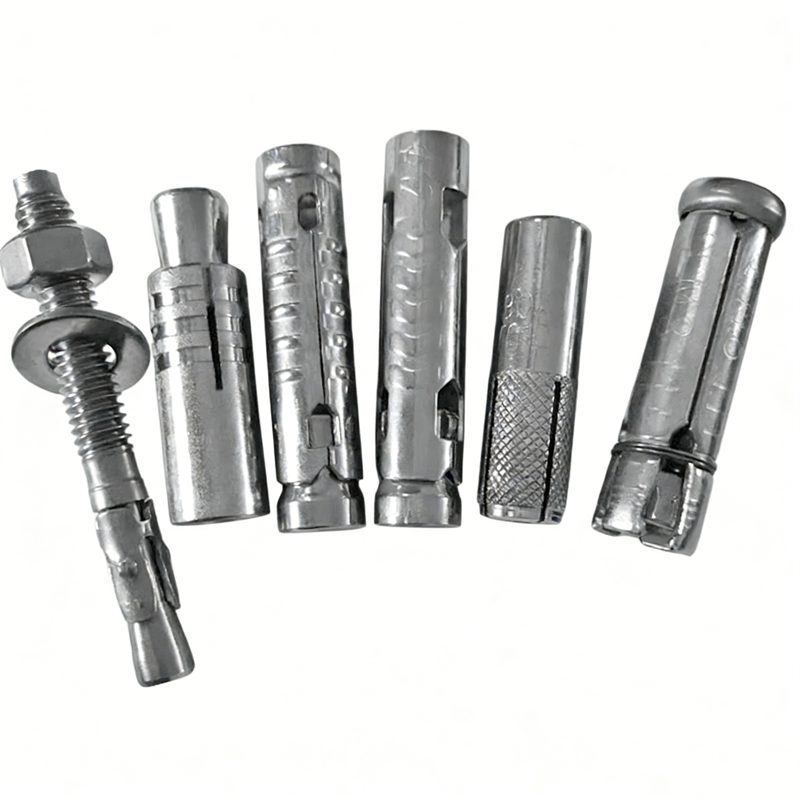
Available surface finishes include plain, passivation, polishing, and electropolishing. These options can improve surface quality, corrosion performance, cleanliness, and appearance, depending on the operating environment and end-use requirements.
Comparison of Common Options
| Fastening Solution | Corrosion and Cost Considerations | Recommended Applications | Main Restriction |
|---|---|---|---|
| 304 stainless steel wedge anchor | Provides reliable corrosion resistance at a cost-effective material level | Outdoor construction, humid sites, HVAC supports, fences, handrails, and general industrial fastening | Not as resistant as 316 in chloride-rich or chemical environments |
| 316 stainless steel wedge anchor | Offers excellent resistance to saltwater, chlorides, and chemicals, with a higher material cost | Marine, coastal, wastewater, chemical, food-processing, and pharmaceutical installations | Can be unnecessary for ordinary low-corrosion conditions |
| Conventional steel dowel pin | Corrosion resistance depends on base material and protective finish | Precision alignment, component location, and removable mechanical assemblies | Does not provide permanent expansion anchoring in concrete |
Frequently Asked Questions
Can a stainless steel wedge anchor directly replace a steel dowel pin?
Only when the connection needs to be permanently anchored into concrete. Wedge anchors provide expansion-based holding force, while dowel pins remain the preferred solution for precise alignment, registration, or repeated disassembly.
Which material should I choose: 304 or 316 stainless steel?
Choose 304 stainless steel for general outdoor, humid, and industrial applications where cost control is important. Choose 316 stainless steel when the anchor will face seawater, chlorides, chemical agents, coastal weather, or wastewater exposure.
What materials can wedge anchors be installed in?
They are intended for solid concrete, reinforced concrete, and grout-filled masonry. They should not be used as the primary fastening solution in brick, hollow block, drywall, or wood.
Manufacturing and Quality Support
The manufacturing process supports full dimensional inspection, first article inspection, material certificates, RoHS compliance, and REACH compliance. OEM and ODM services are available for custom dimensions, logo marking, packaging, prototypes, small-batch orders, and high-volume production.
Beyond wedge anchors, the company has experience producing stainless steel handwheels for food machinery, valve handwheels for industrial pipeline applications, and marine-grade handwheels. This manufacturing background supports projects across industrial equipment, food processing, valve systems, and marine environments.
Conclusion
For concrete fastening projects seeking lower corrosion exposure and reasonable material cost, 304 stainless steel wedge anchors are often a dependable alternative to standard steel components. Where saltwater, chlorides, or chemicals are present, 316 stainless steel provides a more durable long-term solution.
Before replacing a steel dowel pin, confirm that the application requires expansion anchoring rather than precision alignment. Diameter, length, embedment depth, hole cleaning, and installation torque should be verified against the project specification. Zhejiang Dream Industry Limited provides OEM manufacturing, ODM manufacturing, custom CNC machining services, factory-direct supply, flexible small-batch orders, and bulk production. For technical support, please contact us at 86-15868979792.
About Us
ZheJiang Dream Industry Limited has more than 20 years of precision manufacturing experience and produces custom CNC-machined parts and assemblies in stainless steel, aluminum, brass, copper, carbon steel, and engineering plastics. Established in 2008, the company operates a 2500sqm factory offering part design review, CNC turning and milling, surface treatment, precision casting, and final inspection. Its ISO-certified manufacturing system serves customers across a range of industries.
REPORT