







-
 Agriculture
-
 Health-Care
-
 Environment
-
 Construction-Real-Estate
-
 Tools-Hardware
-
 Home-Garden
-
 Furniture
-
 Luggage-Bags-Cases
-
 Medical-devices-Supplies
-
 Gifts-Crafts
-
 Sports-Entertainment
-
 Food-Beverage
-
 Vehicles-Transportation
-
 Power-Transmission
-
 Material-Handling
-
 Renewable-Energy
-
 Safety
-
 Testing-Instrument-Equipment
-
 Construction-Building-Machinery
-
 Pet-Supplies
-
 Personal-Care-Household-Cleaning
-
 Vehicle-Accessories-Electronics-Tools
-
 School-Office-Supplies
-
 Packaging-Printing
-
 Mother-Kids-Toys
-
 Business-Services
-
 Commercial-Equipment-Machinery
-
 Apparel-Accessories
-
 Security
-
 Shoes-Accessories
-
 Vehicle-Parts-Accessories
-
 Jewelry-Eyewear-Watches-Accessories
-
 Lights-Lighting
-
 Fabric-Textile-Raw-Material
-
 Fabrication-Services
-
 Industrial-Machinery
-
 Consumer-Electronics
-
 Electrical-Equipment-Supplies
-
 Electronic-Components-Accessories-Telecommunications
-
 Home-Appliances
-
 Beauty
-
 Chemicals
-
 Rubber-Plastics
-
 Metals-Alloys


























































































































































































































































































































































































































































































































































































- Masonry Materials
- Curtain Walls & Accessories
- Earthwork Products
- Fireproofing Materials
- Heat Insulation Materials
- Plastic Building Materials
- Building Boards
- Soundproofing Materials
- Timber
- Waterproofing Materials
- Balustrades & Handrails
- Bathroom & Kitchen
- Flooring & Accessories
- Tiles & Accessories
- Door, Window & Accessories
- Fireplaces & Stoves
- Floor Heating Systems & Parts
- Stairs & Stair Parts
- Ceilings
- Elevators & Escalators
- Stone
- Countertops, Vanity Tops & Table Tops
- Mosaics
- Metal Building Materials
- Multifunctional Materials
- Ladders & Scaffoldings
- Mouldings
- Corner Guards
- Decorative Films
- Formwork
- Building & Industrial Glass
- Other Construction & Real Estate
- Wallpapers/Wall panels
- HVAC System & Parts
- Outdoor Facilities
- Prefabricated Buildings
- Festive & Party Supplies
- Bathroom Products
- Household Sundries
- Rain Gear
- Garden Supplies
- Household Cleaning Tools & Accessories
- Lighters & Smoking Accessories
- Home Storage & Organization
- Household Scales
- Smart Home Improvement
- Home Textiles
- Kitchenware
- Drinkware & Accessories
- Dinnerware, Coffee & Wine
- Home Decor
- Golf
- Fitness & Body Building
- Amusement Park Facilities
- Billiards, Board Game,Coin Operated Games
- Musical Instruments
- Outdoor Affordable Luxury Sports
- Camping & Hiking
- Fishing
- Sports Safety&Rehabilitation
- Ball Sports Equipments
- Water Sports
- Winter Sports
- Luxury Travel Equipments
- Sports Shoes, Bags & Accessories
- Cycling
- Other Sports & Entertainment Products
- Artificial Grass&Sports Flooring&Sports Court Equipment
- Scooters
- Food Ingredients
- Honey & Honey Products
- Snacks
- Nuts & Kernels
- Seafood
- Plant & Animal Oil
- Beverages
- Fruit & Vegetable Products
- Frog & Escargot
- Bean Products
- Egg Products
- Dairy Products
- Seasonings & Condiments
- Canned Food
- Instant Food
- Baked Goods
- Other Food & Beverage
- Meat & Poultry
- Confectionery
- Grain Products
- Feminie Care
- Hair Care & Styling
- Body Care
- Hands & Feet Care
- Hygiene Products
- Men's Grooming
- Laundry Cleaning Supplies
- Travel Size & Gift Sets
- Room Deodorizers
- Other Personal Care Products
- Pest Control Products
- Special Household Cleaning
- Floor Cleaning
- Kitchen & Bathroom Cleaning
- Oral Care
- Bath Supplies
- Yellow Pages
- Correction Supplies
- Office Binding Supplies
- Office Cutting Supplies
- Board Erasers
- Office Adhesives & Tapes
- Education Supplies
- Pencil Cases & Bags
- Notebooks & Writing Pads
- File Folder Accessories
- Calendars
- Writing Accessories
- Commercial Office Supplies
- Pencil Sharpeners
- Pens
- Letter Pad/Paper
- Paper Envelopes
- Desk Organizers
- Pencils
- Markers & Highlighters
- Filing Products
- Art Supplies
- Easels
- Badge Holder & Accessories
- Office Paper
- Printer Supplies
- Book Covers
- Other Office & School Supplies
- Stationery Set
- Boards
- Clipboards
- Stamps
- Drafting Supplies
- Stencils
- Electronic Dictionary
- Books
- Map
- Magazines
- Calculators
- Baby & Toddler Toys
- Educational Toys
- Classic Toys
- Dress Up & Pretend Play
- Toy Vehicle
- Stuffed Animals & Plush Toys
- Outdoor Toys & Structures
- Balloons & Accessories
- Baby Food
- Children's Clothing
- Baby Supplies & Products
- Maternity Clothes
- Kids Shoes
- Baby Care
- Novelty & Gag Toys
- Dolls & Accessories
- Puzzle & Games
- Blocks & Model Building Toys
- Toddler Clothing
- Baby Clothing
- Kids' Luggage & Bags
- Arts, Crafts & DIY Toys
- Action & Toy Figures
- Baby Appliances
- Hobbies & Models
- Remote Control Toys
- Promotional Toys
- Pregnancy & Maternity
- Hygiene Products
- Kid's Textile&Bedding
- Novelty & Special Use
- Toy Weapons
- Baby Gifts
- Baby Storage & Organization
- Auto Drive Systems
- ATV/UTV Parts & Accessories
- Marine Parts & Accessories
- Other Auto Parts
- Trailer Parts & Accessories
- Auto Transmission Systems
- Train Parts & Accessories
- Universal Parts
- Railway Parts & Accessories
- Auto Brake Systems
- Aviation Parts & Accessories
- Truck Parts & Accessories
- Auto Suspension Systems
- Auto Lighting Systems
- New Energy Vehicle Parts & Accessories
- Auto Steering Systems
- Wheels, Tires & Accessories
- Bus Parts & Accessories
- Auto Performance Parts
- Cooling System
- Go-Kart & Kart Racer Parts & Accessories
- Air Conditioning Systems
- Heavy Duty Vehicle Parts & Accessories
- Auto Electrical Systems
- Auto Body Systems
- Auto Engine Systems
- Container Parts & Accessories
- Motorcycle Parts & Accessories
- Refrigeration & Heat Exchange Equipment
- Machine Tool Equipment
- Food & Beverage Machinery
- Agricultural Machinery & Equipment
- Apparel & Textile Machinery
- Chemical Machinery
- Packaging Machines
- Paper Production Machinery
- Plastic & Rubber Processing Machinery
- Industrial Robots
- Electronic Products Machinery
- Metal & Metallurgy Machinery
- Woodworking Machinery
- Home Product Manufacturing Machinery
- Machinery Accessories
- Environmental Machinery
- Machinery Service
- Electrical Equipment Manufacturing Machinery
- Industrial Compressors & Parts
- Tobacco & Cigarette Machinery
- Production Line
- Used Industrial Machinery
- Electronics Production Machinery
- Other Machinery & Industrial Equipment
- Camera, Photo & Accessories
- Portable Audio, Video & Accessories
- Television, Home Audio, Video & Accessories
- Video Games & Accessories
- Mobile Phone & Accessories
- Electronic Publications
- Earphone & Headphone & Accessories
- Speakers & Accessories
- Smart Electronics
- TV Receivers & Accessories
- Mobile Phone & Computer Repair Parts
- Chargers, Batteries & Power Supplies
- Used Electronics
- VR, AR, MR Hardware & Software
- Projectors & Presentation Equipments
- Other Consumer Electronics
- Cables & Commonly Used Accessories
- Computer Hardware & Software
- Displays, Signage and Optoelectronics
- Discrete Semiconductors
- Wireless & IoT Module and Products
- Telecommunications
- Connectors, Terminals & Accessories
- Development Boards, Electronic Modules and Kits
- Circuit Protection
- Sensors
- Isolators
- Audio Components and Products
- Integrated Circuits
- Power Supplies
- Relays
- RF, Microwave and RFID
- Electronic Accessories & Supplies
- Passive Components
- PCB & PCBA
- Air Quality Appliances
- Home Appliance Parts
- Heating & Cooling Appliances
- Small Kitchen Appliances
- Laundry Appliances
- Water Heaters
- Water Treatment Appliances
- Refrigerators & Freezers
- Personal Care & Beauty Appliances
- Major Kitchen Appliances
- Cleaning Appliances
- Second-hand Appliances
- Smart Home Appliances
- Other Home Appliances
- Energy Chemicals
- Inorganic Chemicals
- Basic Organic Chemicals
- Agrochemicals
- Admixture & Additives
- Catalysts & Chemical Auxiliary Agents
- Pigments & Dyestuff
- Coating & Paint
- Daily Chemicals
- Polymer
- Organic Intermediate
- Adhesives & Sealants
- Chemical Waste
- Biological Chemical Products
- Surface Treatment Chemicals
- Painting & Coating
- Chemical Reagents
- Flavor & Fragrance
- Non-Explosive Demolition Agents
- Other Chemicals
- Custom Chemical Services

Structuring Tier-Based Pricing for a Long-Term Electric Mini Truck Supply Contract
A long-term electric mini truck program is easier to manage when pricing is connected to planned order volume, delivery stages, and service requirements instead of being treated as one fixed figure. Guangzhou Langqing can arrange a tier-based commercial framework around quantity, shipment timing, inspection standards, vehicle configuration, and after-sales support. The final unit price for each tier should be confirmed through commercial negotiation.
Recommended Framework for Tiered Contract Pricing
Each pricing level can be documented in a separate contract schedule. Along with the target quantity, the schedule should identify the delivery batch, vehicle specification, quality procedures, warranty coverage, payment conditions, and shipping arrangement. This structure makes it easier to adjust the program when demand, configuration, or delivery timing changes.
- Order volume: Establish planned quantities for each tier, with orders supported from a minimum quantity of 1 unit.
- Delivery planning: Divide the contract into agreed batches within the stated 15–30 day delivery window.
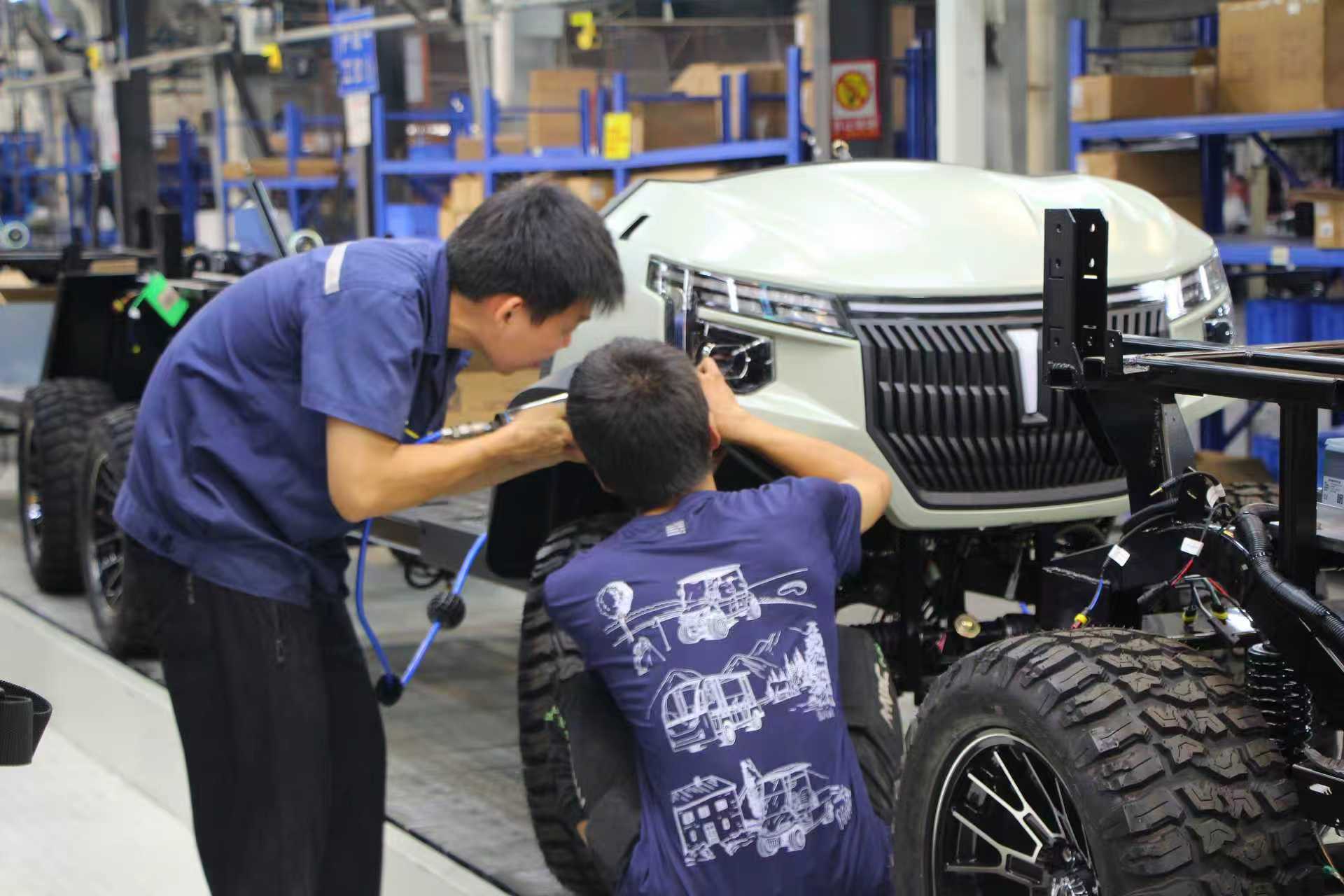
- Inspection: Specify the double-inspection process using advanced equipment and manual inspection.
- Vehicle application: Match the configuration to resort, hotel, industrial park, or factory logistics requirements.
- Commercial terms: Record the warranty, payment schedule, and sea-freight arrangement for every tier.
Volume and Delivery Scheduling
Volume tiers should be based on the total quantity committed during the contract period and the number of units required in each shipment. Guangzhou Langqing lists an MOQ of 1 unit and a monthly production capacity of 1,000 units. The business model indicates a 15–30 day delivery period, while the final batch schedule should be confirmed according to the selected configuration and order plan.
Configuration, Inspection, and Service Scope
A tier should not be defined by quantity alone. The agreement can also specify body design, load requirements, operating environment, accessories, and intended use. Quality terms may reference the supplier’s double-inspection process, combining advanced equipment with manual labor. The listed after-sales arrangement includes a 1-year warranty for the whole vehicle.
Typical Applications and Supplier Experience
Electric mini trucks can support internal transportation at resorts and hotels, where they may be used to move housekeeping supplies, maintenance equipment, luggage, and other materials around the property. In industrial parks and factories, the same type of utility vehicle can help transport raw materials, tools, components, and finished goods across large sites.
Guangzhou Langqing reports CE certification for its electric golf carts, electric sightseeing buses, and electric trucks for the European Union. Its referenced project experience includes a municipal sanitation program in Singapore involving garbage transfer trucks and a museum shuttle project in Egypt. These examples reflect experience supplying utility and shuttle vehicles through dealer-oriented and project-based channels.
Commercial Terms at a Glance
| Contract Item | Available Arrangement |
|---|---|
| Supply model | Industry and Trade Integration |
| Minimum order quantity | 1 unit |
| Monthly capacity | 1,000 units |
| Delivery period | 15–30 days |
| Inspection standard | Double inspection using advanced equipment and manual labor |
| Warranty | 1-year warranty for the whole vehicle |
| Payment terms | 30% deposit, with the balance payable before loading |
| Shipping method | Sea freight |
Frequently Asked Questions
Can different pricing levels have separate delivery batches?
Yes. The contract can link each tier to a planned quantity and its own shipment schedule. The stated delivery reference for the business model is 15–30 days, subject to final confirmation.
Can inspection requirements be written into the contract?
Yes. The agreement can require the listed double-inspection procedure, which combines advanced equipment with manual inspection before shipment.
What payment and shipping conditions are available?
The listed commercial arrangement requires a 30% deposit, followed by payment of the remaining balance before loading. Sea freight is the available shipping method.
Conclusion and Contract Recommendations
For a long-term electric mini truck supply agreement, organize the offer around quantity tiers, phased deliveries, confirmed configurations, inspection procedures, warranty coverage, and logistics terms. The available model supports orders beginning at 1 unit, with monthly capacity of up to 1,000 units, a stated delivery period of 15–30 days, sea freight, and a 30% deposit followed by balance payment before loading. For detailed technical solutions or support, please contact crystalhuang@langqing.cn.
About Guangzhou Langqing
Guangzhou Langqing Electric Car CO., LTD. was established in 2000 and operates an integrated industrial chain covering research and development, manufacturing, sales, and service for all-electric vehicles. Its listed product range includes electric golf carts, electric sightseeing buses, and electric trucks. The company reports a 35,000-square-meter factory and production capacity of 1,000 units per month, together with CE certification and service experience across several industries.

REPORT