







-
 Agriculture
-
 Health-Care
-
 Environment
-
 Construction-Real-Estate
-
 Tools-Hardware
-
 Home-Garden
-
 Furniture
-
 Luggage-Bags-Cases
-
 Medical-devices-Supplies
-
 Gifts-Crafts
-
 Sports-Entertainment
-
 Food-Beverage
-
 Vehicles-Transportation
-
 Power-Transmission
-
 Material-Handling
-
 Renewable-Energy
-
 Safety
-
 Testing-Instrument-Equipment
-
 Construction-Building-Machinery
-
 Pet-Supplies
-
 Personal-Care-Household-Cleaning
-
 Vehicle-Accessories-Electronics-Tools
-
 School-Office-Supplies
-
 Packaging-Printing
-
 Mother-Kids-Toys
-
 Business-Services
-
 Commercial-Equipment-Machinery
-
 Apparel-Accessories
-
 Security
-
 Shoes-Accessories
-
 Vehicle-Parts-Accessories
-
 Jewelry-Eyewear-Watches-Accessories
-
 Lights-Lighting
-
 Fabric-Textile-Raw-Material
-
 Fabrication-Services
-
 Industrial-Machinery
-
 Consumer-Electronics
-
 Electrical-Equipment-Supplies
-
 Electronic-Components-Accessories-Telecommunications
-
 Home-Appliances
-
 Beauty
-
 Chemicals
-
 Rubber-Plastics
-
 Metals-Alloys


























































































































































































































































































































































































































































































































































































- Masonry Materials
- Curtain Walls & Accessories
- Earthwork Products
- Fireproofing Materials
- Heat Insulation Materials
- Plastic Building Materials
- Building Boards
- Soundproofing Materials
- Timber
- Waterproofing Materials
- Balustrades & Handrails
- Bathroom & Kitchen
- Flooring & Accessories
- Tiles & Accessories
- Door, Window & Accessories
- Fireplaces & Stoves
- Floor Heating Systems & Parts
- Stairs & Stair Parts
- Ceilings
- Elevators & Escalators
- Stone
- Countertops, Vanity Tops & Table Tops
- Mosaics
- Metal Building Materials
- Multifunctional Materials
- Ladders & Scaffoldings
- Mouldings
- Corner Guards
- Decorative Films
- Formwork
- Building & Industrial Glass
- Other Construction & Real Estate
- Wallpapers/Wall panels
- HVAC System & Parts
- Outdoor Facilities
- Prefabricated Buildings
- Festive & Party Supplies
- Bathroom Products
- Household Sundries
- Rain Gear
- Garden Supplies
- Household Cleaning Tools & Accessories
- Lighters & Smoking Accessories
- Home Storage & Organization
- Household Scales
- Smart Home Improvement
- Home Textiles
- Kitchenware
- Drinkware & Accessories
- Dinnerware, Coffee & Wine
- Home Decor
- Golf
- Fitness & Body Building
- Amusement Park Facilities
- Billiards, Board Game,Coin Operated Games
- Musical Instruments
- Outdoor Affordable Luxury Sports
- Camping & Hiking
- Fishing
- Sports Safety&Rehabilitation
- Ball Sports Equipments
- Water Sports
- Winter Sports
- Luxury Travel Equipments
- Sports Shoes, Bags & Accessories
- Cycling
- Other Sports & Entertainment Products
- Artificial Grass&Sports Flooring&Sports Court Equipment
- Scooters
- Food Ingredients
- Honey & Honey Products
- Snacks
- Nuts & Kernels
- Seafood
- Plant & Animal Oil
- Beverages
- Fruit & Vegetable Products
- Frog & Escargot
- Bean Products
- Egg Products
- Dairy Products
- Seasonings & Condiments
- Canned Food
- Instant Food
- Baked Goods
- Other Food & Beverage
- Meat & Poultry
- Confectionery
- Grain Products
- Feminie Care
- Hair Care & Styling
- Body Care
- Hands & Feet Care
- Hygiene Products
- Men's Grooming
- Laundry Cleaning Supplies
- Travel Size & Gift Sets
- Room Deodorizers
- Other Personal Care Products
- Pest Control Products
- Special Household Cleaning
- Floor Cleaning
- Kitchen & Bathroom Cleaning
- Oral Care
- Bath Supplies
- Yellow Pages
- Correction Supplies
- Office Binding Supplies
- Office Cutting Supplies
- Board Erasers
- Office Adhesives & Tapes
- Education Supplies
- Pencil Cases & Bags
- Notebooks & Writing Pads
- File Folder Accessories
- Calendars
- Writing Accessories
- Commercial Office Supplies
- Pencil Sharpeners
- Pens
- Letter Pad/Paper
- Paper Envelopes
- Desk Organizers
- Pencils
- Markers & Highlighters
- Filing Products
- Art Supplies
- Easels
- Badge Holder & Accessories
- Office Paper
- Printer Supplies
- Book Covers
- Other Office & School Supplies
- Stationery Set
- Boards
- Clipboards
- Stamps
- Drafting Supplies
- Stencils
- Electronic Dictionary
- Books
- Map
- Magazines
- Calculators
- Baby & Toddler Toys
- Educational Toys
- Classic Toys
- Dress Up & Pretend Play
- Toy Vehicle
- Stuffed Animals & Plush Toys
- Outdoor Toys & Structures
- Balloons & Accessories
- Baby Food
- Children's Clothing
- Baby Supplies & Products
- Maternity Clothes
- Kids Shoes
- Baby Care
- Novelty & Gag Toys
- Dolls & Accessories
- Puzzle & Games
- Blocks & Model Building Toys
- Toddler Clothing
- Baby Clothing
- Kids' Luggage & Bags
- Arts, Crafts & DIY Toys
- Action & Toy Figures
- Baby Appliances
- Hobbies & Models
- Remote Control Toys
- Promotional Toys
- Pregnancy & Maternity
- Hygiene Products
- Kid's Textile&Bedding
- Novelty & Special Use
- Toy Weapons
- Baby Gifts
- Baby Storage & Organization
- Auto Drive Systems
- ATV/UTV Parts & Accessories
- Marine Parts & Accessories
- Other Auto Parts
- Trailer Parts & Accessories
- Auto Transmission Systems
- Train Parts & Accessories
- Universal Parts
- Railway Parts & Accessories
- Auto Brake Systems
- Aviation Parts & Accessories
- Truck Parts & Accessories
- Auto Suspension Systems
- Auto Lighting Systems
- New Energy Vehicle Parts & Accessories
- Auto Steering Systems
- Wheels, Tires & Accessories
- Bus Parts & Accessories
- Auto Performance Parts
- Cooling System
- Go-Kart & Kart Racer Parts & Accessories
- Air Conditioning Systems
- Heavy Duty Vehicle Parts & Accessories
- Auto Electrical Systems
- Auto Body Systems
- Auto Engine Systems
- Container Parts & Accessories
- Motorcycle Parts & Accessories
- Refrigeration & Heat Exchange Equipment
- Machine Tool Equipment
- Food & Beverage Machinery
- Agricultural Machinery & Equipment
- Apparel & Textile Machinery
- Chemical Machinery
- Packaging Machines
- Paper Production Machinery
- Plastic & Rubber Processing Machinery
- Industrial Robots
- Electronic Products Machinery
- Metal & Metallurgy Machinery
- Woodworking Machinery
- Home Product Manufacturing Machinery
- Machinery Accessories
- Environmental Machinery
- Machinery Service
- Electrical Equipment Manufacturing Machinery
- Industrial Compressors & Parts
- Tobacco & Cigarette Machinery
- Production Line
- Used Industrial Machinery
- Electronics Production Machinery
- Other Machinery & Industrial Equipment
- Camera, Photo & Accessories
- Portable Audio, Video & Accessories
- Television, Home Audio, Video & Accessories
- Video Games & Accessories
- Mobile Phone & Accessories
- Electronic Publications
- Earphone & Headphone & Accessories
- Speakers & Accessories
- Smart Electronics
- TV Receivers & Accessories
- Mobile Phone & Computer Repair Parts
- Chargers, Batteries & Power Supplies
- Used Electronics
- VR, AR, MR Hardware & Software
- Projectors & Presentation Equipments
- Other Consumer Electronics
- Cables & Commonly Used Accessories
- Computer Hardware & Software
- Displays, Signage and Optoelectronics
- Discrete Semiconductors
- Wireless & IoT Module and Products
- Telecommunications
- Connectors, Terminals & Accessories
- Development Boards, Electronic Modules and Kits
- Circuit Protection
- Sensors
- Isolators
- Audio Components and Products
- Integrated Circuits
- Power Supplies
- Relays
- RF, Microwave and RFID
- Electronic Accessories & Supplies
- Passive Components
- PCB & PCBA
- Air Quality Appliances
- Home Appliance Parts
- Heating & Cooling Appliances
- Small Kitchen Appliances
- Laundry Appliances
- Water Heaters
- Water Treatment Appliances
- Refrigerators & Freezers
- Personal Care & Beauty Appliances
- Major Kitchen Appliances
- Cleaning Appliances
- Second-hand Appliances
- Smart Home Appliances
- Other Home Appliances
- Energy Chemicals
- Inorganic Chemicals
- Basic Organic Chemicals
- Agrochemicals
- Admixture & Additives
- Catalysts & Chemical Auxiliary Agents
- Pigments & Dyestuff
- Coating & Paint
- Daily Chemicals
- Polymer
- Organic Intermediate
- Adhesives & Sealants
- Chemical Waste
- Biological Chemical Products
- Surface Treatment Chemicals
- Painting & Coating
- Chemical Reagents
- Flavor & Fragrance
- Non-Explosive Demolition Agents
- Other Chemicals
- Custom Chemical Services

The Impact of Handle Material Selection on Commercial Steak Knife Unit Pricing
Understanding How Handle Material Defines Steak Knife Unit Costs
In the commercial hospitality and foodservice sectors, the unit price of a steak knife is predominantly governed by three critical variables: raw material expense, manufacturing complexity, and long-term performance resilience. While synthetic polymers and single-piece stainless steel handles reduce manufacturing overhead for high-capacity dining operations, natural timber handles require meticulous hand-crafting and moisture protection treatment, driving up labor expenses and initial procurement pricing.
Key Insights for Commercial Buyers
- Raw Material Expenditures: Dense hardwoods and specialized resins cost significantly more to source than basic POM polymers or standard stainless steel stock.
- Assembly & Craftsmanship: Multi-part wooden handles demand multi-stage manual shaping, precision riveting, and specialized lacquer coating, contrasting sharply with automated single-piece molding.
- Operational Durability & Environment: Commercial establishments like steakhouse chains and luxury hotels must balance initial acquisition costs against dishwasher resistance and replacement cycles.
- Regulatory Standards & Safety: International food-contact safety certifications—such as SGS report GZHL2608046657CW—guarantee structural safety and compliance across global markets, including the EU and North America.
Engineering & Manufacturing Analysis
Choosing handle materials for hospitality-grade cutlery influences both upfront capital expenditure and long-term operating costs. Gold Spark Global Souricng Co., Ltd. manufactures professional cutlery engineered for intensive usage in fine dining venues and premium hotels. Monobloc stainless steel handles leverage high-efficiency automated forging and mirror finishing, maintaining strong production volumes at competitive unit rates. Conversely, wooden handle options require manual fitting, stainless steel or brass rivets, and protective sealing to prevent fluid absorption during commercial dishwashing cycles.
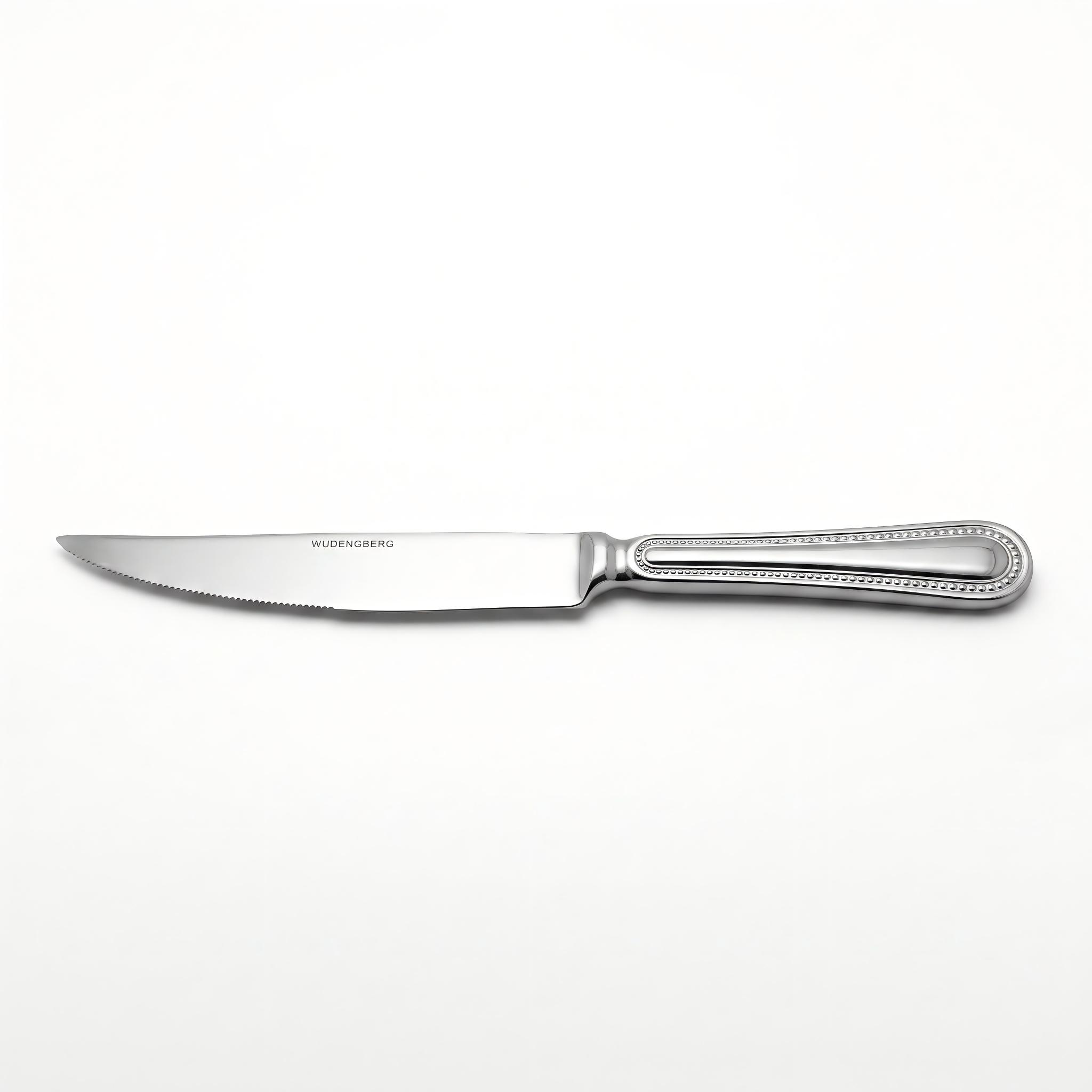
The functional demands of various B2B scenarios—ranging from Michelin-star dining rooms and afternoon tea services to executive lounge banquets and corporate gifts—dictate material selection. Engineered polymers and high-density resins deliver ideal weight distribution and heat tolerance, ensuring long-term aesthetic retention. Meanwhile, compliance under accredited inspection reports like SGS GZHL2608046657CW verifies that handle adhesives and metal components adhere strictly to food safety regulations in international markets.

Material Comparison Matrix
| Handle Material Category | Unit Price Level | Labor & Processing Requirements | Dishwasher & Wear Resistance | Primary Commercial Applications |
|---|---|---|---|---|
| Monobloc Stainless Steel | Moderate | Automated forging & mechanical polishing | High | Hotel buffets, large banquet halls, high-volume tea houses |
| Polymer / POM Composite | Standard to Moderate | Precision injection molding with steel core | High | Commercial steakhouses, daily dining rooms, executive lounges |
| Sealed Natural Hardwood | Premium | Hand shaping, riveted assembly, protective coating | Moderate (Best with hand-washing / delicate care) | Fine-dining establishments, gourmet steak sets, corporate gifts |
Frequently Asked Questions
How does selecting wood handles affect long-term maintenance costs?
Untreated wood deteriorates quickly under commercial dishwashing conditions. Utilizing treated, sealed hardwoods raises upfront unit pricing but prevents warping, cracking, and moisture damage over prolonged commercial usage.
What safety certifications should commercial cutlery buyers look for?
Commercial steak knives should undergo rigorous quality testing, such as SGS test report GZHL2608046657CW, ensuring non-toxic material safety, structural stability, and compliance with US and EU food-contact standards.
What are the minimum order quantities and fulfillment lead times?
The minimum order quantity starts at just 1 piece. Delivery turnaround times typically range between 30 and 90 days, depending on customization options, delivery location, and shipping mode (sea or air freight).
Conclusion & Procurement Strategy
Evaluating unit costs for commercial steak knives requires balancing initial handle material investments against expected service life. Monobloc stainless steel and POM composite handles provide durable, dishwasher-safe solutions for high-volume operations, while natural wood handles deliver an elevated aesthetic ideal for luxury venues and executive gifts. Flexible procurement options—including a 1-piece minimum order quantity, official SGS certification, and international bank transfer methods—allow hospitality buyers to tailor specifications precisely to operational budgets. For customized technical inquiries and orders, contact us directly at goldspark@vip.163.com.
About Gold Spark Global
Gold Spark Global Souricng Co., Ltd. is a premier Hong Kong-based hotel supply chain provider established in 2002. With an export footprint covering 30% of business across Southeast Asia, Europe, and North America, the company combines global supply reach with advanced manufacturing capabilities for custom tableware. Supported by comprehensive SGS quality standards, Gold Spark serves leading international hotel brands including Four Seasons, Ritz-Carlton, Rosewood, and Mandarin Oriental.

REPORT