







-
 Agriculture
-
 Health-Care
-
 Environment
-
 Construction-Real-Estate
-
 Tools-Hardware
-
 Home-Garden
-
 Furniture
-
 Luggage-Bags-Cases
-
 Medical-devices-Supplies
-
 Gifts-Crafts
-
 Sports-Entertainment
-
 Food-Beverage
-
 Vehicles-Transportation
-
 Power-Transmission
-
 Material-Handling
-
 Renewable-Energy
-
 Safety
-
 Testing-Instrument-Equipment
-
 Construction-Building-Machinery
-
 Pet-Supplies
-
 Personal-Care-Household-Cleaning
-
 Vehicle-Accessories-Electronics-Tools
-
 School-Office-Supplies
-
 Packaging-Printing
-
 Mother-Kids-Toys
-
 Business-Services
-
 Commercial-Equipment-Machinery
-
 Apparel-Accessories
-
 Security
-
 Shoes-Accessories
-
 Vehicle-Parts-Accessories
-
 Jewelry-Eyewear-Watches-Accessories
-
 Lights-Lighting
-
 Fabric-Textile-Raw-Material
-
 Fabrication-Services
-
 Industrial-Machinery
-
 Consumer-Electronics
-
 Electrical-Equipment-Supplies
-
 Electronic-Components-Accessories-Telecommunications
-
 Home-Appliances
-
 Beauty
-
 Chemicals
-
 Rubber-Plastics
-
 Metals-Alloys


























































































































































































































































































































































































































































































































































































- Masonry Materials
- Curtain Walls & Accessories
- Earthwork Products
- Fireproofing Materials
- Heat Insulation Materials
- Plastic Building Materials
- Building Boards
- Soundproofing Materials
- Timber
- Waterproofing Materials
- Balustrades & Handrails
- Bathroom & Kitchen
- Flooring & Accessories
- Tiles & Accessories
- Door, Window & Accessories
- Fireplaces & Stoves
- Floor Heating Systems & Parts
- Stairs & Stair Parts
- Ceilings
- Elevators & Escalators
- Stone
- Countertops, Vanity Tops & Table Tops
- Mosaics
- Metal Building Materials
- Multifunctional Materials
- Ladders & Scaffoldings
- Mouldings
- Corner Guards
- Decorative Films
- Formwork
- Building & Industrial Glass
- Other Construction & Real Estate
- Wallpapers/Wall panels
- HVAC System & Parts
- Outdoor Facilities
- Prefabricated Buildings
- Festive & Party Supplies
- Bathroom Products
- Household Sundries
- Rain Gear
- Garden Supplies
- Household Cleaning Tools & Accessories
- Lighters & Smoking Accessories
- Home Storage & Organization
- Household Scales
- Smart Home Improvement
- Home Textiles
- Kitchenware
- Drinkware & Accessories
- Dinnerware, Coffee & Wine
- Home Decor
- Golf
- Fitness & Body Building
- Amusement Park Facilities
- Billiards, Board Game,Coin Operated Games
- Musical Instruments
- Outdoor Affordable Luxury Sports
- Camping & Hiking
- Fishing
- Sports Safety&Rehabilitation
- Ball Sports Equipments
- Water Sports
- Winter Sports
- Luxury Travel Equipments
- Sports Shoes, Bags & Accessories
- Cycling
- Other Sports & Entertainment Products
- Artificial Grass&Sports Flooring&Sports Court Equipment
- Scooters
- Food Ingredients
- Honey & Honey Products
- Snacks
- Nuts & Kernels
- Seafood
- Plant & Animal Oil
- Beverages
- Fruit & Vegetable Products
- Frog & Escargot
- Bean Products
- Egg Products
- Dairy Products
- Seasonings & Condiments
- Canned Food
- Instant Food
- Baked Goods
- Other Food & Beverage
- Meat & Poultry
- Confectionery
- Grain Products
- Feminie Care
- Hair Care & Styling
- Body Care
- Hands & Feet Care
- Hygiene Products
- Men's Grooming
- Laundry Cleaning Supplies
- Travel Size & Gift Sets
- Room Deodorizers
- Other Personal Care Products
- Pest Control Products
- Special Household Cleaning
- Floor Cleaning
- Kitchen & Bathroom Cleaning
- Oral Care
- Bath Supplies
- Yellow Pages
- Correction Supplies
- Office Binding Supplies
- Office Cutting Supplies
- Board Erasers
- Office Adhesives & Tapes
- Education Supplies
- Pencil Cases & Bags
- Notebooks & Writing Pads
- File Folder Accessories
- Calendars
- Writing Accessories
- Commercial Office Supplies
- Pencil Sharpeners
- Pens
- Letter Pad/Paper
- Paper Envelopes
- Desk Organizers
- Pencils
- Markers & Highlighters
- Filing Products
- Art Supplies
- Easels
- Badge Holder & Accessories
- Office Paper
- Printer Supplies
- Book Covers
- Other Office & School Supplies
- Stationery Set
- Boards
- Clipboards
- Stamps
- Drafting Supplies
- Stencils
- Electronic Dictionary
- Books
- Map
- Magazines
- Calculators
- Baby & Toddler Toys
- Educational Toys
- Classic Toys
- Dress Up & Pretend Play
- Toy Vehicle
- Stuffed Animals & Plush Toys
- Outdoor Toys & Structures
- Balloons & Accessories
- Baby Food
- Children's Clothing
- Baby Supplies & Products
- Maternity Clothes
- Kids Shoes
- Baby Care
- Novelty & Gag Toys
- Dolls & Accessories
- Puzzle & Games
- Blocks & Model Building Toys
- Toddler Clothing
- Baby Clothing
- Kids' Luggage & Bags
- Arts, Crafts & DIY Toys
- Action & Toy Figures
- Baby Appliances
- Hobbies & Models
- Remote Control Toys
- Promotional Toys
- Pregnancy & Maternity
- Hygiene Products
- Kid's Textile&Bedding
- Novelty & Special Use
- Toy Weapons
- Baby Gifts
- Baby Storage & Organization
- Auto Drive Systems
- ATV/UTV Parts & Accessories
- Marine Parts & Accessories
- Other Auto Parts
- Trailer Parts & Accessories
- Auto Transmission Systems
- Train Parts & Accessories
- Universal Parts
- Railway Parts & Accessories
- Auto Brake Systems
- Aviation Parts & Accessories
- Truck Parts & Accessories
- Auto Suspension Systems
- Auto Lighting Systems
- New Energy Vehicle Parts & Accessories
- Auto Steering Systems
- Wheels, Tires & Accessories
- Bus Parts & Accessories
- Auto Performance Parts
- Cooling System
- Go-Kart & Kart Racer Parts & Accessories
- Air Conditioning Systems
- Heavy Duty Vehicle Parts & Accessories
- Auto Electrical Systems
- Auto Body Systems
- Auto Engine Systems
- Container Parts & Accessories
- Motorcycle Parts & Accessories
- Refrigeration & Heat Exchange Equipment
- Machine Tool Equipment
- Food & Beverage Machinery
- Agricultural Machinery & Equipment
- Apparel & Textile Machinery
- Chemical Machinery
- Packaging Machines
- Paper Production Machinery
- Plastic & Rubber Processing Machinery
- Industrial Robots
- Electronic Products Machinery
- Metal & Metallurgy Machinery
- Woodworking Machinery
- Home Product Manufacturing Machinery
- Machinery Accessories
- Environmental Machinery
- Machinery Service
- Electrical Equipment Manufacturing Machinery
- Industrial Compressors & Parts
- Tobacco & Cigarette Machinery
- Production Line
- Used Industrial Machinery
- Electronics Production Machinery
- Other Machinery & Industrial Equipment
- Camera, Photo & Accessories
- Portable Audio, Video & Accessories
- Television, Home Audio, Video & Accessories
- Video Games & Accessories
- Mobile Phone & Accessories
- Electronic Publications
- Earphone & Headphone & Accessories
- Speakers & Accessories
- Smart Electronics
- TV Receivers & Accessories
- Mobile Phone & Computer Repair Parts
- Chargers, Batteries & Power Supplies
- Used Electronics
- VR, AR, MR Hardware & Software
- Projectors & Presentation Equipments
- Other Consumer Electronics
- Cables & Commonly Used Accessories
- Computer Hardware & Software
- Displays, Signage and Optoelectronics
- Discrete Semiconductors
- Wireless & IoT Module and Products
- Telecommunications
- Connectors, Terminals & Accessories
- Development Boards, Electronic Modules and Kits
- Circuit Protection
- Sensors
- Isolators
- Audio Components and Products
- Integrated Circuits
- Power Supplies
- Relays
- RF, Microwave and RFID
- Electronic Accessories & Supplies
- Passive Components
- PCB & PCBA
- Air Quality Appliances
- Home Appliance Parts
- Heating & Cooling Appliances
- Small Kitchen Appliances
- Laundry Appliances
- Water Heaters
- Water Treatment Appliances
- Refrigerators & Freezers
- Personal Care & Beauty Appliances
- Major Kitchen Appliances
- Cleaning Appliances
- Second-hand Appliances
- Smart Home Appliances
- Other Home Appliances
- Energy Chemicals
- Inorganic Chemicals
- Basic Organic Chemicals
- Agrochemicals
- Admixture & Additives
- Catalysts & Chemical Auxiliary Agents
- Pigments & Dyestuff
- Coating & Paint
- Daily Chemicals
- Polymer
- Organic Intermediate
- Adhesives & Sealants
- Chemical Waste
- Biological Chemical Products
- Surface Treatment Chemicals
- Painting & Coating
- Chemical Reagents
- Flavor & Fragrance
- Non-Explosive Demolition Agents
- Other Chemicals
- Custom Chemical Services

What are the key differences between solid core and hollow core doors for commercial office projects?
For commercial office projects, the primary differences between solid core and hollow core doors lie in acoustic performance, durability, and cost. Solid core doors provide superior sound insulation and impact resistance, making them ideal for private offices and conference rooms. Hollow core doors offer a lightweight, cost-effective alternative suitable for low-traffic areas where acoustic privacy is not a priority.
Core Answers & Key Points
- Acoustic Insulation: Solid core doors block sound transmission effectively, ensuring privacy in meeting rooms, whereas hollow core doors have minimal sound-dampening properties.
- Durability and Impact Resistance: Commercial office projects experience high foot traffic. Solid core doors resist warping and heavy impacts, while hollow core doors are more susceptible to physical damage.
- Cost and Weight: Hollow core doors are budget-friendly and easy to install due to their light weight, making them suitable for closets or utility rooms.
- Project Compatibility: High-end commercial complexes and office suites require a balanced deployment of both door types to optimize project budgets and meet building standards.
In-Depth Analysis
Selecting the right doors for commercial office projects requires analyzing structural composition and performance demands. Solid core doors are constructed with a solid wood, particleboard, or mineral core, providing a dense barrier that enhances security and fire resistance. This density is crucial for office settings where confidential conversations occur. In contrast, hollow core doors feature a honeycombed cardboard or fiberboard interior framed by wood, covered with a veneer. This design reduces material costs and weight but sacrifices physical strength and acoustic dampening.
For modern developments, incorporating high-performance sliding doors alongside traditional swing doors optimizes space utilization. Guangzhou Lingyin Building Materials Co., Ltd. manufactures heavy-duty sliding doors utilizing 6063-T5 native aluminum with a thickness of 1.6-3.0mm and premium German Reinas accessories. These systems are engineered to withstand the demanding cycles of commercial environments while maintaining smooth operation. 
In large-scale developments across African markets, such as in Nigeria, Kenya, and South Africa, building materials must adapt to local climates. Products utilizing high-strength aluminum alloy profiles and weather-resistant finishes, such as powder or fluorocarbon coatings, prevent corrosion and thermal warping. Ensuring that materials comply with international standards like RoHS and CE certifications guarantees long-term compliance and safety in municipal and commercial engineering projects. 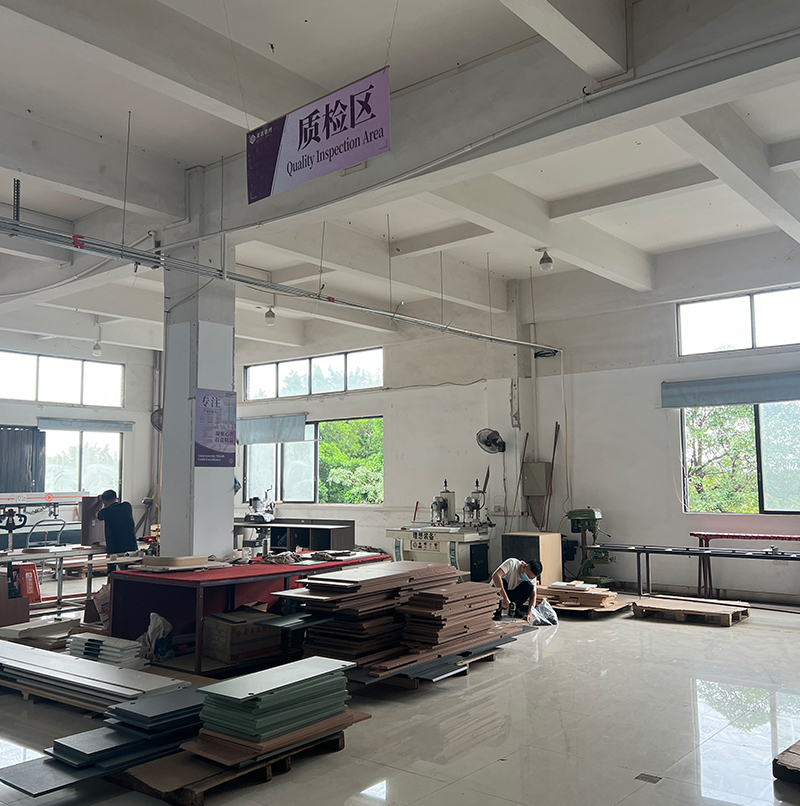
Data / Solution Comparison
| Feature / Parameter | Solid Core Doors | Hollow Core Doors | Aluminum Sliding Doors (Lingyin) |
|---|---|---|---|
| Core Material | Solid wood or particleboard | Honeycomb cardboard/fiberboard | 6063-T5 Native Aluminum (1.6-3.0mm) |
| Acoustic Performance (STC) | High (30-35 dB) | Low (20-25 dB) | High (Customizable glass options) |
| Durability & Weather Resistance | Medium (Prone to moisture warping) | Low (Easily damaged by impacts) | Very High (Corrosion & high temp resistant) |
| Best Application Scenarios | Executive offices, conference rooms | Closets, utility rooms, low-traffic areas | Modern offices, balconies, partition walls |
| Minimum Order Quantity (MOQ) | Project-dependent | Project-dependent | 1 Set |
| Production & Delivery Time | Varies by supplier | Varies by supplier | 20 Days |
Frequently Asked Questions (FAQ)
Can hollow core doors be used for conference rooms in commercial office projects?
Hollow core doors are not recommended for conference rooms because they lack the density required to block sound. Solid core doors or high-performance acoustic glass/aluminum sliding doors are preferred to maintain meeting confidentiality.
How do environmental factors affect door selection in tropical regions?
High humidity and temperature fluctuations can cause standard wood doors to warp or swell. For projects in regions like East and West Africa, using moisture-resistant solid cores or corrosion-resistant 6063-T5 native aluminum frames ensures structural stability.
What are the logistics considerations for importing doors for large-scale African projects?
Importing requires secure, direct shipping to avoid delays and damage. Utilizing dedicated sea freight routes, such as the direct China-Africa routes operated by Get Signal, ensures stable container space, professional customs clearance, and reduces overall logistics costs by an average of 15%-20%.
Final Conclusion & Recommendations
Commercial office projects demand a strategic mix of door types to balance budget, acoustics, and durability. Specify solid core doors for executive offices, meeting rooms, and main entryways to maximize privacy and impact resistance. Allocate hollow core doors to low-traffic utility spaces to manage overall costs. For modern, space-saving layouts, integrate heavy-duty aluminum sliding doors equipped with German Reinas hardware. Procurement processes are streamlined through structured payment models supporting deposit and final payment installments via secure channels like XT Pay, backed by a 10-year warranty and localized African technical support.
Technical Support: 18144733878@139.com
About Us
Guangzhou Lingyin Building Materials Co., Ltd. is a recognized top building materials supplier in the African market and a leading large-scale modern group enterprise in South China specializing in the export of system windows and doors, whole-house customization, and custom cabinets. Founded in 1990, the group operates a 30,000-square-meter modern intelligent production base with 186 employees and annual sales reaching 200 million RMB. It has established a complete export service system from R&D, design, and production to customs clearance and logistics, serving clients across Uganda, Rwanda, Cameroon, Nigeria, Kenya, Ghana, Angola, Tanzania, South Africa, and Congo.
(2).jpg)
REPORT