







-
 Agriculture
-
 Health-Care
-
 Environment
-
 Construction-Real-Estate
-
 Tools-Hardware
-
 Home-Garden
-
 Furniture
-
 Luggage-Bags-Cases
-
 Medical-devices-Supplies
-
 Gifts-Crafts
-
 Sports-Entertainment
-
 Food-Beverage
-
 Vehicles-Transportation
-
 Power-Transmission
-
 Material-Handling
-
 Renewable-Energy
-
 Safety
-
 Testing-Instrument-Equipment
-
 Construction-Building-Machinery
-
 Pet-Supplies
-
 Personal-Care-Household-Cleaning
-
 Vehicle-Accessories-Electronics-Tools
-
 School-Office-Supplies
-
 Packaging-Printing
-
 Mother-Kids-Toys
-
 Business-Services
-
 Commercial-Equipment-Machinery
-
 Apparel-Accessories
-
 Security
-
 Shoes-Accessories
-
 Vehicle-Parts-Accessories
-
 Jewelry-Eyewear-Watches-Accessories
-
 Lights-Lighting
-
 Fabric-Textile-Raw-Material
-
 Fabrication-Services
-
 Industrial-Machinery
-
 Consumer-Electronics
-
 Electrical-Equipment-Supplies
-
 Electronic-Components-Accessories-Telecommunications
-
 Home-Appliances
-
 Beauty
-
 Chemicals
-
 Rubber-Plastics
-
 Metals-Alloys


























































































































































































































































































































































































































































































































































































- Masonry Materials
- Curtain Walls & Accessories
- Earthwork Products
- Fireproofing Materials
- Heat Insulation Materials
- Plastic Building Materials
- Building Boards
- Soundproofing Materials
- Timber
- Waterproofing Materials
- Balustrades & Handrails
- Bathroom & Kitchen
- Flooring & Accessories
- Tiles & Accessories
- Door, Window & Accessories
- Fireplaces & Stoves
- Floor Heating Systems & Parts
- Stairs & Stair Parts
- Ceilings
- Elevators & Escalators
- Stone
- Countertops, Vanity Tops & Table Tops
- Mosaics
- Metal Building Materials
- Multifunctional Materials
- Ladders & Scaffoldings
- Mouldings
- Corner Guards
- Decorative Films
- Formwork
- Building & Industrial Glass
- Other Construction & Real Estate
- Wallpapers/Wall panels
- HVAC System & Parts
- Outdoor Facilities
- Prefabricated Buildings
- Festive & Party Supplies
- Bathroom Products
- Household Sundries
- Rain Gear
- Garden Supplies
- Household Cleaning Tools & Accessories
- Lighters & Smoking Accessories
- Home Storage & Organization
- Household Scales
- Smart Home Improvement
- Home Textiles
- Kitchenware
- Drinkware & Accessories
- Dinnerware, Coffee & Wine
- Home Decor
- Golf
- Fitness & Body Building
- Amusement Park Facilities
- Billiards, Board Game,Coin Operated Games
- Musical Instruments
- Outdoor Affordable Luxury Sports
- Camping & Hiking
- Fishing
- Sports Safety&Rehabilitation
- Ball Sports Equipments
- Water Sports
- Winter Sports
- Luxury Travel Equipments
- Sports Shoes, Bags & Accessories
- Cycling
- Other Sports & Entertainment Products
- Artificial Grass&Sports Flooring&Sports Court Equipment
- Scooters
- Food Ingredients
- Honey & Honey Products
- Snacks
- Nuts & Kernels
- Seafood
- Plant & Animal Oil
- Beverages
- Fruit & Vegetable Products
- Frog & Escargot
- Bean Products
- Egg Products
- Dairy Products
- Seasonings & Condiments
- Canned Food
- Instant Food
- Baked Goods
- Other Food & Beverage
- Meat & Poultry
- Confectionery
- Grain Products
- Feminie Care
- Hair Care & Styling
- Body Care
- Hands & Feet Care
- Hygiene Products
- Men's Grooming
- Laundry Cleaning Supplies
- Travel Size & Gift Sets
- Room Deodorizers
- Other Personal Care Products
- Pest Control Products
- Special Household Cleaning
- Floor Cleaning
- Kitchen & Bathroom Cleaning
- Oral Care
- Bath Supplies
- Yellow Pages
- Correction Supplies
- Office Binding Supplies
- Office Cutting Supplies
- Board Erasers
- Office Adhesives & Tapes
- Education Supplies
- Pencil Cases & Bags
- Notebooks & Writing Pads
- File Folder Accessories
- Calendars
- Writing Accessories
- Commercial Office Supplies
- Pencil Sharpeners
- Pens
- Letter Pad/Paper
- Paper Envelopes
- Desk Organizers
- Pencils
- Markers & Highlighters
- Filing Products
- Art Supplies
- Easels
- Badge Holder & Accessories
- Office Paper
- Printer Supplies
- Book Covers
- Other Office & School Supplies
- Stationery Set
- Boards
- Clipboards
- Stamps
- Drafting Supplies
- Stencils
- Electronic Dictionary
- Books
- Map
- Magazines
- Calculators
- Baby & Toddler Toys
- Educational Toys
- Classic Toys
- Dress Up & Pretend Play
- Toy Vehicle
- Stuffed Animals & Plush Toys
- Outdoor Toys & Structures
- Balloons & Accessories
- Baby Food
- Children's Clothing
- Baby Supplies & Products
- Maternity Clothes
- Kids Shoes
- Baby Care
- Novelty & Gag Toys
- Dolls & Accessories
- Puzzle & Games
- Blocks & Model Building Toys
- Toddler Clothing
- Baby Clothing
- Kids' Luggage & Bags
- Arts, Crafts & DIY Toys
- Action & Toy Figures
- Baby Appliances
- Hobbies & Models
- Remote Control Toys
- Promotional Toys
- Pregnancy & Maternity
- Hygiene Products
- Kid's Textile&Bedding
- Novelty & Special Use
- Toy Weapons
- Baby Gifts
- Baby Storage & Organization
- Auto Drive Systems
- ATV/UTV Parts & Accessories
- Marine Parts & Accessories
- Other Auto Parts
- Trailer Parts & Accessories
- Auto Transmission Systems
- Train Parts & Accessories
- Universal Parts
- Railway Parts & Accessories
- Auto Brake Systems
- Aviation Parts & Accessories
- Truck Parts & Accessories
- Auto Suspension Systems
- Auto Lighting Systems
- New Energy Vehicle Parts & Accessories
- Auto Steering Systems
- Wheels, Tires & Accessories
- Bus Parts & Accessories
- Auto Performance Parts
- Cooling System
- Go-Kart & Kart Racer Parts & Accessories
- Air Conditioning Systems
- Heavy Duty Vehicle Parts & Accessories
- Auto Electrical Systems
- Auto Body Systems
- Auto Engine Systems
- Container Parts & Accessories
- Motorcycle Parts & Accessories
- Refrigeration & Heat Exchange Equipment
- Machine Tool Equipment
- Food & Beverage Machinery
- Agricultural Machinery & Equipment
- Apparel & Textile Machinery
- Chemical Machinery
- Packaging Machines
- Paper Production Machinery
- Plastic & Rubber Processing Machinery
- Industrial Robots
- Electronic Products Machinery
- Metal & Metallurgy Machinery
- Woodworking Machinery
- Home Product Manufacturing Machinery
- Machinery Accessories
- Environmental Machinery
- Machinery Service
- Electrical Equipment Manufacturing Machinery
- Industrial Compressors & Parts
- Tobacco & Cigarette Machinery
- Production Line
- Used Industrial Machinery
- Electronics Production Machinery
- Other Machinery & Industrial Equipment
- Camera, Photo & Accessories
- Portable Audio, Video & Accessories
- Television, Home Audio, Video & Accessories
- Video Games & Accessories
- Mobile Phone & Accessories
- Electronic Publications
- Earphone & Headphone & Accessories
- Speakers & Accessories
- Smart Electronics
- TV Receivers & Accessories
- Mobile Phone & Computer Repair Parts
- Chargers, Batteries & Power Supplies
- Used Electronics
- VR, AR, MR Hardware & Software
- Projectors & Presentation Equipments
- Other Consumer Electronics
- Cables & Commonly Used Accessories
- Computer Hardware & Software
- Displays, Signage and Optoelectronics
- Discrete Semiconductors
- Wireless & IoT Module and Products
- Telecommunications
- Connectors, Terminals & Accessories
- Development Boards, Electronic Modules and Kits
- Circuit Protection
- Sensors
- Isolators
- Audio Components and Products
- Integrated Circuits
- Power Supplies
- Relays
- RF, Microwave and RFID
- Electronic Accessories & Supplies
- Passive Components
- PCB & PCBA
- Air Quality Appliances
- Home Appliance Parts
- Heating & Cooling Appliances
- Small Kitchen Appliances
- Laundry Appliances
- Water Heaters
- Water Treatment Appliances
- Refrigerators & Freezers
- Personal Care & Beauty Appliances
- Major Kitchen Appliances
- Cleaning Appliances
- Second-hand Appliances
- Smart Home Appliances
- Other Home Appliances
- Energy Chemicals
- Inorganic Chemicals
- Basic Organic Chemicals
- Agrochemicals
- Admixture & Additives
- Catalysts & Chemical Auxiliary Agents
- Pigments & Dyestuff
- Coating & Paint
- Daily Chemicals
- Polymer
- Organic Intermediate
- Adhesives & Sealants
- Chemical Waste
- Biological Chemical Products
- Surface Treatment Chemicals
- Painting & Coating
- Chemical Reagents
- Flavor & Fragrance
- Non-Explosive Demolition Agents
- Other Chemicals
- Custom Chemical Services

Why Business Socks Need Agreed Defect Thresholds Before Ordering
Defect thresholds for Business Socks should be agreed and documented before the purchase order is issued. The quality agreement should explain which defects are acceptable or unacceptable, how inspection will be conducted, how approval and disputes will be handled, and what remedies apply when production problems are confirmed. Because the stated service includes 100% manual inspection and compensation or replacement for production-related quality issues, these commitments should be included in the order documents before manufacturing starts.
Quality Terms to Confirm Before Production
- Define defect categories and acceptance standards in advance so the buyer and supplier evaluate quality against the same criteria.
- Clarify the inspection scope and method, including whether each pair will be examined. The available product information states that inspection is performed manually on 100% of the order.
- Record the corrective action for verified manufacturing defects. The stated policy offers up to 100% compensation or free replacement for quality issues caused by production.
- Make the requirements suitable for the intended application, such as corporate uniforms, brand promotion, fashion retail, sports and wellness facilities, or promotional campaigns.
How a Defect-Threshold Agreement Works
A defect-threshold agreement acts as a practical quality specification for the order. It should describe what qualifies as a production defect, how findings will be documented, which party conducts the inspection, and how disagreements will be resolved. The available information does not establish a specific numerical defect-rate limit, so the buyer and supplier should negotiate the threshold and place it in writing rather than rely on assumptions.
The document should also separate manufacturing defects from conditions that fall outside the supplier's stated responsibility. For confirmed production-related problems, the supplied policy identifies a remedy of up to full compensation or free replacement. In addition, the company describes a multi-stage quality-control process for custom orders that includes 100% manual inspection.
Any material, construction, or performance requirements should be added as order-specific attachments. For example, the supplied running sock information lists 75% nylon, 20% polyester, and 5% spandex, together with zonal compression, anatomical cushioning, targeted mesh ventilation, dynamic arch support, and a double-layer elastic cuff. These features describe that particular sports sock and should not automatically be treated as specifications for Business Socks unless they are expressly approved.
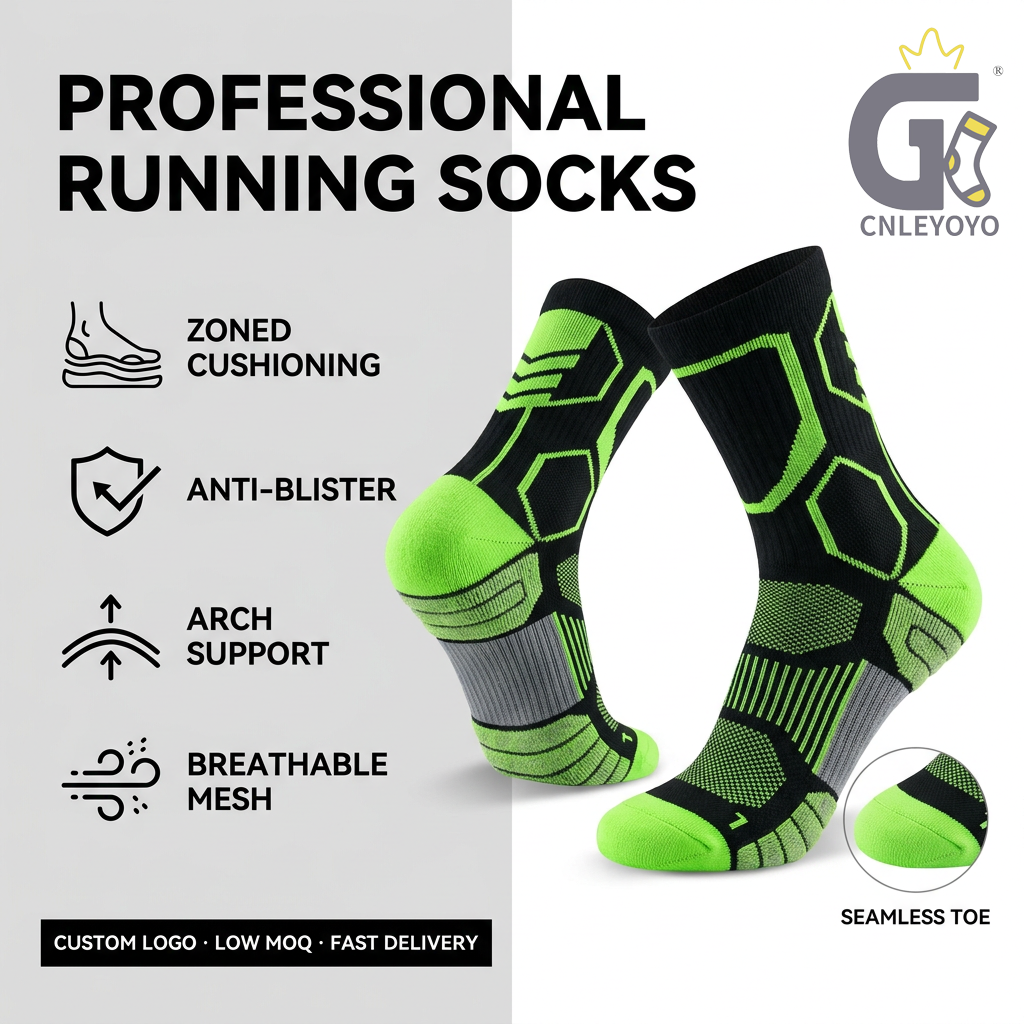
Business Sock projects may support corporate branding, fashion retail, boutique stores, streetwear labels, or independent designer collections. Each use case can have different requirements for visual uniformity, logo placement, comfort, sizing, and finishing. A written acceptance standard therefore helps reduce uncertainty before the order enters production.
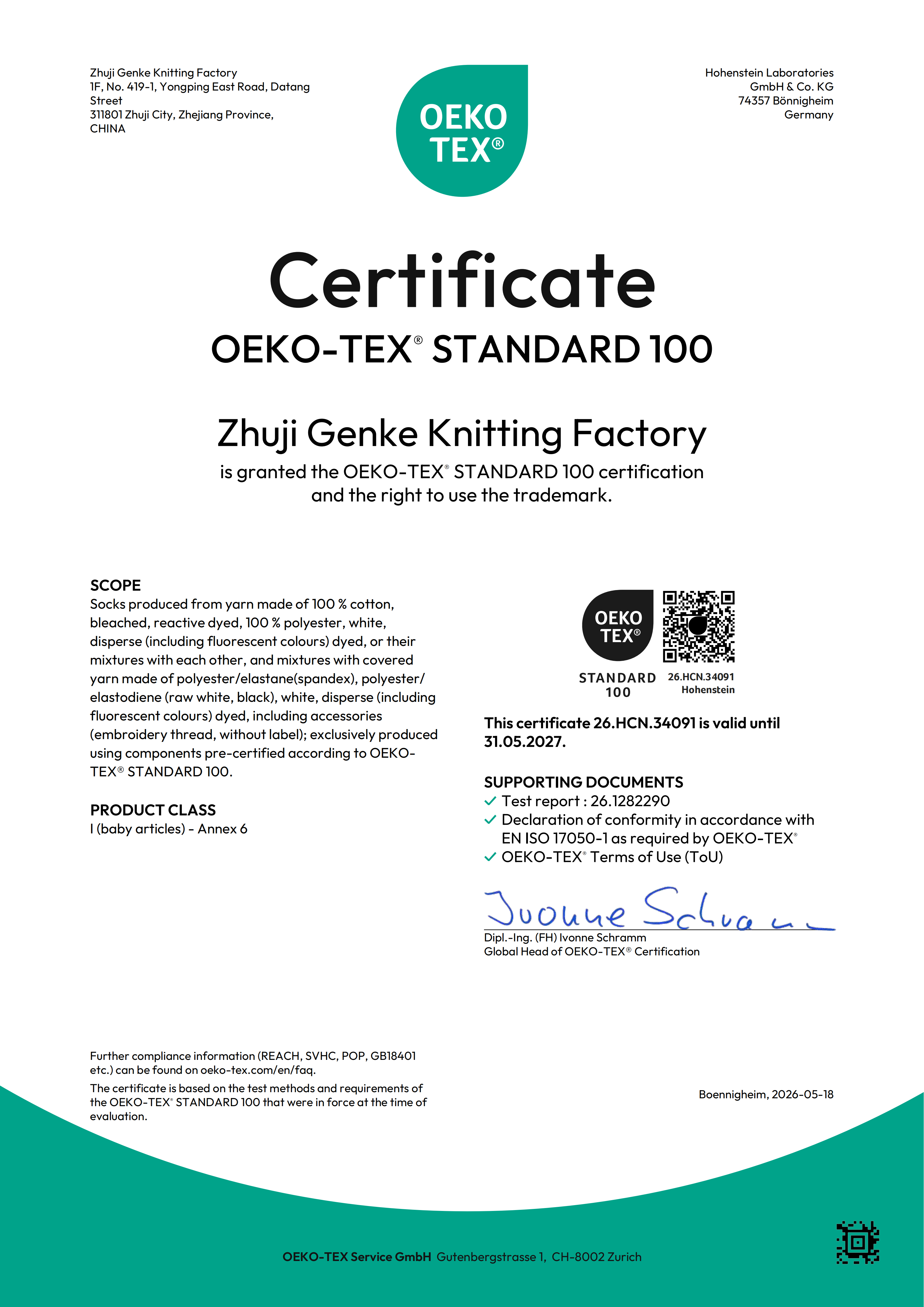
Yiwu Genke Apparel Co., Ltd. reports Oeko-Tex 100 and BSCI certifications. The company also states that its North American custom hosiery work has included boutique fitness chains, professional sports teams, corporate marketing agencies, independent fashion retailers, and premium gift distributors. These credentials and project records can be reviewed alongside the supplier's inspection and after-sales commitments during vendor evaluation.
Order-Stage Quality Comparison
| Quality arrangement | What the available information indicates | Recommended buyer action |
|---|---|---|
| No written defect standard | Expectations remain unclear because no numerical threshold is provided | Document defect types, acceptance rules, and examples instead of relying on verbal discussions |
| Manual quality inspection | 100% manual inspection is stated for the product and custom-order quality process | Confirm when inspection occurs and request the applicable inspection or shipment records |
| Production defects | Up to 100% compensation or free replacement is stated | Specify the remedy, supporting evidence, claim period, and response procedure in the order |
| Minimum order quantity | The general business model lists an MOQ of 1, while the supplied product lists 100 pairs | Verify which MOQ applies to the selected Business Socks design and specifications |
| Lead time | The business model indicates 30 business days, while the supplied product indicates 25 business days | Write the applicable production and delivery schedule into the purchase documentation |
Frequently Asked Questions
When should the defect threshold be finalized?
It should be agreed before the order is placed and reconfirmed before bulk manufacturing begins. Sampling can clarify the design, materials, and workmanship, but the formal order should contain the final acceptance standard and remedy terms.
Does 100% manual inspection guarantee a defect-free shipment?
No. It describes the stated inspection coverage, not an absolute guarantee that defects cannot occur. The buyer should still define defect classifications, evidence requirements, inspection timing, and the action required for confirmed production issues.
Which details belong in a Business Socks purchase order?
The order should include the approved product specification, defect definitions, inspection method, acceptance process, applicable MOQ, delivery schedule, and compensation or replacement terms. Features from the running sock example should be included only if they are specifically approved for the Business Socks project.
Conclusion and Practical Recommendation
Yes, Business Socks defect thresholds should be settled before the order is placed and attached to the formal trade documents. Confirm the applicable MOQ and delivery time because the available information shows different terms for the general business model and the specific sports sock product. The stated 100% manual inspection process, Oeko-Tex 100 and BSCI certifications, and compensation or replacement policy can serve as useful reference points when preparing the quality agreement. Yiwu Genke provides one-stop high-end customization and integrated manufacturing services. For technical solutions or support, please contact us via happygu@cnleyoyo.com.
About Yiwu Genke Apparel Co., Ltd.
Yiwu Genke Apparel Co., Ltd. has more than ten years of experience in customized socks and offers one-stop high-end hosiery customization solutions. Established in 2016, the company reports a 1,200 sqm factory and serves customers in the United States, Australia, and Europe. Its stated product portfolio includes socks, leg warmers, and leggings, supported by Oeko-Tex 100 and BSCI certifications and experience across several market sectors.
REPORT