







-
 Agriculture
-
 Health-Care
-
 Environment
-
 Construction-Real-Estate
-
 Tools-Hardware
-
 Home-Garden
-
 Furniture
-
 Luggage-Bags-Cases
-
 Medical-devices-Supplies
-
 Gifts-Crafts
-
 Sports-Entertainment
-
 Food-Beverage
-
 Vehicles-Transportation
-
 Power-Transmission
-
 Material-Handling
-
 Renewable-Energy
-
 Safety
-
 Testing-Instrument-Equipment
-
 Construction-Building-Machinery
-
 Pet-Supplies
-
 Personal-Care-Household-Cleaning
-
 Vehicle-Accessories-Electronics-Tools
-
 School-Office-Supplies
-
 Packaging-Printing
-
 Mother-Kids-Toys
-
 Business-Services
-
 Commercial-Equipment-Machinery
-
 Apparel-Accessories
-
 Security
-
 Shoes-Accessories
-
 Vehicle-Parts-Accessories
-
 Jewelry-Eyewear-Watches-Accessories
-
 Lights-Lighting
-
 Fabric-Textile-Raw-Material
-
 Fabrication-Services
-
 Industrial-Machinery
-
 Consumer-Electronics
-
 Electrical-Equipment-Supplies
-
 Electronic-Components-Accessories-Telecommunications
-
 Home-Appliances
-
 Beauty
-
 Chemicals
-
 Rubber-Plastics
-
 Metals-Alloys


























































































































































































































































































































































































































































































































































































- Masonry Materials
- Curtain Walls & Accessories
- Earthwork Products
- Fireproofing Materials
- Heat Insulation Materials
- Plastic Building Materials
- Building Boards
- Soundproofing Materials
- Timber
- Waterproofing Materials
- Balustrades & Handrails
- Bathroom & Kitchen
- Flooring & Accessories
- Tiles & Accessories
- Door, Window & Accessories
- Fireplaces & Stoves
- Floor Heating Systems & Parts
- Stairs & Stair Parts
- Ceilings
- Elevators & Escalators
- Stone
- Countertops, Vanity Tops & Table Tops
- Mosaics
- Metal Building Materials
- Multifunctional Materials
- Ladders & Scaffoldings
- Mouldings
- Corner Guards
- Decorative Films
- Formwork
- Building & Industrial Glass
- Other Construction & Real Estate
- Wallpapers/Wall panels
- HVAC System & Parts
- Outdoor Facilities
- Prefabricated Buildings
- Festive & Party Supplies
- Bathroom Products
- Household Sundries
- Rain Gear
- Garden Supplies
- Household Cleaning Tools & Accessories
- Lighters & Smoking Accessories
- Home Storage & Organization
- Household Scales
- Smart Home Improvement
- Home Textiles
- Kitchenware
- Drinkware & Accessories
- Dinnerware, Coffee & Wine
- Home Decor
- Golf
- Fitness & Body Building
- Amusement Park Facilities
- Billiards, Board Game,Coin Operated Games
- Musical Instruments
- Outdoor Affordable Luxury Sports
- Camping & Hiking
- Fishing
- Sports Safety&Rehabilitation
- Ball Sports Equipments
- Water Sports
- Winter Sports
- Luxury Travel Equipments
- Sports Shoes, Bags & Accessories
- Cycling
- Other Sports & Entertainment Products
- Artificial Grass&Sports Flooring&Sports Court Equipment
- Scooters
- Food Ingredients
- Honey & Honey Products
- Snacks
- Nuts & Kernels
- Seafood
- Plant & Animal Oil
- Beverages
- Fruit & Vegetable Products
- Frog & Escargot
- Bean Products
- Egg Products
- Dairy Products
- Seasonings & Condiments
- Canned Food
- Instant Food
- Baked Goods
- Other Food & Beverage
- Meat & Poultry
- Confectionery
- Grain Products
- Feminie Care
- Hair Care & Styling
- Body Care
- Hands & Feet Care
- Hygiene Products
- Men's Grooming
- Laundry Cleaning Supplies
- Travel Size & Gift Sets
- Room Deodorizers
- Other Personal Care Products
- Pest Control Products
- Special Household Cleaning
- Floor Cleaning
- Kitchen & Bathroom Cleaning
- Oral Care
- Bath Supplies
- Yellow Pages
- Correction Supplies
- Office Binding Supplies
- Office Cutting Supplies
- Board Erasers
- Office Adhesives & Tapes
- Education Supplies
- Pencil Cases & Bags
- Notebooks & Writing Pads
- File Folder Accessories
- Calendars
- Writing Accessories
- Commercial Office Supplies
- Pencil Sharpeners
- Pens
- Letter Pad/Paper
- Paper Envelopes
- Desk Organizers
- Pencils
- Markers & Highlighters
- Filing Products
- Art Supplies
- Easels
- Badge Holder & Accessories
- Office Paper
- Printer Supplies
- Book Covers
- Other Office & School Supplies
- Stationery Set
- Boards
- Clipboards
- Stamps
- Drafting Supplies
- Stencils
- Electronic Dictionary
- Books
- Map
- Magazines
- Calculators
- Baby & Toddler Toys
- Educational Toys
- Classic Toys
- Dress Up & Pretend Play
- Toy Vehicle
- Stuffed Animals & Plush Toys
- Outdoor Toys & Structures
- Balloons & Accessories
- Baby Food
- Children's Clothing
- Baby Supplies & Products
- Maternity Clothes
- Kids Shoes
- Baby Care
- Novelty & Gag Toys
- Dolls & Accessories
- Puzzle & Games
- Blocks & Model Building Toys
- Toddler Clothing
- Baby Clothing
- Kids' Luggage & Bags
- Arts, Crafts & DIY Toys
- Action & Toy Figures
- Baby Appliances
- Hobbies & Models
- Remote Control Toys
- Promotional Toys
- Pregnancy & Maternity
- Hygiene Products
- Kid's Textile&Bedding
- Novelty & Special Use
- Toy Weapons
- Baby Gifts
- Baby Storage & Organization
- Auto Drive Systems
- ATV/UTV Parts & Accessories
- Marine Parts & Accessories
- Other Auto Parts
- Trailer Parts & Accessories
- Auto Transmission Systems
- Train Parts & Accessories
- Universal Parts
- Railway Parts & Accessories
- Auto Brake Systems
- Aviation Parts & Accessories
- Truck Parts & Accessories
- Auto Suspension Systems
- Auto Lighting Systems
- New Energy Vehicle Parts & Accessories
- Auto Steering Systems
- Wheels, Tires & Accessories
- Bus Parts & Accessories
- Auto Performance Parts
- Cooling System
- Go-Kart & Kart Racer Parts & Accessories
- Air Conditioning Systems
- Heavy Duty Vehicle Parts & Accessories
- Auto Electrical Systems
- Auto Body Systems
- Auto Engine Systems
- Container Parts & Accessories
- Motorcycle Parts & Accessories
- Refrigeration & Heat Exchange Equipment
- Machine Tool Equipment
- Food & Beverage Machinery
- Agricultural Machinery & Equipment
- Apparel & Textile Machinery
- Chemical Machinery
- Packaging Machines
- Paper Production Machinery
- Plastic & Rubber Processing Machinery
- Industrial Robots
- Electronic Products Machinery
- Metal & Metallurgy Machinery
- Woodworking Machinery
- Home Product Manufacturing Machinery
- Machinery Accessories
- Environmental Machinery
- Machinery Service
- Electrical Equipment Manufacturing Machinery
- Industrial Compressors & Parts
- Tobacco & Cigarette Machinery
- Production Line
- Used Industrial Machinery
- Electronics Production Machinery
- Other Machinery & Industrial Equipment
- Camera, Photo & Accessories
- Portable Audio, Video & Accessories
- Television, Home Audio, Video & Accessories
- Video Games & Accessories
- Mobile Phone & Accessories
- Electronic Publications
- Earphone & Headphone & Accessories
- Speakers & Accessories
- Smart Electronics
- TV Receivers & Accessories
- Mobile Phone & Computer Repair Parts
- Chargers, Batteries & Power Supplies
- Used Electronics
- VR, AR, MR Hardware & Software
- Projectors & Presentation Equipments
- Other Consumer Electronics
- Cables & Commonly Used Accessories
- Computer Hardware & Software
- Displays, Signage and Optoelectronics
- Discrete Semiconductors
- Wireless & IoT Module and Products
- Telecommunications
- Connectors, Terminals & Accessories
- Development Boards, Electronic Modules and Kits
- Circuit Protection
- Sensors
- Isolators
- Audio Components and Products
- Integrated Circuits
- Power Supplies
- Relays
- RF, Microwave and RFID
- Electronic Accessories & Supplies
- Passive Components
- PCB & PCBA
- Air Quality Appliances
- Home Appliance Parts
- Heating & Cooling Appliances
- Small Kitchen Appliances
- Laundry Appliances
- Water Heaters
- Water Treatment Appliances
- Refrigerators & Freezers
- Personal Care & Beauty Appliances
- Major Kitchen Appliances
- Cleaning Appliances
- Second-hand Appliances
- Smart Home Appliances
- Other Home Appliances
- Energy Chemicals
- Inorganic Chemicals
- Basic Organic Chemicals
- Agrochemicals
- Admixture & Additives
- Catalysts & Chemical Auxiliary Agents
- Pigments & Dyestuff
- Coating & Paint
- Daily Chemicals
- Polymer
- Organic Intermediate
- Adhesives & Sealants
- Chemical Waste
- Biological Chemical Products
- Surface Treatment Chemicals
- Painting & Coating
- Chemical Reagents
- Flavor & Fragrance
- Non-Explosive Demolition Agents
- Other Chemicals
- Custom Chemical Services

Why Crochet Human Hair Samples Outshine Bulk Batches: Causes and Quality Solutions
Beauty brand owners and wholesale distributors frequently observe a noticeable disparity between initial crochet human hair samples and full manufacturing orders. While golden prototypes showcase impeccable luster, soft hand-feel, and uniform curl patterns, commercial volume shipments can exhibit subtle variances. Understanding the technical dynamics of scale, material grading, and thermal processing helps sourcing managers bridge this gap and secure consistent inventory.
The Core Factors Behind the Quality Discrepancy
The primary reason prototype samples outshine production runs lies in the difference between micro-scale craftsmanship and industrial-scale manufacturing. During sample creation, technicians work with small, highly curated raw hair bundles and perform meticulous single-unit processing. In contrast, mass manufacturing aggregates raw donor hair into large batches, introducing variable factors during steam texturing, dyeing, and finishing workflows.
Technical Breakdown of Manufacturing Differences
1. Raw Material Sourcing & Donor Pooling
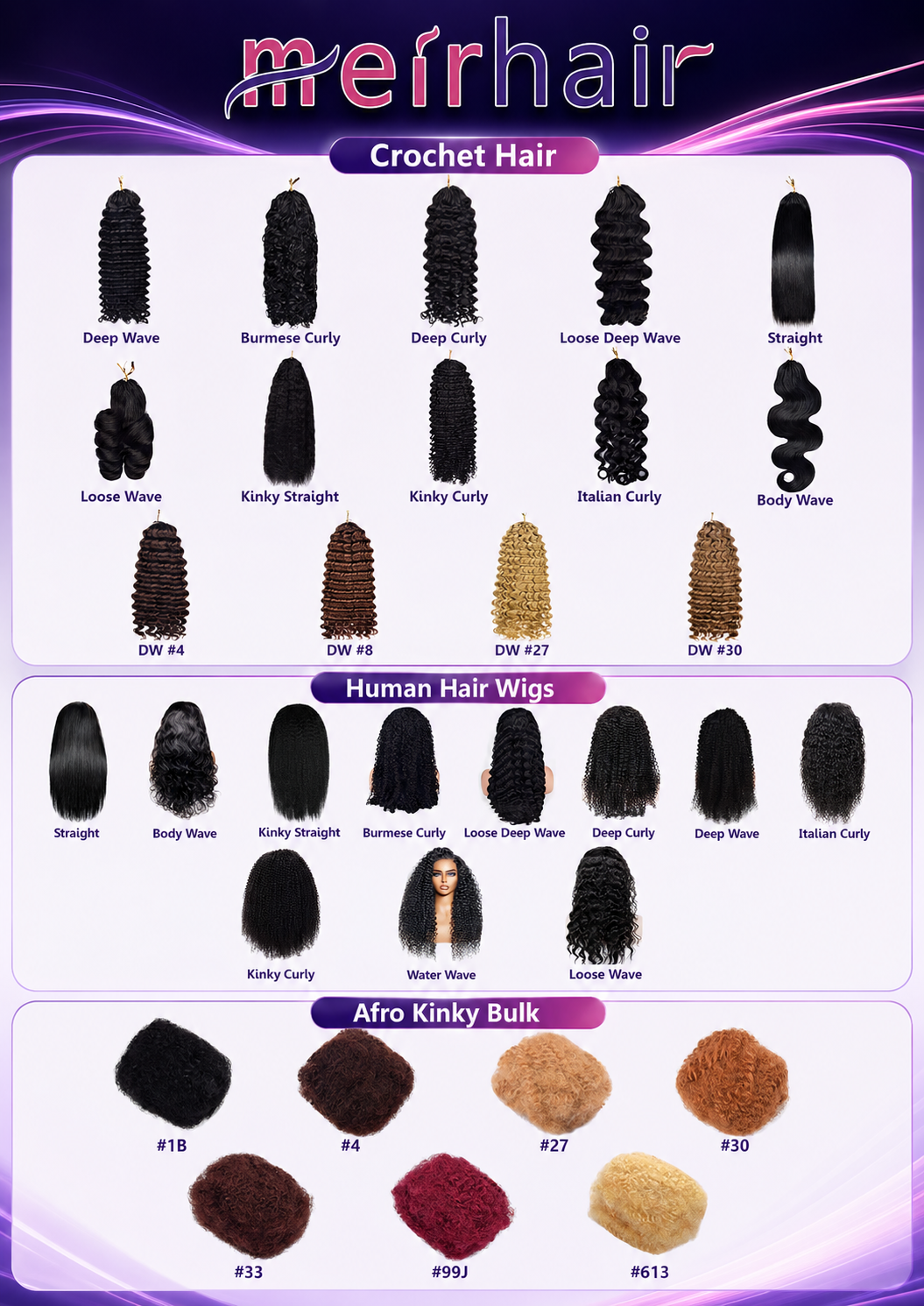
Sample prototypes are typically crafted from single-donor, premium-selected 100% human hair. This ensures identical cuticle alignment, natural elasticity, and uniform porosity. For large commercial runs, factories pool raw hair from multiple sources to meet volume targets. Even when using authentic human hair, slight differences in strand porosity alter how individual bundles absorb standard shades such as #1B, #27, #30, or #99J, as well as how they react to thermal styling.
2. Thermal Steam Texturing at Scale
Forming popular patterns like Deep Curly, Water Wave, or Kinky Straight requires thermal moisture processing. Individual samples receive equal heat distribution across steel rods. However, when hundreds of hair bundles (ranging from 8 to 40 inches) are packed into industrial autoclaves, subtle temperature gradients between the chamber core and outer edges can produce minor variations in curl definition and sheen across the batch.
3. Mechanical Stress and Post-Processing Finishing
Creating prototype extensions involves manual double-weft sewing, individual hand-combing, and tailored sealing techniques that minimize shedding. Mass manufacturing utilizes automated equipment designed for high-speed throughput serving salons, distributors, and online retailers. Rapid mechanical handling and bulk washing cycles can temporarily deplete surface moisture, making mass-produced hair feel less silky until proper conditioning is reapplied.

Comparative Analysis: Prototypes vs. Bulk Orders
| Workflow Phase | Sample Prototype Standard | Bulk Production Run |
|---|---|---|
| Hair Sourcing | Hand-picked single-donor 100% human hair | Multi-donor inspected raw hair batches |
| Curl Formation | Single-unit precision steam treatment | High-volume industrial autoclave steaming |
| Color Processing | Individual hand dyeing & controlled rinsing | Batch vat dyeing with standardized rinse cycles |
| Quality Inspection | 100% continuous manual oversight | Systematic pre-shipment multi-point QC |
| Minimum Order Quantity (MOQ) | 1 piece testing unit | Scalable bulk order quantities |
| Production Lead Time | 7 Days (Standard sample turnaround) | 15–30 Days (Varies by quantity and style) |
Frequently Asked Questions
Why do initial sample extensions feel softer than full production shipments?
Samples undergo individualized deep-conditioning and manual grooming before shipment. Mass production batches go through fast industrial drying cycles, which temporarily reduce surface moisture until standard post-factory hair conditioning is performed.
How can hair brands maintain quality consistency between samples and mass orders?
Brands should collaborate with factories that implement strict pre-shipment protocols—verifying cuticle alignment, length, strand density, weight, and shade matching across every manufacturing run.
Can bulk-manufactured crochet extensions be colored and heat-styled like sample units?
Yes. As long as the production extensions are crafted from authentic 100% human hair, they preserve the structural ability to be bleached, dyed, and thermally restyled across all textures from Straight to Afro Curly.
Actionable Steps for Sourcing Consistency
To reduce the quality gap between approved samples and bulk orders, procurement teams must implement clear technical specifications and standard operating procedures. Utilizing OEM/ODM customization frameworks, conducting pre-shipment inspections, and placing small trial runs prior to large procurement orders protect brand standards across global distribution channels. For specialized manufacturing inquiries or technical assistance, contact our team at sales@brazilianhairtop.com.
About Us
Guangzhou Ruiju E-Commerce Co., Ltd. operates the professional human hair brand meirhair, specializing in human hair wigs, hair bundles, lace closures, frontals, and customized hair extension systems for global beauty markets. Established in 2014, the company operates a 5000 sqm factory facility and maintains strong product development and customization capabilities for hair textures, lengths, colors, and cap constructions. Serving clients across global markets including North America, Europe, Africa, and the Middle East, the enterprise delivers reliable OEM/ODM manufacturing, private label branding, and bulk wholesale supply. 
REPORT