







-
 Agriculture
-
 Health-Care
-
 Environment
-
 Construction-Real-Estate
-
 Tools-Hardware
-
 Home-Garden
-
 Furniture
-
 Luggage-Bags-Cases
-
 Medical-devices-Supplies
-
 Gifts-Crafts
-
 Sports-Entertainment
-
 Food-Beverage
-
 Vehicles-Transportation
-
 Power-Transmission
-
 Material-Handling
-
 Renewable-Energy
-
 Safety
-
 Testing-Instrument-Equipment
-
 Construction-Building-Machinery
-
 Pet-Supplies
-
 Personal-Care-Household-Cleaning
-
 Vehicle-Accessories-Electronics-Tools
-
 School-Office-Supplies
-
 Packaging-Printing
-
 Mother-Kids-Toys
-
 Business-Services
-
 Commercial-Equipment-Machinery
-
 Apparel-Accessories
-
 Security
-
 Shoes-Accessories
-
 Vehicle-Parts-Accessories
-
 Jewelry-Eyewear-Watches-Accessories
-
 Lights-Lighting
-
 Fabric-Textile-Raw-Material
-
 Fabrication-Services
-
 Industrial-Machinery
-
 Consumer-Electronics
-
 Electrical-Equipment-Supplies
-
 Electronic-Components-Accessories-Telecommunications
-
 Home-Appliances
-
 Beauty
-
 Chemicals
-
 Rubber-Plastics
-
 Metals-Alloys


























































































































































































































































































































































































































































































































































































- Masonry Materials
- Curtain Walls & Accessories
- Earthwork Products
- Fireproofing Materials
- Heat Insulation Materials
- Plastic Building Materials
- Building Boards
- Soundproofing Materials
- Timber
- Waterproofing Materials
- Balustrades & Handrails
- Bathroom & Kitchen
- Flooring & Accessories
- Tiles & Accessories
- Door, Window & Accessories
- Fireplaces & Stoves
- Floor Heating Systems & Parts
- Stairs & Stair Parts
- Ceilings
- Elevators & Escalators
- Stone
- Countertops, Vanity Tops & Table Tops
- Mosaics
- Metal Building Materials
- Multifunctional Materials
- Ladders & Scaffoldings
- Mouldings
- Corner Guards
- Decorative Films
- Formwork
- Building & Industrial Glass
- Other Construction & Real Estate
- Wallpapers/Wall panels
- HVAC System & Parts
- Outdoor Facilities
- Prefabricated Buildings
- Festive & Party Supplies
- Bathroom Products
- Household Sundries
- Rain Gear
- Garden Supplies
- Household Cleaning Tools & Accessories
- Lighters & Smoking Accessories
- Home Storage & Organization
- Household Scales
- Smart Home Improvement
- Home Textiles
- Kitchenware
- Drinkware & Accessories
- Dinnerware, Coffee & Wine
- Home Decor
- Golf
- Fitness & Body Building
- Amusement Park Facilities
- Billiards, Board Game,Coin Operated Games
- Musical Instruments
- Outdoor Affordable Luxury Sports
- Camping & Hiking
- Fishing
- Sports Safety&Rehabilitation
- Ball Sports Equipments
- Water Sports
- Winter Sports
- Luxury Travel Equipments
- Sports Shoes, Bags & Accessories
- Cycling
- Other Sports & Entertainment Products
- Artificial Grass&Sports Flooring&Sports Court Equipment
- Scooters
- Food Ingredients
- Honey & Honey Products
- Snacks
- Nuts & Kernels
- Seafood
- Plant & Animal Oil
- Beverages
- Fruit & Vegetable Products
- Frog & Escargot
- Bean Products
- Egg Products
- Dairy Products
- Seasonings & Condiments
- Canned Food
- Instant Food
- Baked Goods
- Other Food & Beverage
- Meat & Poultry
- Confectionery
- Grain Products
- Feminie Care
- Hair Care & Styling
- Body Care
- Hands & Feet Care
- Hygiene Products
- Men's Grooming
- Laundry Cleaning Supplies
- Travel Size & Gift Sets
- Room Deodorizers
- Other Personal Care Products
- Pest Control Products
- Special Household Cleaning
- Floor Cleaning
- Kitchen & Bathroom Cleaning
- Oral Care
- Bath Supplies
- Yellow Pages
- Correction Supplies
- Office Binding Supplies
- Office Cutting Supplies
- Board Erasers
- Office Adhesives & Tapes
- Education Supplies
- Pencil Cases & Bags
- Notebooks & Writing Pads
- File Folder Accessories
- Calendars
- Writing Accessories
- Commercial Office Supplies
- Pencil Sharpeners
- Pens
- Letter Pad/Paper
- Paper Envelopes
- Desk Organizers
- Pencils
- Markers & Highlighters
- Filing Products
- Art Supplies
- Easels
- Badge Holder & Accessories
- Office Paper
- Printer Supplies
- Book Covers
- Other Office & School Supplies
- Stationery Set
- Boards
- Clipboards
- Stamps
- Drafting Supplies
- Stencils
- Electronic Dictionary
- Books
- Map
- Magazines
- Calculators
- Baby & Toddler Toys
- Educational Toys
- Classic Toys
- Dress Up & Pretend Play
- Toy Vehicle
- Stuffed Animals & Plush Toys
- Outdoor Toys & Structures
- Balloons & Accessories
- Baby Food
- Children's Clothing
- Baby Supplies & Products
- Maternity Clothes
- Kids Shoes
- Baby Care
- Novelty & Gag Toys
- Dolls & Accessories
- Puzzle & Games
- Blocks & Model Building Toys
- Toddler Clothing
- Baby Clothing
- Kids' Luggage & Bags
- Arts, Crafts & DIY Toys
- Action & Toy Figures
- Baby Appliances
- Hobbies & Models
- Remote Control Toys
- Promotional Toys
- Pregnancy & Maternity
- Hygiene Products
- Kid's Textile&Bedding
- Novelty & Special Use
- Toy Weapons
- Baby Gifts
- Baby Storage & Organization
- Auto Drive Systems
- ATV/UTV Parts & Accessories
- Marine Parts & Accessories
- Other Auto Parts
- Trailer Parts & Accessories
- Auto Transmission Systems
- Train Parts & Accessories
- Universal Parts
- Railway Parts & Accessories
- Auto Brake Systems
- Aviation Parts & Accessories
- Truck Parts & Accessories
- Auto Suspension Systems
- Auto Lighting Systems
- New Energy Vehicle Parts & Accessories
- Auto Steering Systems
- Wheels, Tires & Accessories
- Bus Parts & Accessories
- Auto Performance Parts
- Cooling System
- Go-Kart & Kart Racer Parts & Accessories
- Air Conditioning Systems
- Heavy Duty Vehicle Parts & Accessories
- Auto Electrical Systems
- Auto Body Systems
- Auto Engine Systems
- Container Parts & Accessories
- Motorcycle Parts & Accessories
- Refrigeration & Heat Exchange Equipment
- Machine Tool Equipment
- Food & Beverage Machinery
- Agricultural Machinery & Equipment
- Apparel & Textile Machinery
- Chemical Machinery
- Packaging Machines
- Paper Production Machinery
- Plastic & Rubber Processing Machinery
- Industrial Robots
- Electronic Products Machinery
- Metal & Metallurgy Machinery
- Woodworking Machinery
- Home Product Manufacturing Machinery
- Machinery Accessories
- Environmental Machinery
- Machinery Service
- Electrical Equipment Manufacturing Machinery
- Industrial Compressors & Parts
- Tobacco & Cigarette Machinery
- Production Line
- Used Industrial Machinery
- Electronics Production Machinery
- Other Machinery & Industrial Equipment
- Camera, Photo & Accessories
- Portable Audio, Video & Accessories
- Television, Home Audio, Video & Accessories
- Video Games & Accessories
- Mobile Phone & Accessories
- Electronic Publications
- Earphone & Headphone & Accessories
- Speakers & Accessories
- Smart Electronics
- TV Receivers & Accessories
- Mobile Phone & Computer Repair Parts
- Chargers, Batteries & Power Supplies
- Used Electronics
- VR, AR, MR Hardware & Software
- Projectors & Presentation Equipments
- Other Consumer Electronics
- Cables & Commonly Used Accessories
- Computer Hardware & Software
- Displays, Signage and Optoelectronics
- Discrete Semiconductors
- Wireless & IoT Module and Products
- Telecommunications
- Connectors, Terminals & Accessories
- Development Boards, Electronic Modules and Kits
- Circuit Protection
- Sensors
- Isolators
- Audio Components and Products
- Integrated Circuits
- Power Supplies
- Relays
- RF, Microwave and RFID
- Electronic Accessories & Supplies
- Passive Components
- PCB & PCBA
- Air Quality Appliances
- Home Appliance Parts
- Heating & Cooling Appliances
- Small Kitchen Appliances
- Laundry Appliances
- Water Heaters
- Water Treatment Appliances
- Refrigerators & Freezers
- Personal Care & Beauty Appliances
- Major Kitchen Appliances
- Cleaning Appliances
- Second-hand Appliances
- Smart Home Appliances
- Other Home Appliances
- Energy Chemicals
- Inorganic Chemicals
- Basic Organic Chemicals
- Agrochemicals
- Admixture & Additives
- Catalysts & Chemical Auxiliary Agents
- Pigments & Dyestuff
- Coating & Paint
- Daily Chemicals
- Polymer
- Organic Intermediate
- Adhesives & Sealants
- Chemical Waste
- Biological Chemical Products
- Surface Treatment Chemicals
- Painting & Coating
- Chemical Reagents
- Flavor & Fragrance
- Non-Explosive Demolition Agents
- Other Chemicals
- Custom Chemical Services

Diagnosing Four-Color Shuttle Printer Misregistration: Key Diagnostic Tests and High-Precision Optical Solutions
Understanding Registration Challenges in Multi-Color Shuttle Screen Printing
Achieving flawless alignment across sequential color passes is one of the most critical challenges in multi-color screen printing. On four-color shuttle printers, even microscopic physical movement can produce noticeable color-to-color misalignment. Factors such as mechanical shuttle play, squeegee pressure fluctuations, structural flexing, and substrate thermal shrinkage frequently induce registration drift along the X and Y axes as well as rotational angular skew.
Essential Sample Tests for Detecting Registration Errors
To systematically identify mechanical wear and optical tracking failures, quality control engineers utilize specific evaluation target patterns:
- Multi-Pass Crosshair Target Test: Measures station-to-station indexing repeatability and highlights linear positioning offsets across each sequential color pass.
- Step-and-Repeat Grid Pattern Test: Exposes rotational skew and angular deflection caused by worn shuttle carriage linear guides or loose screen frame mounts during rapid acceleration and deceleration cycles.
- Full-Bleed Overlay Stress Runs: Evaluates long-term structural stability over continuous operational runs to detect mechanical backlash and frame tension loss under friction.
- Optical Cursor Tracking Verification: Checks sensor response latency and contrast recognition accuracy when processing irregular or textured material surfaces.
Overcoming Misalignment: The SCL-400SF Optical Cursor Solution
To eliminate mechanical positioning drift inherent in manual indexing, modern industrial printing operations integrate advanced optoelectronic alignment technologies. The SCL-400SF fully automatic cursor positioning screen printing machine, manufactured by Dongguan Shichuangli Zhihui Technology Co., Ltd., addresses registration variance by performing real-time optical cursor alignment before every color deposition step.
Equipped with a maximum print area of 380 x 300 mm and a 500 x 300 mm workbench, the system offers a 100 mm horizontal and vertical precision tuning range to continuously recalibrate substrate alignment relative to the overhead mesh frame.
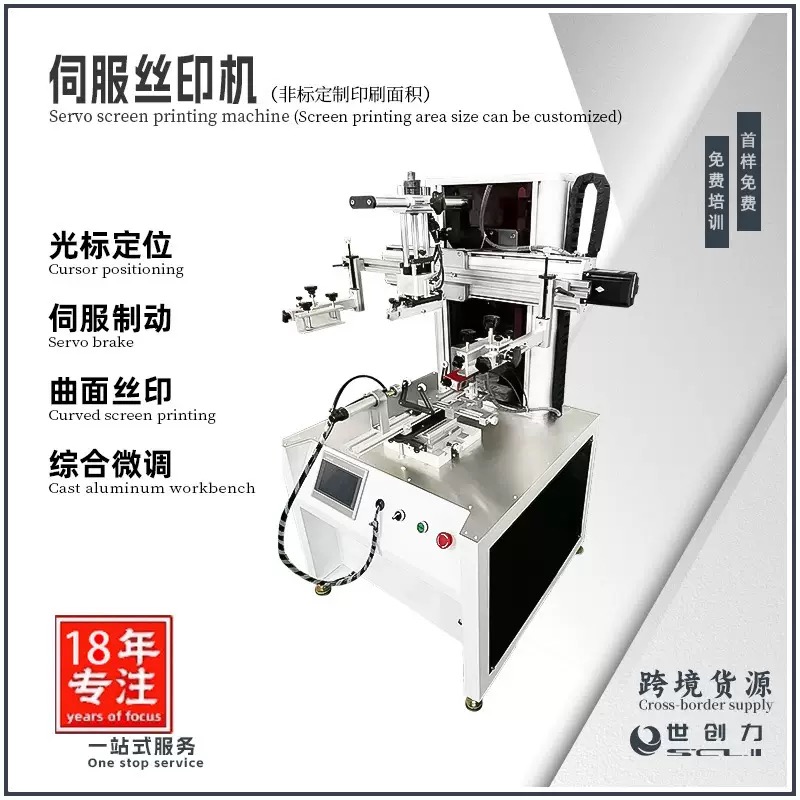
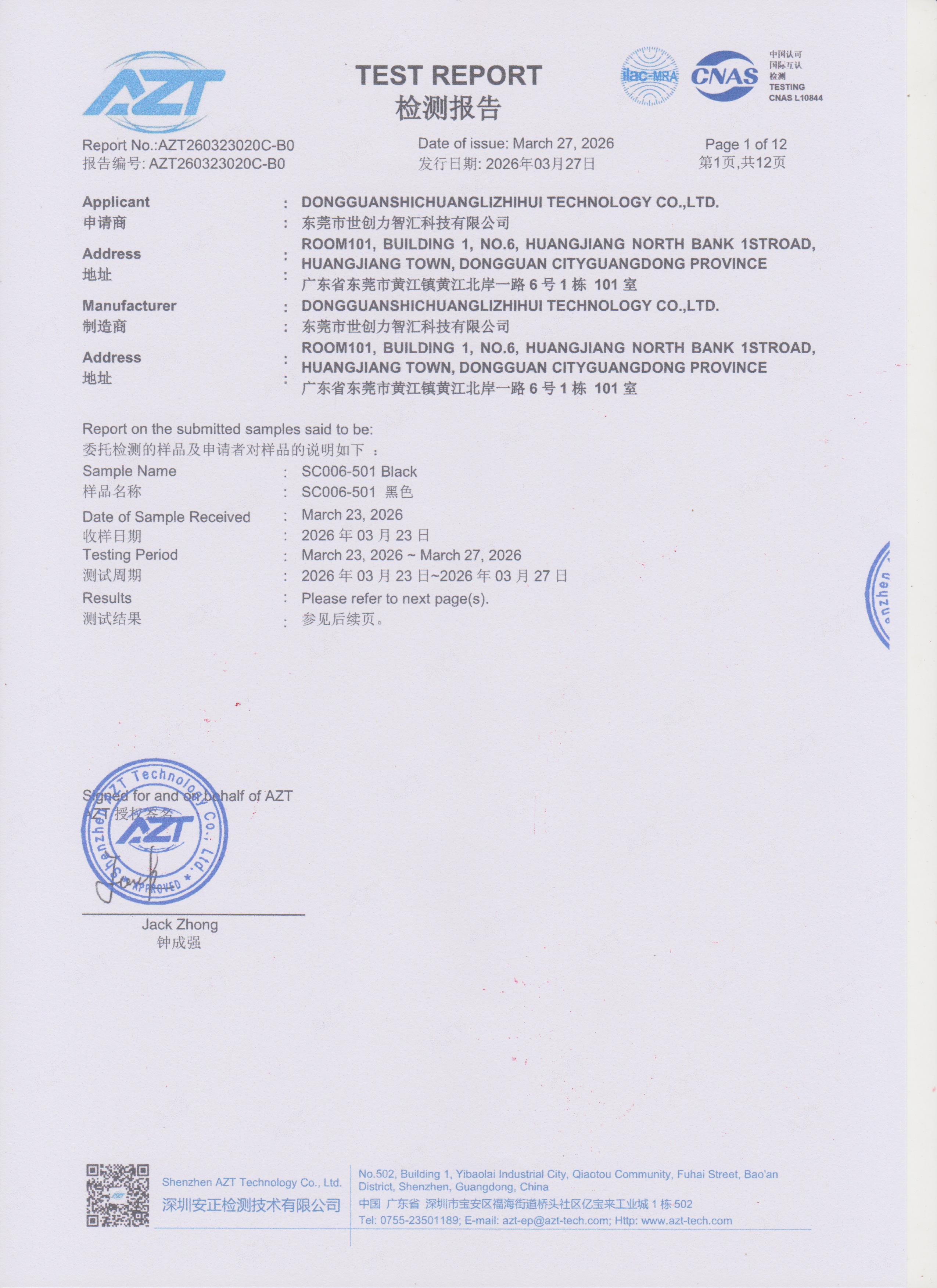
Engineered under rigid quality management protocols, the equipment complies with CNAS testing standards (certificate AZT260323020C-B0). Its heavy-duty architecture accommodates screen frames up to 600 x 400 mm, while utility model patent innovations (patent number 202521984351.0) provide dedicated mechanical frame reinforcement that counteracts flex under high squeegee loads.
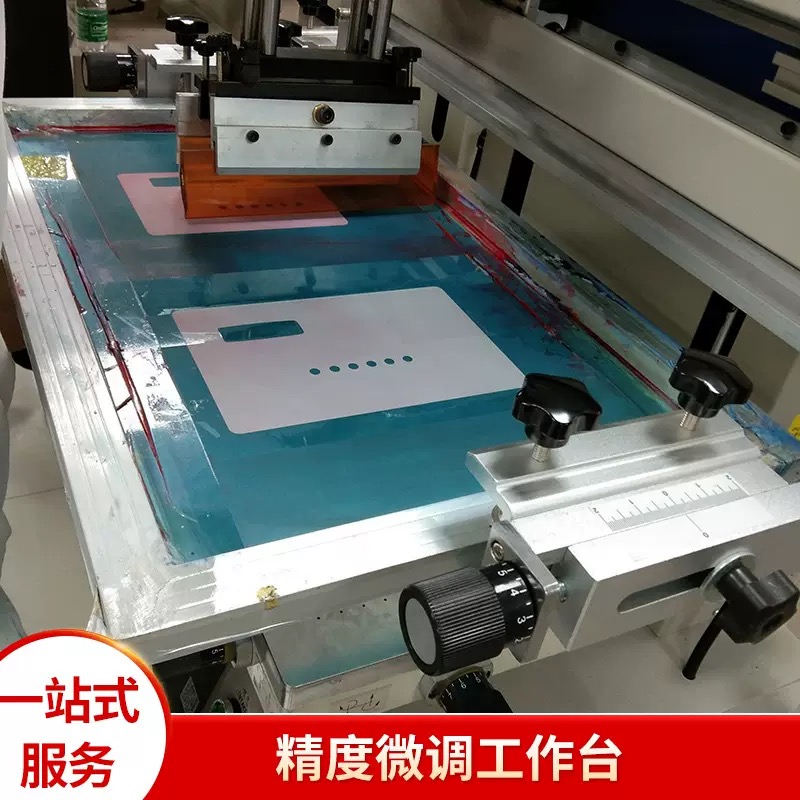
Industrial Applications and Practical Case Performance
Automated cursor registration solves multi-color alignment issues across demanding sectors, including 3C electronics panels, cosmetics container packaging, automotive interior trim emblems, and apparel accessories.
In a notable field implementation, a commercial product distributor supplying luxury hotel venues in Saudi Arabia deployed automated cursor-positioning screen printing equipment to customize high-end glass bottles, bath amenity containers, and linen tags. Replacing conventional manual shuttle indexing with optical registration reduced color-to-color alignment variance to below 0.05 mm across multi-material substrates, including glass, wood, plastic, and metal.
Performance Breakdown: Conventional vs. Optical Cursor Printing
| Evaluation Parameter | Conventional Mechanical Shuttle Printer | SCL-400SF Cursor Positioning Printer |
|---|---|---|
| Alignment Mechanism | Mechanical stop pins & manual jigs | Automated optical cursor identification |
| Registration Tolerance | ±0.25 mm to ±0.50 mm | ±0.02 mm to ±0.05 mm |
| Substrate Surface Adaptability | Flat rigid items only | Flat and round surfaces (metal, film, plastic, glass) |
| Multi-Color Setup Time | 45 - 90 minutes per job | 10 - 15 minutes automated calibration |
| Workbench Adjustment Range | Manual screw adjustment (limited) | 100 mm horizontal and vertical precision tuning |
| Maximum Print Area | Variable / Unregulated | 380 x 300 mm |
Frequently Asked Questions (FAQ)
How does optical cursor positioning correct multi-color registration errors?
Optical cursor positioning sensors scan pre-printed target marks on the substrate before each printing stroke. The control unit processes offset metrics and automatically adjusts the multi-axis workbench within a 100 mm range to achieve exact alignment with the screen mesh.
Which sample test best detects rotational misregistration on shuttle systems?
The full-bed step-and-repeat grid test effectively highlights rotational misregistration. Corner grid patterns display angular deflection caused by worn shuttle linear guides, loose frame clamps, or unbalanced squeegee pressure distribution.
What physical mechanical factors cause registration drift during long production runs?
Continuous production registration drift is typically driven by vibration-induced loosening of worktable lock screws, thermal expansion of screen frames during rapid friction cycles, squeegee blade edge wear, or worn drive belt teeth in the shuttle travel mechanism.
Logistics, Support & Corporate Profile
Standard equipment models ship within 48 hours, while specialized non-standard automated configurations deliver within one month. Shipments are secured in reinforced wooden packaging across FBA sea, air, and land logistics channels, backed by a two-year main product warranty and lifetime maintenance support. For technical consultations, contact support@shichuanglimachine.com.
Established in 2008, Dongguan Shichuangli Zhihui Technology Co., Ltd. operates a 1,600-square-meter manufacturing facility and training center supported by a 20-person professional R&D design team and 150 employees. Leveraging 18 years of industrial equipment manufacturing experience, the company maintains an annual output capacity of 300 units and exports to over 100 countries and regions worldwide, serving over 15,000 industrial clients.

REPORT