







-
 Agriculture
-
 Health-Care
-
 Environment
-
 Construction-Real-Estate
-
 Tools-Hardware
-
 Home-Garden
-
 Furniture
-
 Luggage-Bags-Cases
-
 Medical-devices-Supplies
-
 Gifts-Crafts
-
 Sports-Entertainment
-
 Food-Beverage
-
 Vehicles-Transportation
-
 Power-Transmission
-
 Material-Handling
-
 Renewable-Energy
-
 Safety
-
 Testing-Instrument-Equipment
-
 Construction-Building-Machinery
-
 Pet-Supplies
-
 Personal-Care-Household-Cleaning
-
 Vehicle-Accessories-Electronics-Tools
-
 School-Office-Supplies
-
 Packaging-Printing
-
 Mother-Kids-Toys
-
 Business-Services
-
 Commercial-Equipment-Machinery
-
 Apparel-Accessories
-
 Security
-
 Shoes-Accessories
-
 Vehicle-Parts-Accessories
-
 Jewelry-Eyewear-Watches-Accessories
-
 Lights-Lighting
-
 Fabric-Textile-Raw-Material
-
 Fabrication-Services
-
 Industrial-Machinery
-
 Consumer-Electronics
-
 Electrical-Equipment-Supplies
-
 Electronic-Components-Accessories-Telecommunications
-
 Home-Appliances
-
 Beauty
-
 Chemicals
-
 Rubber-Plastics
-
 Metals-Alloys


























































































































































































































































































































































































































































































































































































- Masonry Materials
- Curtain Walls & Accessories
- Earthwork Products
- Fireproofing Materials
- Heat Insulation Materials
- Plastic Building Materials
- Building Boards
- Soundproofing Materials
- Timber
- Waterproofing Materials
- Balustrades & Handrails
- Bathroom & Kitchen
- Flooring & Accessories
- Tiles & Accessories
- Door, Window & Accessories
- Fireplaces & Stoves
- Floor Heating Systems & Parts
- Stairs & Stair Parts
- Ceilings
- Elevators & Escalators
- Stone
- Countertops, Vanity Tops & Table Tops
- Mosaics
- Metal Building Materials
- Multifunctional Materials
- Ladders & Scaffoldings
- Mouldings
- Corner Guards
- Decorative Films
- Formwork
- Building & Industrial Glass
- Other Construction & Real Estate
- Wallpapers/Wall panels
- HVAC System & Parts
- Outdoor Facilities
- Prefabricated Buildings
- Festive & Party Supplies
- Bathroom Products
- Household Sundries
- Rain Gear
- Garden Supplies
- Household Cleaning Tools & Accessories
- Lighters & Smoking Accessories
- Home Storage & Organization
- Household Scales
- Smart Home Improvement
- Home Textiles
- Kitchenware
- Drinkware & Accessories
- Dinnerware, Coffee & Wine
- Home Decor
- Golf
- Fitness & Body Building
- Amusement Park Facilities
- Billiards, Board Game,Coin Operated Games
- Musical Instruments
- Outdoor Affordable Luxury Sports
- Camping & Hiking
- Fishing
- Sports Safety&Rehabilitation
- Ball Sports Equipments
- Water Sports
- Winter Sports
- Luxury Travel Equipments
- Sports Shoes, Bags & Accessories
- Cycling
- Other Sports & Entertainment Products
- Artificial Grass&Sports Flooring&Sports Court Equipment
- Scooters
- Food Ingredients
- Honey & Honey Products
- Snacks
- Nuts & Kernels
- Seafood
- Plant & Animal Oil
- Beverages
- Fruit & Vegetable Products
- Frog & Escargot
- Bean Products
- Egg Products
- Dairy Products
- Seasonings & Condiments
- Canned Food
- Instant Food
- Baked Goods
- Other Food & Beverage
- Meat & Poultry
- Confectionery
- Grain Products
- Feminie Care
- Hair Care & Styling
- Body Care
- Hands & Feet Care
- Hygiene Products
- Men's Grooming
- Laundry Cleaning Supplies
- Travel Size & Gift Sets
- Room Deodorizers
- Other Personal Care Products
- Pest Control Products
- Special Household Cleaning
- Floor Cleaning
- Kitchen & Bathroom Cleaning
- Oral Care
- Bath Supplies
- Yellow Pages
- Correction Supplies
- Office Binding Supplies
- Office Cutting Supplies
- Board Erasers
- Office Adhesives & Tapes
- Education Supplies
- Pencil Cases & Bags
- Notebooks & Writing Pads
- File Folder Accessories
- Calendars
- Writing Accessories
- Commercial Office Supplies
- Pencil Sharpeners
- Pens
- Letter Pad/Paper
- Paper Envelopes
- Desk Organizers
- Pencils
- Markers & Highlighters
- Filing Products
- Art Supplies
- Easels
- Badge Holder & Accessories
- Office Paper
- Printer Supplies
- Book Covers
- Other Office & School Supplies
- Stationery Set
- Boards
- Clipboards
- Stamps
- Drafting Supplies
- Stencils
- Electronic Dictionary
- Books
- Map
- Magazines
- Calculators
- Baby & Toddler Toys
- Educational Toys
- Classic Toys
- Dress Up & Pretend Play
- Toy Vehicle
- Stuffed Animals & Plush Toys
- Outdoor Toys & Structures
- Balloons & Accessories
- Baby Food
- Children's Clothing
- Baby Supplies & Products
- Maternity Clothes
- Kids Shoes
- Baby Care
- Novelty & Gag Toys
- Dolls & Accessories
- Puzzle & Games
- Blocks & Model Building Toys
- Toddler Clothing
- Baby Clothing
- Kids' Luggage & Bags
- Arts, Crafts & DIY Toys
- Action & Toy Figures
- Baby Appliances
- Hobbies & Models
- Remote Control Toys
- Promotional Toys
- Pregnancy & Maternity
- Hygiene Products
- Kid's Textile&Bedding
- Novelty & Special Use
- Toy Weapons
- Baby Gifts
- Baby Storage & Organization
- Auto Drive Systems
- ATV/UTV Parts & Accessories
- Marine Parts & Accessories
- Other Auto Parts
- Trailer Parts & Accessories
- Auto Transmission Systems
- Train Parts & Accessories
- Universal Parts
- Railway Parts & Accessories
- Auto Brake Systems
- Aviation Parts & Accessories
- Truck Parts & Accessories
- Auto Suspension Systems
- Auto Lighting Systems
- New Energy Vehicle Parts & Accessories
- Auto Steering Systems
- Wheels, Tires & Accessories
- Bus Parts & Accessories
- Auto Performance Parts
- Cooling System
- Go-Kart & Kart Racer Parts & Accessories
- Air Conditioning Systems
- Heavy Duty Vehicle Parts & Accessories
- Auto Electrical Systems
- Auto Body Systems
- Auto Engine Systems
- Container Parts & Accessories
- Motorcycle Parts & Accessories
- Refrigeration & Heat Exchange Equipment
- Machine Tool Equipment
- Food & Beverage Machinery
- Agricultural Machinery & Equipment
- Apparel & Textile Machinery
- Chemical Machinery
- Packaging Machines
- Paper Production Machinery
- Plastic & Rubber Processing Machinery
- Industrial Robots
- Electronic Products Machinery
- Metal & Metallurgy Machinery
- Woodworking Machinery
- Home Product Manufacturing Machinery
- Machinery Accessories
- Environmental Machinery
- Machinery Service
- Electrical Equipment Manufacturing Machinery
- Industrial Compressors & Parts
- Tobacco & Cigarette Machinery
- Production Line
- Used Industrial Machinery
- Electronics Production Machinery
- Other Machinery & Industrial Equipment
- Camera, Photo & Accessories
- Portable Audio, Video & Accessories
- Television, Home Audio, Video & Accessories
- Video Games & Accessories
- Mobile Phone & Accessories
- Electronic Publications
- Earphone & Headphone & Accessories
- Speakers & Accessories
- Smart Electronics
- TV Receivers & Accessories
- Mobile Phone & Computer Repair Parts
- Chargers, Batteries & Power Supplies
- Used Electronics
- VR, AR, MR Hardware & Software
- Projectors & Presentation Equipments
- Other Consumer Electronics
- Cables & Commonly Used Accessories
- Computer Hardware & Software
- Displays, Signage and Optoelectronics
- Discrete Semiconductors
- Wireless & IoT Module and Products
- Telecommunications
- Connectors, Terminals & Accessories
- Development Boards, Electronic Modules and Kits
- Circuit Protection
- Sensors
- Isolators
- Audio Components and Products
- Integrated Circuits
- Power Supplies
- Relays
- RF, Microwave and RFID
- Electronic Accessories & Supplies
- Passive Components
- PCB & PCBA
- Air Quality Appliances
- Home Appliance Parts
- Heating & Cooling Appliances
- Small Kitchen Appliances
- Laundry Appliances
- Water Heaters
- Water Treatment Appliances
- Refrigerators & Freezers
- Personal Care & Beauty Appliances
- Major Kitchen Appliances
- Cleaning Appliances
- Second-hand Appliances
- Smart Home Appliances
- Other Home Appliances
- Energy Chemicals
- Inorganic Chemicals
- Basic Organic Chemicals
- Agrochemicals
- Admixture & Additives
- Catalysts & Chemical Auxiliary Agents
- Pigments & Dyestuff
- Coating & Paint
- Daily Chemicals
- Polymer
- Organic Intermediate
- Adhesives & Sealants
- Chemical Waste
- Biological Chemical Products
- Surface Treatment Chemicals
- Painting & Coating
- Chemical Reagents
- Flavor & Fragrance
- Non-Explosive Demolition Agents
- Other Chemicals
- Custom Chemical Services

Guide to Street-Legal Electric Mini Trucks: Registration & Compliance Standards
Navigating Road Legality for Electric Utility Mini Trucks
Getting a mini truck approved for street registration depends on strict alignment with regional motor vehicle codes and low-speed electric vehicle (LSV) safety mandates. To qualify for public highways or city streets, vehicles must present verified compliance proof covering braking efficiency, structural durability, and certified lighting configurations. Establishing eligibility begins with confirming the vehicle's engineering standards against local highway safety laws.
Crucial Documentation Needed for Vehicle Registration
Local licensing agencies mandate detailed paperwork to confirm that an electric mini truck meets public safety and environmental rules. The standard compliance dossier includes:
- Manufacturer Certificate of Origin (MCO): Establishes official factory ownership history and origin details.
- Certificate of Conformity (COC): Validates that the individual unit conforms directly to baseline regional vehicle standards.
- Unique VIN Code Assignment: Ensures distinct vehicle identification for license and insurance registration.
- Certified Inspection Records: Validates factory physical road tests, chassis durability, and braking performance.
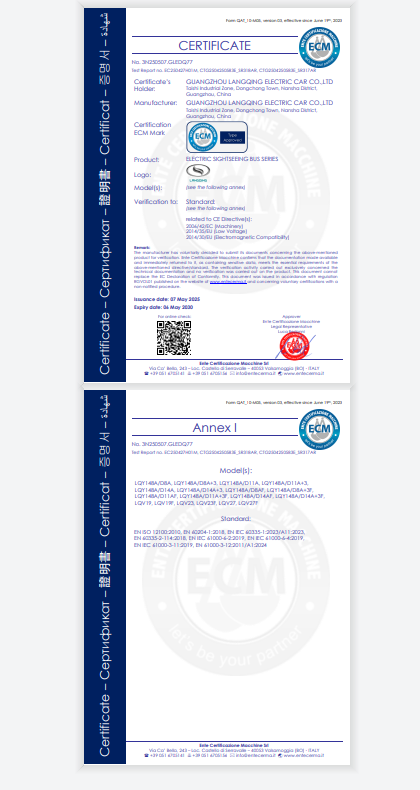
- International Certifications: EU CE marks (such as 3N250506.GLEDQ43, 3N250507.GLEDQ77, and 3N250507.GLEDQ78) verifying adherence to recognized safety standards.
Engineering Integrity & Safety System Inspection Requirements
Road registration involves a comprehensive inspection of structural and mechanical sub-systems. Industry leaders such as Guangzhou Langqing Electric Car CO., LTD. design electric utility platforms with heavy-duty electrophoretic metal frames and independent suspension systems, engineered specifically for load stability and dynamic handling.
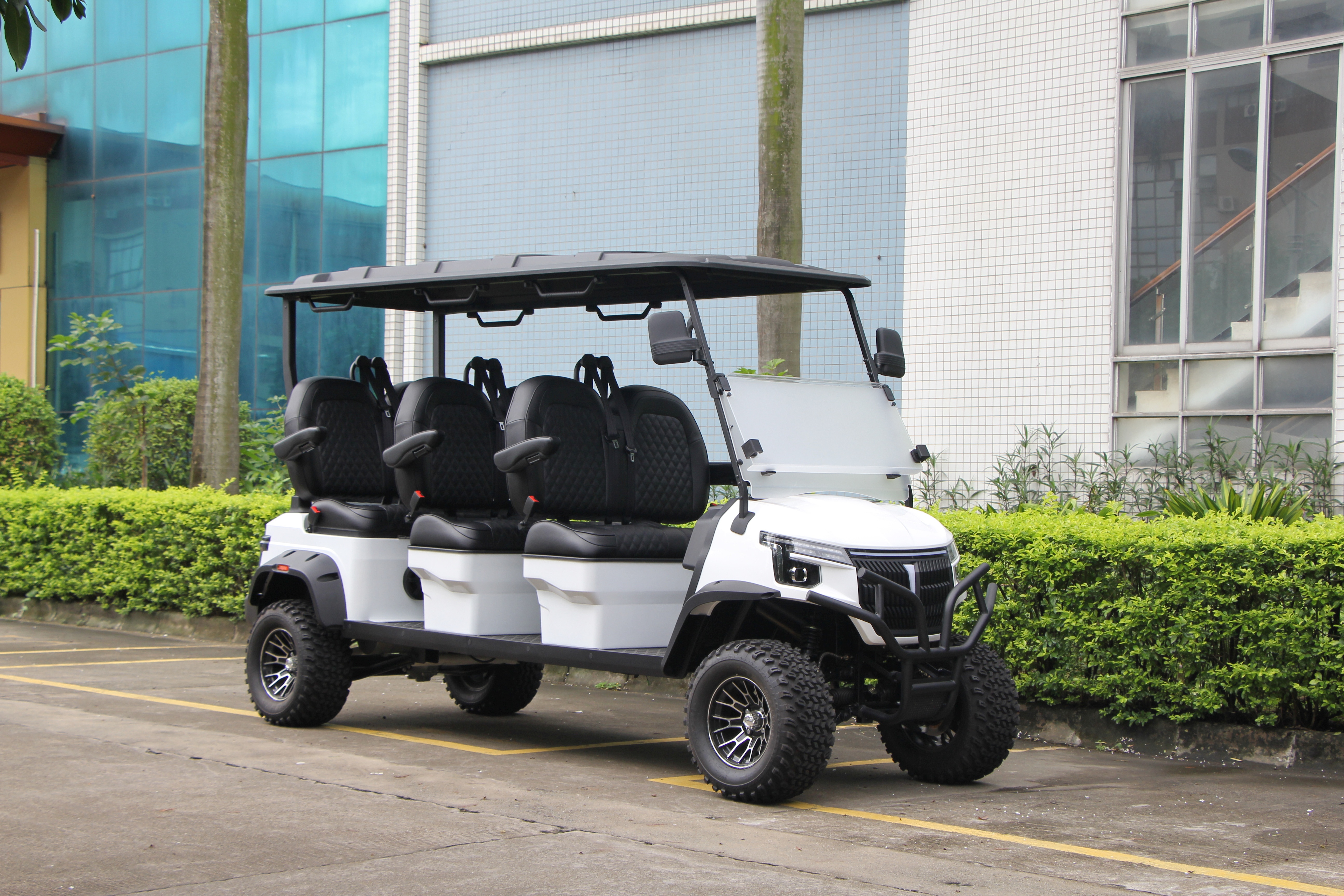
During safety verification, authorities examine critical hardware features:
- Braking Performance: Reliable hydraulic disc brake setups for responsive stopping power under full load conditions.
- Visibility & Signaling: Full front/rear headlights, turn signals, hazard lights, and side mirrors.
- Cabin Ergonomics: Non-slip diamond-pattern rubber flooring paired with standard three-point seat belts.
- Quality Control Protocols: 100% assembly line testing and end-of-line physical road tests (as conducted on platforms like the LQD065 utility chassis) prior to dispatch.
Commercial Applications and Practical Deployment
Fully compliant electric mini trucks offer zero-emission transport solutions for municipal agencies and enterprise operations. Successful international projects confirm their versatility—including 156 sanitation utility trucks delivered for municipal waste management in Singapore and over 3,500 passenger and utility units operating in Cuba. These large-scale fleets demonstrate how proper certification enables seamless integration into municipal logistics, private resorts, and commercial properties.
Comparison: Street-Legal vs. Off-Road Utility Platforms
| Evaluation Metric | Road-Legal Mini Truck | Closed-Site / Off-Road Utility Vehicle |
|---|---|---|
| Regulatory Approvals | CE Certification, Official VIN, MCO & COC Paperwork | Internal Factory QC Document Only |
| Safety Systems | Hydraulic Disc Brakes, Full LED Lighting, Mirrors & Seat Belts | Standard Mechanical Brakes, Basic Lighting |
| Speed Limits | Strictly Regulated LSV / Street-Speed Boundaries | Unrestricted or Factory-Preset Internal Speed Limits |
| Testing Rigor | 100% Assembly Line Verification + Dynamic Road Test | Standard Pre-Shipment Quality Check |
| Deployment Environment | City Streets, Municipal Sanitation, Urban Logistics | Gated Resorts, Industrial Warehouses, Golf Courses |
Frequently Asked Questions
What initial paperwork do I need to register a mini truck?
You must present the original Manufacturer Certificate of Origin (MCO), Certificate of Conformity (COC), technical spec sheets, sales receipt, and local vehicle safety inspection certificates.
Can any off-road electric utility vehicle be registered for street use?
No. Basic off-road carts lack required street-legal features. Only vehicles built to Low-Speed Vehicle (LSV) specifications with compliant lighting, seat belts, and hydraulic disc braking qualify for license plates.
Why are international marks like CE certification important?
CE certification confirms compliance with stringent European Union health, environmental, and safety standards, which streamlines local registration approvals across global markets.
Conclusion & Buyer Recommendations
Successfully registering an electric mini truck requires selecting a vehicle engineered to meet regional road safety regulations supported by proper compliance documentation. Buyers and fleet managers should partner with established original equipment manufacturers capable of delivering documented quality assurance, strict testing records, and full factory support. For tailored vehicle specifications and procurement guidance, contact our team directly at crystalhuang@langqing.cn.
About Guangzhou Langqing Electric Car CO., LTD.
Guangzhou Langqing Electric Car CO., LTD. was founded in 2000 within the Nansha Economic Development Zone in Guangzhou. Operating a modern 35,000-square-meter facility powered by 160 skilled employees, the company yields a monthly output of 1,000 vehicles. Langqing manages a completely integrated supply chain spanning R&D, manufacturing, distribution, and customer care. Holding ISO9001, ISO14001, ISO45001, and EU CE credentials, the manufacturer exports 80% of its electric mini trucks, sightseeing shuttles, and golf carts to clients across North America, South America, Europe, the Middle East, Africa, and Southeast Asia.

REPORT