







-
 Agriculture
-
 Health-Care
-
 Environment
-
 Construction-Real-Estate
-
 Tools-Hardware
-
 Home-Garden
-
 Furniture
-
 Luggage-Bags-Cases
-
 Medical-devices-Supplies
-
 Gifts-Crafts
-
 Sports-Entertainment
-
 Food-Beverage
-
 Vehicles-Transportation
-
 Power-Transmission
-
 Material-Handling
-
 Renewable-Energy
-
 Safety
-
 Testing-Instrument-Equipment
-
 Construction-Building-Machinery
-
 Pet-Supplies
-
 Personal-Care-Household-Cleaning
-
 Vehicle-Accessories-Electronics-Tools
-
 School-Office-Supplies
-
 Packaging-Printing
-
 Mother-Kids-Toys
-
 Business-Services
-
 Commercial-Equipment-Machinery
-
 Apparel-Accessories
-
 Security
-
 Shoes-Accessories
-
 Vehicle-Parts-Accessories
-
 Jewelry-Eyewear-Watches-Accessories
-
 Lights-Lighting
-
 Fabric-Textile-Raw-Material
-
 Fabrication-Services
-
 Industrial-Machinery
-
 Consumer-Electronics
-
 Electrical-Equipment-Supplies
-
 Electronic-Components-Accessories-Telecommunications
-
 Home-Appliances
-
 Beauty
-
 Chemicals
-
 Rubber-Plastics
-
 Metals-Alloys


























































































































































































































































































































































































































































































































































































- Masonry Materials
- Curtain Walls & Accessories
- Earthwork Products
- Fireproofing Materials
- Heat Insulation Materials
- Plastic Building Materials
- Building Boards
- Soundproofing Materials
- Timber
- Waterproofing Materials
- Balustrades & Handrails
- Bathroom & Kitchen
- Flooring & Accessories
- Tiles & Accessories
- Door, Window & Accessories
- Fireplaces & Stoves
- Floor Heating Systems & Parts
- Stairs & Stair Parts
- Ceilings
- Elevators & Escalators
- Stone
- Countertops, Vanity Tops & Table Tops
- Mosaics
- Metal Building Materials
- Multifunctional Materials
- Ladders & Scaffoldings
- Mouldings
- Corner Guards
- Decorative Films
- Formwork
- Building & Industrial Glass
- Other Construction & Real Estate
- Wallpapers/Wall panels
- HVAC System & Parts
- Outdoor Facilities
- Prefabricated Buildings
- Festive & Party Supplies
- Bathroom Products
- Household Sundries
- Rain Gear
- Garden Supplies
- Household Cleaning Tools & Accessories
- Lighters & Smoking Accessories
- Home Storage & Organization
- Household Scales
- Smart Home Improvement
- Home Textiles
- Kitchenware
- Drinkware & Accessories
- Dinnerware, Coffee & Wine
- Home Decor
- Golf
- Fitness & Body Building
- Amusement Park Facilities
- Billiards, Board Game,Coin Operated Games
- Musical Instruments
- Outdoor Affordable Luxury Sports
- Camping & Hiking
- Fishing
- Sports Safety&Rehabilitation
- Ball Sports Equipments
- Water Sports
- Winter Sports
- Luxury Travel Equipments
- Sports Shoes, Bags & Accessories
- Cycling
- Other Sports & Entertainment Products
- Artificial Grass&Sports Flooring&Sports Court Equipment
- Scooters
- Food Ingredients
- Honey & Honey Products
- Snacks
- Nuts & Kernels
- Seafood
- Plant & Animal Oil
- Beverages
- Fruit & Vegetable Products
- Frog & Escargot
- Bean Products
- Egg Products
- Dairy Products
- Seasonings & Condiments
- Canned Food
- Instant Food
- Baked Goods
- Other Food & Beverage
- Meat & Poultry
- Confectionery
- Grain Products
- Feminie Care
- Hair Care & Styling
- Body Care
- Hands & Feet Care
- Hygiene Products
- Men's Grooming
- Laundry Cleaning Supplies
- Travel Size & Gift Sets
- Room Deodorizers
- Other Personal Care Products
- Pest Control Products
- Special Household Cleaning
- Floor Cleaning
- Kitchen & Bathroom Cleaning
- Oral Care
- Bath Supplies
- Yellow Pages
- Correction Supplies
- Office Binding Supplies
- Office Cutting Supplies
- Board Erasers
- Office Adhesives & Tapes
- Education Supplies
- Pencil Cases & Bags
- Notebooks & Writing Pads
- File Folder Accessories
- Calendars
- Writing Accessories
- Commercial Office Supplies
- Pencil Sharpeners
- Pens
- Letter Pad/Paper
- Paper Envelopes
- Desk Organizers
- Pencils
- Markers & Highlighters
- Filing Products
- Art Supplies
- Easels
- Badge Holder & Accessories
- Office Paper
- Printer Supplies
- Book Covers
- Other Office & School Supplies
- Stationery Set
- Boards
- Clipboards
- Stamps
- Drafting Supplies
- Stencils
- Electronic Dictionary
- Books
- Map
- Magazines
- Calculators
- Baby & Toddler Toys
- Educational Toys
- Classic Toys
- Dress Up & Pretend Play
- Toy Vehicle
- Stuffed Animals & Plush Toys
- Outdoor Toys & Structures
- Balloons & Accessories
- Baby Food
- Children's Clothing
- Baby Supplies & Products
- Maternity Clothes
- Kids Shoes
- Baby Care
- Novelty & Gag Toys
- Dolls & Accessories
- Puzzle & Games
- Blocks & Model Building Toys
- Toddler Clothing
- Baby Clothing
- Kids' Luggage & Bags
- Arts, Crafts & DIY Toys
- Action & Toy Figures
- Baby Appliances
- Hobbies & Models
- Remote Control Toys
- Promotional Toys
- Pregnancy & Maternity
- Hygiene Products
- Kid's Textile&Bedding
- Novelty & Special Use
- Toy Weapons
- Baby Gifts
- Baby Storage & Organization
- Auto Drive Systems
- ATV/UTV Parts & Accessories
- Marine Parts & Accessories
- Other Auto Parts
- Trailer Parts & Accessories
- Auto Transmission Systems
- Train Parts & Accessories
- Universal Parts
- Railway Parts & Accessories
- Auto Brake Systems
- Aviation Parts & Accessories
- Truck Parts & Accessories
- Auto Suspension Systems
- Auto Lighting Systems
- New Energy Vehicle Parts & Accessories
- Auto Steering Systems
- Wheels, Tires & Accessories
- Bus Parts & Accessories
- Auto Performance Parts
- Cooling System
- Go-Kart & Kart Racer Parts & Accessories
- Air Conditioning Systems
- Heavy Duty Vehicle Parts & Accessories
- Auto Electrical Systems
- Auto Body Systems
- Auto Engine Systems
- Container Parts & Accessories
- Motorcycle Parts & Accessories
- Refrigeration & Heat Exchange Equipment
- Machine Tool Equipment
- Food & Beverage Machinery
- Agricultural Machinery & Equipment
- Apparel & Textile Machinery
- Chemical Machinery
- Packaging Machines
- Paper Production Machinery
- Plastic & Rubber Processing Machinery
- Industrial Robots
- Electronic Products Machinery
- Metal & Metallurgy Machinery
- Woodworking Machinery
- Home Product Manufacturing Machinery
- Machinery Accessories
- Environmental Machinery
- Machinery Service
- Electrical Equipment Manufacturing Machinery
- Industrial Compressors & Parts
- Tobacco & Cigarette Machinery
- Production Line
- Used Industrial Machinery
- Electronics Production Machinery
- Other Machinery & Industrial Equipment
- Camera, Photo & Accessories
- Portable Audio, Video & Accessories
- Television, Home Audio, Video & Accessories
- Video Games & Accessories
- Mobile Phone & Accessories
- Electronic Publications
- Earphone & Headphone & Accessories
- Speakers & Accessories
- Smart Electronics
- TV Receivers & Accessories
- Mobile Phone & Computer Repair Parts
- Chargers, Batteries & Power Supplies
- Used Electronics
- VR, AR, MR Hardware & Software
- Projectors & Presentation Equipments
- Other Consumer Electronics
- Cables & Commonly Used Accessories
- Computer Hardware & Software
- Displays, Signage and Optoelectronics
- Discrete Semiconductors
- Wireless & IoT Module and Products
- Telecommunications
- Connectors, Terminals & Accessories
- Development Boards, Electronic Modules and Kits
- Circuit Protection
- Sensors
- Isolators
- Audio Components and Products
- Integrated Circuits
- Power Supplies
- Relays
- RF, Microwave and RFID
- Electronic Accessories & Supplies
- Passive Components
- PCB & PCBA
- Air Quality Appliances
- Home Appliance Parts
- Heating & Cooling Appliances
- Small Kitchen Appliances
- Laundry Appliances
- Water Heaters
- Water Treatment Appliances
- Refrigerators & Freezers
- Personal Care & Beauty Appliances
- Major Kitchen Appliances
- Cleaning Appliances
- Second-hand Appliances
- Smart Home Appliances
- Other Home Appliances
- Energy Chemicals
- Inorganic Chemicals
- Basic Organic Chemicals
- Agrochemicals
- Admixture & Additives
- Catalysts & Chemical Auxiliary Agents
- Pigments & Dyestuff
- Coating & Paint
- Daily Chemicals
- Polymer
- Organic Intermediate
- Adhesives & Sealants
- Chemical Waste
- Biological Chemical Products
- Surface Treatment Chemicals
- Painting & Coating
- Chemical Reagents
- Flavor & Fragrance
- Non-Explosive Demolition Agents
- Other Chemicals
- Custom Chemical Services

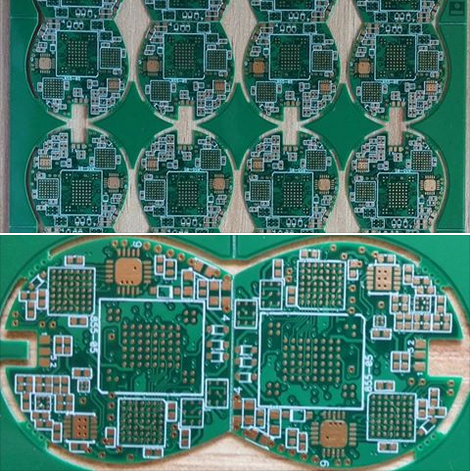
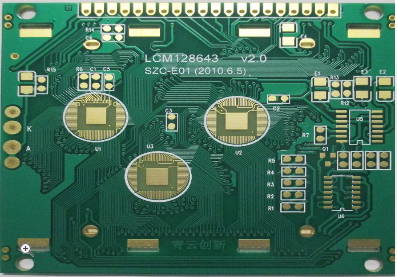
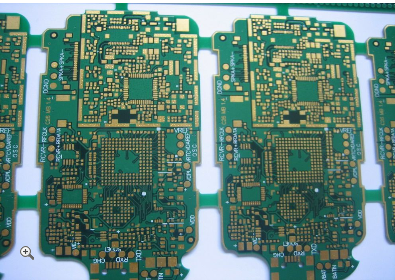
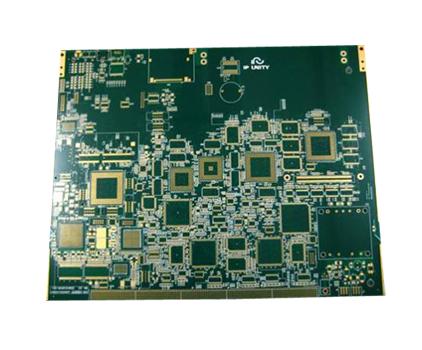
High Performance Ceramic Board Technology Enhancing Microwave RF PCB Design And Efficiency
In the rapidly evolving landscape of wireless communication, radar systems, and satellite technology, the demand for higher frequencies, greater bandwidth, and enhanced signal integrity has never been more critical. At the heart of these advanced microwave and radio frequency (RF) applications lies the printed circuit board (PCB), a foundational component whose material properties directly dictate system performance. Traditional organic substrates like FR-4 often fall short in high-frequency regimes due to limitations in dielectric constant stability, thermal management, and loss characteristics. This is where High-Performance Ceramic Board Technology emerges as a transformative solution, offering a paradigm shift in Microwave RF PCB design and efficiency. By leveraging materials such as alumina (Al2O3), aluminum nitride (AlN), and low-temperature co-fired ceramic (LTCC), this technology addresses the core challenges of modern RF engineering, enabling designs that are not only more efficient and reliable but also capable of pushing the boundaries of what is possible in high-frequency electronics.
Superior Electrical Performance and Signal Integrity
The primary advantage of ceramic board technology in Microwave RF applications stems from its exceptional electrical properties. Ceramic substrates, particularly those like alumina or specialized microwave ceramics, exhibit a stable and low dielectric constant (Dk) with minimal variation over a wide frequency and temperature range. This stability is paramount for maintaining consistent impedance control in transmission lines, such as microstrips and coplanar waveguides, which is essential for minimizing signal reflection and distortion. Unlike organic materials, whose Dk can fluctuate, ceramics ensure predictable signal propagation speeds, critical for phase-sensitive applications like phased-array antennas.
Furthermore, these materials boast extremely low dissipation factors (Df), meaning they introduce minimal dielectric loss as high-frequency signals traverse the board. This low loss tangent directly translates to higher system efficiency, as more signal power is delivered to the load rather than being dissipated as heat within the substrate. For applications operating at millimeter-wave frequencies (e.g., 5G/6G, automotive radar), this reduction in insertion loss is non-negotiable for achieving the required signal-to-noise ratios and overall link budget. The inherent electrical homogeneity of ceramics also reduces electromagnetic interference (EMI) and crosstalk between densely packed components, preserving signal purity in complex, miniaturized designs.
Enhanced Thermal Management and Reliability
Microwave and RF power amplifiers, oscillators, and other active components generate significant heat, which can degrade performance and shorten operational lifespans if not effectively managed. High-performance ceramic boards excel in this domain due to their superior thermal conductivity. Materials like aluminum nitride (AlN) offer thermal conductivity an order of magnitude higher than traditional FR-4 and even surpass that of alumina. This allows for rapid and efficient heat dissipation away from sensitive semiconductor devices, maintaining optimal junction temperatures and ensuring stable electrical parameters.
The robust thermal performance is intrinsically linked to enhanced reliability and power handling capability. By preventing localized hot spots, ceramic substrates mitigate thermal stress and the associated failures like solder joint cracking or delamination. This makes them ideal for high-power RF applications in aerospace, defense, and base station infrastructure, where equipment must operate reliably in harsh environments. Additionally, ceramics exhibit a coefficient of thermal expansion (CTE) that can be closely matched to that of semiconductor dies and other critical components. This CTE matching reduces mechanical stress during thermal cycling, further bolstering the long-term reliability and mean time between failures (MTBF) of the entire assembly.
Advanced Integration and Miniaturization Capabilities
The drive towards more compact, lightweight, and multifunctional electronic systems is relentless. Ceramic board technology, particularly LTCC, provides unparalleled opportunities for system integration and miniaturization. The LTCC process involves screen-printing conductive, resistive, and dielectric pastes onto multiple layers of flexible ceramic "green tape," which are then laminated and co-fired at temperatures below 1000°C. This allows for the creation of intricate, three-dimensional structures with embedded passive components—resistors, capacitors, and inductors—directly within the substrate itself.
This embedded component approach saves valuable surface area on the PCB, enabling higher component density and more compact form factors. It also improves performance by shortening interconnect lengths, which reduces parasitic inductance and capacitance that can plague surface-mount technology at high frequencies. Moreover, the hermetic nature of sintered ceramic provides an excellent barrier against moisture and environmental contaminants, protecting embedded and surface-mounted components. This integration capability is crucial for creating complete system-in-package (SiP) or even system-on-substrate solutions for RF front-end modules, where filters, couplers, and matching networks can be seamlessly integrated alongside active ICs.
Material Versatility and Application-Specific Design
High-performance ceramic technology is not a one-size-fits-all solution; it offers a spectrum of materials that can be tailored to specific application requirements. For instance, alumina is a cost-effective workhorse with good overall electrical and mechanical properties, suitable for many commercial RF applications. When ultra-high thermal conductivity is the priority, aluminum nitride becomes the material of choice. For designs demanding the ultimate in low loss at extremely high frequencies, specialized microwave ceramics like Rogers' RO series (though often ceramic-filled composites) or pure ceramics like boron nitride might be evaluated alongside traditional options.
This material versatility extends to the manufacturing processes. Besides LTCC, there are thick-film and thin-film technologies deployed on ceramic substrates. Thin-film processes, using materials like gold or copper on a highly polished ceramic surface, can produce extremely fine line widths and spacings, enabling the fabrication of high-precision, low-loss transmission lines and passive circuits well into the terahertz range. This allows designers to select the optimal combination of substrate material and fabrication technique based on the frequency band, power level, integration density, and cost targets of their specific project, from consumer IoT devices to cutting-edge satellite communications payloads.
In conclusion, high-performance ceramic board technology represents a cornerstone for the next generation of Microwave RF PCB design. By providing unmatched electrical performance, superior thermal management, advanced integration potential, and material versatility, it directly enhances system efficiency, bandwidth, power handling, and reliability. As the industry continues its march toward higher frequencies and more complex, integrated systems, the role of advanced ceramic substrates will only become more pronounced, solidifying their position as an enabling technology for the future of wireless innovation.
REPORT