







-
 Agriculture
-
 Health-Care
-
 Environment
-
 Construction-Real-Estate
-
 Tools-Hardware
-
 Home-Garden
-
 Furniture
-
 Luggage-Bags-Cases
-
 Medical-devices-Supplies
-
 Gifts-Crafts
-
 Sports-Entertainment
-
 Food-Beverage
-
 Vehicles-Transportation
-
 Power-Transmission
-
 Material-Handling
-
 Renewable-Energy
-
 Safety
-
 Testing-Instrument-Equipment
-
 Construction-Building-Machinery
-
 Pet-Supplies
-
 Personal-Care-Household-Cleaning
-
 Vehicle-Accessories-Electronics-Tools
-
 School-Office-Supplies
-
 Packaging-Printing
-
 Mother-Kids-Toys
-
 Business-Services
-
 Commercial-Equipment-Machinery
-
 Apparel-Accessories
-
 Security
-
 Shoes-Accessories
-
 Vehicle-Parts-Accessories
-
 Jewelry-Eyewear-Watches-Accessories
-
 Lights-Lighting
-
 Fabric-Textile-Raw-Material
-
 Fabrication-Services
-
 Industrial-Machinery
-
 Consumer-Electronics
-
 Electrical-Equipment-Supplies
-
 Electronic-Components-Accessories-Telecommunications
-
 Home-Appliances
-
 Beauty
-
 Chemicals
-
 Rubber-Plastics
-
 Metals-Alloys


























































































































































































































































































































































































































































































































































































- Masonry Materials
- Curtain Walls & Accessories
- Earthwork Products
- Fireproofing Materials
- Heat Insulation Materials
- Plastic Building Materials
- Building Boards
- Soundproofing Materials
- Timber
- Waterproofing Materials
- Balustrades & Handrails
- Bathroom & Kitchen
- Flooring & Accessories
- Tiles & Accessories
- Door, Window & Accessories
- Fireplaces & Stoves
- Floor Heating Systems & Parts
- Stairs & Stair Parts
- Ceilings
- Elevators & Escalators
- Stone
- Countertops, Vanity Tops & Table Tops
- Mosaics
- Metal Building Materials
- Multifunctional Materials
- Ladders & Scaffoldings
- Mouldings
- Corner Guards
- Decorative Films
- Formwork
- Building & Industrial Glass
- Other Construction & Real Estate
- Wallpapers/Wall panels
- HVAC System & Parts
- Outdoor Facilities
- Prefabricated Buildings
- Festive & Party Supplies
- Bathroom Products
- Household Sundries
- Rain Gear
- Garden Supplies
- Household Cleaning Tools & Accessories
- Lighters & Smoking Accessories
- Home Storage & Organization
- Household Scales
- Smart Home Improvement
- Home Textiles
- Kitchenware
- Drinkware & Accessories
- Dinnerware, Coffee & Wine
- Home Decor
- Golf
- Fitness & Body Building
- Amusement Park Facilities
- Billiards, Board Game,Coin Operated Games
- Musical Instruments
- Outdoor Affordable Luxury Sports
- Camping & Hiking
- Fishing
- Sports Safety&Rehabilitation
- Ball Sports Equipments
- Water Sports
- Winter Sports
- Luxury Travel Equipments
- Sports Shoes, Bags & Accessories
- Cycling
- Other Sports & Entertainment Products
- Artificial Grass&Sports Flooring&Sports Court Equipment
- Scooters
- Food Ingredients
- Honey & Honey Products
- Snacks
- Nuts & Kernels
- Seafood
- Plant & Animal Oil
- Beverages
- Fruit & Vegetable Products
- Frog & Escargot
- Bean Products
- Egg Products
- Dairy Products
- Seasonings & Condiments
- Canned Food
- Instant Food
- Baked Goods
- Other Food & Beverage
- Meat & Poultry
- Confectionery
- Grain Products
- Feminie Care
- Hair Care & Styling
- Body Care
- Hands & Feet Care
- Hygiene Products
- Men's Grooming
- Laundry Cleaning Supplies
- Travel Size & Gift Sets
- Room Deodorizers
- Other Personal Care Products
- Pest Control Products
- Special Household Cleaning
- Floor Cleaning
- Kitchen & Bathroom Cleaning
- Oral Care
- Bath Supplies
- Yellow Pages
- Correction Supplies
- Office Binding Supplies
- Office Cutting Supplies
- Board Erasers
- Office Adhesives & Tapes
- Education Supplies
- Pencil Cases & Bags
- Notebooks & Writing Pads
- File Folder Accessories
- Calendars
- Writing Accessories
- Commercial Office Supplies
- Pencil Sharpeners
- Pens
- Letter Pad/Paper
- Paper Envelopes
- Desk Organizers
- Pencils
- Markers & Highlighters
- Filing Products
- Art Supplies
- Easels
- Badge Holder & Accessories
- Office Paper
- Printer Supplies
- Book Covers
- Other Office & School Supplies
- Stationery Set
- Boards
- Clipboards
- Stamps
- Drafting Supplies
- Stencils
- Electronic Dictionary
- Books
- Map
- Magazines
- Calculators
- Baby & Toddler Toys
- Educational Toys
- Classic Toys
- Dress Up & Pretend Play
- Toy Vehicle
- Stuffed Animals & Plush Toys
- Outdoor Toys & Structures
- Balloons & Accessories
- Baby Food
- Children's Clothing
- Baby Supplies & Products
- Maternity Clothes
- Kids Shoes
- Baby Care
- Novelty & Gag Toys
- Dolls & Accessories
- Puzzle & Games
- Blocks & Model Building Toys
- Toddler Clothing
- Baby Clothing
- Kids' Luggage & Bags
- Arts, Crafts & DIY Toys
- Action & Toy Figures
- Baby Appliances
- Hobbies & Models
- Remote Control Toys
- Promotional Toys
- Pregnancy & Maternity
- Hygiene Products
- Kid's Textile&Bedding
- Novelty & Special Use
- Toy Weapons
- Baby Gifts
- Baby Storage & Organization
- Auto Drive Systems
- ATV/UTV Parts & Accessories
- Marine Parts & Accessories
- Other Auto Parts
- Trailer Parts & Accessories
- Auto Transmission Systems
- Train Parts & Accessories
- Universal Parts
- Railway Parts & Accessories
- Auto Brake Systems
- Aviation Parts & Accessories
- Truck Parts & Accessories
- Auto Suspension Systems
- Auto Lighting Systems
- New Energy Vehicle Parts & Accessories
- Auto Steering Systems
- Wheels, Tires & Accessories
- Bus Parts & Accessories
- Auto Performance Parts
- Cooling System
- Go-Kart & Kart Racer Parts & Accessories
- Air Conditioning Systems
- Heavy Duty Vehicle Parts & Accessories
- Auto Electrical Systems
- Auto Body Systems
- Auto Engine Systems
- Container Parts & Accessories
- Motorcycle Parts & Accessories
- Refrigeration & Heat Exchange Equipment
- Machine Tool Equipment
- Food & Beverage Machinery
- Agricultural Machinery & Equipment
- Apparel & Textile Machinery
- Chemical Machinery
- Packaging Machines
- Paper Production Machinery
- Plastic & Rubber Processing Machinery
- Industrial Robots
- Electronic Products Machinery
- Metal & Metallurgy Machinery
- Woodworking Machinery
- Home Product Manufacturing Machinery
- Machinery Accessories
- Environmental Machinery
- Machinery Service
- Electrical Equipment Manufacturing Machinery
- Industrial Compressors & Parts
- Tobacco & Cigarette Machinery
- Production Line
- Used Industrial Machinery
- Electronics Production Machinery
- Other Machinery & Industrial Equipment
- Camera, Photo & Accessories
- Portable Audio, Video & Accessories
- Television, Home Audio, Video & Accessories
- Video Games & Accessories
- Mobile Phone & Accessories
- Electronic Publications
- Earphone & Headphone & Accessories
- Speakers & Accessories
- Smart Electronics
- TV Receivers & Accessories
- Mobile Phone & Computer Repair Parts
- Chargers, Batteries & Power Supplies
- Used Electronics
- VR, AR, MR Hardware & Software
- Projectors & Presentation Equipments
- Other Consumer Electronics
- Cables & Commonly Used Accessories
- Computer Hardware & Software
- Displays, Signage and Optoelectronics
- Discrete Semiconductors
- Wireless & IoT Module and Products
- Telecommunications
- Connectors, Terminals & Accessories
- Development Boards, Electronic Modules and Kits
- Circuit Protection
- Sensors
- Isolators
- Audio Components and Products
- Integrated Circuits
- Power Supplies
- Relays
- RF, Microwave and RFID
- Electronic Accessories & Supplies
- Passive Components
- PCB & PCBA
- Air Quality Appliances
- Home Appliance Parts
- Heating & Cooling Appliances
- Small Kitchen Appliances
- Laundry Appliances
- Water Heaters
- Water Treatment Appliances
- Refrigerators & Freezers
- Personal Care & Beauty Appliances
- Major Kitchen Appliances
- Cleaning Appliances
- Second-hand Appliances
- Smart Home Appliances
- Other Home Appliances
- Energy Chemicals
- Inorganic Chemicals
- Basic Organic Chemicals
- Agrochemicals
- Admixture & Additives
- Catalysts & Chemical Auxiliary Agents
- Pigments & Dyestuff
- Coating & Paint
- Daily Chemicals
- Polymer
- Organic Intermediate
- Adhesives & Sealants
- Chemical Waste
- Biological Chemical Products
- Surface Treatment Chemicals
- Painting & Coating
- Chemical Reagents
- Flavor & Fragrance
- Non-Explosive Demolition Agents
- Other Chemicals
- Custom Chemical Services

How to Choose Shipping for a Wafer Automatic Packaging System
Shipping a wafer automatic packaging system requires more than selecting a freight service. Buyers should first confirm the final machine configuration, packaged dimensions, gross weight, number of shipping units, destination, delivery schedule, and unloading conditions. These details help determine whether sea, air, rail, road, multimodal, or project cargo transport is the most practical choice.
Shipping Planning Priorities
For a complete packaging line or a large integrated system, sea freight is normally the most suitable solution. Air freight is better suited to urgent spare parts, control panels, and other compact, high-value components. Rail and truck transport can serve specific regional routes, while multimodal shipping combines several transport modes when the route or equipment size requires greater flexibility.
- Choose FCL sea freight for complete systems or large packaging lines that can be loaded into dedicated containers.
- Consider LCL shipping for smaller machines or partial equipment consignments.
- Use air freight for time-sensitive components, provided the shipment meets carrier size and weight restrictions.
- Select break bulk or project cargo for machinery that cannot be accommodated in standard containers.
- Coordinate lifting, securing, site access, unloading, and installation schedules before dispatch.
How Equipment Configuration Affects Transport
A wafer automatic packaging system may be supplied as a single machine or as a complete line containing feeding units, primary packaging equipment, secondary packaging modules, cartoners, case packers, and palletizing machinery. The final configuration directly affects the number of containers, loading sequence, cargo protection, and receiving-site preparation.
Before booking freight, the supplier and buyer should prepare a complete packing list that shows each module's dimensions, weight, center of gravity, lifting points, and packaging method. This information supports container selection and helps the logistics team create a safe loading and lashing plan.
Containerized Sea Freight
FCL sea freight gives the shipment exclusive use of one or more containers. It is generally appropriate for heavy or complete packaging lines because the cargo can be loaded, secured, and transported as a dedicated consignment. LCL sea freight shares container space with other cargo and may be useful for smaller machines, although it can involve additional terminal handling and coordination.
If a machine is too wide, tall, long, or heavy for a standard container, break bulk or project cargo may be required. This approach uses customized lifting, securing, route planning, and sometimes special port or site equipment.
Air, Rail, Road, and Multimodal Options
Air freight provides a faster alternative for urgent or high-value items such as replacement parts and electrical control panels. The stated transit period is approximately 3–7 days, but acceptance depends on the shipment's dimensions, weight, packaging, and airline restrictions.
Rail freight can be considered for medium-to-large equipment, particularly along China-Europe routes. The stated approximate transit time is 15–20 days, making rail a potential balance between speed and cost for suitable destinations.
Truck or road transport is useful for domestic deliveries and short cross-border movements. Oversized equipment may require route surveys, traffic permits, escorts, or special handling arrangements. Multimodal transport combines road, sea, rail, or other services under a coordinated logistics plan. Before selecting this option, confirm tracking procedures, transfer points, responsibilities, and liability coverage.
Information to Confirm Before Dispatch
The receiving factory should provide its complete delivery address, unloading method, available cranes or forklifts, entrance dimensions, floor conditions, receiving hours, and preferred delivery window. The buyer should also confirm whether the site can accommodate oversized vehicles or requires special access permits.
Installation and commissioning should be planned around the expected arrival date. If the system requires supplier technicians, reserve sufficient time for customs clearance, inland delivery, equipment positioning, assembly, testing, and operator training.
Ruipuhua states that its automatic packaging machines and complete packaging lines are supplied to customers worldwide, including markets in China, Southeast Asia, the Middle East, Africa, Eastern Europe, South America, and North America. Its listed logistics solutions include sea, air, rail, truck, multimodal transport, break bulk or project cargo, and express courier services for small parts.
The company lists CE certification for flow packaging machines, automatic packaging systems, cartoning machines, and palletizing robots, with applicability stated as worldwide. A referenced cooperation project involved a chocolate pie cake packaging system supplied for Orion plants in Vietnam, Korea, and China, reflecting experience with integrated equipment and international delivery requirements.
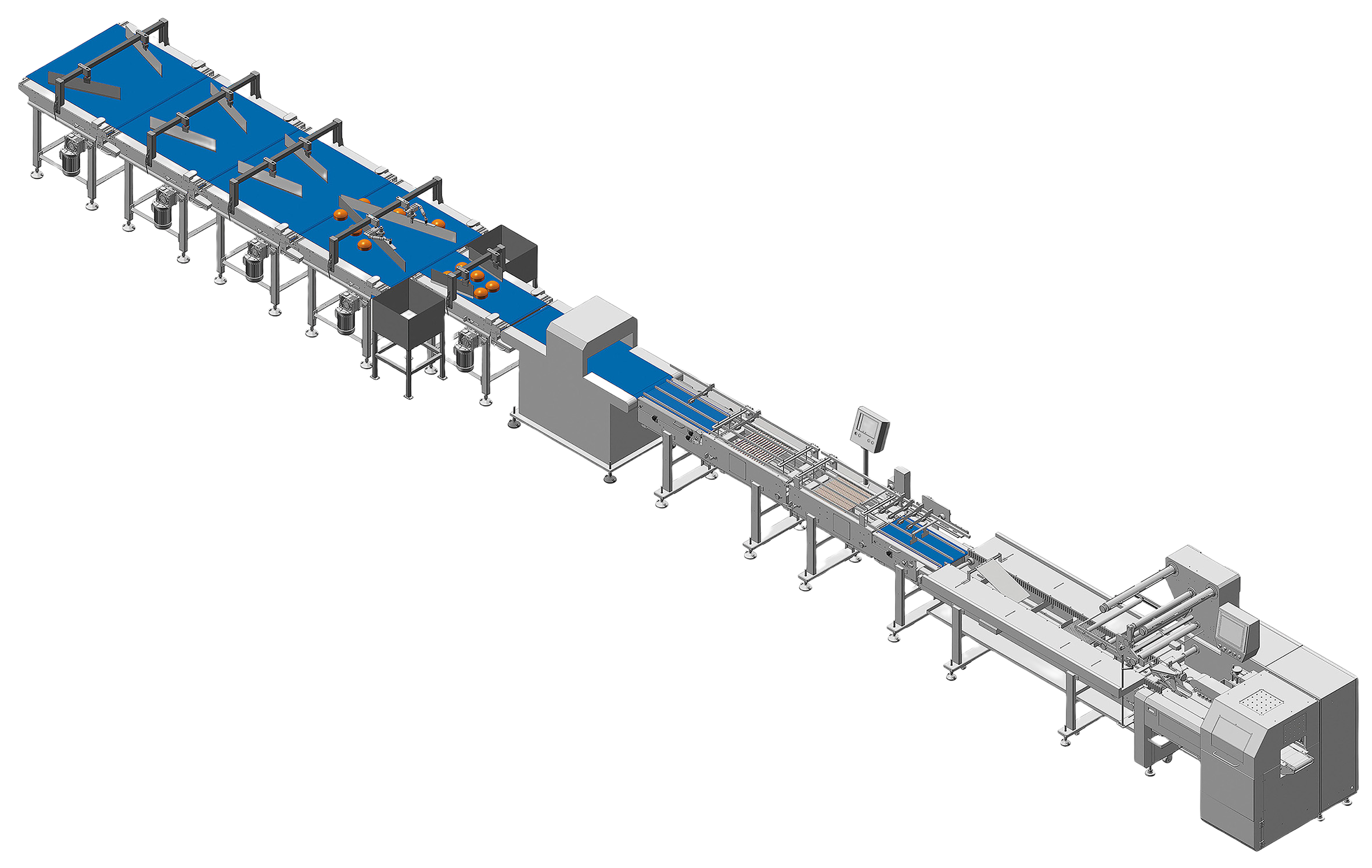
Shipping Method Comparison
| Transport method | Recommended application | Main planning considerations |
|---|---|---|
| Sea freight: FCL | Complete wafer automatic packaging systems and large production lines | Dedicated containers, loading sequence, lifting arrangements, and cargo lashing |
| Sea freight: LCL | Smaller machines or partial shipments | Shared container space, terminal handling, and additional coordination |
| Air freight | Urgent spare parts, control panels, and compact high-value components | Confirm carrier limits for size and weight; stated transit time is 3–7 days |
| Rail freight | Medium-to-large equipment, especially on China-Europe routes | Containerized transport and an approximate stated transit time of 15–20 days |
| Truck or road freight | Domestic and short-distance cross-border deliveries | Check road access, permits, route restrictions, and escort needs |
| Multimodal transport | Shipments requiring a combination of road, sea, rail, or other services | Confirm transfer arrangements, tracking, contract coverage, and liability |
| Break bulk or project cargo | Equipment exceeding standard container dimensions or weight limits | Prepare customized lifting, route, port, and lashing plans |
Frequently Asked Questions
What is the best shipping method for a complete wafer automatic packaging system?
FCL sea freight is generally suitable for a large complete line because it provides dedicated container space. If the equipment cannot fit in standard containers, break bulk or project cargo should be evaluated instead.
Can urgent packaging machine parts be transported by air?
Yes. Air freight can be used for urgent or valuable components, including spare parts and control panels. The stated transit range is 3–7 days, subject to airline size, weight, packaging, and acceptance requirements.
What details are needed before arranging shipment?
Confirm the final equipment configuration, dimensions, gross weight, packaging units, destination, unloading equipment, site access, receiving hours, delivery deadline, and any requirements for special lifting, permits, or escorts.
Conclusion and Practical Recommendation
For most large wafer automatic packaging systems, dedicated-container sea freight offers a practical shipping solution. LCL can support smaller consignments, while air freight is appropriate for urgent components. Rail, truck, multimodal transport, and project cargo should be selected according to the route, equipment dimensions, delivery urgency, and handling requirements.
Ruipuhua states that it supports manufacturing and OEM cooperation, offers a minimum order quantity of one, and provides worldwide shipping options. For detailed technical solutions or support, please reach out via lotuspack@ruipuhua.com.
About Us
Foshan Ruipuhua Machinery Equipment Co. Ltd is a Chinese manufacturer of intelligent packaging machinery founded in 2005. The company integrates research and development, manufacturing, installation, and technical after-sales support. It operates a 50,000-square-meter factory and reports annual production of more than 500 automatic packaging machines and complete packaging lines. Its equipment serves customers in over 100 countries and supports applications in bakery, biscuits, snacks, noodles, chocolate, soap, hardware, pharmaceuticals, and daily chemicals. The company lists CE certification for flow packaging machines, automatic packaging systems, cartoning machines, and palletizing robots, and has supplied equipment for multiple industries.

REPORT