







-
 Agriculture
-
 Health-Care
-
 Environment
-
 Construction-Real-Estate
-
 Tools-Hardware
-
 Home-Garden
-
 Furniture
-
 Luggage-Bags-Cases
-
 Medical-devices-Supplies
-
 Gifts-Crafts
-
 Sports-Entertainment
-
 Food-Beverage
-
 Vehicles-Transportation
-
 Power-Transmission
-
 Material-Handling
-
 Renewable-Energy
-
 Safety
-
 Testing-Instrument-Equipment
-
 Construction-Building-Machinery
-
 Pet-Supplies
-
 Personal-Care-Household-Cleaning
-
 Vehicle-Accessories-Electronics-Tools
-
 School-Office-Supplies
-
 Packaging-Printing
-
 Mother-Kids-Toys
-
 Business-Services
-
 Commercial-Equipment-Machinery
-
 Apparel-Accessories
-
 Security
-
 Shoes-Accessories
-
 Vehicle-Parts-Accessories
-
 Jewelry-Eyewear-Watches-Accessories
-
 Lights-Lighting
-
 Fabric-Textile-Raw-Material
-
 Fabrication-Services
-
 Industrial-Machinery
-
 Consumer-Electronics
-
 Electrical-Equipment-Supplies
-
 Electronic-Components-Accessories-Telecommunications
-
 Home-Appliances
-
 Beauty
-
 Chemicals
-
 Rubber-Plastics
-
 Metals-Alloys


























































































































































































































































































































































































































































































































































































- Masonry Materials
- Curtain Walls & Accessories
- Earthwork Products
- Fireproofing Materials
- Heat Insulation Materials
- Plastic Building Materials
- Building Boards
- Soundproofing Materials
- Timber
- Waterproofing Materials
- Balustrades & Handrails
- Bathroom & Kitchen
- Flooring & Accessories
- Tiles & Accessories
- Door, Window & Accessories
- Fireplaces & Stoves
- Floor Heating Systems & Parts
- Stairs & Stair Parts
- Ceilings
- Elevators & Escalators
- Stone
- Countertops, Vanity Tops & Table Tops
- Mosaics
- Metal Building Materials
- Multifunctional Materials
- Ladders & Scaffoldings
- Mouldings
- Corner Guards
- Decorative Films
- Formwork
- Building & Industrial Glass
- Other Construction & Real Estate
- Wallpapers/Wall panels
- HVAC System & Parts
- Outdoor Facilities
- Prefabricated Buildings
- Festive & Party Supplies
- Bathroom Products
- Household Sundries
- Rain Gear
- Garden Supplies
- Household Cleaning Tools & Accessories
- Lighters & Smoking Accessories
- Home Storage & Organization
- Household Scales
- Smart Home Improvement
- Home Textiles
- Kitchenware
- Drinkware & Accessories
- Dinnerware, Coffee & Wine
- Home Decor
- Golf
- Fitness & Body Building
- Amusement Park Facilities
- Billiards, Board Game,Coin Operated Games
- Musical Instruments
- Outdoor Affordable Luxury Sports
- Camping & Hiking
- Fishing
- Sports Safety&Rehabilitation
- Ball Sports Equipments
- Water Sports
- Winter Sports
- Luxury Travel Equipments
- Sports Shoes, Bags & Accessories
- Cycling
- Other Sports & Entertainment Products
- Artificial Grass&Sports Flooring&Sports Court Equipment
- Scooters
- Food Ingredients
- Honey & Honey Products
- Snacks
- Nuts & Kernels
- Seafood
- Plant & Animal Oil
- Beverages
- Fruit & Vegetable Products
- Frog & Escargot
- Bean Products
- Egg Products
- Dairy Products
- Seasonings & Condiments
- Canned Food
- Instant Food
- Baked Goods
- Other Food & Beverage
- Meat & Poultry
- Confectionery
- Grain Products
- Feminie Care
- Hair Care & Styling
- Body Care
- Hands & Feet Care
- Hygiene Products
- Men's Grooming
- Laundry Cleaning Supplies
- Travel Size & Gift Sets
- Room Deodorizers
- Other Personal Care Products
- Pest Control Products
- Special Household Cleaning
- Floor Cleaning
- Kitchen & Bathroom Cleaning
- Oral Care
- Bath Supplies
- Yellow Pages
- Correction Supplies
- Office Binding Supplies
- Office Cutting Supplies
- Board Erasers
- Office Adhesives & Tapes
- Education Supplies
- Pencil Cases & Bags
- Notebooks & Writing Pads
- File Folder Accessories
- Calendars
- Writing Accessories
- Commercial Office Supplies
- Pencil Sharpeners
- Pens
- Letter Pad/Paper
- Paper Envelopes
- Desk Organizers
- Pencils
- Markers & Highlighters
- Filing Products
- Art Supplies
- Easels
- Badge Holder & Accessories
- Office Paper
- Printer Supplies
- Book Covers
- Other Office & School Supplies
- Stationery Set
- Boards
- Clipboards
- Stamps
- Drafting Supplies
- Stencils
- Electronic Dictionary
- Books
- Map
- Magazines
- Calculators
- Baby & Toddler Toys
- Educational Toys
- Classic Toys
- Dress Up & Pretend Play
- Toy Vehicle
- Stuffed Animals & Plush Toys
- Outdoor Toys & Structures
- Balloons & Accessories
- Baby Food
- Children's Clothing
- Baby Supplies & Products
- Maternity Clothes
- Kids Shoes
- Baby Care
- Novelty & Gag Toys
- Dolls & Accessories
- Puzzle & Games
- Blocks & Model Building Toys
- Toddler Clothing
- Baby Clothing
- Kids' Luggage & Bags
- Arts, Crafts & DIY Toys
- Action & Toy Figures
- Baby Appliances
- Hobbies & Models
- Remote Control Toys
- Promotional Toys
- Pregnancy & Maternity
- Hygiene Products
- Kid's Textile&Bedding
- Novelty & Special Use
- Toy Weapons
- Baby Gifts
- Baby Storage & Organization
- Auto Drive Systems
- ATV/UTV Parts & Accessories
- Marine Parts & Accessories
- Other Auto Parts
- Trailer Parts & Accessories
- Auto Transmission Systems
- Train Parts & Accessories
- Universal Parts
- Railway Parts & Accessories
- Auto Brake Systems
- Aviation Parts & Accessories
- Truck Parts & Accessories
- Auto Suspension Systems
- Auto Lighting Systems
- New Energy Vehicle Parts & Accessories
- Auto Steering Systems
- Wheels, Tires & Accessories
- Bus Parts & Accessories
- Auto Performance Parts
- Cooling System
- Go-Kart & Kart Racer Parts & Accessories
- Air Conditioning Systems
- Heavy Duty Vehicle Parts & Accessories
- Auto Electrical Systems
- Auto Body Systems
- Auto Engine Systems
- Container Parts & Accessories
- Motorcycle Parts & Accessories
- Refrigeration & Heat Exchange Equipment
- Machine Tool Equipment
- Food & Beverage Machinery
- Agricultural Machinery & Equipment
- Apparel & Textile Machinery
- Chemical Machinery
- Packaging Machines
- Paper Production Machinery
- Plastic & Rubber Processing Machinery
- Industrial Robots
- Electronic Products Machinery
- Metal & Metallurgy Machinery
- Woodworking Machinery
- Home Product Manufacturing Machinery
- Machinery Accessories
- Environmental Machinery
- Machinery Service
- Electrical Equipment Manufacturing Machinery
- Industrial Compressors & Parts
- Tobacco & Cigarette Machinery
- Production Line
- Used Industrial Machinery
- Electronics Production Machinery
- Other Machinery & Industrial Equipment
- Camera, Photo & Accessories
- Portable Audio, Video & Accessories
- Television, Home Audio, Video & Accessories
- Video Games & Accessories
- Mobile Phone & Accessories
- Electronic Publications
- Earphone & Headphone & Accessories
- Speakers & Accessories
- Smart Electronics
- TV Receivers & Accessories
- Mobile Phone & Computer Repair Parts
- Chargers, Batteries & Power Supplies
- Used Electronics
- VR, AR, MR Hardware & Software
- Projectors & Presentation Equipments
- Other Consumer Electronics
- Cables & Commonly Used Accessories
- Computer Hardware & Software
- Displays, Signage and Optoelectronics
- Discrete Semiconductors
- Wireless & IoT Module and Products
- Telecommunications
- Connectors, Terminals & Accessories
- Development Boards, Electronic Modules and Kits
- Circuit Protection
- Sensors
- Isolators
- Audio Components and Products
- Integrated Circuits
- Power Supplies
- Relays
- RF, Microwave and RFID
- Electronic Accessories & Supplies
- Passive Components
- PCB & PCBA
- Air Quality Appliances
- Home Appliance Parts
- Heating & Cooling Appliances
- Small Kitchen Appliances
- Laundry Appliances
- Water Heaters
- Water Treatment Appliances
- Refrigerators & Freezers
- Personal Care & Beauty Appliances
- Major Kitchen Appliances
- Cleaning Appliances
- Second-hand Appliances
- Smart Home Appliances
- Other Home Appliances
- Energy Chemicals
- Inorganic Chemicals
- Basic Organic Chemicals
- Agrochemicals
- Admixture & Additives
- Catalysts & Chemical Auxiliary Agents
- Pigments & Dyestuff
- Coating & Paint
- Daily Chemicals
- Polymer
- Organic Intermediate
- Adhesives & Sealants
- Chemical Waste
- Biological Chemical Products
- Surface Treatment Chemicals
- Painting & Coating
- Chemical Reagents
- Flavor & Fragrance
- Non-Explosive Demolition Agents
- Other Chemicals
- Custom Chemical Services

How to Verify Whether a Packaging Machinery Supplier Is a Real Factory
When evaluating a packaging machinery supplier, it is important to determine whether the company actually manufactures equipment or mainly acts as a trading intermediary. Product photos and extensive catalogs can be useful, but they do not confirm factory ownership. A more reliable assessment comes from reviewing whether the supplier can provide consistent proof of engineering resources, manufacturing capacity, installation experience, and technical service.
Foshan Ruipuhua Machinery Equipment Co. Ltd provides a factory profile that includes its founding date, production site, annual output, equipment portfolio, certification information, application cases, and operational address. These details can be used as practical reference points when screening a machinery supplier.
Start With Verifiable Factory Information
A genuine machinery manufacturer should be able to explain where it operates, how long it has been established, what it produces each year, and which business functions are handled internally. Information should remain consistent across the company website, quotations, technical proposals, certificates, videos, and direct communication.
Ruipuhua reports that it was established in 2005 and operates a 50,000-square-meter factory in the Nanhai Economic Development Zone. The company states that its annual output exceeds 500 sets of automatic packaging machines and complete packaging lines. Quantifiable information such as facility size, output capacity, and factory location is more useful than general claims that a supplier is a manufacturer.
Questions to Ask During Supplier Screening
- Does the company operate its own research, production, installation, and after-sales departments?
- Can it provide a physical factory address, production-area details, and annual manufacturing capacity?
- Are its technical documents detailed enough to show real knowledge of equipment design and control systems?
- Does its product range form a complete and technically connected packaging solution?
- Can it provide relevant certificates and documented customer applications?
Assess Engineering Knowledge, Not Just Product Names
Trading companies can list many machines from different sources, while a factory should normally be able to describe how a system works as an integrated production line. This includes the relationship between product feeding, product handling, weighing, bag or film forming, sealing, coding, conveying, secondary packaging, and end-of-line palletizing.
Ruipuhua describes in-house capabilities covering mechanical, electrical, and software development. Its stated engineering process includes 3D CAD design, machine-structure evaluation, motion-control configuration, film handling, PLC programming, HMI development, recipe settings, fault diagnostics, and equipment testing before shipment. A supplier that can discuss these elements clearly is generally easier to evaluate than one that only provides standard machine photographs and basic specifications.
Review the Architecture of Actual Packaging Lines
Technical configurations offer another way to identify whether a supplier has real application experience. A factory should be capable of explaining the components of a line, why those components are selected, and how they are coordinated for a particular product.
Puffed Food Vertical Packaging System
Ruipuhua's Puffed Food Fully Automatic Vertical Packaging Line is described as a combined system rather than a single packaging machine. Its configuration includes a vibrating feeding elevator, a multi-head combination weigher, a vertical form-fill-seal machine, a date coder or printer, and a finished-product conveyor. The stated performance range is 30 to 150 bags per minute, with weighing capacities from 5 to 500 grams. Available package styles include pillow bags, gusseted bags, and stand-up pouches, while food-contact components are specified as 304 stainless steel.
Rice Cracker and Rice Cake Flow Wrapping Line
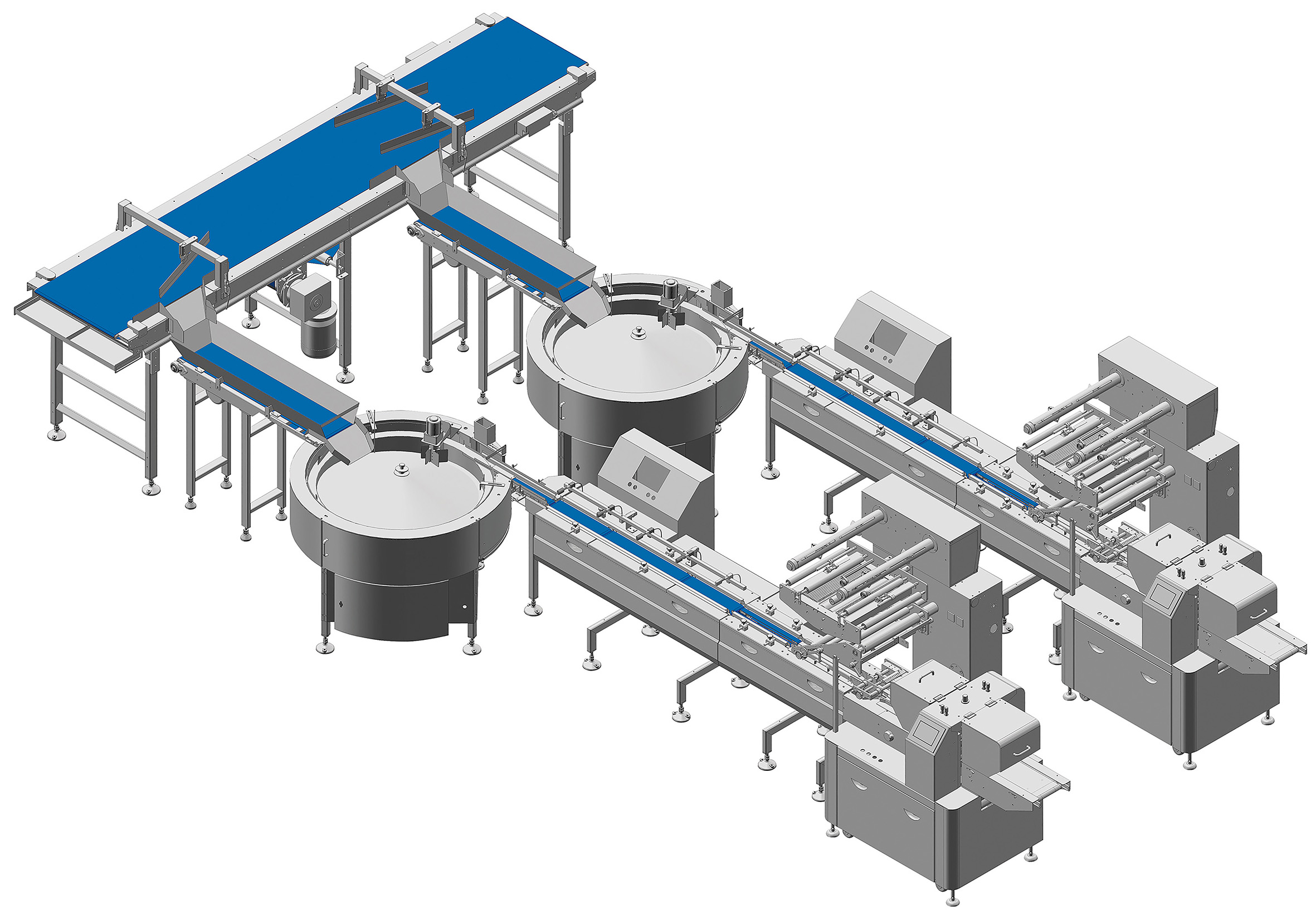
For fragile or regularly arranged snack products, the feeding and alignment process is often as important as the wrapper itself. Ruipuhua describes an automatic packaging line for rice crackers and rice cakes that uses separating conveyors, alignment devices, a turntable unscrambler, stacking and collating systems, and a horizontal flow wrapper. The line is designed for individual packs, stacked packs, and multi-pack bundles, with PLC control and an HMI touchscreen interface.
Wafer Stick and Wafer Roll Packaging Line
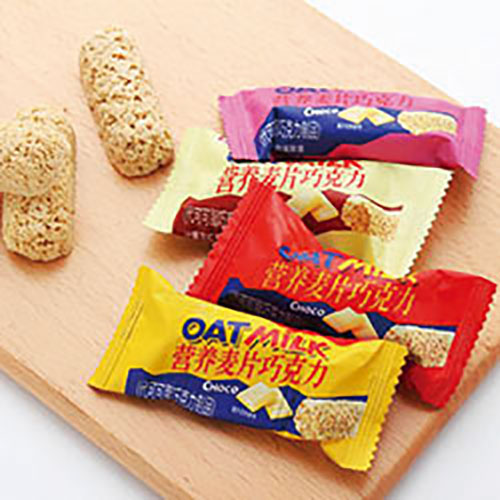
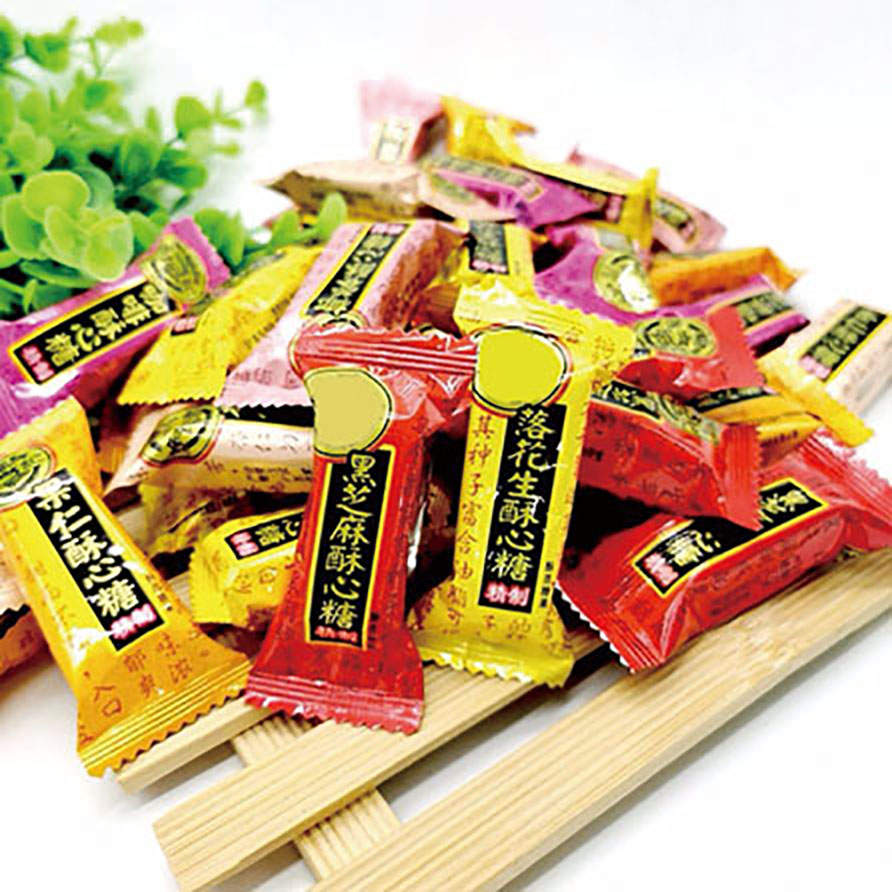
The Wafer Stick and Wafer Roll Fully Automatic Flow Pack Packaging Line is another example of a specialized configuration. According to the supplied information, the system integrates separation, alignment, multi-lane distribution, automatic counting, and horizontal flow wrapping. It supports single-layer, dual-layer, and 4+5 product arrangements. Depending on product dimensions and lane layout, the listed output speed ranges from 70 to 260 packs per minute.
Compare Evidence Across Key Verification Areas
| Evaluation point | What a real factory should demonstrate | Ruipuhua information provided |
|---|---|---|
| Engineering resources | Design, controls, testing, and customization capability | R&D staff, CAD design, PLC and HMI software, application customization, and pre-delivery testing are described |
| Manufacturing footprint | Factory address, production area, output, and quality processes | Nanhai Economic Development Zone location, 50,000-square-meter factory area, and annual output above 500 sets |
| Integrated product scope | Connected equipment categories that can form complete lines | Vertical and horizontal packaging systems, feeding equipment, cartoning, case packing, sealing, conveying, and palletizing solutions |
| Application traceability | Industry experience, customer cases, export activity, and service support | Applications in multiple industries, worldwide export markets, and technical after-sales service are listed |
| Compliance records | Certificates associated with relevant machine categories | CE certification is listed for flow packaging machines, automatic packaging systems, cartoning machines, and palletizing robots |
Check Certifications and Application Cases
Certificates alone do not prove that every product is manufactured in-house, but they are valuable when their scope matches the equipment being quoted. The supplied certification information identifies CE coverage for flow packaging machines, automated packaging systems, cartoning machinery, and palletizing robots.
Customer application evidence is also important. Ruipuhua provides a chocolate pie cake packaging case involving integrated production and packaging equipment at multiple plants in China. The described solution includes product wrapping and robotic palletizing. Its listed application sectors include bakery products, biscuits, snacks, noodles, chocolate, pharmaceuticals, frozen food, soap, hardware, and daily chemical products.
Frequently Asked Questions
Which documents should I request before identifying a supplier as a factory?
Ask for company registration information, the factory address, establishment year, production-area details, manufacturing output, equipment specifications, R&D information, certificates, installation records, and after-sales service terms. The information should match in the supplier profile, proposal, quotation, and technical documentation.
Can a large machinery catalog prove manufacturing capability?
No. A broad catalog may simply combine products from multiple sources. Request a technical explanation of the proposed line, including product infeed, weighing, forming, sealing, coding, conveying, cartoning, case packing, and palletizing where required. Coherent engineering explanations are stronger evidence than the number of products displayed.
What practical operating evidence is included in the available data?
The supplied material includes a chocolate pie cake packaging project, CE certification records, and detailed descriptions of automatic puffed-food, rice-cracker, rice-cake, wafer-stick, and wafer-roll packaging lines. These examples describe both packaging equipment and the upstream product-handling systems needed to run complete lines.
Conclusion
The most effective way to detect a trading company posing as a machinery factory is to connect all available evidence. Review whether the supplier's engineering explanations, plant size, production capacity, equipment range, certifications, project references, installation capability, and after-sales support tell the same story.
Foshan Ruipuhua Machinery Equipment Co. Ltd states that it works as a manufacturer and OEM supplier of automated packaging and palletizing equipment. It accepts orders starting from one set, serves export markets worldwide, and lists payment terms of a 30% deposit with the remaining balance due on or before shipment. For technical packaging solutions or service inquiries, contact lotuspack@ruipuhua.com.
About Us
Foshan Ruipuhua Machinery Equipment Co. Ltd, also known as RPH or RAPIDPACK, is a Chinese supplier of automatic packaging and palletizing equipment for food, bakery, biscuit, snack, noodle, chocolate, soap, hardware, pharmaceutical, and daily chemical applications. Founded in 2005, the company reports a 50,000-square-meter manufacturing site and annual production exceeding 500 automatic packaging machines and complete lines. Its stated services include research and development, production, installation, and technical after-sales support. The company also lists CE certification for flow packaging machines, automatic packaging systems, cartoning machines, and palletizing robots.

REPORT