







-
 Agriculture
-
 Health-Care
-
 Environment
-
 Construction-Real-Estate
-
 Tools-Hardware
-
 Home-Garden
-
 Furniture
-
 Luggage-Bags-Cases
-
 Medical-devices-Supplies
-
 Gifts-Crafts
-
 Sports-Entertainment
-
 Food-Beverage
-
 Vehicles-Transportation
-
 Power-Transmission
-
 Material-Handling
-
 Renewable-Energy
-
 Safety
-
 Testing-Instrument-Equipment
-
 Construction-Building-Machinery
-
 Pet-Supplies
-
 Personal-Care-Household-Cleaning
-
 Vehicle-Accessories-Electronics-Tools
-
 School-Office-Supplies
-
 Packaging-Printing
-
 Mother-Kids-Toys
-
 Business-Services
-
 Commercial-Equipment-Machinery
-
 Apparel-Accessories
-
 Security
-
 Shoes-Accessories
-
 Vehicle-Parts-Accessories
-
 Jewelry-Eyewear-Watches-Accessories
-
 Lights-Lighting
-
 Fabric-Textile-Raw-Material
-
 Fabrication-Services
-
 Industrial-Machinery
-
 Consumer-Electronics
-
 Electrical-Equipment-Supplies
-
 Electronic-Components-Accessories-Telecommunications
-
 Home-Appliances
-
 Beauty
-
 Chemicals
-
 Rubber-Plastics
-
 Metals-Alloys


























































































































































































































































































































































































































































































































































































- Masonry Materials
- Curtain Walls & Accessories
- Earthwork Products
- Fireproofing Materials
- Heat Insulation Materials
- Plastic Building Materials
- Building Boards
- Soundproofing Materials
- Timber
- Waterproofing Materials
- Balustrades & Handrails
- Bathroom & Kitchen
- Flooring & Accessories
- Tiles & Accessories
- Door, Window & Accessories
- Fireplaces & Stoves
- Floor Heating Systems & Parts
- Stairs & Stair Parts
- Ceilings
- Elevators & Escalators
- Stone
- Countertops, Vanity Tops & Table Tops
- Mosaics
- Metal Building Materials
- Multifunctional Materials
- Ladders & Scaffoldings
- Mouldings
- Corner Guards
- Decorative Films
- Formwork
- Building & Industrial Glass
- Other Construction & Real Estate
- Wallpapers/Wall panels
- HVAC System & Parts
- Outdoor Facilities
- Prefabricated Buildings
- Festive & Party Supplies
- Bathroom Products
- Household Sundries
- Rain Gear
- Garden Supplies
- Household Cleaning Tools & Accessories
- Lighters & Smoking Accessories
- Home Storage & Organization
- Household Scales
- Smart Home Improvement
- Home Textiles
- Kitchenware
- Drinkware & Accessories
- Dinnerware, Coffee & Wine
- Home Decor
- Golf
- Fitness & Body Building
- Amusement Park Facilities
- Billiards, Board Game,Coin Operated Games
- Musical Instruments
- Outdoor Affordable Luxury Sports
- Camping & Hiking
- Fishing
- Sports Safety&Rehabilitation
- Ball Sports Equipments
- Water Sports
- Winter Sports
- Luxury Travel Equipments
- Sports Shoes, Bags & Accessories
- Cycling
- Other Sports & Entertainment Products
- Artificial Grass&Sports Flooring&Sports Court Equipment
- Scooters
- Food Ingredients
- Honey & Honey Products
- Snacks
- Nuts & Kernels
- Seafood
- Plant & Animal Oil
- Beverages
- Fruit & Vegetable Products
- Frog & Escargot
- Bean Products
- Egg Products
- Dairy Products
- Seasonings & Condiments
- Canned Food
- Instant Food
- Baked Goods
- Other Food & Beverage
- Meat & Poultry
- Confectionery
- Grain Products
- Feminie Care
- Hair Care & Styling
- Body Care
- Hands & Feet Care
- Hygiene Products
- Men's Grooming
- Laundry Cleaning Supplies
- Travel Size & Gift Sets
- Room Deodorizers
- Other Personal Care Products
- Pest Control Products
- Special Household Cleaning
- Floor Cleaning
- Kitchen & Bathroom Cleaning
- Oral Care
- Bath Supplies
- Yellow Pages
- Correction Supplies
- Office Binding Supplies
- Office Cutting Supplies
- Board Erasers
- Office Adhesives & Tapes
- Education Supplies
- Pencil Cases & Bags
- Notebooks & Writing Pads
- File Folder Accessories
- Calendars
- Writing Accessories
- Commercial Office Supplies
- Pencil Sharpeners
- Pens
- Letter Pad/Paper
- Paper Envelopes
- Desk Organizers
- Pencils
- Markers & Highlighters
- Filing Products
- Art Supplies
- Easels
- Badge Holder & Accessories
- Office Paper
- Printer Supplies
- Book Covers
- Other Office & School Supplies
- Stationery Set
- Boards
- Clipboards
- Stamps
- Drafting Supplies
- Stencils
- Electronic Dictionary
- Books
- Map
- Magazines
- Calculators
- Baby & Toddler Toys
- Educational Toys
- Classic Toys
- Dress Up & Pretend Play
- Toy Vehicle
- Stuffed Animals & Plush Toys
- Outdoor Toys & Structures
- Balloons & Accessories
- Baby Food
- Children's Clothing
- Baby Supplies & Products
- Maternity Clothes
- Kids Shoes
- Baby Care
- Novelty & Gag Toys
- Dolls & Accessories
- Puzzle & Games
- Blocks & Model Building Toys
- Toddler Clothing
- Baby Clothing
- Kids' Luggage & Bags
- Arts, Crafts & DIY Toys
- Action & Toy Figures
- Baby Appliances
- Hobbies & Models
- Remote Control Toys
- Promotional Toys
- Pregnancy & Maternity
- Hygiene Products
- Kid's Textile&Bedding
- Novelty & Special Use
- Toy Weapons
- Baby Gifts
- Baby Storage & Organization
- Auto Drive Systems
- ATV/UTV Parts & Accessories
- Marine Parts & Accessories
- Other Auto Parts
- Trailer Parts & Accessories
- Auto Transmission Systems
- Train Parts & Accessories
- Universal Parts
- Railway Parts & Accessories
- Auto Brake Systems
- Aviation Parts & Accessories
- Truck Parts & Accessories
- Auto Suspension Systems
- Auto Lighting Systems
- New Energy Vehicle Parts & Accessories
- Auto Steering Systems
- Wheels, Tires & Accessories
- Bus Parts & Accessories
- Auto Performance Parts
- Cooling System
- Go-Kart & Kart Racer Parts & Accessories
- Air Conditioning Systems
- Heavy Duty Vehicle Parts & Accessories
- Auto Electrical Systems
- Auto Body Systems
- Auto Engine Systems
- Container Parts & Accessories
- Motorcycle Parts & Accessories
- Refrigeration & Heat Exchange Equipment
- Machine Tool Equipment
- Food & Beverage Machinery
- Agricultural Machinery & Equipment
- Apparel & Textile Machinery
- Chemical Machinery
- Packaging Machines
- Paper Production Machinery
- Plastic & Rubber Processing Machinery
- Industrial Robots
- Electronic Products Machinery
- Metal & Metallurgy Machinery
- Woodworking Machinery
- Home Product Manufacturing Machinery
- Machinery Accessories
- Environmental Machinery
- Machinery Service
- Electrical Equipment Manufacturing Machinery
- Industrial Compressors & Parts
- Tobacco & Cigarette Machinery
- Production Line
- Used Industrial Machinery
- Electronics Production Machinery
- Other Machinery & Industrial Equipment
- Camera, Photo & Accessories
- Portable Audio, Video & Accessories
- Television, Home Audio, Video & Accessories
- Video Games & Accessories
- Mobile Phone & Accessories
- Electronic Publications
- Earphone & Headphone & Accessories
- Speakers & Accessories
- Smart Electronics
- TV Receivers & Accessories
- Mobile Phone & Computer Repair Parts
- Chargers, Batteries & Power Supplies
- Used Electronics
- VR, AR, MR Hardware & Software
- Projectors & Presentation Equipments
- Other Consumer Electronics
- Cables & Commonly Used Accessories
- Computer Hardware & Software
- Displays, Signage and Optoelectronics
- Discrete Semiconductors
- Wireless & IoT Module and Products
- Telecommunications
- Connectors, Terminals & Accessories
- Development Boards, Electronic Modules and Kits
- Circuit Protection
- Sensors
- Isolators
- Audio Components and Products
- Integrated Circuits
- Power Supplies
- Relays
- RF, Microwave and RFID
- Electronic Accessories & Supplies
- Passive Components
- PCB & PCBA
- Air Quality Appliances
- Home Appliance Parts
- Heating & Cooling Appliances
- Small Kitchen Appliances
- Laundry Appliances
- Water Heaters
- Water Treatment Appliances
- Refrigerators & Freezers
- Personal Care & Beauty Appliances
- Major Kitchen Appliances
- Cleaning Appliances
- Second-hand Appliances
- Smart Home Appliances
- Other Home Appliances
- Energy Chemicals
- Inorganic Chemicals
- Basic Organic Chemicals
- Agrochemicals
- Admixture & Additives
- Catalysts & Chemical Auxiliary Agents
- Pigments & Dyestuff
- Coating & Paint
- Daily Chemicals
- Polymer
- Organic Intermediate
- Adhesives & Sealants
- Chemical Waste
- Biological Chemical Products
- Surface Treatment Chemicals
- Painting & Coating
- Chemical Reagents
- Flavor & Fragrance
- Non-Explosive Demolition Agents
- Other Chemicals
- Custom Chemical Services

How to Combine Rapid Stock Availability with Sustainable Pest Control Supply
Maintaining product availability while pursuing sustainability requires a deliberate supply strategy. Immediate needs can be covered with ready stock, while forecasted demand is better served through customized production. Transport should then be selected according to delivery urgency, order size, and destination. For pest control products, this approach allows buyers to obtain cockroach houses quickly when necessary, avoid unnecessary inventory, and use sea or railway freight when schedules permit.
Supply Strategy at a Glance
- Choose stock orders for urgent requirements, with delivery generally completed within 3 to 7 days.
- Use customized production for planned quantities and specifications, with an estimated lead time of 1 month.
- Match freight to the shipment profile: sea freight suits high-volume orders, while air freight serves time-sensitive international deliveries.
- Organize replenishment according to real application environments, such as food facilities, catering locations, and industrial warehouses.
Building a More Efficient Inventory Model
The main principle is to separate short-term availability from planned manufacturing. For Yiwu Jinli Commodity Co., Ltd., the relevant product is cockroach houses. The stated minimum order quantity is 120,000 pieces, and customized orders have a listed production and delivery period of 1 month. Ready-stock orders, by comparison, can be delivered in approximately 3 to 7 days.
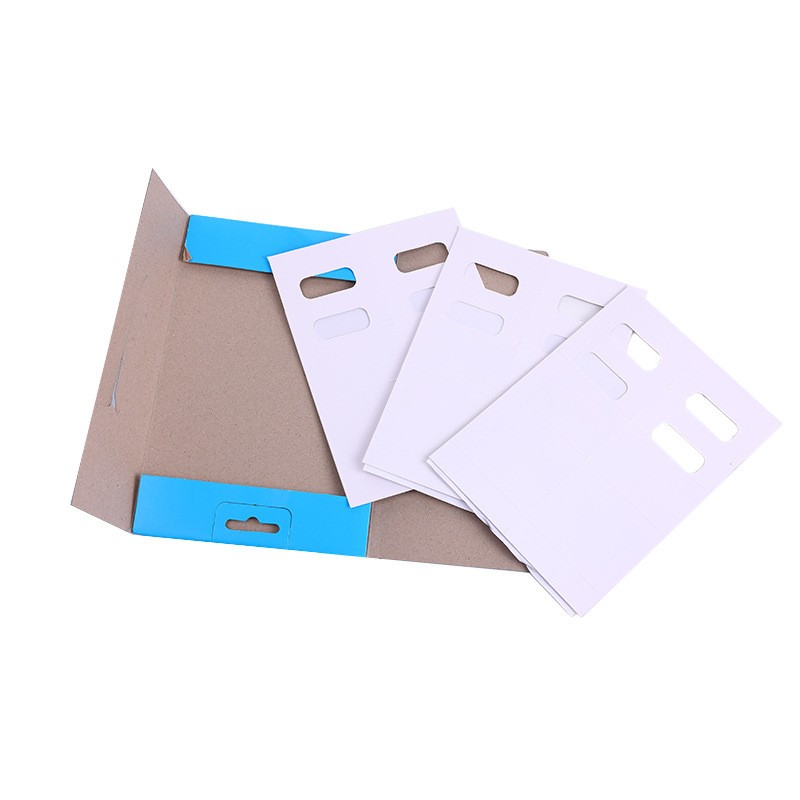
This two-track model helps companies reserve finished goods for predictable urgent demand while moving larger or specification-dependent requirements into the production schedule. It lowers the possibility of excess finished inventory without removing access to fast supply. Yiwu Jinli lists factory direct supply, bulk production, flexible small batch orders, OEM manufacturing, ODM manufacturing, and long-term supply cooperation among its available business models.
Choosing Transport According to Demand
Logistics planning is another important part of balancing speed and sustainability. For large shipments that do not require immediate arrival, sea freight is identified as a cost-effective option for industrial hardware orders and long-term OEM projects. Railway transportation is available for deliveries to Europe and Central Asia, offering an alternative for buyers seeking a balance between cost and transit efficiency. Truck transportation supports domestic and nearby cross-border routes, while air freight is appropriate when international orders must arrive sooner than sea transport allows.
Segmenting Demand by Application
Inventory requirements also vary according to where products will be used. Catering and food industry facilities may rely on sticky rat boards in areas where chemical solutions are restricted. Industrial warehouses can use these products for monitoring activity and intercepting rodents at an early stage. Separating demand by operating environment gives buyers a more accurate basis for stock levels and replenishment instead of treating every order as identical.
Quality Controls and Supply Reliability
Sustainability also depends on avoiding rework, rejected goods, and inefficient replacement shipments. The stated quality system includes raw material inspection, production process inspection, semi-finished product inspection, surface treatment inspection, assembly inspection, final product inspection, and packaging inspection. The company also lists trade mark and copyright credentials, including trade mark certificate No. 15322289 and Copyright certificate No. 黔作登字-2020-F-00118638.
Reported export cooperation includes sticky mouse board orders supplied for resale in India, Brazil, and Peru. The cited quantities were 40,000 pieces, 617,000 pieces, and 1.8 million pieces. These examples demonstrate experience handling both moderate and high-volume international requirements.
Comparing Supply and Freight Options
| Option | Recommended application | Availability and sustainability perspective |
|---|---|---|
| Stock order | Immediate or near-term requirements | Usually delivered in 3 to 7 days; replenishment should be controlled to prevent overstocking |
| Customized order | Planned specifications and predictable volume | Approximately 1 month; enables production to be aligned with confirmed demand |
| Sea freight | Large shipments and long-term OEM programs | Cost-effective when the delivery schedule allows extended transit |
| Railway transportation | Europe and Central Asia deliveries | Provides a practical balance between transit time and transportation cost |
| Air freight | Urgent international requirements | Shortens international delivery time when speed is the priority |
Frequently Asked Questions
What is the delivery time for stock orders?
Stock orders are listed with a delivery period of 3 to 7 days. Customized orders generally require 1 month.
Which freight method is generally more economical for large orders?
Sea freight is described as a cost-effective choice for large-volume industrial hardware orders and long-term OEM manufacturing projects. Buyers should still consider the required arrival date and destination before confirming the method.
How can buyers maintain availability without creating excess inventory?
Keep a controlled quantity of ready goods for immediate demand, direct recurring and forecastable requirements into customized production, and select freight based on urgency. Demand should also be separated by use case, including catering facilities, food processing environments, and industrial warehouses.
Practical Recommendation
A balanced purchasing program should reserve stock orders for short-notice demand and use the 1-month customized route for planned volumes. When the schedule is flexible, sea or railway transportation can support more efficient logistics planning; air freight should be reserved for genuinely urgent international shipments. With factory direct supply, bulk production, flexible small batch orders, OEM, ODM, and long-term cooperation available, buyers can select a model that fits both operational needs and sustainability targets.
About Us
Yiwu Jinli Commodity Co., Ltd., also known as Yiwu Jinli and operating under the MUSTRAP brand, was founded in 2010. The company combines research and development, manufacturing, and sales of pest control products. Its independent workshops and production lines have a stated daily capacity of 80,000 units, including sticky rat traps, flypaper, cockroach traps, and related items. Its markets include South America, the Middle East, Southeast Asia, Africa, India, Pakistan, Uzbekistan, Brazil, Ecuador, Romania, Iraq, and other regions. Cooperation examples include customers in India, Brazil, and Peru.

REPORT