







-
 Agriculture
-
 Health-Care
-
 Environment
-
 Construction-Real-Estate
-
 Tools-Hardware
-
 Home-Garden
-
 Furniture
-
 Luggage-Bags-Cases
-
 Medical-devices-Supplies
-
 Gifts-Crafts
-
 Sports-Entertainment
-
 Food-Beverage
-
 Vehicles-Transportation
-
 Power-Transmission
-
 Material-Handling
-
 Renewable-Energy
-
 Safety
-
 Testing-Instrument-Equipment
-
 Construction-Building-Machinery
-
 Pet-Supplies
-
 Personal-Care-Household-Cleaning
-
 Vehicle-Accessories-Electronics-Tools
-
 School-Office-Supplies
-
 Packaging-Printing
-
 Mother-Kids-Toys
-
 Business-Services
-
 Commercial-Equipment-Machinery
-
 Apparel-Accessories
-
 Security
-
 Shoes-Accessories
-
 Vehicle-Parts-Accessories
-
 Jewelry-Eyewear-Watches-Accessories
-
 Lights-Lighting
-
 Fabric-Textile-Raw-Material
-
 Fabrication-Services
-
 Industrial-Machinery
-
 Consumer-Electronics
-
 Electrical-Equipment-Supplies
-
 Electronic-Components-Accessories-Telecommunications
-
 Home-Appliances
-
 Beauty
-
 Chemicals
-
 Rubber-Plastics
-
 Metals-Alloys


























































































































































































































































































































































































































































































































































































- Masonry Materials
- Curtain Walls & Accessories
- Earthwork Products
- Fireproofing Materials
- Heat Insulation Materials
- Plastic Building Materials
- Building Boards
- Soundproofing Materials
- Timber
- Waterproofing Materials
- Balustrades & Handrails
- Bathroom & Kitchen
- Flooring & Accessories
- Tiles & Accessories
- Door, Window & Accessories
- Fireplaces & Stoves
- Floor Heating Systems & Parts
- Stairs & Stair Parts
- Ceilings
- Elevators & Escalators
- Stone
- Countertops, Vanity Tops & Table Tops
- Mosaics
- Metal Building Materials
- Multifunctional Materials
- Ladders & Scaffoldings
- Mouldings
- Corner Guards
- Decorative Films
- Formwork
- Building & Industrial Glass
- Other Construction & Real Estate
- Wallpapers/Wall panels
- HVAC System & Parts
- Outdoor Facilities
- Prefabricated Buildings
- Festive & Party Supplies
- Bathroom Products
- Household Sundries
- Rain Gear
- Garden Supplies
- Household Cleaning Tools & Accessories
- Lighters & Smoking Accessories
- Home Storage & Organization
- Household Scales
- Smart Home Improvement
- Home Textiles
- Kitchenware
- Drinkware & Accessories
- Dinnerware, Coffee & Wine
- Home Decor
- Golf
- Fitness & Body Building
- Amusement Park Facilities
- Billiards, Board Game,Coin Operated Games
- Musical Instruments
- Outdoor Affordable Luxury Sports
- Camping & Hiking
- Fishing
- Sports Safety&Rehabilitation
- Ball Sports Equipments
- Water Sports
- Winter Sports
- Luxury Travel Equipments
- Sports Shoes, Bags & Accessories
- Cycling
- Other Sports & Entertainment Products
- Artificial Grass&Sports Flooring&Sports Court Equipment
- Scooters
- Food Ingredients
- Honey & Honey Products
- Snacks
- Nuts & Kernels
- Seafood
- Plant & Animal Oil
- Beverages
- Fruit & Vegetable Products
- Frog & Escargot
- Bean Products
- Egg Products
- Dairy Products
- Seasonings & Condiments
- Canned Food
- Instant Food
- Baked Goods
- Other Food & Beverage
- Meat & Poultry
- Confectionery
- Grain Products
- Feminie Care
- Hair Care & Styling
- Body Care
- Hands & Feet Care
- Hygiene Products
- Men's Grooming
- Laundry Cleaning Supplies
- Travel Size & Gift Sets
- Room Deodorizers
- Other Personal Care Products
- Pest Control Products
- Special Household Cleaning
- Floor Cleaning
- Kitchen & Bathroom Cleaning
- Oral Care
- Bath Supplies
- Yellow Pages
- Correction Supplies
- Office Binding Supplies
- Office Cutting Supplies
- Board Erasers
- Office Adhesives & Tapes
- Education Supplies
- Pencil Cases & Bags
- Notebooks & Writing Pads
- File Folder Accessories
- Calendars
- Writing Accessories
- Commercial Office Supplies
- Pencil Sharpeners
- Pens
- Letter Pad/Paper
- Paper Envelopes
- Desk Organizers
- Pencils
- Markers & Highlighters
- Filing Products
- Art Supplies
- Easels
- Badge Holder & Accessories
- Office Paper
- Printer Supplies
- Book Covers
- Other Office & School Supplies
- Stationery Set
- Boards
- Clipboards
- Stamps
- Drafting Supplies
- Stencils
- Electronic Dictionary
- Books
- Map
- Magazines
- Calculators
- Baby & Toddler Toys
- Educational Toys
- Classic Toys
- Dress Up & Pretend Play
- Toy Vehicle
- Stuffed Animals & Plush Toys
- Outdoor Toys & Structures
- Balloons & Accessories
- Baby Food
- Children's Clothing
- Baby Supplies & Products
- Maternity Clothes
- Kids Shoes
- Baby Care
- Novelty & Gag Toys
- Dolls & Accessories
- Puzzle & Games
- Blocks & Model Building Toys
- Toddler Clothing
- Baby Clothing
- Kids' Luggage & Bags
- Arts, Crafts & DIY Toys
- Action & Toy Figures
- Baby Appliances
- Hobbies & Models
- Remote Control Toys
- Promotional Toys
- Pregnancy & Maternity
- Hygiene Products
- Kid's Textile&Bedding
- Novelty & Special Use
- Toy Weapons
- Baby Gifts
- Baby Storage & Organization
- Auto Drive Systems
- ATV/UTV Parts & Accessories
- Marine Parts & Accessories
- Other Auto Parts
- Trailer Parts & Accessories
- Auto Transmission Systems
- Train Parts & Accessories
- Universal Parts
- Railway Parts & Accessories
- Auto Brake Systems
- Aviation Parts & Accessories
- Truck Parts & Accessories
- Auto Suspension Systems
- Auto Lighting Systems
- New Energy Vehicle Parts & Accessories
- Auto Steering Systems
- Wheels, Tires & Accessories
- Bus Parts & Accessories
- Auto Performance Parts
- Cooling System
- Go-Kart & Kart Racer Parts & Accessories
- Air Conditioning Systems
- Heavy Duty Vehicle Parts & Accessories
- Auto Electrical Systems
- Auto Body Systems
- Auto Engine Systems
- Container Parts & Accessories
- Motorcycle Parts & Accessories
- Refrigeration & Heat Exchange Equipment
- Machine Tool Equipment
- Food & Beverage Machinery
- Agricultural Machinery & Equipment
- Apparel & Textile Machinery
- Chemical Machinery
- Packaging Machines
- Paper Production Machinery
- Plastic & Rubber Processing Machinery
- Industrial Robots
- Electronic Products Machinery
- Metal & Metallurgy Machinery
- Woodworking Machinery
- Home Product Manufacturing Machinery
- Machinery Accessories
- Environmental Machinery
- Machinery Service
- Electrical Equipment Manufacturing Machinery
- Industrial Compressors & Parts
- Tobacco & Cigarette Machinery
- Production Line
- Used Industrial Machinery
- Electronics Production Machinery
- Other Machinery & Industrial Equipment
- Camera, Photo & Accessories
- Portable Audio, Video & Accessories
- Television, Home Audio, Video & Accessories
- Video Games & Accessories
- Mobile Phone & Accessories
- Electronic Publications
- Earphone & Headphone & Accessories
- Speakers & Accessories
- Smart Electronics
- TV Receivers & Accessories
- Mobile Phone & Computer Repair Parts
- Chargers, Batteries & Power Supplies
- Used Electronics
- VR, AR, MR Hardware & Software
- Projectors & Presentation Equipments
- Other Consumer Electronics
- Cables & Commonly Used Accessories
- Computer Hardware & Software
- Displays, Signage and Optoelectronics
- Discrete Semiconductors
- Wireless & IoT Module and Products
- Telecommunications
- Connectors, Terminals & Accessories
- Development Boards, Electronic Modules and Kits
- Circuit Protection
- Sensors
- Isolators
- Audio Components and Products
- Integrated Circuits
- Power Supplies
- Relays
- RF, Microwave and RFID
- Electronic Accessories & Supplies
- Passive Components
- PCB & PCBA
- Air Quality Appliances
- Home Appliance Parts
- Heating & Cooling Appliances
- Small Kitchen Appliances
- Laundry Appliances
- Water Heaters
- Water Treatment Appliances
- Refrigerators & Freezers
- Personal Care & Beauty Appliances
- Major Kitchen Appliances
- Cleaning Appliances
- Second-hand Appliances
- Smart Home Appliances
- Other Home Appliances
- Energy Chemicals
- Inorganic Chemicals
- Basic Organic Chemicals
- Agrochemicals
- Admixture & Additives
- Catalysts & Chemical Auxiliary Agents
- Pigments & Dyestuff
- Coating & Paint
- Daily Chemicals
- Polymer
- Organic Intermediate
- Adhesives & Sealants
- Chemical Waste
- Biological Chemical Products
- Surface Treatment Chemicals
- Painting & Coating
- Chemical Reagents
- Flavor & Fragrance
- Non-Explosive Demolition Agents
- Other Chemicals
- Custom Chemical Services

How to Evaluate Wood Frame Saw Blade Tension and Cutting Accuracy Before Purchase
How to Assess a Wood Frame Saw Before Buying
When comparing a Wood Frame Saw, blade tension and cutting accuracy should be evaluated as two separate technical factors. The available specifications provide measurable accuracy limits, but they do not identify a blade-tension value, adjustment range, or testing method. Buyers should therefore use the published accuracy data as a starting point and request written tension-related documentation before placing an order.
Key Buying Points
- The stated cutting accuracy is up to ±0.1 mm at cutting heights of 120 mm or less, and up to ±0.2 mm above 120 mm.
- No blade-tension setting, adjustment range, or tension-measurement procedure is included in the available product information.
- The adjustable cutting-height range is 30–200 mm, while the minimum product thickness is 2 mm.
- Accuracy should be compared under the same cutting height, feed speed, material, and measurement conditions required for the buyer’s application.
- Applications such as panel furniture, solid wood furniture, raw-log processing, and engineered-wood production may require different verification conditions.
Understanding Tension and Cutting Accuracy
Blade tension describes how the blade is secured and maintained during operation. Cutting accuracy, by contrast, is the resulting dimensional performance of the machine. These characteristics are related in operation but should not be treated as interchangeable. Motor power, blade quantity, stroke rate, or machine weight cannot be used as substitutes for documented tension control.
The available Wood Frame Saw data lists 25 saw blades, a 210 mm stroke, and a speed of 480 strokes per minute. However, it does not state the blade-tension specification. Before buying, ask the supplier whether tension is manually or automatically adjusted, what the recommended setting or range is, and how operators can check that the blade remains within tolerance.
Compare Accuracy at the Intended Cutting Height
The published accuracy changes according to cutting height. The machine is specified to achieve up to ±0.1 mm at a height of 120 mm and up to ±0.2 mm when cutting above 120 mm. This means a single general precision figure is not sufficient for a technical comparison. The buyer should request results at the exact height planned for production.
Additional operating parameters establish the conditions for a fair evaluation. Feed speed can be adjusted from 0.1–1.5 m/min, cutting height can be set from 30–200 mm, and the minimum product thickness is 2 mm. The listed block length is at least 300 mm. These specifications should be compared with the dimensions, density, and production method of the timber or boards to be processed.
Information to Request from the Supplier
Before issuing a purchase order, request a written technical response covering the blade-tension setting, adjustment procedure, inspection tools, and acceptance criteria. Also ask how the stated cutting accuracy was measured. Important details include the test material, blade condition, feed speed, cutting height, number of test cuts, and measuring equipment.
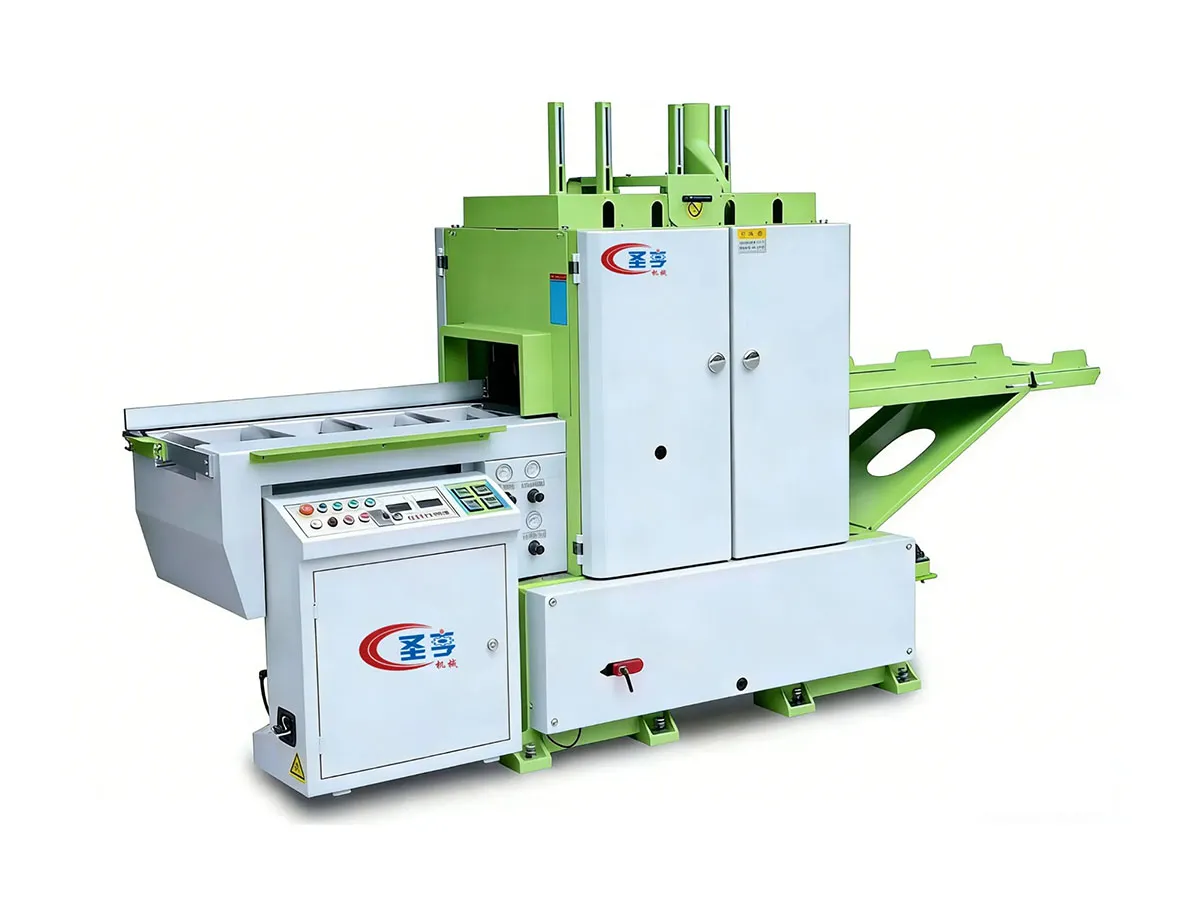
The machine is equipped with a 22 kW main motor and has listed dimensions of 3600 × 1030 × 2500 mm, with a weight of 3300 kg. These figures help describe the machine’s configuration and installation requirements, but they do not prove blade-tension performance or cutting precision.
Quality and Production Support
Foshan Sun Hunt reports that its quality procedures include precision calibration, extended load-running tests, mechanical-clearance inspection, positioning-accuracy checks, and control-program optimization before shipment. The company also states that complete machine testing and rework are carried out when required. Buyers can ask for inspection records that specifically address blade tension and cutting accuracy rather than relying only on general factory testing claims.
The supplier has reported delivering a 19-machine wooden-door production line to India and a 10-machine wood-processing line to the UAE. These projects suggest experience with production-line planning, although the available information does not include independent blade-tension readings or third-party accuracy reports for this particular Wood Frame Saw.
Specification Comparison Checklist
| Evaluation point | Published information | Buyer verification request |
|---|---|---|
| Blade tension | No value or range stated | Request the recommended setting, adjustment method, and measurement procedure |
| Accuracy at or below 120 mm | Up to ±0.1 mm | Confirm material, feed speed, blade condition, and measurement method |
| Accuracy above 120 mm | Up to ±0.2 mm | Request test results at the actual production height |
| Cutting-height capability | 30–200 mm, adjustable | Match the range to the required timber or board sizes |
| Feed-speed range | 0.1–1.5 m/min | Identify the feed speed used to obtain the accuracy claim |
| Factory verification | Calibration and long-duration load tests are stated | Request relevant inspection reports and acceptance standards |
Frequently Asked Questions
Does the available information specify blade tension?
No. The current product information does not provide a blade-tension value, adjustment range, or testing method. These details should be obtained from the supplier in writing.
What cutting accuracy is documented?
The stated performance is up to ±0.1 mm at a cutting height of 120 mm and up to ±0.2 mm above 120 mm. Any competing quotation should identify the cutting height used for its accuracy claim.
What conditions should be used for a fair comparison?
Compare the same cutting height, feed speed, material dimensions, blade condition, measurement method, calibration status, and load-test procedure. The machine’s listed operating range includes a 30–200 mm cutting height, a 0.1–1.5 m/min feed speed, and a minimum product thickness of 2 mm.
Conclusion and Purchase Recommendations
The documented accuracy limits provide a practical benchmark, but blade tension remains an item requiring confirmation because no specification is currently listed. Buyers should request the tension-setting and verification procedure, then obtain accuracy evidence under the intended cutting height and feed speed. Foshan Sun Hunt supports customized machinery and complete production-line solutions. The stated minimum order quantity is one set, with a typical delivery period of 20–35 days. Available technical services include online installation guidance, spare-parts support, machine modification, and control-system optimization. For technical consultation, contact vincent@fsshmachine.cn.
About Foshan Sun Hunt
Foshan Sun Hunt Woodworking Machinery Co.,Ltd. is based in Lunjiao Town, Shunde District, Foshan City. The company develops and manufactures woodworking equipment for a range of processing applications. Its management and R&D team focuses on continued development of woodworking machinery technology. The product portfolio includes CNC router machines, double-end saws, planers, drilling machines, edge banding machines, and panel saws.

REPORT