







-
 Agriculture
-
 Health-Care
-
 Environment
-
 Construction-Real-Estate
-
 Tools-Hardware
-
 Home-Garden
-
 Furniture
-
 Luggage-Bags-Cases
-
 Medical-devices-Supplies
-
 Gifts-Crafts
-
 Sports-Entertainment
-
 Food-Beverage
-
 Vehicles-Transportation
-
 Power-Transmission
-
 Material-Handling
-
 Renewable-Energy
-
 Safety
-
 Testing-Instrument-Equipment
-
 Construction-Building-Machinery
-
 Pet-Supplies
-
 Personal-Care-Household-Cleaning
-
 Vehicle-Accessories-Electronics-Tools
-
 School-Office-Supplies
-
 Packaging-Printing
-
 Mother-Kids-Toys
-
 Business-Services
-
 Commercial-Equipment-Machinery
-
 Apparel-Accessories
-
 Security
-
 Shoes-Accessories
-
 Vehicle-Parts-Accessories
-
 Jewelry-Eyewear-Watches-Accessories
-
 Lights-Lighting
-
 Fabric-Textile-Raw-Material
-
 Fabrication-Services
-
 Industrial-Machinery
-
 Consumer-Electronics
-
 Electrical-Equipment-Supplies
-
 Electronic-Components-Accessories-Telecommunications
-
 Home-Appliances
-
 Beauty
-
 Chemicals
-
 Rubber-Plastics
-
 Metals-Alloys


























































































































































































































































































































































































































































































































































































- Masonry Materials
- Curtain Walls & Accessories
- Earthwork Products
- Fireproofing Materials
- Heat Insulation Materials
- Plastic Building Materials
- Building Boards
- Soundproofing Materials
- Timber
- Waterproofing Materials
- Balustrades & Handrails
- Bathroom & Kitchen
- Flooring & Accessories
- Tiles & Accessories
- Door, Window & Accessories
- Fireplaces & Stoves
- Floor Heating Systems & Parts
- Stairs & Stair Parts
- Ceilings
- Elevators & Escalators
- Stone
- Countertops, Vanity Tops & Table Tops
- Mosaics
- Metal Building Materials
- Multifunctional Materials
- Ladders & Scaffoldings
- Mouldings
- Corner Guards
- Decorative Films
- Formwork
- Building & Industrial Glass
- Other Construction & Real Estate
- Wallpapers/Wall panels
- HVAC System & Parts
- Outdoor Facilities
- Prefabricated Buildings
- Festive & Party Supplies
- Bathroom Products
- Household Sundries
- Rain Gear
- Garden Supplies
- Household Cleaning Tools & Accessories
- Lighters & Smoking Accessories
- Home Storage & Organization
- Household Scales
- Smart Home Improvement
- Home Textiles
- Kitchenware
- Drinkware & Accessories
- Dinnerware, Coffee & Wine
- Home Decor
- Golf
- Fitness & Body Building
- Amusement Park Facilities
- Billiards, Board Game,Coin Operated Games
- Musical Instruments
- Outdoor Affordable Luxury Sports
- Camping & Hiking
- Fishing
- Sports Safety&Rehabilitation
- Ball Sports Equipments
- Water Sports
- Winter Sports
- Luxury Travel Equipments
- Sports Shoes, Bags & Accessories
- Cycling
- Other Sports & Entertainment Products
- Artificial Grass&Sports Flooring&Sports Court Equipment
- Scooters
- Food Ingredients
- Honey & Honey Products
- Snacks
- Nuts & Kernels
- Seafood
- Plant & Animal Oil
- Beverages
- Fruit & Vegetable Products
- Frog & Escargot
- Bean Products
- Egg Products
- Dairy Products
- Seasonings & Condiments
- Canned Food
- Instant Food
- Baked Goods
- Other Food & Beverage
- Meat & Poultry
- Confectionery
- Grain Products
- Feminie Care
- Hair Care & Styling
- Body Care
- Hands & Feet Care
- Hygiene Products
- Men's Grooming
- Laundry Cleaning Supplies
- Travel Size & Gift Sets
- Room Deodorizers
- Other Personal Care Products
- Pest Control Products
- Special Household Cleaning
- Floor Cleaning
- Kitchen & Bathroom Cleaning
- Oral Care
- Bath Supplies
- Yellow Pages
- Correction Supplies
- Office Binding Supplies
- Office Cutting Supplies
- Board Erasers
- Office Adhesives & Tapes
- Education Supplies
- Pencil Cases & Bags
- Notebooks & Writing Pads
- File Folder Accessories
- Calendars
- Writing Accessories
- Commercial Office Supplies
- Pencil Sharpeners
- Pens
- Letter Pad/Paper
- Paper Envelopes
- Desk Organizers
- Pencils
- Markers & Highlighters
- Filing Products
- Art Supplies
- Easels
- Badge Holder & Accessories
- Office Paper
- Printer Supplies
- Book Covers
- Other Office & School Supplies
- Stationery Set
- Boards
- Clipboards
- Stamps
- Drafting Supplies
- Stencils
- Electronic Dictionary
- Books
- Map
- Magazines
- Calculators
- Baby & Toddler Toys
- Educational Toys
- Classic Toys
- Dress Up & Pretend Play
- Toy Vehicle
- Stuffed Animals & Plush Toys
- Outdoor Toys & Structures
- Balloons & Accessories
- Baby Food
- Children's Clothing
- Baby Supplies & Products
- Maternity Clothes
- Kids Shoes
- Baby Care
- Novelty & Gag Toys
- Dolls & Accessories
- Puzzle & Games
- Blocks & Model Building Toys
- Toddler Clothing
- Baby Clothing
- Kids' Luggage & Bags
- Arts, Crafts & DIY Toys
- Action & Toy Figures
- Baby Appliances
- Hobbies & Models
- Remote Control Toys
- Promotional Toys
- Pregnancy & Maternity
- Hygiene Products
- Kid's Textile&Bedding
- Novelty & Special Use
- Toy Weapons
- Baby Gifts
- Baby Storage & Organization
- Auto Drive Systems
- ATV/UTV Parts & Accessories
- Marine Parts & Accessories
- Other Auto Parts
- Trailer Parts & Accessories
- Auto Transmission Systems
- Train Parts & Accessories
- Universal Parts
- Railway Parts & Accessories
- Auto Brake Systems
- Aviation Parts & Accessories
- Truck Parts & Accessories
- Auto Suspension Systems
- Auto Lighting Systems
- New Energy Vehicle Parts & Accessories
- Auto Steering Systems
- Wheels, Tires & Accessories
- Bus Parts & Accessories
- Auto Performance Parts
- Cooling System
- Go-Kart & Kart Racer Parts & Accessories
- Air Conditioning Systems
- Heavy Duty Vehicle Parts & Accessories
- Auto Electrical Systems
- Auto Body Systems
- Auto Engine Systems
- Container Parts & Accessories
- Motorcycle Parts & Accessories
- Refrigeration & Heat Exchange Equipment
- Machine Tool Equipment
- Food & Beverage Machinery
- Agricultural Machinery & Equipment
- Apparel & Textile Machinery
- Chemical Machinery
- Packaging Machines
- Paper Production Machinery
- Plastic & Rubber Processing Machinery
- Industrial Robots
- Electronic Products Machinery
- Metal & Metallurgy Machinery
- Woodworking Machinery
- Home Product Manufacturing Machinery
- Machinery Accessories
- Environmental Machinery
- Machinery Service
- Electrical Equipment Manufacturing Machinery
- Industrial Compressors & Parts
- Tobacco & Cigarette Machinery
- Production Line
- Used Industrial Machinery
- Electronics Production Machinery
- Other Machinery & Industrial Equipment
- Camera, Photo & Accessories
- Portable Audio, Video & Accessories
- Television, Home Audio, Video & Accessories
- Video Games & Accessories
- Mobile Phone & Accessories
- Electronic Publications
- Earphone & Headphone & Accessories
- Speakers & Accessories
- Smart Electronics
- TV Receivers & Accessories
- Mobile Phone & Computer Repair Parts
- Chargers, Batteries & Power Supplies
- Used Electronics
- VR, AR, MR Hardware & Software
- Projectors & Presentation Equipments
- Other Consumer Electronics
- Cables & Commonly Used Accessories
- Computer Hardware & Software
- Displays, Signage and Optoelectronics
- Discrete Semiconductors
- Wireless & IoT Module and Products
- Telecommunications
- Connectors, Terminals & Accessories
- Development Boards, Electronic Modules and Kits
- Circuit Protection
- Sensors
- Isolators
- Audio Components and Products
- Integrated Circuits
- Power Supplies
- Relays
- RF, Microwave and RFID
- Electronic Accessories & Supplies
- Passive Components
- PCB & PCBA
- Air Quality Appliances
- Home Appliance Parts
- Heating & Cooling Appliances
- Small Kitchen Appliances
- Laundry Appliances
- Water Heaters
- Water Treatment Appliances
- Refrigerators & Freezers
- Personal Care & Beauty Appliances
- Major Kitchen Appliances
- Cleaning Appliances
- Second-hand Appliances
- Smart Home Appliances
- Other Home Appliances
- Energy Chemicals
- Inorganic Chemicals
- Basic Organic Chemicals
- Agrochemicals
- Admixture & Additives
- Catalysts & Chemical Auxiliary Agents
- Pigments & Dyestuff
- Coating & Paint
- Daily Chemicals
- Polymer
- Organic Intermediate
- Adhesives & Sealants
- Chemical Waste
- Biological Chemical Products
- Surface Treatment Chemicals
- Painting & Coating
- Chemical Reagents
- Flavor & Fragrance
- Non-Explosive Demolition Agents
- Other Chemicals
- Custom Chemical Services

How to Select Precision CNC Components That Maintain Tolerances Under Continuous Operation
Maintaining strict dimensional tolerances during ongoing, heavy-duty operation is a critical requirement for high-performance industrial machinery. When mechanical systems run continuously, localized heat buildup, mechanical friction, and material fatigue can lead to premature wear and dimensional drift. Selecting turned parts crafted from thermally stable alloys, specifying proper manufacturing techniques, and enforcing rigorous surface treatments are essential steps to ensure long-term positional accuracy.
Key Factors for Dimensional Stability
- Appropriate Alloy Selection: Choose robust materials like stainless steel (304/316) for corrosion resistance or high-strength alloy steel (4140/4340) for heavy mechanical loads.
- Advanced Machining Methods: Utilize multi-axis CNC turning and Swiss machining to consistently maintain tight tolerances ranging from ±0.1 mm down to ±0.03 mm.
- Surface Finish & Heat Treatments: Apply stress-relief annealing, hard anodizing, or thermal treatments to combat mechanical wear and friction-induced heat.
- Application-Driven Hardware Specs: Match component parameters specifically to high-frequency packaging automation, robotic positioning systems, and heavy industrial drives.
Engineering Principles for High-Cycle Reliability
Preventing tolerance degradation under constant load requires a balance between low thermal expansion and high mechanical fatigue resistance. Friction generated at moving contact surfaces causes localized temperature spikes, expanding metal components and impairing operational precision. By controlling surface roughness to levels between Ra 0.8 and Ra 1.6, mechanical friction is drastically reduced, helping preserve tight tolerances throughout extended duty cycles.
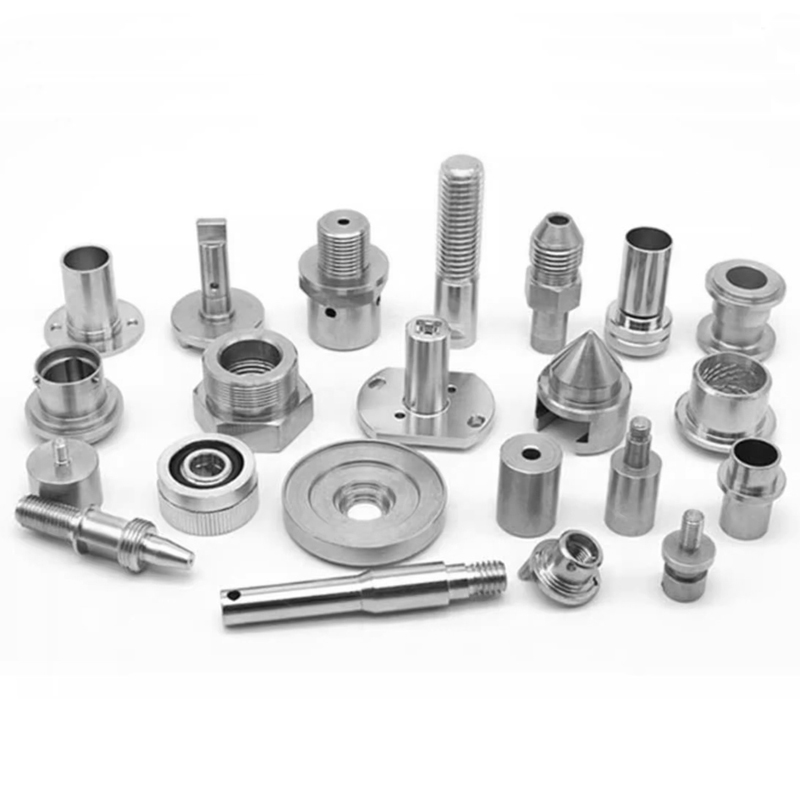
Stringent quality control protocols back up precision production processes. Operations incorporating automated CNC milling, turning, and wire EDM rely on multi-stage quality checks—often including up to 23 distinct in-process inspection points. A notable example involved supplying 65,000 adjustable clamping knobs for CNC machine positioning equipment in Italy, where consistent dimensions and high wear resistance eliminated locking force degradation over prolonged operational periods.
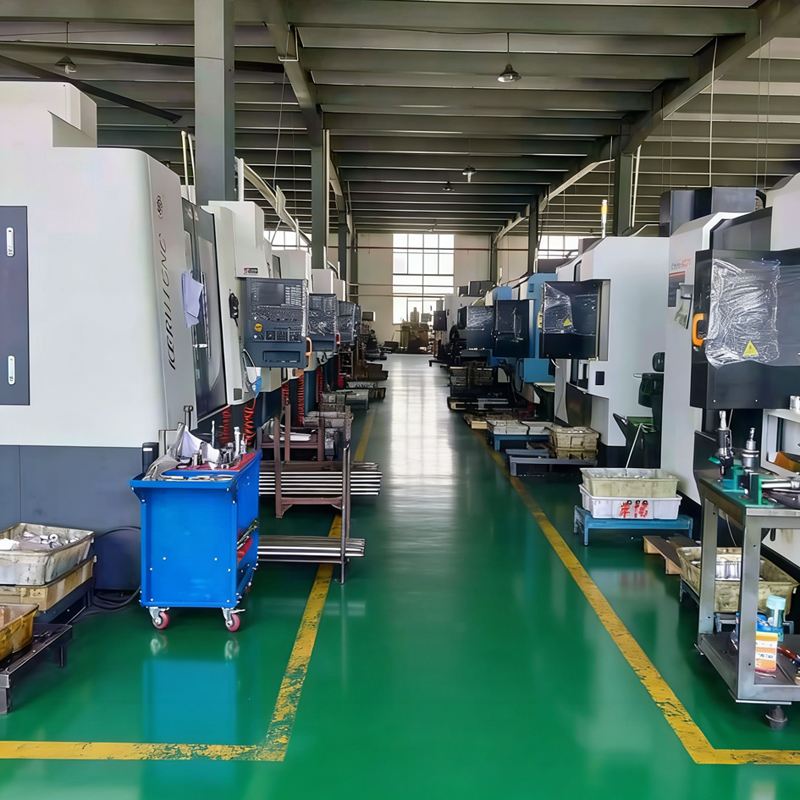
Manufacturing under certified systems like ISO ZT-Q-24120011S guarantees that raw material stock, partially finished parts, and final assemblies comply strictly with 2D and 3D engineering files (including STEP, STP, DWG, and DXF). This disciplined verification keeps operational defect rates under 0.3%, ensuring parts remain stable in severe application conditions.
Material & Technical Performance Matrix
| Material Grade | Mechanical Performance | Machining Tolerance | Surface Finishing Options | Primary Application Area |
|---|---|---|---|---|
| Stainless Steel (304 / 316) | High tensile strength, exceptional heat & corrosion resistance | ±0.03 mm | Passivation, Polishing, Electroplating | Fluid handling valves, food automation, marine components |
| Alloy Steel (4140 / 4340) | Superior hardness, high fatigue limits, anti-wear properties | ±0.03 mm | Heat Treatment, Zinc Plating, Black Oxide | Heavy equipment drives, automotive power transmissions |
| Aluminum (6061 / 7075) | High strength-to-weight ratio, lightweight | ±0.03 mm to ±0.1 mm | Clear/Black Anodizing, Hard Anodizing | Robotic actuators, automated positioning fixtures |
| Engineering Plastics (POM / PEEK) | Low coefficient of friction, high chemical stability | ±0.1 mm | As Machined, Stress-Relief Annealing | Sliding guide bushings, semiconductor processing fixtures |
Frequently Asked Questions
Which machining processes offer the best dimensional consistency for cylindrical parts?
Swiss machining and multi-axis CNC turning deliver exceptional concentricity and accuracy for cylindrical parts from 0.5 mm to 500 mm in diameter, reliably achieving precision tolerances up to ±0.03 mm.
How does controlling surface roughness extend part life?
Achieving smooth surface finishes (such as Ra 0.8 or polished surfaces) minimizes contact friction during sliding or rotational motion. Less friction leads to reduced thermal expansion and lower surface wear, preserving tolerance limits over extended use.
What batch sizes are recommended for initial tolerance validation?
Starting with prototype lots of 1 to 10 units enables full drawing validation and First Article Inspection (FAI). Small batches of 50 to 500 units help confirm production repeatability before initiating full-scale manufacturing runs over 1,000 units.
Summary & Recommendations
Selecting durable CNC parts capable of retaining tight tolerances under continuous operation involves picking the right engineering materials, enforcing precision limits down to ±0.03 mm, and maintaining strict ISO-certified inspection steps. Verifying surface finish requirements early in development protects your equipment against premature tolerance failure. Flexible OEM and ODM production setups support projects from initial prototypes (1–10 pieces) to full production capacities exceeding 250,000 units monthly. For tailored technical guidance or project quotes, contact our team at 86-15868979792.
About Us
ZheJiang Dream Industry Limited is a premier manufacturer specializing in high-precision CNC components, stainless steel handwheels, and custom industrial hardware. Operating a modern 2,500 square meter production facility housing over 100 sets of advanced machinery—80% of which are fully automated CNC systems—the company achieves an annual output of over 3 million units. Exporting 65% of its products to more than 30 countries across Europe, North America, South America, the Middle East, and Southeast Asia, the company holds ISO quality certification ZT-Q-24120011S and multiple design patents, delivering reliable OEM/ODM solutions to industrial equipment manufacturers worldwide.
REPORT