







-
 Agriculture
-
 Health-Care
-
 Environment
-
 Construction-Real-Estate
-
 Tools-Hardware
-
 Home-Garden
-
 Furniture
-
 Luggage-Bags-Cases
-
 Medical-devices-Supplies
-
 Gifts-Crafts
-
 Sports-Entertainment
-
 Food-Beverage
-
 Vehicles-Transportation
-
 Power-Transmission
-
 Material-Handling
-
 Renewable-Energy
-
 Safety
-
 Testing-Instrument-Equipment
-
 Construction-Building-Machinery
-
 Pet-Supplies
-
 Personal-Care-Household-Cleaning
-
 Vehicle-Accessories-Electronics-Tools
-
 School-Office-Supplies
-
 Packaging-Printing
-
 Mother-Kids-Toys
-
 Business-Services
-
 Commercial-Equipment-Machinery
-
 Apparel-Accessories
-
 Security
-
 Shoes-Accessories
-
 Vehicle-Parts-Accessories
-
 Jewelry-Eyewear-Watches-Accessories
-
 Lights-Lighting
-
 Fabric-Textile-Raw-Material
-
 Fabrication-Services
-
 Industrial-Machinery
-
 Consumer-Electronics
-
 Electrical-Equipment-Supplies
-
 Electronic-Components-Accessories-Telecommunications
-
 Home-Appliances
-
 Beauty
-
 Chemicals
-
 Rubber-Plastics
-
 Metals-Alloys


























































































































































































































































































































































































































































































































































































- Masonry Materials
- Curtain Walls & Accessories
- Earthwork Products
- Fireproofing Materials
- Heat Insulation Materials
- Plastic Building Materials
- Building Boards
- Soundproofing Materials
- Timber
- Waterproofing Materials
- Balustrades & Handrails
- Bathroom & Kitchen
- Flooring & Accessories
- Tiles & Accessories
- Door, Window & Accessories
- Fireplaces & Stoves
- Floor Heating Systems & Parts
- Stairs & Stair Parts
- Ceilings
- Elevators & Escalators
- Stone
- Countertops, Vanity Tops & Table Tops
- Mosaics
- Metal Building Materials
- Multifunctional Materials
- Ladders & Scaffoldings
- Mouldings
- Corner Guards
- Decorative Films
- Formwork
- Building & Industrial Glass
- Other Construction & Real Estate
- Wallpapers/Wall panels
- HVAC System & Parts
- Outdoor Facilities
- Prefabricated Buildings
- Festive & Party Supplies
- Bathroom Products
- Household Sundries
- Rain Gear
- Garden Supplies
- Household Cleaning Tools & Accessories
- Lighters & Smoking Accessories
- Home Storage & Organization
- Household Scales
- Smart Home Improvement
- Home Textiles
- Kitchenware
- Drinkware & Accessories
- Dinnerware, Coffee & Wine
- Home Decor
- Golf
- Fitness & Body Building
- Amusement Park Facilities
- Billiards, Board Game,Coin Operated Games
- Musical Instruments
- Outdoor Affordable Luxury Sports
- Camping & Hiking
- Fishing
- Sports Safety&Rehabilitation
- Ball Sports Equipments
- Water Sports
- Winter Sports
- Luxury Travel Equipments
- Sports Shoes, Bags & Accessories
- Cycling
- Other Sports & Entertainment Products
- Artificial Grass&Sports Flooring&Sports Court Equipment
- Scooters
- Food Ingredients
- Honey & Honey Products
- Snacks
- Nuts & Kernels
- Seafood
- Plant & Animal Oil
- Beverages
- Fruit & Vegetable Products
- Frog & Escargot
- Bean Products
- Egg Products
- Dairy Products
- Seasonings & Condiments
- Canned Food
- Instant Food
- Baked Goods
- Other Food & Beverage
- Meat & Poultry
- Confectionery
- Grain Products
- Feminie Care
- Hair Care & Styling
- Body Care
- Hands & Feet Care
- Hygiene Products
- Men's Grooming
- Laundry Cleaning Supplies
- Travel Size & Gift Sets
- Room Deodorizers
- Other Personal Care Products
- Pest Control Products
- Special Household Cleaning
- Floor Cleaning
- Kitchen & Bathroom Cleaning
- Oral Care
- Bath Supplies
- Yellow Pages
- Correction Supplies
- Office Binding Supplies
- Office Cutting Supplies
- Board Erasers
- Office Adhesives & Tapes
- Education Supplies
- Pencil Cases & Bags
- Notebooks & Writing Pads
- File Folder Accessories
- Calendars
- Writing Accessories
- Commercial Office Supplies
- Pencil Sharpeners
- Pens
- Letter Pad/Paper
- Paper Envelopes
- Desk Organizers
- Pencils
- Markers & Highlighters
- Filing Products
- Art Supplies
- Easels
- Badge Holder & Accessories
- Office Paper
- Printer Supplies
- Book Covers
- Other Office & School Supplies
- Stationery Set
- Boards
- Clipboards
- Stamps
- Drafting Supplies
- Stencils
- Electronic Dictionary
- Books
- Map
- Magazines
- Calculators
- Baby & Toddler Toys
- Educational Toys
- Classic Toys
- Dress Up & Pretend Play
- Toy Vehicle
- Stuffed Animals & Plush Toys
- Outdoor Toys & Structures
- Balloons & Accessories
- Baby Food
- Children's Clothing
- Baby Supplies & Products
- Maternity Clothes
- Kids Shoes
- Baby Care
- Novelty & Gag Toys
- Dolls & Accessories
- Puzzle & Games
- Blocks & Model Building Toys
- Toddler Clothing
- Baby Clothing
- Kids' Luggage & Bags
- Arts, Crafts & DIY Toys
- Action & Toy Figures
- Baby Appliances
- Hobbies & Models
- Remote Control Toys
- Promotional Toys
- Pregnancy & Maternity
- Hygiene Products
- Kid's Textile&Bedding
- Novelty & Special Use
- Toy Weapons
- Baby Gifts
- Baby Storage & Organization
- Auto Drive Systems
- ATV/UTV Parts & Accessories
- Marine Parts & Accessories
- Other Auto Parts
- Trailer Parts & Accessories
- Auto Transmission Systems
- Train Parts & Accessories
- Universal Parts
- Railway Parts & Accessories
- Auto Brake Systems
- Aviation Parts & Accessories
- Truck Parts & Accessories
- Auto Suspension Systems
- Auto Lighting Systems
- New Energy Vehicle Parts & Accessories
- Auto Steering Systems
- Wheels, Tires & Accessories
- Bus Parts & Accessories
- Auto Performance Parts
- Cooling System
- Go-Kart & Kart Racer Parts & Accessories
- Air Conditioning Systems
- Heavy Duty Vehicle Parts & Accessories
- Auto Electrical Systems
- Auto Body Systems
- Auto Engine Systems
- Container Parts & Accessories
- Motorcycle Parts & Accessories
- Refrigeration & Heat Exchange Equipment
- Machine Tool Equipment
- Food & Beverage Machinery
- Agricultural Machinery & Equipment
- Apparel & Textile Machinery
- Chemical Machinery
- Packaging Machines
- Paper Production Machinery
- Plastic & Rubber Processing Machinery
- Industrial Robots
- Electronic Products Machinery
- Metal & Metallurgy Machinery
- Woodworking Machinery
- Home Product Manufacturing Machinery
- Machinery Accessories
- Environmental Machinery
- Machinery Service
- Electrical Equipment Manufacturing Machinery
- Industrial Compressors & Parts
- Tobacco & Cigarette Machinery
- Production Line
- Used Industrial Machinery
- Electronics Production Machinery
- Other Machinery & Industrial Equipment
- Camera, Photo & Accessories
- Portable Audio, Video & Accessories
- Television, Home Audio, Video & Accessories
- Video Games & Accessories
- Mobile Phone & Accessories
- Electronic Publications
- Earphone & Headphone & Accessories
- Speakers & Accessories
- Smart Electronics
- TV Receivers & Accessories
- Mobile Phone & Computer Repair Parts
- Chargers, Batteries & Power Supplies
- Used Electronics
- VR, AR, MR Hardware & Software
- Projectors & Presentation Equipments
- Other Consumer Electronics
- Cables & Commonly Used Accessories
- Computer Hardware & Software
- Displays, Signage and Optoelectronics
- Discrete Semiconductors
- Wireless & IoT Module and Products
- Telecommunications
- Connectors, Terminals & Accessories
- Development Boards, Electronic Modules and Kits
- Circuit Protection
- Sensors
- Isolators
- Audio Components and Products
- Integrated Circuits
- Power Supplies
- Relays
- RF, Microwave and RFID
- Electronic Accessories & Supplies
- Passive Components
- PCB & PCBA
- Air Quality Appliances
- Home Appliance Parts
- Heating & Cooling Appliances
- Small Kitchen Appliances
- Laundry Appliances
- Water Heaters
- Water Treatment Appliances
- Refrigerators & Freezers
- Personal Care & Beauty Appliances
- Major Kitchen Appliances
- Cleaning Appliances
- Second-hand Appliances
- Smart Home Appliances
- Other Home Appliances
- Energy Chemicals
- Inorganic Chemicals
- Basic Organic Chemicals
- Agrochemicals
- Admixture & Additives
- Catalysts & Chemical Auxiliary Agents
- Pigments & Dyestuff
- Coating & Paint
- Daily Chemicals
- Polymer
- Organic Intermediate
- Adhesives & Sealants
- Chemical Waste
- Biological Chemical Products
- Surface Treatment Chemicals
- Painting & Coating
- Chemical Reagents
- Flavor & Fragrance
- Non-Explosive Demolition Agents
- Other Chemicals
- Custom Chemical Services

How to Structure Delivery Penalties in a Soldering Station Supply Contract
Delivery terms for soldering stations should do more than list an estimated lead time. A well-drafted supply contract needs a specific delivery trigger, a confirmed deadline, shipment and documentation standards, inspection rules, and clearly agreed consequences for delay or non-conforming goods. For BA-898A+ Hot Air Soldering and Desoldering Station orders, the most effective approach is to use measurable obligations linked to a written delivery date.
Essential Delivery Terms to Include
Before imposing any late-delivery remedy, both parties should confirm the commercial details that determine when the obligation begins and ends. This avoids disputes over whether the supplier was actually late.
- Specify the order quantity, delivery destination, shipping method, and party responsible for freight arrangements.
- Define the event that starts the delivery period, such as purchase order confirmation, receipt of payment, or approval of customized artwork.
- Clarify whether delivery occurs when goods leave the factory, are transferred to the carrier, or arrive at the named destination.
- Use separate remedies for late shipment, missing quantities, incorrect models, transit damage, and incomplete shipping documents.
- Include a written notice process and a reasonable correction period before stronger remedies are exercised.
BA-898A+ Product Information Relevant to Contract Acceptance
The BA-898A+ is a hot air soldering and desoldering station designed for repair and training applications, including mobile phone and tablet servicing, laptop and computer motherboard work, and electronics education environments. The unit has a maximum power rating of 540W. Its hot-air temperature range is 100–480℃, and its soldering-iron temperature range is 200–480℃.
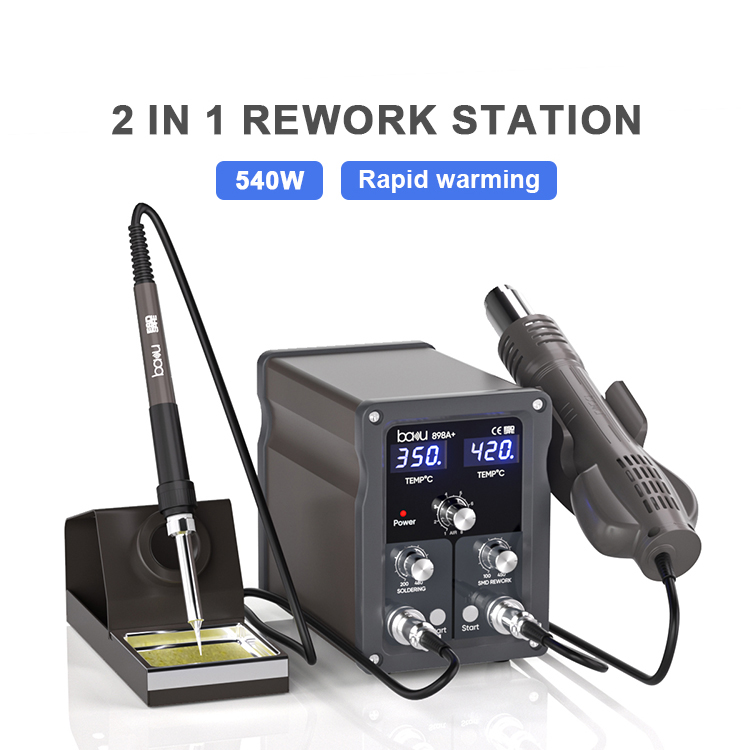
For contractual reference, the product information states an MOQ of 50 units, an estimated lead time of 7–15 days, one included soldering-iron tip, and a one-year warranty. These specifications should be written into the purchase order or technical appendix rather than relying solely on general product listings.
How to Draft a Late-Delivery Penalty Clause
Convert the Lead Time into a Dated Commitment
A stated lead time of 7–15 days should be converted into a verifiable schedule. For example, the contract may state that the supplier must hand over the goods to the nominated carrier no later than a specified calendar date, calculated from payment confirmation or another agreed trigger. Customized OEM or ODM orders may require a different starting event from standard stock orders.
Agree on Remedies Instead of Assuming a Penalty Rate
Product information may state a delivery range, but it does not automatically establish a late-delivery penalty percentage. Any deduction, liquidated damages amount, or daily charge should be expressly approved by both buyer and supplier. Alternatives may include reimbursement of documented direct freight adjustments, a mutually agreed price reduction, a revised delivery plan, or cancellation of the undelivered portion of the order.
The clause should also state a maximum liability cap, the method used to calculate the remedy, and the circumstances that pause or exclude liability. Such exceptions may include force majeure events or other delays expressly accepted in writing by both parties.
Require Notice and an Opportunity to Cure
When a delay occurs, the buyer should provide written notice describing the missed obligation. The supplier should then receive an agreed correction period to dispatch the goods, provide a revised schedule, or resolve the issue. If the supplier does not cure the breach within that period, the buyer may apply the agreed remedy or cancel the delayed balance.
Separate Timing Failures from Quantity and Specification Issues
An on-time shipment is not necessarily a compliant shipment. The contract should treat shortages, wrong products, and technical deviations as separate non-conformities. The buyer should be entitled to inspect the delivery against the agreed model, ordered quantity, packing list, and technical specifications.
For BA-898A+ orders, acceptance requirements can identify the correct model, 540W maximum power, hot-air range of 100–480℃, soldering-iron range of 200–480℃, included soldering-iron tip, and warranty terms. If units are missing or do not match the agreed specifications, the contract may provide for replenishment, replacement, return, credit, or another negotiated settlement.
Shipping Documents and Compliance Records
Document obligations should be as specific as the product requirements. The agreement can list the required packing list, commercial invoice, transport documents, and any applicable compliance records, together with the date by which each document must be supplied.
Guangdong BAKU Technology Development Co., Ltd. lists CE, FCC, and RoHS certificates for soldering stations. However, buyers should identify the exact certificate and product configuration required for their order rather than assuming that every document applies automatically to every shipment. A contract may permit the buyer to withhold final acceptance until agreed documentation has been corrected or delivered.
Recommended Contract Controls by Delivery Issue
| Contract area | Items to state clearly | Possible agreed remedy | BA-898A+ reference |
|---|---|---|---|
| Delivery schedule | Trigger event, firm delivery date, destination, and definition of delivery | Correction period, revised schedule, agreed deduction, or cancellation of delayed units | Published lead time: 7–15 days |
| Quantity control | Ordered units, partial-shipment rules, packing list, and inspection process | Replenishment, credit, or another agreed settlement for shortages | MOQ: 50 units |
| Technical conformity | Model number, power, temperature ranges, included accessories, and warranty | Replacement, return, repair, or credit for non-conforming goods | 540W maximum; hot air 100–480℃; soldering iron 200–480℃; one-year warranty |
| Freight and payment | Carrier, Incoterms or trade method, freight responsibility, and payment release conditions | Hold final acceptance or use the applicable contractual remedy | Listed shipping: DHL, UPS, and shipping; listed payment: T/T, PayPal, and Alipay |
| Required documents | Certificate copies, shipping records, document format, and submission deadline | Document correction or suspension of acceptance until records are provided | CE, FCC, and RoHS certificates are listed for soldering stations |
Practical Shipment Planning for Mixed and Bulk Orders
Shipment milestones are particularly useful for large, mixed, or destination-sensitive orders. Reported cooperation cases include approximately 500 mixed tool-kit sets delivered to a repair store in the Philippines, around 300 sets of welding and testing equipment supplied to a Malaysian training institution, a mixed full-container shipment for a Saudi Arabian wholesaler, and about 200 pieces for a laptop repair workshop in Mexico.
These types of transactions support the use of detailed packing lists, shipment notices, container or carrier handover milestones, and staged acceptance checks. For mixed orders, each product line should be separately listed so that a shortfall in one item does not obscure compliance with the rest of the shipment.
Frequently Asked Questions
Must the contract include a fixed percentage for late delivery?
No. A fixed percentage or amount should be used only when both parties have agreed to it in writing. Since the available BA-898A+ product information gives a 7–15-day delivery period but no stated penalty rate, the contract should establish the calculation method, cap, and exceptions if a late-delivery charge is required.
Which delivery date should apply to a BA-898A+ purchase?
The parties should turn the estimated lead time into a calendar-date obligation. To do this, they must define the starting event, which may be order confirmation, deposit receipt, full payment confirmation, or approval of customization requirements.
What happens if the goods arrive on time but are the wrong soldering stations?
The agreement should contain a separate inspection and non-conformity clause. It should identify the BA-898A+ model and required parameters, state the period for reporting defects, and specify whether the supplier must replace, replenish, accept a return, issue credit, or provide another mutually agreed solution.
Conclusion
The strongest delivery-penalty clause is part of a complete acceptance system, not an isolated charge for late shipment. It should combine a dated delivery commitment with clear product specifications, quantity controls, shipping responsibilities, document requirements, notice procedures, correction periods, and mutually agreed remedies. Because BAKU offers both standard wholesale products and OEM/ODM customization, contracts should use different delivery triggers where customization affects production timing. For detailed technical solutions or support, please reach out to us via hanker002@bakutool.com.
About Us
Guangdong BAKU Technology Development Co., Ltd. was established in 2003 and provides professional electronic repair tools, including soldering stations, solder flux, solder paste, screwdrivers, and ultrasonic cleaners. Its standardized workshops, assembly lines, and flexible manufacturing model support bulk purchases, small trial orders, and customized projects. The company exports 90% of its output and identifies South America, Europe, and Southeast Asia as key markets. It lists CE, FCC, and RoHS certifications for soldering stations and serves customers in a range of industries.

REPORT