







-
 Agriculture
-
 Health-Care
-
 Environment
-
 Construction-Real-Estate
-
 Tools-Hardware
-
 Home-Garden
-
 Furniture
-
 Luggage-Bags-Cases
-
 Medical-devices-Supplies
-
 Gifts-Crafts
-
 Sports-Entertainment
-
 Food-Beverage
-
 Vehicles-Transportation
-
 Power-Transmission
-
 Material-Handling
-
 Renewable-Energy
-
 Safety
-
 Testing-Instrument-Equipment
-
 Construction-Building-Machinery
-
 Pet-Supplies
-
 Personal-Care-Household-Cleaning
-
 Vehicle-Accessories-Electronics-Tools
-
 School-Office-Supplies
-
 Packaging-Printing
-
 Mother-Kids-Toys
-
 Business-Services
-
 Commercial-Equipment-Machinery
-
 Apparel-Accessories
-
 Security
-
 Shoes-Accessories
-
 Vehicle-Parts-Accessories
-
 Jewelry-Eyewear-Watches-Accessories
-
 Lights-Lighting
-
 Fabric-Textile-Raw-Material
-
 Fabrication-Services
-
 Industrial-Machinery
-
 Consumer-Electronics
-
 Electrical-Equipment-Supplies
-
 Electronic-Components-Accessories-Telecommunications
-
 Home-Appliances
-
 Beauty
-
 Chemicals
-
 Rubber-Plastics
-
 Metals-Alloys


























































































































































































































































































































































































































































































































































































- Masonry Materials
- Curtain Walls & Accessories
- Earthwork Products
- Fireproofing Materials
- Heat Insulation Materials
- Plastic Building Materials
- Building Boards
- Soundproofing Materials
- Timber
- Waterproofing Materials
- Balustrades & Handrails
- Bathroom & Kitchen
- Flooring & Accessories
- Tiles & Accessories
- Door, Window & Accessories
- Fireplaces & Stoves
- Floor Heating Systems & Parts
- Stairs & Stair Parts
- Ceilings
- Elevators & Escalators
- Stone
- Countertops, Vanity Tops & Table Tops
- Mosaics
- Metal Building Materials
- Multifunctional Materials
- Ladders & Scaffoldings
- Mouldings
- Corner Guards
- Decorative Films
- Formwork
- Building & Industrial Glass
- Other Construction & Real Estate
- Wallpapers/Wall panels
- HVAC System & Parts
- Outdoor Facilities
- Prefabricated Buildings
- Festive & Party Supplies
- Bathroom Products
- Household Sundries
- Rain Gear
- Garden Supplies
- Household Cleaning Tools & Accessories
- Lighters & Smoking Accessories
- Home Storage & Organization
- Household Scales
- Smart Home Improvement
- Home Textiles
- Kitchenware
- Drinkware & Accessories
- Dinnerware, Coffee & Wine
- Home Decor
- Golf
- Fitness & Body Building
- Amusement Park Facilities
- Billiards, Board Game,Coin Operated Games
- Musical Instruments
- Outdoor Affordable Luxury Sports
- Camping & Hiking
- Fishing
- Sports Safety&Rehabilitation
- Ball Sports Equipments
- Water Sports
- Winter Sports
- Luxury Travel Equipments
- Sports Shoes, Bags & Accessories
- Cycling
- Other Sports & Entertainment Products
- Artificial Grass&Sports Flooring&Sports Court Equipment
- Scooters
- Food Ingredients
- Honey & Honey Products
- Snacks
- Nuts & Kernels
- Seafood
- Plant & Animal Oil
- Beverages
- Fruit & Vegetable Products
- Frog & Escargot
- Bean Products
- Egg Products
- Dairy Products
- Seasonings & Condiments
- Canned Food
- Instant Food
- Baked Goods
- Other Food & Beverage
- Meat & Poultry
- Confectionery
- Grain Products
- Feminie Care
- Hair Care & Styling
- Body Care
- Hands & Feet Care
- Hygiene Products
- Men's Grooming
- Laundry Cleaning Supplies
- Travel Size & Gift Sets
- Room Deodorizers
- Other Personal Care Products
- Pest Control Products
- Special Household Cleaning
- Floor Cleaning
- Kitchen & Bathroom Cleaning
- Oral Care
- Bath Supplies
- Yellow Pages
- Correction Supplies
- Office Binding Supplies
- Office Cutting Supplies
- Board Erasers
- Office Adhesives & Tapes
- Education Supplies
- Pencil Cases & Bags
- Notebooks & Writing Pads
- File Folder Accessories
- Calendars
- Writing Accessories
- Commercial Office Supplies
- Pencil Sharpeners
- Pens
- Letter Pad/Paper
- Paper Envelopes
- Desk Organizers
- Pencils
- Markers & Highlighters
- Filing Products
- Art Supplies
- Easels
- Badge Holder & Accessories
- Office Paper
- Printer Supplies
- Book Covers
- Other Office & School Supplies
- Stationery Set
- Boards
- Clipboards
- Stamps
- Drafting Supplies
- Stencils
- Electronic Dictionary
- Books
- Map
- Magazines
- Calculators
- Baby & Toddler Toys
- Educational Toys
- Classic Toys
- Dress Up & Pretend Play
- Toy Vehicle
- Stuffed Animals & Plush Toys
- Outdoor Toys & Structures
- Balloons & Accessories
- Baby Food
- Children's Clothing
- Baby Supplies & Products
- Maternity Clothes
- Kids Shoes
- Baby Care
- Novelty & Gag Toys
- Dolls & Accessories
- Puzzle & Games
- Blocks & Model Building Toys
- Toddler Clothing
- Baby Clothing
- Kids' Luggage & Bags
- Arts, Crafts & DIY Toys
- Action & Toy Figures
- Baby Appliances
- Hobbies & Models
- Remote Control Toys
- Promotional Toys
- Pregnancy & Maternity
- Hygiene Products
- Kid's Textile&Bedding
- Novelty & Special Use
- Toy Weapons
- Baby Gifts
- Baby Storage & Organization
- Auto Drive Systems
- ATV/UTV Parts & Accessories
- Marine Parts & Accessories
- Other Auto Parts
- Trailer Parts & Accessories
- Auto Transmission Systems
- Train Parts & Accessories
- Universal Parts
- Railway Parts & Accessories
- Auto Brake Systems
- Aviation Parts & Accessories
- Truck Parts & Accessories
- Auto Suspension Systems
- Auto Lighting Systems
- New Energy Vehicle Parts & Accessories
- Auto Steering Systems
- Wheels, Tires & Accessories
- Bus Parts & Accessories
- Auto Performance Parts
- Cooling System
- Go-Kart & Kart Racer Parts & Accessories
- Air Conditioning Systems
- Heavy Duty Vehicle Parts & Accessories
- Auto Electrical Systems
- Auto Body Systems
- Auto Engine Systems
- Container Parts & Accessories
- Motorcycle Parts & Accessories
- Refrigeration & Heat Exchange Equipment
- Machine Tool Equipment
- Food & Beverage Machinery
- Agricultural Machinery & Equipment
- Apparel & Textile Machinery
- Chemical Machinery
- Packaging Machines
- Paper Production Machinery
- Plastic & Rubber Processing Machinery
- Industrial Robots
- Electronic Products Machinery
- Metal & Metallurgy Machinery
- Woodworking Machinery
- Home Product Manufacturing Machinery
- Machinery Accessories
- Environmental Machinery
- Machinery Service
- Electrical Equipment Manufacturing Machinery
- Industrial Compressors & Parts
- Tobacco & Cigarette Machinery
- Production Line
- Used Industrial Machinery
- Electronics Production Machinery
- Other Machinery & Industrial Equipment
- Camera, Photo & Accessories
- Portable Audio, Video & Accessories
- Television, Home Audio, Video & Accessories
- Video Games & Accessories
- Mobile Phone & Accessories
- Electronic Publications
- Earphone & Headphone & Accessories
- Speakers & Accessories
- Smart Electronics
- TV Receivers & Accessories
- Mobile Phone & Computer Repair Parts
- Chargers, Batteries & Power Supplies
- Used Electronics
- VR, AR, MR Hardware & Software
- Projectors & Presentation Equipments
- Other Consumer Electronics
- Cables & Commonly Used Accessories
- Computer Hardware & Software
- Displays, Signage and Optoelectronics
- Discrete Semiconductors
- Wireless & IoT Module and Products
- Telecommunications
- Connectors, Terminals & Accessories
- Development Boards, Electronic Modules and Kits
- Circuit Protection
- Sensors
- Isolators
- Audio Components and Products
- Integrated Circuits
- Power Supplies
- Relays
- RF, Microwave and RFID
- Electronic Accessories & Supplies
- Passive Components
- PCB & PCBA
- Air Quality Appliances
- Home Appliance Parts
- Heating & Cooling Appliances
- Small Kitchen Appliances
- Laundry Appliances
- Water Heaters
- Water Treatment Appliances
- Refrigerators & Freezers
- Personal Care & Beauty Appliances
- Major Kitchen Appliances
- Cleaning Appliances
- Second-hand Appliances
- Smart Home Appliances
- Other Home Appliances
- Energy Chemicals
- Inorganic Chemicals
- Basic Organic Chemicals
- Agrochemicals
- Admixture & Additives
- Catalysts & Chemical Auxiliary Agents
- Pigments & Dyestuff
- Coating & Paint
- Daily Chemicals
- Polymer
- Organic Intermediate
- Adhesives & Sealants
- Chemical Waste
- Biological Chemical Products
- Surface Treatment Chemicals
- Painting & Coating
- Chemical Reagents
- Flavor & Fragrance
- Non-Explosive Demolition Agents
- Other Chemicals
- Custom Chemical Services

How to Write Clear Compliance Descriptions for Human Hair Lace Front Wigs
Accurate product descriptions help customs authorities, distributors, and retailers identify human hair lace front wigs without unnecessary regulatory confusion. A complete listing should state the 100% human hair composition, cap and lace construction, country of origin, density, dimensions, length, color, and processing details. Consistent technical information across product pages, invoices, labels, and shipping documents can reduce classification questions and import delays in international markets.
Essential Information for Clear Product Descriptions
For human hair lace front wigs, vague phrases such as “premium natural hair” do not provide enough information for customs or commercial buyers. Product records should use specific, verifiable terms that match the physical item and supporting documents.
1. State the Material Precisely
Identify the product as made from 100% human hair and clarify whether the hair has been colored, bleached, chemically treated, or otherwise processed. This distinction helps prevent the wig from being incorrectly grouped with synthetic fiber products during tariff review or import inspection.
2. Describe the Construction and Measurements
Specify whether the unit is a lace front wig, lace closure wig, or full lace wig. Include the lace size, cap dimensions, adjustable features, density rating, and available lengths, such as 8 to 16 inches. Product style should also be identified clearly, including options such as straight bob, body wave bob, or other customized designs.
3. Document Color, Origin, and Processing
Use defined color categories such as natural black, brown, blonde, or a named customized shade. The description should also provide the declared origin and describe relevant production or finishing processes. Matching this information with the commercial invoice gives inspectors a consistent reference when checking imported cargo.
Why Technical Details Matter in International Trade
Regulatory reviews of human hair imports commonly focus on material authenticity, product identity, country of origin, and the accuracy of commercial paperwork. Generic descriptions can lead to requests for additional evidence, manual examinations, or disagreements about tariff classification. A detailed listing for Human Hair Bob Wigs, for example, can identify the exact fiber content, cap type, style, length, color, and treatment history rather than relying on broad marketing language.
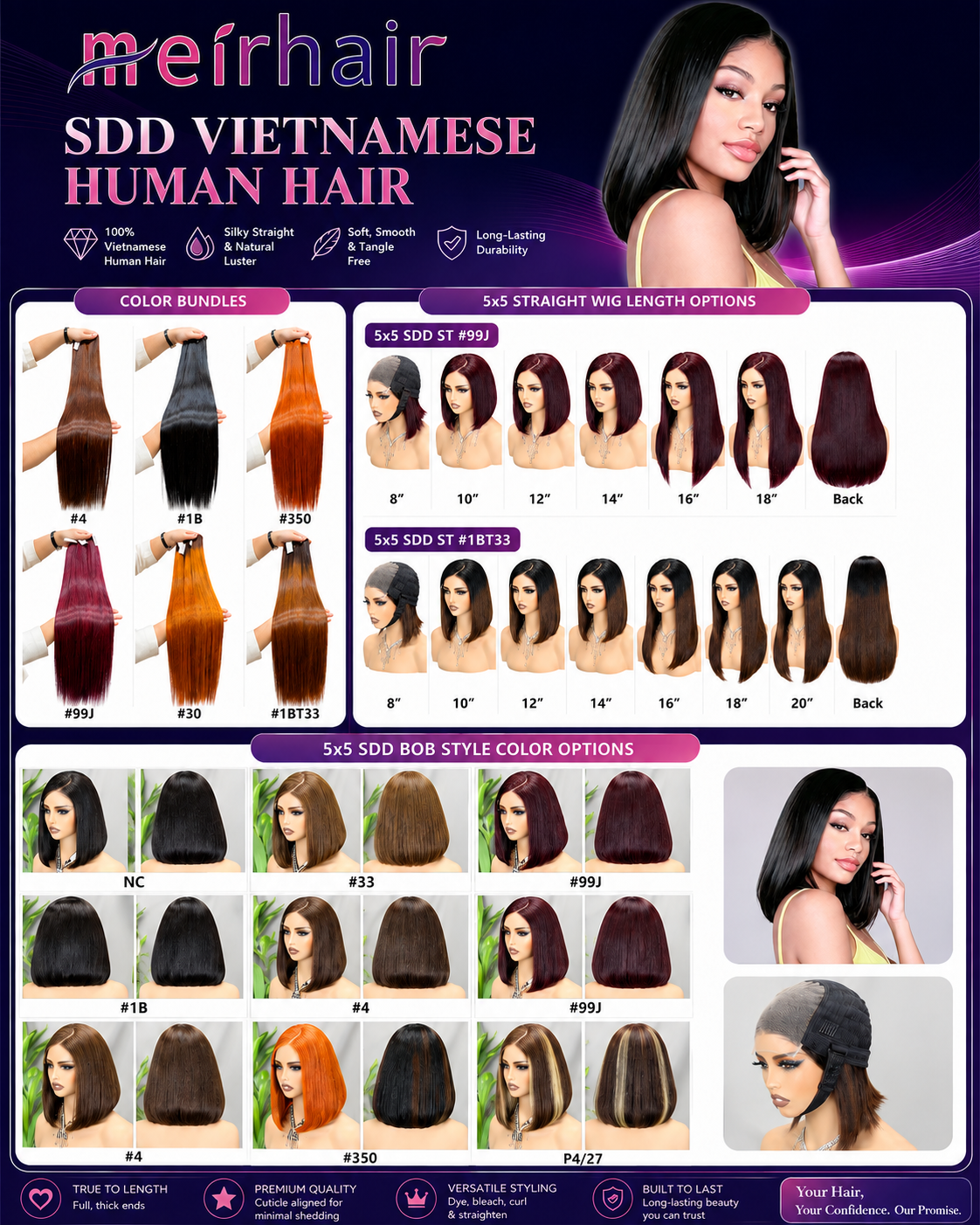
Quality information should be equally specific. A documented inspection process may verify the source and authenticity of the hair, finished length, product weight, density, texture consistency, color accuracy, and lace condition. These records support compliance reviews in destinations such as the United States, Canada, Europe, Africa, and South America.
For example, a distributor importing 300 human hair wigs into the United States can reduce documentation discrepancies by using one standardized product description on the quotation, invoice, packing list, label, and shipping records. When the paperwork reflects the actual product parameters, forwarders and customs brokers have a clearer basis for processing the shipment.
Comparison of Description Quality
The following comparison shows how specific wording improves product identification and operational coordination.
| Information Area | Unclear Wording | Recommended Technical Wording | Practical Benefit |
|---|---|---|---|
| Material | Premium natural hair | 100% human hair, with raw hair authenticity inspected | Supports correct product identification and reduces classification disputes. |
| Construction | Lace wig unit | Lace front, lace closure, or full lace wig; bob style; 8–16 inch length | Gives buyers, brokers, and inspectors measurable product details. |
| Product Quality | Quality checked | Pre-shipment checks for length, density, texture, color, weight, and lace integrity | Creates traceable evidence for receiving and import verification. |
| Documents and Logistics | Standard delivery | International express, air, or sea freight supported by matching forwarder documents | Improves consistency between logistics records and the commercial invoice. |
FAQ: Regulatory Product Descriptions
Q1: Why should a wig listing identify the hair as 100% human hair?
A: A direct material declaration helps distinguish the item from synthetic wigs and gives customs officials a more reliable basis for reviewing the product description and applicable tariff treatment.
Q2: Which construction details should be included?
A: List the wig type, lace dimensions, cap measurements, density, available lengths, style, and color. Identifying whether the unit is lace front, lace closure, or full lace is particularly useful.
Q3: Can private labeling improve documentation consistency?
A: Yes. OEM and ODM packaging can use consistent product names, batch references, labels, and brand information across shipments, making inventory tracking and document matching easier.
Recommended Compliance Checklist
- Declare the material as 100% human hair and note any relevant processing.
- Identify lace and cap construction, dimensions, density, length, style, and color.
- State origin information consistently across product pages and commercial documents.
- Record pre-shipment checks for authenticity, weight, texture, color, length, and lace quality.
- Match private-label packaging, batch information, invoices, and shipping records.
Conclusion
The most effective descriptions for human hair lace front wigs combine commercial clarity with measurable technical specifications. Accurate material declarations, complete construction details, standardized inspection records, and consistent labeling make it easier for importers, customs brokers, distributors, and retailers to verify each shipment. MEIRHAIR supports ready-stock orders with dispatch in as little as 7 days, minimum orders from 1 piece, and OEM/ODM manufacturing for businesses building international supply chains. T/T bank transfer, Alibaba Trade Assurance, and PayPal are available, along with international express, air, and sea freight options. For product specifications or sourcing assistance, contact sales@brazilianhairtop.com.
About MEIRHAIR
MEIRHAIR is a professional human hair brand operated by Guangzhou Ruiju E-Commerce Co., Ltd.. Founded in 2014, the company operates a 5000 sqm factory and has a team of 50 employees focused on human hair wigs, bundles, extensions, braiding hair, and customized hair products. With 100% of its business oriented toward export markets, the company serves customers throughout North America, Europe, Africa, the Middle East, South America, and Southeast Asia, supported by in-house research, development, and customization capabilities.

REPORT