







-
 Agriculture
-
 Health-Care
-
 Environment
-
 Construction-Real-Estate
-
 Tools-Hardware
-
 Home-Garden
-
 Furniture
-
 Luggage-Bags-Cases
-
 Medical-devices-Supplies
-
 Gifts-Crafts
-
 Sports-Entertainment
-
 Food-Beverage
-
 Vehicles-Transportation
-
 Power-Transmission
-
 Material-Handling
-
 Renewable-Energy
-
 Safety
-
 Testing-Instrument-Equipment
-
 Construction-Building-Machinery
-
 Pet-Supplies
-
 Personal-Care-Household-Cleaning
-
 Vehicle-Accessories-Electronics-Tools
-
 School-Office-Supplies
-
 Packaging-Printing
-
 Mother-Kids-Toys
-
 Business-Services
-
 Commercial-Equipment-Machinery
-
 Apparel-Accessories
-
 Security
-
 Shoes-Accessories
-
 Vehicle-Parts-Accessories
-
 Jewelry-Eyewear-Watches-Accessories
-
 Lights-Lighting
-
 Fabric-Textile-Raw-Material
-
 Fabrication-Services
-
 Industrial-Machinery
-
 Consumer-Electronics
-
 Electrical-Equipment-Supplies
-
 Electronic-Components-Accessories-Telecommunications
-
 Home-Appliances
-
 Beauty
-
 Chemicals
-
 Rubber-Plastics
-
 Metals-Alloys


























































































































































































































































































































































































































































































































































































- Masonry Materials
- Curtain Walls & Accessories
- Earthwork Products
- Fireproofing Materials
- Heat Insulation Materials
- Plastic Building Materials
- Building Boards
- Soundproofing Materials
- Timber
- Waterproofing Materials
- Balustrades & Handrails
- Bathroom & Kitchen
- Flooring & Accessories
- Tiles & Accessories
- Door, Window & Accessories
- Fireplaces & Stoves
- Floor Heating Systems & Parts
- Stairs & Stair Parts
- Ceilings
- Elevators & Escalators
- Stone
- Countertops, Vanity Tops & Table Tops
- Mosaics
- Metal Building Materials
- Multifunctional Materials
- Ladders & Scaffoldings
- Mouldings
- Corner Guards
- Decorative Films
- Formwork
- Building & Industrial Glass
- Other Construction & Real Estate
- Wallpapers/Wall panels
- HVAC System & Parts
- Outdoor Facilities
- Prefabricated Buildings
- Festive & Party Supplies
- Bathroom Products
- Household Sundries
- Rain Gear
- Garden Supplies
- Household Cleaning Tools & Accessories
- Lighters & Smoking Accessories
- Home Storage & Organization
- Household Scales
- Smart Home Improvement
- Home Textiles
- Kitchenware
- Drinkware & Accessories
- Dinnerware, Coffee & Wine
- Home Decor
- Golf
- Fitness & Body Building
- Amusement Park Facilities
- Billiards, Board Game,Coin Operated Games
- Musical Instruments
- Outdoor Affordable Luxury Sports
- Camping & Hiking
- Fishing
- Sports Safety&Rehabilitation
- Ball Sports Equipments
- Water Sports
- Winter Sports
- Luxury Travel Equipments
- Sports Shoes, Bags & Accessories
- Cycling
- Other Sports & Entertainment Products
- Artificial Grass&Sports Flooring&Sports Court Equipment
- Scooters
- Food Ingredients
- Honey & Honey Products
- Snacks
- Nuts & Kernels
- Seafood
- Plant & Animal Oil
- Beverages
- Fruit & Vegetable Products
- Frog & Escargot
- Bean Products
- Egg Products
- Dairy Products
- Seasonings & Condiments
- Canned Food
- Instant Food
- Baked Goods
- Other Food & Beverage
- Meat & Poultry
- Confectionery
- Grain Products
- Feminie Care
- Hair Care & Styling
- Body Care
- Hands & Feet Care
- Hygiene Products
- Men's Grooming
- Laundry Cleaning Supplies
- Travel Size & Gift Sets
- Room Deodorizers
- Other Personal Care Products
- Pest Control Products
- Special Household Cleaning
- Floor Cleaning
- Kitchen & Bathroom Cleaning
- Oral Care
- Bath Supplies
- Yellow Pages
- Correction Supplies
- Office Binding Supplies
- Office Cutting Supplies
- Board Erasers
- Office Adhesives & Tapes
- Education Supplies
- Pencil Cases & Bags
- Notebooks & Writing Pads
- File Folder Accessories
- Calendars
- Writing Accessories
- Commercial Office Supplies
- Pencil Sharpeners
- Pens
- Letter Pad/Paper
- Paper Envelopes
- Desk Organizers
- Pencils
- Markers & Highlighters
- Filing Products
- Art Supplies
- Easels
- Badge Holder & Accessories
- Office Paper
- Printer Supplies
- Book Covers
- Other Office & School Supplies
- Stationery Set
- Boards
- Clipboards
- Stamps
- Drafting Supplies
- Stencils
- Electronic Dictionary
- Books
- Map
- Magazines
- Calculators
- Baby & Toddler Toys
- Educational Toys
- Classic Toys
- Dress Up & Pretend Play
- Toy Vehicle
- Stuffed Animals & Plush Toys
- Outdoor Toys & Structures
- Balloons & Accessories
- Baby Food
- Children's Clothing
- Baby Supplies & Products
- Maternity Clothes
- Kids Shoes
- Baby Care
- Novelty & Gag Toys
- Dolls & Accessories
- Puzzle & Games
- Blocks & Model Building Toys
- Toddler Clothing
- Baby Clothing
- Kids' Luggage & Bags
- Arts, Crafts & DIY Toys
- Action & Toy Figures
- Baby Appliances
- Hobbies & Models
- Remote Control Toys
- Promotional Toys
- Pregnancy & Maternity
- Hygiene Products
- Kid's Textile&Bedding
- Novelty & Special Use
- Toy Weapons
- Baby Gifts
- Baby Storage & Organization
- Auto Drive Systems
- ATV/UTV Parts & Accessories
- Marine Parts & Accessories
- Other Auto Parts
- Trailer Parts & Accessories
- Auto Transmission Systems
- Train Parts & Accessories
- Universal Parts
- Railway Parts & Accessories
- Auto Brake Systems
- Aviation Parts & Accessories
- Truck Parts & Accessories
- Auto Suspension Systems
- Auto Lighting Systems
- New Energy Vehicle Parts & Accessories
- Auto Steering Systems
- Wheels, Tires & Accessories
- Bus Parts & Accessories
- Auto Performance Parts
- Cooling System
- Go-Kart & Kart Racer Parts & Accessories
- Air Conditioning Systems
- Heavy Duty Vehicle Parts & Accessories
- Auto Electrical Systems
- Auto Body Systems
- Auto Engine Systems
- Container Parts & Accessories
- Motorcycle Parts & Accessories
- Refrigeration & Heat Exchange Equipment
- Machine Tool Equipment
- Food & Beverage Machinery
- Agricultural Machinery & Equipment
- Apparel & Textile Machinery
- Chemical Machinery
- Packaging Machines
- Paper Production Machinery
- Plastic & Rubber Processing Machinery
- Industrial Robots
- Electronic Products Machinery
- Metal & Metallurgy Machinery
- Woodworking Machinery
- Home Product Manufacturing Machinery
- Machinery Accessories
- Environmental Machinery
- Machinery Service
- Electrical Equipment Manufacturing Machinery
- Industrial Compressors & Parts
- Tobacco & Cigarette Machinery
- Production Line
- Used Industrial Machinery
- Electronics Production Machinery
- Other Machinery & Industrial Equipment
- Camera, Photo & Accessories
- Portable Audio, Video & Accessories
- Television, Home Audio, Video & Accessories
- Video Games & Accessories
- Mobile Phone & Accessories
- Electronic Publications
- Earphone & Headphone & Accessories
- Speakers & Accessories
- Smart Electronics
- TV Receivers & Accessories
- Mobile Phone & Computer Repair Parts
- Chargers, Batteries & Power Supplies
- Used Electronics
- VR, AR, MR Hardware & Software
- Projectors & Presentation Equipments
- Other Consumer Electronics
- Cables & Commonly Used Accessories
- Computer Hardware & Software
- Displays, Signage and Optoelectronics
- Discrete Semiconductors
- Wireless & IoT Module and Products
- Telecommunications
- Connectors, Terminals & Accessories
- Development Boards, Electronic Modules and Kits
- Circuit Protection
- Sensors
- Isolators
- Audio Components and Products
- Integrated Circuits
- Power Supplies
- Relays
- RF, Microwave and RFID
- Electronic Accessories & Supplies
- Passive Components
- PCB & PCBA
- Air Quality Appliances
- Home Appliance Parts
- Heating & Cooling Appliances
- Small Kitchen Appliances
- Laundry Appliances
- Water Heaters
- Water Treatment Appliances
- Refrigerators & Freezers
- Personal Care & Beauty Appliances
- Major Kitchen Appliances
- Cleaning Appliances
- Second-hand Appliances
- Smart Home Appliances
- Other Home Appliances
- Energy Chemicals
- Inorganic Chemicals
- Basic Organic Chemicals
- Agrochemicals
- Admixture & Additives
- Catalysts & Chemical Auxiliary Agents
- Pigments & Dyestuff
- Coating & Paint
- Daily Chemicals
- Polymer
- Organic Intermediate
- Adhesives & Sealants
- Chemical Waste
- Biological Chemical Products
- Surface Treatment Chemicals
- Painting & Coating
- Chemical Reagents
- Flavor & Fragrance
- Non-Explosive Demolition Agents
- Other Chemicals
- Custom Chemical Services

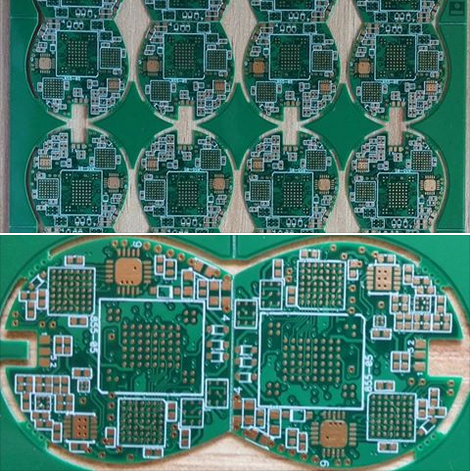
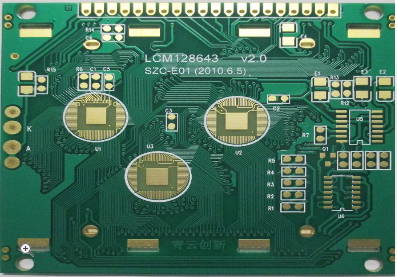
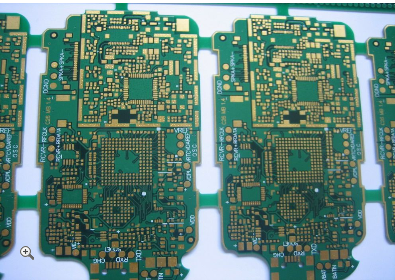
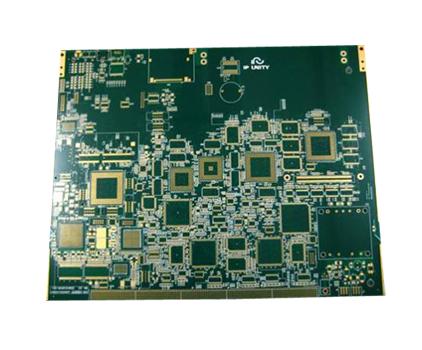
Innovative Plating Half Holes PCB Design Ensuring Superior Signal Integrity And Durable Performance
In the rapidly evolving landscape of electronics, where devices demand higher speeds, greater reliability, and more compact form factors, printed circuit board (PCB) design has become a critical frontier for innovation. Among the advanced techniques pushing the boundaries of performance, Innovative Plating Half Holes PCB Design stands out as a pivotal solution for applications requiring superior signal integrity and durable performance. This design methodology addresses the growing challenges in high-frequency communications, automotive electronics, aerospace systems, and medical devices, where even minor signal distortions or mechanical failures can lead to significant consequences. By integrating precision-engineered half-hole plating—also known as castellated holes—this approach not only enhances electrical connectivity but also ensures robust mechanical endurance, making it a cornerstone for next-generation electronic assemblies.
Understanding Plating Half Holes and Their Structural Advantages
Plating half holes, or castellated holes, refer to holes drilled along the edges of a PCB that are partially plated with conductive material, typically copper, and then cut in half during the board separation process. This creates a series of semi-circular pads that protrude from the board's edge, allowing for direct surface-mount soldering to another PCB or module. Unlike traditional through-hole vias or edge connectors, half holes provide a seamless interface that minimizes signal path discontinuities and reduces the need for additional connectors, which can introduce parasitic capacitance and inductance.
The structural integrity of these plated half holes is achieved through advanced manufacturing processes, such as laser drilling and precise electroplating, which ensure uniform coating and adherence to the hole walls. This uniformity is crucial for maintaining consistent electrical properties across all connections, preventing weak points that could lead to signal degradation or mechanical failure under stress. Moreover, the design allows for tighter packing of components, enabling more compact and lightweight assemblies—a key requirement in modern portable and space-constrained applications.
Enhancing Signal Integrity in High-Frequency Applications
Signal integrity is paramount in high-speed digital and RF circuits, where reflections, crosstalk, and impedance mismatches can severely impact performance. Innovative Plating Half Holes PCB Design directly addresses these issues by providing a low-impedance, continuous pathway for signals transitioning between boards. The plated half holes act as controlled impedance structures, with their geometry and plating thickness carefully calibrated to match the characteristic impedance of the transmission lines. This minimizes signal reflections at the interconnection points, ensuring clean and reliable data transmission even at frequencies exceeding several gigahertz.
Additionally, the reduced parasitic elements associated with half-hole connections—compared to traditional pin headers or solderless connectors—help lower insertion loss and improve bandwidth. By eliminating unnecessary discontinuities, this design supports higher data rates with minimal bit error rates, making it ideal for applications like 5G infrastructure, high-performance computing, and advanced radar systems. Simulations and empirical testing have shown that PCBs utilizing plated half holes exhibit up to 20% better signal quality in high-frequency environments, underscoring their effectiveness in preserving signal fidelity.
Ensuring Durable Performance Under Mechanical and Environmental Stress
Durability is another critical aspect where Innovative Plating Half Holes PCB Design excels. The plated half holes create a strong mechanical bond when soldered to a mating board, distributing stress evenly across the joint and reducing the risk of cracking or detachment during vibration, thermal cycling, or physical impact. This is particularly important in automotive and aerospace industries, where electronics must withstand extreme temperatures, humidity, and mechanical shocks over long operational lifetimes. The robust nature of these connections enhances the overall reliability of the assembly, reducing failure rates and maintenance costs.
Furthermore, the plating material used in half holes often includes additional layers, such as nickel and gold, which provide excellent corrosion resistance and solderability. These coatings protect the copper from oxidation and environmental contaminants, ensuring long-term electrical stability even in harsh conditions. In medical devices, for instance, where sterility and reliability are non-negotiable, plated half holes offer a dependable solution that maintains performance over repeated sterilization cycles. By combining mechanical resilience with environmental protection, this design approach extends the lifespan of electronic products while maintaining consistent performance.
Optimizing Manufacturing Efficiency and Cost-Effectiveness
Beyond performance benefits, Innovative Plating Half Holes PCB Design also contributes to manufacturing efficiency and cost savings. The integration of half holes simplifies the assembly process by enabling direct board-to-board stacking or mounting without intermediate connectors, reducing part count and assembly time. This streamlined approach lowers labor costs and minimizes potential points of failure, leading to higher yield rates and improved overall product quality. Additionally, the precision of modern PCB fabrication techniques allows for high-density layouts with half holes, optimizing space utilization and material usage.
From a design perspective, half holes offer greater flexibility in modular system architectures, allowing designers to create scalable and upgradeable products. For example, in IoT devices or consumer electronics, modules with plated half holes can be easily replaced or upgraded without redesigning the entire PCB, facilitating faster time-to-market and adaptability to evolving technological standards. While the initial setup for half-hole plating may require specialized equipment and expertise, the long-term benefits in reduced warranty claims and enhanced product reliability often justify the investment, making it a cost-effective choice for high-value applications.
Future Trends and Applications in Emerging Technologies
As technology continues to advance, the role of Innovative Plating Half Holes PCB Design is set to expand into new frontiers. In the realm of artificial intelligence and edge computing, where compact, high-speed interconnects are essential for processing vast amounts of data, half-hole designs will enable more efficient integration of processing units and memory modules. Similarly, in renewable energy systems, such as solar inverters and battery management systems, the durability and signal integrity offered by plated half holes will support reliable operation in outdoor and fluctuating environmental conditions.
Research is also underway to enhance the materials and processes used in half-hole plating, such as incorporating advanced alloys or using additive manufacturing techniques to create even finer structures. These innovations promise to further improve electrical performance and mechanical strength, opening doors to applications in flexible electronics and wearable devices. By staying at the forefront of PCB design trends, plated half holes will continue to empower engineers to push the limits of what is possible, ensuring that electronic systems not only meet but exceed the demands of tomorrow's challenges.
REPORT