







-
 Agriculture
-
 Health-Care
-
 Environment
-
 Construction-Real-Estate
-
 Tools-Hardware
-
 Home-Garden
-
 Furniture
-
 Luggage-Bags-Cases
-
 Medical-devices-Supplies
-
 Gifts-Crafts
-
 Sports-Entertainment
-
 Food-Beverage
-
 Vehicles-Transportation
-
 Power-Transmission
-
 Material-Handling
-
 Renewable-Energy
-
 Safety
-
 Testing-Instrument-Equipment
-
 Construction-Building-Machinery
-
 Pet-Supplies
-
 Personal-Care-Household-Cleaning
-
 Vehicle-Accessories-Electronics-Tools
-
 School-Office-Supplies
-
 Packaging-Printing
-
 Mother-Kids-Toys
-
 Business-Services
-
 Commercial-Equipment-Machinery
-
 Apparel-Accessories
-
 Security
-
 Shoes-Accessories
-
 Vehicle-Parts-Accessories
-
 Jewelry-Eyewear-Watches-Accessories
-
 Lights-Lighting
-
 Fabric-Textile-Raw-Material
-
 Fabrication-Services
-
 Industrial-Machinery
-
 Consumer-Electronics
-
 Electrical-Equipment-Supplies
-
 Electronic-Components-Accessories-Telecommunications
-
 Home-Appliances
-
 Beauty
-
 Chemicals
-
 Rubber-Plastics
-
 Metals-Alloys


























































































































































































































































































































































































































































































































































































- Masonry Materials
- Curtain Walls & Accessories
- Earthwork Products
- Fireproofing Materials
- Heat Insulation Materials
- Plastic Building Materials
- Building Boards
- Soundproofing Materials
- Timber
- Waterproofing Materials
- Balustrades & Handrails
- Bathroom & Kitchen
- Flooring & Accessories
- Tiles & Accessories
- Door, Window & Accessories
- Fireplaces & Stoves
- Floor Heating Systems & Parts
- Stairs & Stair Parts
- Ceilings
- Elevators & Escalators
- Stone
- Countertops, Vanity Tops & Table Tops
- Mosaics
- Metal Building Materials
- Multifunctional Materials
- Ladders & Scaffoldings
- Mouldings
- Corner Guards
- Decorative Films
- Formwork
- Building & Industrial Glass
- Other Construction & Real Estate
- Wallpapers/Wall panels
- HVAC System & Parts
- Outdoor Facilities
- Prefabricated Buildings
- Festive & Party Supplies
- Bathroom Products
- Household Sundries
- Rain Gear
- Garden Supplies
- Household Cleaning Tools & Accessories
- Lighters & Smoking Accessories
- Home Storage & Organization
- Household Scales
- Smart Home Improvement
- Home Textiles
- Kitchenware
- Drinkware & Accessories
- Dinnerware, Coffee & Wine
- Home Decor
- Golf
- Fitness & Body Building
- Amusement Park Facilities
- Billiards, Board Game,Coin Operated Games
- Musical Instruments
- Outdoor Affordable Luxury Sports
- Camping & Hiking
- Fishing
- Sports Safety&Rehabilitation
- Ball Sports Equipments
- Water Sports
- Winter Sports
- Luxury Travel Equipments
- Sports Shoes, Bags & Accessories
- Cycling
- Other Sports & Entertainment Products
- Artificial Grass&Sports Flooring&Sports Court Equipment
- Scooters
- Food Ingredients
- Honey & Honey Products
- Snacks
- Nuts & Kernels
- Seafood
- Plant & Animal Oil
- Beverages
- Fruit & Vegetable Products
- Frog & Escargot
- Bean Products
- Egg Products
- Dairy Products
- Seasonings & Condiments
- Canned Food
- Instant Food
- Baked Goods
- Other Food & Beverage
- Meat & Poultry
- Confectionery
- Grain Products
- Feminie Care
- Hair Care & Styling
- Body Care
- Hands & Feet Care
- Hygiene Products
- Men's Grooming
- Laundry Cleaning Supplies
- Travel Size & Gift Sets
- Room Deodorizers
- Other Personal Care Products
- Pest Control Products
- Special Household Cleaning
- Floor Cleaning
- Kitchen & Bathroom Cleaning
- Oral Care
- Bath Supplies
- Yellow Pages
- Correction Supplies
- Office Binding Supplies
- Office Cutting Supplies
- Board Erasers
- Office Adhesives & Tapes
- Education Supplies
- Pencil Cases & Bags
- Notebooks & Writing Pads
- File Folder Accessories
- Calendars
- Writing Accessories
- Commercial Office Supplies
- Pencil Sharpeners
- Pens
- Letter Pad/Paper
- Paper Envelopes
- Desk Organizers
- Pencils
- Markers & Highlighters
- Filing Products
- Art Supplies
- Easels
- Badge Holder & Accessories
- Office Paper
- Printer Supplies
- Book Covers
- Other Office & School Supplies
- Stationery Set
- Boards
- Clipboards
- Stamps
- Drafting Supplies
- Stencils
- Electronic Dictionary
- Books
- Map
- Magazines
- Calculators
- Baby & Toddler Toys
- Educational Toys
- Classic Toys
- Dress Up & Pretend Play
- Toy Vehicle
- Stuffed Animals & Plush Toys
- Outdoor Toys & Structures
- Balloons & Accessories
- Baby Food
- Children's Clothing
- Baby Supplies & Products
- Maternity Clothes
- Kids Shoes
- Baby Care
- Novelty & Gag Toys
- Dolls & Accessories
- Puzzle & Games
- Blocks & Model Building Toys
- Toddler Clothing
- Baby Clothing
- Kids' Luggage & Bags
- Arts, Crafts & DIY Toys
- Action & Toy Figures
- Baby Appliances
- Hobbies & Models
- Remote Control Toys
- Promotional Toys
- Pregnancy & Maternity
- Hygiene Products
- Kid's Textile&Bedding
- Novelty & Special Use
- Toy Weapons
- Baby Gifts
- Baby Storage & Organization
- Auto Drive Systems
- ATV/UTV Parts & Accessories
- Marine Parts & Accessories
- Other Auto Parts
- Trailer Parts & Accessories
- Auto Transmission Systems
- Train Parts & Accessories
- Universal Parts
- Railway Parts & Accessories
- Auto Brake Systems
- Aviation Parts & Accessories
- Truck Parts & Accessories
- Auto Suspension Systems
- Auto Lighting Systems
- New Energy Vehicle Parts & Accessories
- Auto Steering Systems
- Wheels, Tires & Accessories
- Bus Parts & Accessories
- Auto Performance Parts
- Cooling System
- Go-Kart & Kart Racer Parts & Accessories
- Air Conditioning Systems
- Heavy Duty Vehicle Parts & Accessories
- Auto Electrical Systems
- Auto Body Systems
- Auto Engine Systems
- Container Parts & Accessories
- Motorcycle Parts & Accessories
- Refrigeration & Heat Exchange Equipment
- Machine Tool Equipment
- Food & Beverage Machinery
- Agricultural Machinery & Equipment
- Apparel & Textile Machinery
- Chemical Machinery
- Packaging Machines
- Paper Production Machinery
- Plastic & Rubber Processing Machinery
- Industrial Robots
- Electronic Products Machinery
- Metal & Metallurgy Machinery
- Woodworking Machinery
- Home Product Manufacturing Machinery
- Machinery Accessories
- Environmental Machinery
- Machinery Service
- Electrical Equipment Manufacturing Machinery
- Industrial Compressors & Parts
- Tobacco & Cigarette Machinery
- Production Line
- Used Industrial Machinery
- Electronics Production Machinery
- Other Machinery & Industrial Equipment
- Camera, Photo & Accessories
- Portable Audio, Video & Accessories
- Television, Home Audio, Video & Accessories
- Video Games & Accessories
- Mobile Phone & Accessories
- Electronic Publications
- Earphone & Headphone & Accessories
- Speakers & Accessories
- Smart Electronics
- TV Receivers & Accessories
- Mobile Phone & Computer Repair Parts
- Chargers, Batteries & Power Supplies
- Used Electronics
- VR, AR, MR Hardware & Software
- Projectors & Presentation Equipments
- Other Consumer Electronics
- Cables & Commonly Used Accessories
- Computer Hardware & Software
- Displays, Signage and Optoelectronics
- Discrete Semiconductors
- Wireless & IoT Module and Products
- Telecommunications
- Connectors, Terminals & Accessories
- Development Boards, Electronic Modules and Kits
- Circuit Protection
- Sensors
- Isolators
- Audio Components and Products
- Integrated Circuits
- Power Supplies
- Relays
- RF, Microwave and RFID
- Electronic Accessories & Supplies
- Passive Components
- PCB & PCBA
- Air Quality Appliances
- Home Appliance Parts
- Heating & Cooling Appliances
- Small Kitchen Appliances
- Laundry Appliances
- Water Heaters
- Water Treatment Appliances
- Refrigerators & Freezers
- Personal Care & Beauty Appliances
- Major Kitchen Appliances
- Cleaning Appliances
- Second-hand Appliances
- Smart Home Appliances
- Other Home Appliances
- Energy Chemicals
- Inorganic Chemicals
- Basic Organic Chemicals
- Agrochemicals
- Admixture & Additives
- Catalysts & Chemical Auxiliary Agents
- Pigments & Dyestuff
- Coating & Paint
- Daily Chemicals
- Polymer
- Organic Intermediate
- Adhesives & Sealants
- Chemical Waste
- Biological Chemical Products
- Surface Treatment Chemicals
- Painting & Coating
- Chemical Reagents
- Flavor & Fragrance
- Non-Explosive Demolition Agents
- Other Chemicals
- Custom Chemical Services

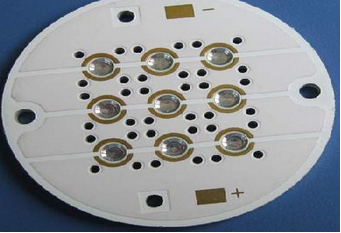
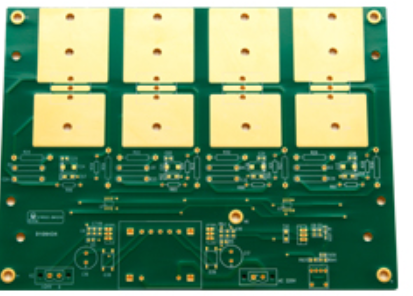
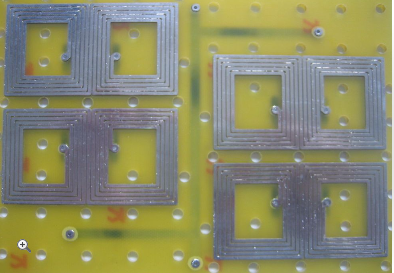
Optimizing Signal Integrity With Custom RF Filter And Power Amplifier PCB Layout Techniques
In the high-stakes world of modern wireless communication, radar systems, and high-frequency instrumentation, the performance of Radio Frequency (RF) circuits is paramount. At the heart of this performance lies a critical, yet often underestimated, challenge: preserving signal integrity from the initial transmission to the final reception. While advanced semiconductor technology provides powerful components like custom RF filters and power amplifiers (PAs), their ultimate potential is unlocked or limited not on the silicon die, but on the printed circuit board (PCB). The article "Optimizing Signal Integrity With Custom RF Filter And Power Amplifier PCB Layout Techniques" delves into this crucial intersection of component design and physical implementation. It argues that meticulous, application-specific PCB layout is not merely a final assembly step but a foundational design discipline essential for achieving desired performance metrics such as low noise, high efficiency, stable gain, and minimal distortion. This exploration provides engineers and designers with the background and detailed methodologies to transform theoretical circuit designs into robust, high-performing physical realities, navigating the complex electromagnetic landscape of a densely packed board.
The Critical Role of Impedance Control and Transmission Line Design
At RF frequencies, PCB traces are not simple conductive paths; they behave as transmission lines. Any discontinuity in the characteristic impedance of these lines leads to signal reflections, which manifest as ringing, overshoot, and degraded signal quality. For custom RF filters, which are designed to precisely pass or reject specific frequency bands, impedance mismatches can drastically alter their frequency response, rendering them ineffective. Similarly, for power amplifiers, reflections can cause instability, reduced power delivery, and even device failure.
Therefore, the first pillar of optimization is rigorous impedance control. This involves calculating the required trace width, dielectric thickness, and material properties (Dk value) to achieve a target impedance, typically 50 ohms in RF systems. Using controlled-impedance stack-ups and consulting with PCB fabricators is essential. Furthermore, the layout must maintain this controlled impedance along the entire signal path, paying special attention to bends (which should use mitred corners), vias (which introduce parasitic inductance and capacitance), and transitions between layers. For filter networks, the physical length and spacing of traces become part of the resonant elements themselves, making precision in their geometry non-negotiable.
Strategic Component Placement and Partitioning
The physical arrangement of components on the board sets the stage for all subsequent layout decisions. Effective partitioning separates the board into distinct functional blocks: the sensitive low-noise receive section, the high-power transmit/amplifier section, and the digital control circuitry. This physical segregation is crucial to prevent noise coupling from noisy digital lines or the high-power PA output back into sensitive filter inputs or oscillator circuits.
Placement must follow the signal flow. For a cascade of a filter and a power amplifier, the components should be arranged in a linear, low-inductance path from input to output, minimizing the length of critical RF traces. The power amplifier, often a significant heat source, must be placed with thermal management in mind—providing adequate copper pour for heat sinking and away from temperature-sensitive components like certain filter dielectrics or crystal oscillators. Decoupling capacitors for the PA's power supply must be placed as close as physically possible to its power pins to form a low-inductance loop, suppressing high-frequency noise on the supply rail that could modulate the output signal.
Advanced Grounding and Power Plane Techniques
A solid, low-impedance ground is the bedrock of signal integrity. A poor ground strategy can create ground loops, common-impedance coupling, and act as an antenna for noise. For RF layouts, a continuous ground plane on an adjacent layer to the RF traces is highly recommended. This provides a clear, predictable return path for high-frequency currents and helps contain electromagnetic fields.
The grounding approach for the power amplifier deserves special attention. High-current return paths must be kept short and wide to minimize parasitic inductance, which can lead to voltage spikes and instability. Often, a "star" grounding point or a dedicated ground pour for the PA section is used, connected to the main ground plane at a single point to isolate noisy return currents. Similarly, power planes must be well-designed. Using split power planes or dedicated, locally regulated supplies for different stages (e.g., driver stage vs. final stage of the PA) prevents noise propagation through the shared power bus. Careful stitching of ground and power planes with multiple vias around the perimeter and near component pads reduces parasitic inductance and prevents the planes from acting as resonant cavities.
Mitigating Parasitics and Electromagnetic Interference (EMI)
At gigahertz frequencies, the parasitic inductance of a short wire bond or the capacitance between two closely spaced traces can become significant circuit elements. The layout must actively work to minimize these unintended effects. This involves using surface-mount components (SMDs) with minimal package parasitics, keeping lead lengths as short as possible, and carefully managing the spacing between traces—especially those carrying signals of vastly different amplitudes, like the input and output of a power amplifier.
Shielding and isolation are key to controlling EMI. Sensitive filter sections or oscillator circuits may require shielding cans—metal enclosures soldered to the ground plane—to block external radiated noise. Traces should be routed to avoid crossing splits in the ground plane, which can force return currents to take long, looped paths, increasing radiation. For the power amplifier, the large switched currents can generate significant harmonic radiation. Proper output matching network layout and the use of shielding can help contain this energy, ensuring compliance with regulatory standards and preventing interference with other board sections or nearby systems.
REPORT