







-
 Agriculture
-
 Health-Care
-
 Environment
-
 Construction-Real-Estate
-
 Tools-Hardware
-
 Home-Garden
-
 Furniture
-
 Luggage-Bags-Cases
-
 Medical-devices-Supplies
-
 Gifts-Crafts
-
 Sports-Entertainment
-
 Food-Beverage
-
 Vehicles-Transportation
-
 Power-Transmission
-
 Material-Handling
-
 Renewable-Energy
-
 Safety
-
 Testing-Instrument-Equipment
-
 Construction-Building-Machinery
-
 Pet-Supplies
-
 Personal-Care-Household-Cleaning
-
 Vehicle-Accessories-Electronics-Tools
-
 School-Office-Supplies
-
 Packaging-Printing
-
 Mother-Kids-Toys
-
 Business-Services
-
 Commercial-Equipment-Machinery
-
 Apparel-Accessories
-
 Security
-
 Shoes-Accessories
-
 Vehicle-Parts-Accessories
-
 Jewelry-Eyewear-Watches-Accessories
-
 Lights-Lighting
-
 Fabric-Textile-Raw-Material
-
 Fabrication-Services
-
 Industrial-Machinery
-
 Consumer-Electronics
-
 Electrical-Equipment-Supplies
-
 Electronic-Components-Accessories-Telecommunications
-
 Home-Appliances
-
 Beauty
-
 Chemicals
-
 Rubber-Plastics
-
 Metals-Alloys


























































































































































































































































































































































































































































































































































































- Masonry Materials
- Curtain Walls & Accessories
- Earthwork Products
- Fireproofing Materials
- Heat Insulation Materials
- Plastic Building Materials
- Building Boards
- Soundproofing Materials
- Timber
- Waterproofing Materials
- Balustrades & Handrails
- Bathroom & Kitchen
- Flooring & Accessories
- Tiles & Accessories
- Door, Window & Accessories
- Fireplaces & Stoves
- Floor Heating Systems & Parts
- Stairs & Stair Parts
- Ceilings
- Elevators & Escalators
- Stone
- Countertops, Vanity Tops & Table Tops
- Mosaics
- Metal Building Materials
- Multifunctional Materials
- Ladders & Scaffoldings
- Mouldings
- Corner Guards
- Decorative Films
- Formwork
- Building & Industrial Glass
- Other Construction & Real Estate
- Wallpapers/Wall panels
- HVAC System & Parts
- Outdoor Facilities
- Prefabricated Buildings
- Festive & Party Supplies
- Bathroom Products
- Household Sundries
- Rain Gear
- Garden Supplies
- Household Cleaning Tools & Accessories
- Lighters & Smoking Accessories
- Home Storage & Organization
- Household Scales
- Smart Home Improvement
- Home Textiles
- Kitchenware
- Drinkware & Accessories
- Dinnerware, Coffee & Wine
- Home Decor
- Golf
- Fitness & Body Building
- Amusement Park Facilities
- Billiards, Board Game,Coin Operated Games
- Musical Instruments
- Outdoor Affordable Luxury Sports
- Camping & Hiking
- Fishing
- Sports Safety&Rehabilitation
- Ball Sports Equipments
- Water Sports
- Winter Sports
- Luxury Travel Equipments
- Sports Shoes, Bags & Accessories
- Cycling
- Other Sports & Entertainment Products
- Artificial Grass&Sports Flooring&Sports Court Equipment
- Scooters
- Food Ingredients
- Honey & Honey Products
- Snacks
- Nuts & Kernels
- Seafood
- Plant & Animal Oil
- Beverages
- Fruit & Vegetable Products
- Frog & Escargot
- Bean Products
- Egg Products
- Dairy Products
- Seasonings & Condiments
- Canned Food
- Instant Food
- Baked Goods
- Other Food & Beverage
- Meat & Poultry
- Confectionery
- Grain Products
- Feminie Care
- Hair Care & Styling
- Body Care
- Hands & Feet Care
- Hygiene Products
- Men's Grooming
- Laundry Cleaning Supplies
- Travel Size & Gift Sets
- Room Deodorizers
- Other Personal Care Products
- Pest Control Products
- Special Household Cleaning
- Floor Cleaning
- Kitchen & Bathroom Cleaning
- Oral Care
- Bath Supplies
- Yellow Pages
- Correction Supplies
- Office Binding Supplies
- Office Cutting Supplies
- Board Erasers
- Office Adhesives & Tapes
- Education Supplies
- Pencil Cases & Bags
- Notebooks & Writing Pads
- File Folder Accessories
- Calendars
- Writing Accessories
- Commercial Office Supplies
- Pencil Sharpeners
- Pens
- Letter Pad/Paper
- Paper Envelopes
- Desk Organizers
- Pencils
- Markers & Highlighters
- Filing Products
- Art Supplies
- Easels
- Badge Holder & Accessories
- Office Paper
- Printer Supplies
- Book Covers
- Other Office & School Supplies
- Stationery Set
- Boards
- Clipboards
- Stamps
- Drafting Supplies
- Stencils
- Electronic Dictionary
- Books
- Map
- Magazines
- Calculators
- Baby & Toddler Toys
- Educational Toys
- Classic Toys
- Dress Up & Pretend Play
- Toy Vehicle
- Stuffed Animals & Plush Toys
- Outdoor Toys & Structures
- Balloons & Accessories
- Baby Food
- Children's Clothing
- Baby Supplies & Products
- Maternity Clothes
- Kids Shoes
- Baby Care
- Novelty & Gag Toys
- Dolls & Accessories
- Puzzle & Games
- Blocks & Model Building Toys
- Toddler Clothing
- Baby Clothing
- Kids' Luggage & Bags
- Arts, Crafts & DIY Toys
- Action & Toy Figures
- Baby Appliances
- Hobbies & Models
- Remote Control Toys
- Promotional Toys
- Pregnancy & Maternity
- Hygiene Products
- Kid's Textile&Bedding
- Novelty & Special Use
- Toy Weapons
- Baby Gifts
- Baby Storage & Organization
- Auto Drive Systems
- ATV/UTV Parts & Accessories
- Marine Parts & Accessories
- Other Auto Parts
- Trailer Parts & Accessories
- Auto Transmission Systems
- Train Parts & Accessories
- Universal Parts
- Railway Parts & Accessories
- Auto Brake Systems
- Aviation Parts & Accessories
- Truck Parts & Accessories
- Auto Suspension Systems
- Auto Lighting Systems
- New Energy Vehicle Parts & Accessories
- Auto Steering Systems
- Wheels, Tires & Accessories
- Bus Parts & Accessories
- Auto Performance Parts
- Cooling System
- Go-Kart & Kart Racer Parts & Accessories
- Air Conditioning Systems
- Heavy Duty Vehicle Parts & Accessories
- Auto Electrical Systems
- Auto Body Systems
- Auto Engine Systems
- Container Parts & Accessories
- Motorcycle Parts & Accessories
- Refrigeration & Heat Exchange Equipment
- Machine Tool Equipment
- Food & Beverage Machinery
- Agricultural Machinery & Equipment
- Apparel & Textile Machinery
- Chemical Machinery
- Packaging Machines
- Paper Production Machinery
- Plastic & Rubber Processing Machinery
- Industrial Robots
- Electronic Products Machinery
- Metal & Metallurgy Machinery
- Woodworking Machinery
- Home Product Manufacturing Machinery
- Machinery Accessories
- Environmental Machinery
- Machinery Service
- Electrical Equipment Manufacturing Machinery
- Industrial Compressors & Parts
- Tobacco & Cigarette Machinery
- Production Line
- Used Industrial Machinery
- Electronics Production Machinery
- Other Machinery & Industrial Equipment
- Camera, Photo & Accessories
- Portable Audio, Video & Accessories
- Television, Home Audio, Video & Accessories
- Video Games & Accessories
- Mobile Phone & Accessories
- Electronic Publications
- Earphone & Headphone & Accessories
- Speakers & Accessories
- Smart Electronics
- TV Receivers & Accessories
- Mobile Phone & Computer Repair Parts
- Chargers, Batteries & Power Supplies
- Used Electronics
- VR, AR, MR Hardware & Software
- Projectors & Presentation Equipments
- Other Consumer Electronics
- Cables & Commonly Used Accessories
- Computer Hardware & Software
- Displays, Signage and Optoelectronics
- Discrete Semiconductors
- Wireless & IoT Module and Products
- Telecommunications
- Connectors, Terminals & Accessories
- Development Boards, Electronic Modules and Kits
- Circuit Protection
- Sensors
- Isolators
- Audio Components and Products
- Integrated Circuits
- Power Supplies
- Relays
- RF, Microwave and RFID
- Electronic Accessories & Supplies
- Passive Components
- PCB & PCBA
- Air Quality Appliances
- Home Appliance Parts
- Heating & Cooling Appliances
- Small Kitchen Appliances
- Laundry Appliances
- Water Heaters
- Water Treatment Appliances
- Refrigerators & Freezers
- Personal Care & Beauty Appliances
- Major Kitchen Appliances
- Cleaning Appliances
- Second-hand Appliances
- Smart Home Appliances
- Other Home Appliances
- Energy Chemicals
- Inorganic Chemicals
- Basic Organic Chemicals
- Agrochemicals
- Admixture & Additives
- Catalysts & Chemical Auxiliary Agents
- Pigments & Dyestuff
- Coating & Paint
- Daily Chemicals
- Polymer
- Organic Intermediate
- Adhesives & Sealants
- Chemical Waste
- Biological Chemical Products
- Surface Treatment Chemicals
- Painting & Coating
- Chemical Reagents
- Flavor & Fragrance
- Non-Explosive Demolition Agents
- Other Chemicals
- Custom Chemical Services

Understanding Production Lead Time Drivers for Custom Sports Socks Post-Order Confirmation
Overview of Post-Confirmation Lead Time Variables
Once a custom order for sports socks is confirmed, several critical operational factors govern the manufacturing turnaround time. Primary timeline extensions are usually triggered by delays in finalizing artwork specifications, custom Pantone yarn dyeing requirements, specialized post-knitting treatments—such as anti-slip silicone dispensing or 360° heat transfer printing—and comprehensive quality inspection protocols. Furthermore, late-stage design alterations during sample approval can shift delivery schedules beyond original baseline estimates.
Key Strategic Takeaways for Buyers
- Freeze Technical Specifications Early: Confirming vector design files and color matches before production begins eliminates pre-knitting bottlenecks.
- Account for Advanced Processing Times: Additional technical steps like silicone/PVC grip application or 360° printing require dedicated queue time beyond basic knitting schedules.
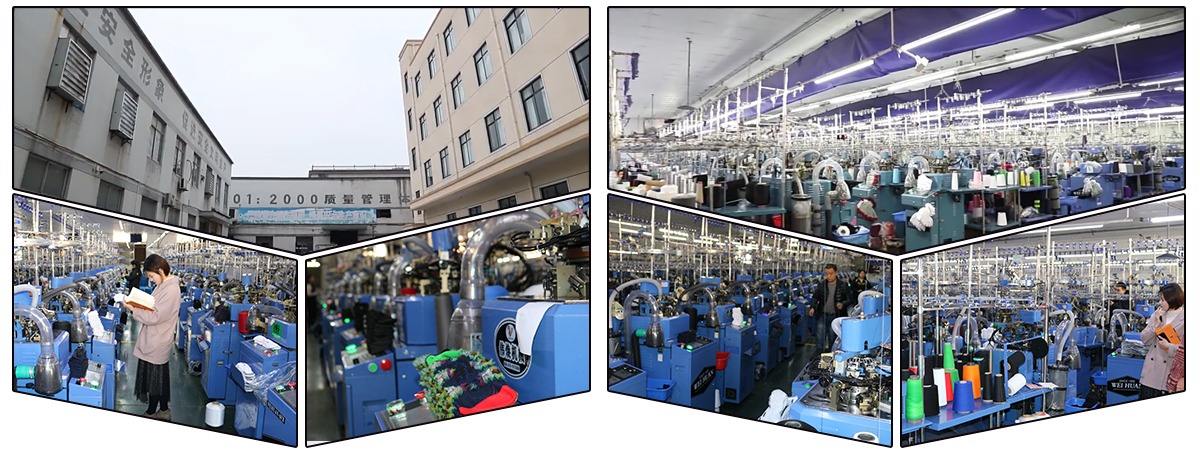
- Leverage Robust Manufacturing Capacity: Facilities outfitted with modern equipment—such as over 200 computerized jacquard machines—can output up to 40,000 pairs daily, stabilizing timelines for large volume orders.
- Broad Market Adaptability: Custom sock solutions cater to diverse sectors, including corporate promotional events, athletic teams, and wellness studios.
In-Depth Breakdown of the Manufacturing Workflow
The manufacturing journey of athletic socks follows a structured sequence: digitizing, material preparation, machine setup, knitting, automatic toe closing, boarding, and post-processing. Immediate execution depends heavily on raw material availability. Standard yarn blends (e.g., 80% Combed Cotton, 17% Nylon, 3% Spandex) kept in inventory enable immediate machine setup. Conversely, custom color requests that require dedicated yarn dyeing add setup days before weaving can start.
Weaving speeds are determined by machine configuration and pattern complexity. Intricate jacquard designs necessitate specialized needle programming and lower rotational speeds to maintain crisp graphics without distorting fabric tension. When orders require secondary enhancements—such as custom embroidery, 360° seamless printing, or silicone grip application for yoga and Pilates— socks must move to specialized processing lines, adding handling and queuing time between departments.
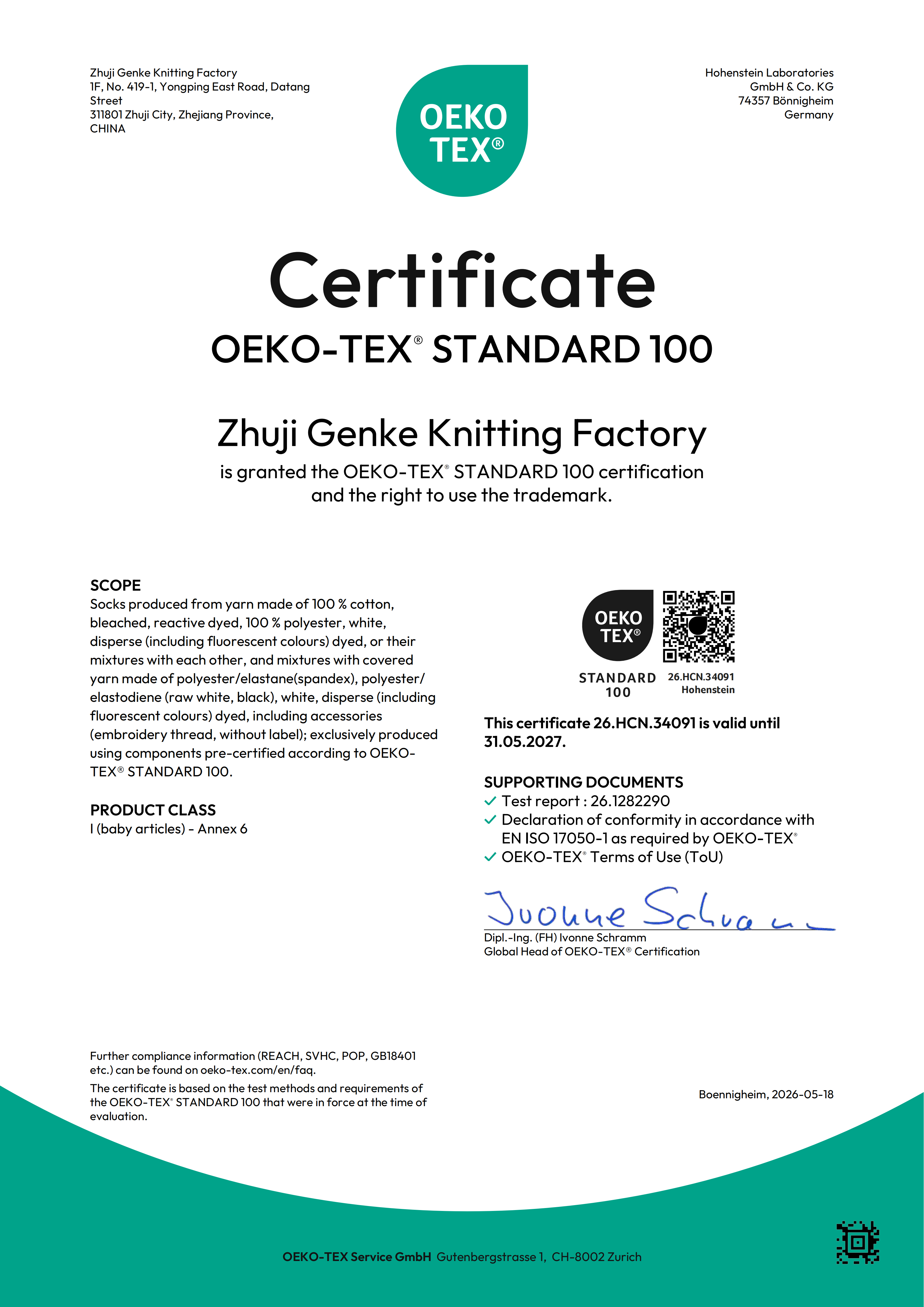
Quality assurance and international compliance form the final stage before packaging. Facilities certified under global standards like Oeko-Tex 100 (Certificate 26.HCN.34091) and BSCI (Audit 25-0339304) conduct rigorous checks, including 100% visual inspection, seam strength testing, and dimensional evaluation. These stringent control steps ensure consistent product quality for international markets in North America and Europe while keeping shipments on schedule.
Lead Time Impact by Customization Type
| Customization Method | Technical Processing | Lead Time Impact | Target Scenario |
|---|---|---|---|
| Standard Jacquard Weaving | Direct needle pattern integration (up to 5 colors) | Baseline schedule (Fastest execution) | Corporate promotional crew socks, standard athletic socks |
| 360° Heat Transfer Printing | Seamless high-definition printing on blank knitted base | +3 to 5 Business Days (Printing & thermo-curing) | Complex multi-color artwork, photorealistic graphic streetwear |
| Silicone / PVC Grip Application | Automated pattern dispensing & thermal setting | +4 to 7 Business Days (Secondary line processing) | Yoga studio socks, Pilates grip socks, high-traction athletic wear |
| Custom Pantone Yarn Dyeing | Bespoke raw material color bath processing | +7 to 10 Business Days (Pre-knitting material prep) | Strict brand color alignment, high-volume custom OEM runs |
Frequently Asked Questions
Q1: What is the typical timeframe for rapid prototype sampling?
Once artwork is approved, physical prototype sampling generally takes between 3 and 7 days, which includes design digitizing, machine setup, and sample knitting.
Q2: What is the minimum order quantity (MOQ) for custom logo socks?
The standard minimum order requirement starts at 100 pairs, providing flexibility for small-batch and quick-turnaround projects.
Q3: What are the transit options and estimated delivery times following production?
Express courier services (DHL, FedEx, UPS) deliver small orders in 3 to 7 days. Air freight requires 7 to 12 days, while ocean freight under DDP/DDU terms ranges from 20 to 35 days depending on the final destination.
Recommendations for Minimizing Lead Time Delays
To avoid lead time fluctuations for custom sports socks, buyers should finalize artwork early, select stocked yarn colors for time-sensitive orders, and plan ahead for secondary steps such as silicone dispensing or full-wrap printing. Partnering with an experienced manufacturer that manages all production stages in-house streamlines workflow transitions and provides clear schedule visibility. For inquiries or technical assistance, contact us at happygu@cnleyoyo.com.
About Our Manufacturing Capabilities
Yiwu Genke Apparel Co., Ltd. operates a 1,200 square meter production facility fitted with over 200 computerized jacquard machines and supported by an 89-member technical team. Founded in 2016, the company produces up to 12 million pairs annually for corporate, athletic, and fashion clients in the US, Europe, and Australia. Backed by BSCI and Oeko-Tex 100 certifications, the company offers end-to-end customization services from quick sampling to full-scale production.
REPORT