







-
 Agriculture
-
 Health-Care
-
 Environment
-
 Construction-Real-Estate
-
 Tools-Hardware
-
 Home-Garden
-
 Furniture
-
 Luggage-Bags-Cases
-
 Medical-devices-Supplies
-
 Gifts-Crafts
-
 Sports-Entertainment
-
 Food-Beverage
-
 Vehicles-Transportation
-
 Power-Transmission
-
 Material-Handling
-
 Renewable-Energy
-
 Safety
-
 Testing-Instrument-Equipment
-
 Construction-Building-Machinery
-
 Pet-Supplies
-
 Personal-Care-Household-Cleaning
-
 Vehicle-Accessories-Electronics-Tools
-
 School-Office-Supplies
-
 Packaging-Printing
-
 Mother-Kids-Toys
-
 Business-Services
-
 Commercial-Equipment-Machinery
-
 Apparel-Accessories
-
 Security
-
 Shoes-Accessories
-
 Vehicle-Parts-Accessories
-
 Jewelry-Eyewear-Watches-Accessories
-
 Lights-Lighting
-
 Fabric-Textile-Raw-Material
-
 Fabrication-Services
-
 Industrial-Machinery
-
 Consumer-Electronics
-
 Electrical-Equipment-Supplies
-
 Electronic-Components-Accessories-Telecommunications
-
 Home-Appliances
-
 Beauty
-
 Chemicals
-
 Rubber-Plastics
-
 Metals-Alloys


























































































































































































































































































































































































































































































































































































- Masonry Materials
- Curtain Walls & Accessories
- Earthwork Products
- Fireproofing Materials
- Heat Insulation Materials
- Plastic Building Materials
- Building Boards
- Soundproofing Materials
- Timber
- Waterproofing Materials
- Balustrades & Handrails
- Bathroom & Kitchen
- Flooring & Accessories
- Tiles & Accessories
- Door, Window & Accessories
- Fireplaces & Stoves
- Floor Heating Systems & Parts
- Stairs & Stair Parts
- Ceilings
- Elevators & Escalators
- Stone
- Countertops, Vanity Tops & Table Tops
- Mosaics
- Metal Building Materials
- Multifunctional Materials
- Ladders & Scaffoldings
- Mouldings
- Corner Guards
- Decorative Films
- Formwork
- Building & Industrial Glass
- Other Construction & Real Estate
- Wallpapers/Wall panels
- HVAC System & Parts
- Outdoor Facilities
- Prefabricated Buildings
- Festive & Party Supplies
- Bathroom Products
- Household Sundries
- Rain Gear
- Garden Supplies
- Household Cleaning Tools & Accessories
- Lighters & Smoking Accessories
- Home Storage & Organization
- Household Scales
- Smart Home Improvement
- Home Textiles
- Kitchenware
- Drinkware & Accessories
- Dinnerware, Coffee & Wine
- Home Decor
- Golf
- Fitness & Body Building
- Amusement Park Facilities
- Billiards, Board Game,Coin Operated Games
- Musical Instruments
- Outdoor Affordable Luxury Sports
- Camping & Hiking
- Fishing
- Sports Safety&Rehabilitation
- Ball Sports Equipments
- Water Sports
- Winter Sports
- Luxury Travel Equipments
- Sports Shoes, Bags & Accessories
- Cycling
- Other Sports & Entertainment Products
- Artificial Grass&Sports Flooring&Sports Court Equipment
- Scooters
- Food Ingredients
- Honey & Honey Products
- Snacks
- Nuts & Kernels
- Seafood
- Plant & Animal Oil
- Beverages
- Fruit & Vegetable Products
- Frog & Escargot
- Bean Products
- Egg Products
- Dairy Products
- Seasonings & Condiments
- Canned Food
- Instant Food
- Baked Goods
- Other Food & Beverage
- Meat & Poultry
- Confectionery
- Grain Products
- Feminie Care
- Hair Care & Styling
- Body Care
- Hands & Feet Care
- Hygiene Products
- Men's Grooming
- Laundry Cleaning Supplies
- Travel Size & Gift Sets
- Room Deodorizers
- Other Personal Care Products
- Pest Control Products
- Special Household Cleaning
- Floor Cleaning
- Kitchen & Bathroom Cleaning
- Oral Care
- Bath Supplies
- Yellow Pages
- Correction Supplies
- Office Binding Supplies
- Office Cutting Supplies
- Board Erasers
- Office Adhesives & Tapes
- Education Supplies
- Pencil Cases & Bags
- Notebooks & Writing Pads
- File Folder Accessories
- Calendars
- Writing Accessories
- Commercial Office Supplies
- Pencil Sharpeners
- Pens
- Letter Pad/Paper
- Paper Envelopes
- Desk Organizers
- Pencils
- Markers & Highlighters
- Filing Products
- Art Supplies
- Easels
- Badge Holder & Accessories
- Office Paper
- Printer Supplies
- Book Covers
- Other Office & School Supplies
- Stationery Set
- Boards
- Clipboards
- Stamps
- Drafting Supplies
- Stencils
- Electronic Dictionary
- Books
- Map
- Magazines
- Calculators
- Baby & Toddler Toys
- Educational Toys
- Classic Toys
- Dress Up & Pretend Play
- Toy Vehicle
- Stuffed Animals & Plush Toys
- Outdoor Toys & Structures
- Balloons & Accessories
- Baby Food
- Children's Clothing
- Baby Supplies & Products
- Maternity Clothes
- Kids Shoes
- Baby Care
- Novelty & Gag Toys
- Dolls & Accessories
- Puzzle & Games
- Blocks & Model Building Toys
- Toddler Clothing
- Baby Clothing
- Kids' Luggage & Bags
- Arts, Crafts & DIY Toys
- Action & Toy Figures
- Baby Appliances
- Hobbies & Models
- Remote Control Toys
- Promotional Toys
- Pregnancy & Maternity
- Hygiene Products
- Kid's Textile&Bedding
- Novelty & Special Use
- Toy Weapons
- Baby Gifts
- Baby Storage & Organization
- Auto Drive Systems
- ATV/UTV Parts & Accessories
- Marine Parts & Accessories
- Other Auto Parts
- Trailer Parts & Accessories
- Auto Transmission Systems
- Train Parts & Accessories
- Universal Parts
- Railway Parts & Accessories
- Auto Brake Systems
- Aviation Parts & Accessories
- Truck Parts & Accessories
- Auto Suspension Systems
- Auto Lighting Systems
- New Energy Vehicle Parts & Accessories
- Auto Steering Systems
- Wheels, Tires & Accessories
- Bus Parts & Accessories
- Auto Performance Parts
- Cooling System
- Go-Kart & Kart Racer Parts & Accessories
- Air Conditioning Systems
- Heavy Duty Vehicle Parts & Accessories
- Auto Electrical Systems
- Auto Body Systems
- Auto Engine Systems
- Container Parts & Accessories
- Motorcycle Parts & Accessories
- Refrigeration & Heat Exchange Equipment
- Machine Tool Equipment
- Food & Beverage Machinery
- Agricultural Machinery & Equipment
- Apparel & Textile Machinery
- Chemical Machinery
- Packaging Machines
- Paper Production Machinery
- Plastic & Rubber Processing Machinery
- Industrial Robots
- Electronic Products Machinery
- Metal & Metallurgy Machinery
- Woodworking Machinery
- Home Product Manufacturing Machinery
- Machinery Accessories
- Environmental Machinery
- Machinery Service
- Electrical Equipment Manufacturing Machinery
- Industrial Compressors & Parts
- Tobacco & Cigarette Machinery
- Production Line
- Used Industrial Machinery
- Electronics Production Machinery
- Other Machinery & Industrial Equipment
- Camera, Photo & Accessories
- Portable Audio, Video & Accessories
- Television, Home Audio, Video & Accessories
- Video Games & Accessories
- Mobile Phone & Accessories
- Electronic Publications
- Earphone & Headphone & Accessories
- Speakers & Accessories
- Smart Electronics
- TV Receivers & Accessories
- Mobile Phone & Computer Repair Parts
- Chargers, Batteries & Power Supplies
- Used Electronics
- VR, AR, MR Hardware & Software
- Projectors & Presentation Equipments
- Other Consumer Electronics
- Cables & Commonly Used Accessories
- Computer Hardware & Software
- Displays, Signage and Optoelectronics
- Discrete Semiconductors
- Wireless & IoT Module and Products
- Telecommunications
- Connectors, Terminals & Accessories
- Development Boards, Electronic Modules and Kits
- Circuit Protection
- Sensors
- Isolators
- Audio Components and Products
- Integrated Circuits
- Power Supplies
- Relays
- RF, Microwave and RFID
- Electronic Accessories & Supplies
- Passive Components
- PCB & PCBA
- Air Quality Appliances
- Home Appliance Parts
- Heating & Cooling Appliances
- Small Kitchen Appliances
- Laundry Appliances
- Water Heaters
- Water Treatment Appliances
- Refrigerators & Freezers
- Personal Care & Beauty Appliances
- Major Kitchen Appliances
- Cleaning Appliances
- Second-hand Appliances
- Smart Home Appliances
- Other Home Appliances
- Energy Chemicals
- Inorganic Chemicals
- Basic Organic Chemicals
- Agrochemicals
- Admixture & Additives
- Catalysts & Chemical Auxiliary Agents
- Pigments & Dyestuff
- Coating & Paint
- Daily Chemicals
- Polymer
- Organic Intermediate
- Adhesives & Sealants
- Chemical Waste
- Biological Chemical Products
- Surface Treatment Chemicals
- Painting & Coating
- Chemical Reagents
- Flavor & Fragrance
- Non-Explosive Demolition Agents
- Other Chemicals
- Custom Chemical Services


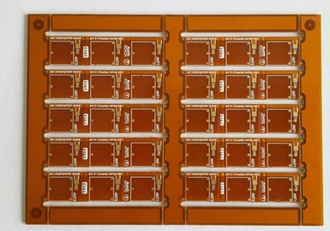
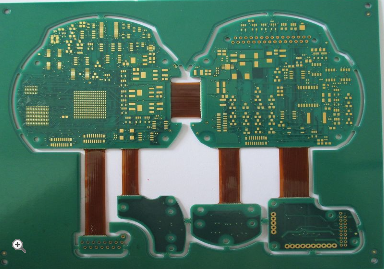
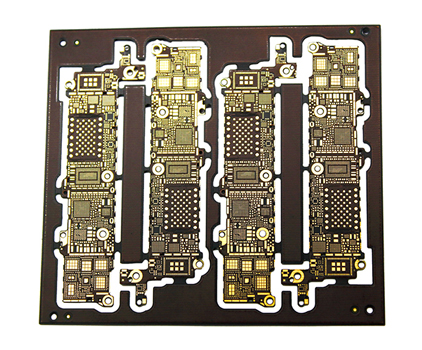
Unlocking Innovation With Rigid Flex PCBs The Perfect Blend Of Strength And Adaptability In Modern Circuit Board Solutions
In the rapidly evolving landscape of electronics, the demand for more compact, reliable, and high-performance devices is relentless. Traditional printed circuit boards (PCBs), whether rigid or flexible, often fall short in meeting the complex requirements of modern applications such as wearable technology, medical implants, aerospace systems, and advanced consumer electronics. Enter rigid-flex PCBs—a revolutionary solution that seamlessly merges the durability of rigid boards with the adaptability of flexible circuits. This hybrid technology is unlocking unprecedented levels of innovation, enabling designers to overcome spatial constraints, enhance reliability, and push the boundaries of what's possible in electronic design. By combining strength and flexibility, rigid-flex PCBs are not just an incremental improvement but a transformative approach that addresses the core challenges of today's interconnected world. As industries strive for miniaturization and increased functionality, understanding the potential of rigid-flex PCBs becomes essential for engineers, product developers, and technology enthusiasts alike.
The Engineering Marvel: How Rigid-Flex PCBs Work
At its core, a rigid-flex PCB integrates multiple layers of rigid and flexible substrates into a single, continuous unit. The rigid sections are typically made from materials like FR4, providing structural support for mounting components and connectors, while the flexible parts use polyimide or similar polymers, allowing the board to bend, twist, or fold during installation or operation. These sections are laminated together using advanced adhesives and plating techniques, creating a unified circuit that eliminates the need for connectors and cables between separate boards. This seamless integration reduces points of failure, such as solder joints and interconnects, which are common sources of reliability issues in traditional setups. Moreover, the manufacturing process involves precise control over layer alignment and material properties, ensuring consistent performance even under mechanical stress. By enabling three-dimensional packaging, rigid-flex PCBs allow for more efficient use of space, which is critical in devices where every millimeter counts. This engineering synergy not only enhances durability but also simplifies assembly, leading to faster production cycles and lower overall costs in complex applications.
The design flexibility of rigid-flex PCBs extends beyond mere physical bending. Engineers can tailor the board's geometry to fit irregular enclosures, wrap around other components, or even move dynamically within a device. For instance, in a folding smartphone, the rigid-flex PCB can traverse the hinge area, maintaining electrical continuity while withstanding thousands of flex cycles. This adaptability is achieved through careful material selection and simulation-driven design, which predicts stress points and optimizes the layout to prevent fatigue or cracking. Additionally, the ability to integrate high-density interconnects (HDI) on both rigid and flexible sections supports advanced functionalities like high-speed data transmission and power management. As a result, rigid-flex PCBs are not just passive carriers of circuits but active enablers of innovative form factors and enhanced performance, making them indispensable in cutting-edge electronic development.
Driving Innovation Across Industries
The impact of rigid-flex PCBs is felt across a diverse range of sectors, each leveraging the technology to solve unique challenges. In the medical field, for example, devices such as pacemakers, hearing aids, and diagnostic equipment benefit from the compactness and reliability of rigid-flex designs. These PCBs can conform to the human body's contours, reducing discomfort and improving patient outcomes, while their robust construction ensures longevity in sensitive environments. Similarly, in aerospace and defense, rigid-flex circuits are used in avionics, satellites, and military gear, where they withstand extreme temperatures, vibrations, and shock without compromising performance. The reduction in weight and volume is particularly valuable here, as it contributes to fuel efficiency and payload capacity. By replacing bulky wiring harnesses with integrated flexible sections, these industries achieve higher system reliability and easier maintenance, which are critical for safety-critical applications.
Consumer electronics is another domain where rigid-flex PCBs are driving transformative change. From smartphones and laptops to wearable fitness trackers and virtual reality headsets, the demand for sleeker, more durable devices has never been higher. Rigid-flex technology allows manufacturers to pack more features into smaller form factors, enabling innovations like foldable screens and waterproof designs. In automotive electronics, rigid-flex PCBs support advanced driver-assistance systems (ADAS), infotainment consoles, and electric vehicle powertrains, where they endure harsh conditions while ensuring seamless connectivity. The technology's adaptability also fosters rapid prototyping and customization, empowering companies to bring products to market faster. As the Internet of Things (IoT) expands, rigid-flex PCBs will play a pivotal role in connecting smart devices, from industrial sensors to home automation systems, by providing the necessary durability and flexibility for diverse installation scenarios. This cross-industry adoption underscores the versatility of rigid-flex solutions in unlocking new possibilities.
Advantages Over Traditional PCB Solutions
Compared to conventional rigid or flexible PCBs used in isolation, rigid-flex hybrids offer a host of advantages that justify their growing popularity. First and foremost is enhanced reliability: by eliminating connectors and discrete wiring, the risk of connection failures, signal interference, and mechanical wear is significantly reduced. This leads to longer product lifespans and lower warranty costs, which are crucial for high-stakes applications like medical implants or aerospace systems. Additionally, the integrated design minimizes assembly steps, streamlining manufacturing and reducing labor expenses. While the initial material costs for rigid-flex PCBs may be higher, the total cost of ownership often decreases due to fewer components, simplified testing, and improved yield rates. From a performance standpoint, rigid-flex boards support better signal integrity, as shorter trace lengths and controlled impedance reduce electromagnetic interference (EMI) and signal loss, which is vital for high-frequency applications like 5G communications or data centers.
Another key advantage is space optimization. Rigid-flex PCBs can be folded or shaped to fit into tight spaces, allowing for more compact device designs without sacrificing functionality. This is especially beneficial in portable electronics, where every gram and cubic centimeter matters. The reduction in weight also contributes to energy efficiency, particularly in battery-operated devices. Furthermore, the environmental resilience of rigid-flex circuits—thanks to materials that resist moisture, chemicals, and temperature fluctuations—makes them suitable for harsh operating conditions. Designers also appreciate the creative freedom that rigid-flex technology provides, enabling innovative product architectures that were previously impossible. For instance, a single rigid-flex board can replace multiple interconnected boards, simplifying the overall system and enhancing aesthetics. As sustainability becomes a priority, the durability and longevity of rigid-flex PCBs align with circular economy principles by reducing electronic waste. These cumulative benefits make rigid-flex PCBs a superior choice for modern circuit board solutions, driving their adoption across cutting-edge projects.
Future Trends and Challenges
Looking ahead, the evolution of rigid-flex PCB technology is poised to accelerate, fueled by advancements in materials science, manufacturing techniques, and design software. Emerging trends include the use of stretchable electronics, which could enable even greater adaptability for wearable and biomedical applications. Researchers are exploring novel substrates like liquid crystal polymers (LCPs) that offer improved flexibility and thermal stability, while additive manufacturing methods such as 3D printing may revolutionize prototyping and small-batch production. The integration of embedded components—where passive or active elements are placed within the PCB layers—will further enhance miniaturization and performance. As artificial intelligence and machine learning become more prevalent, rigid-flex PCBs will need to support higher computational densities and faster data rates, driving innovations in thermal management and signal routing. The push for greener electronics will also influence material choices, with a focus on recyclable or biodegradable polymers without compromising durability.
However, several challenges remain in the widespread adoption of rigid-flex PCBs. Manufacturing complexity is a significant hurdle, as the lamination of rigid and flexible materials requires precise control and specialized equipment, leading to higher upfront costs and longer lead times. Designers must also navigate stringent standards and testing protocols, particularly in regulated industries like healthcare and aerospace, where failure is not an option. Additionally, the limited availability of skilled engineers proficient in rigid-flex design can slow down implementation. To overcome these obstacles, industry collaboration and education will be key. Companies are investing in automated production lines and simulation tools to reduce errors and improve yield, while training programs aim to build expertise in this niche field. As these challenges are addressed, rigid-flex PCBs will become more accessible, paving the way for even more groundbreaking applications. Ultimately, the future of electronics hinges on solutions that balance strength and adaptability, and rigid-flex technology stands at the forefront of this exciting journey.
REPORT