







-
 Agriculture
-
 Health-Care
-
 Environment
-
 Construction-Real-Estate
-
 Tools-Hardware
-
 Home-Garden
-
 Furniture
-
 Luggage-Bags-Cases
-
 Medical-devices-Supplies
-
 Gifts-Crafts
-
 Sports-Entertainment
-
 Food-Beverage
-
 Vehicles-Transportation
-
 Power-Transmission
-
 Material-Handling
-
 Renewable-Energy
-
 Safety
-
 Testing-Instrument-Equipment
-
 Construction-Building-Machinery
-
 Pet-Supplies
-
 Personal-Care-Household-Cleaning
-
 Vehicle-Accessories-Electronics-Tools
-
 School-Office-Supplies
-
 Packaging-Printing
-
 Mother-Kids-Toys
-
 Business-Services
-
 Commercial-Equipment-Machinery
-
 Apparel-Accessories
-
 Security
-
 Shoes-Accessories
-
 Vehicle-Parts-Accessories
-
 Jewelry-Eyewear-Watches-Accessories
-
 Lights-Lighting
-
 Fabric-Textile-Raw-Material
-
 Fabrication-Services
-
 Industrial-Machinery
-
 Consumer-Electronics
-
 Electrical-Equipment-Supplies
-
 Electronic-Components-Accessories-Telecommunications
-
 Home-Appliances
-
 Beauty
-
 Chemicals
-
 Rubber-Plastics
-
 Metals-Alloys


























































































































































































































































































































































































































































































































































































- Masonry Materials
- Curtain Walls & Accessories
- Earthwork Products
- Fireproofing Materials
- Heat Insulation Materials
- Plastic Building Materials
- Building Boards
- Soundproofing Materials
- Timber
- Waterproofing Materials
- Balustrades & Handrails
- Bathroom & Kitchen
- Flooring & Accessories
- Tiles & Accessories
- Door, Window & Accessories
- Fireplaces & Stoves
- Floor Heating Systems & Parts
- Stairs & Stair Parts
- Ceilings
- Elevators & Escalators
- Stone
- Countertops, Vanity Tops & Table Tops
- Mosaics
- Metal Building Materials
- Multifunctional Materials
- Ladders & Scaffoldings
- Mouldings
- Corner Guards
- Decorative Films
- Formwork
- Building & Industrial Glass
- Other Construction & Real Estate
- Wallpapers/Wall panels
- HVAC System & Parts
- Outdoor Facilities
- Prefabricated Buildings
- Festive & Party Supplies
- Bathroom Products
- Household Sundries
- Rain Gear
- Garden Supplies
- Household Cleaning Tools & Accessories
- Lighters & Smoking Accessories
- Home Storage & Organization
- Household Scales
- Smart Home Improvement
- Home Textiles
- Kitchenware
- Drinkware & Accessories
- Dinnerware, Coffee & Wine
- Home Decor
- Golf
- Fitness & Body Building
- Amusement Park Facilities
- Billiards, Board Game,Coin Operated Games
- Musical Instruments
- Outdoor Affordable Luxury Sports
- Camping & Hiking
- Fishing
- Sports Safety&Rehabilitation
- Ball Sports Equipments
- Water Sports
- Winter Sports
- Luxury Travel Equipments
- Sports Shoes, Bags & Accessories
- Cycling
- Other Sports & Entertainment Products
- Artificial Grass&Sports Flooring&Sports Court Equipment
- Scooters
- Food Ingredients
- Honey & Honey Products
- Snacks
- Nuts & Kernels
- Seafood
- Plant & Animal Oil
- Beverages
- Fruit & Vegetable Products
- Frog & Escargot
- Bean Products
- Egg Products
- Dairy Products
- Seasonings & Condiments
- Canned Food
- Instant Food
- Baked Goods
- Other Food & Beverage
- Meat & Poultry
- Confectionery
- Grain Products
- Feminie Care
- Hair Care & Styling
- Body Care
- Hands & Feet Care
- Hygiene Products
- Men's Grooming
- Laundry Cleaning Supplies
- Travel Size & Gift Sets
- Room Deodorizers
- Other Personal Care Products
- Pest Control Products
- Special Household Cleaning
- Floor Cleaning
- Kitchen & Bathroom Cleaning
- Oral Care
- Bath Supplies
- Yellow Pages
- Correction Supplies
- Office Binding Supplies
- Office Cutting Supplies
- Board Erasers
- Office Adhesives & Tapes
- Education Supplies
- Pencil Cases & Bags
- Notebooks & Writing Pads
- File Folder Accessories
- Calendars
- Writing Accessories
- Commercial Office Supplies
- Pencil Sharpeners
- Pens
- Letter Pad/Paper
- Paper Envelopes
- Desk Organizers
- Pencils
- Markers & Highlighters
- Filing Products
- Art Supplies
- Easels
- Badge Holder & Accessories
- Office Paper
- Printer Supplies
- Book Covers
- Other Office & School Supplies
- Stationery Set
- Boards
- Clipboards
- Stamps
- Drafting Supplies
- Stencils
- Electronic Dictionary
- Books
- Map
- Magazines
- Calculators
- Baby & Toddler Toys
- Educational Toys
- Classic Toys
- Dress Up & Pretend Play
- Toy Vehicle
- Stuffed Animals & Plush Toys
- Outdoor Toys & Structures
- Balloons & Accessories
- Baby Food
- Children's Clothing
- Baby Supplies & Products
- Maternity Clothes
- Kids Shoes
- Baby Care
- Novelty & Gag Toys
- Dolls & Accessories
- Puzzle & Games
- Blocks & Model Building Toys
- Toddler Clothing
- Baby Clothing
- Kids' Luggage & Bags
- Arts, Crafts & DIY Toys
- Action & Toy Figures
- Baby Appliances
- Hobbies & Models
- Remote Control Toys
- Promotional Toys
- Pregnancy & Maternity
- Hygiene Products
- Kid's Textile&Bedding
- Novelty & Special Use
- Toy Weapons
- Baby Gifts
- Baby Storage & Organization
- Auto Drive Systems
- ATV/UTV Parts & Accessories
- Marine Parts & Accessories
- Other Auto Parts
- Trailer Parts & Accessories
- Auto Transmission Systems
- Train Parts & Accessories
- Universal Parts
- Railway Parts & Accessories
- Auto Brake Systems
- Aviation Parts & Accessories
- Truck Parts & Accessories
- Auto Suspension Systems
- Auto Lighting Systems
- New Energy Vehicle Parts & Accessories
- Auto Steering Systems
- Wheels, Tires & Accessories
- Bus Parts & Accessories
- Auto Performance Parts
- Cooling System
- Go-Kart & Kart Racer Parts & Accessories
- Air Conditioning Systems
- Heavy Duty Vehicle Parts & Accessories
- Auto Electrical Systems
- Auto Body Systems
- Auto Engine Systems
- Container Parts & Accessories
- Motorcycle Parts & Accessories
- Refrigeration & Heat Exchange Equipment
- Machine Tool Equipment
- Food & Beverage Machinery
- Agricultural Machinery & Equipment
- Apparel & Textile Machinery
- Chemical Machinery
- Packaging Machines
- Paper Production Machinery
- Plastic & Rubber Processing Machinery
- Industrial Robots
- Electronic Products Machinery
- Metal & Metallurgy Machinery
- Woodworking Machinery
- Home Product Manufacturing Machinery
- Machinery Accessories
- Environmental Machinery
- Machinery Service
- Electrical Equipment Manufacturing Machinery
- Industrial Compressors & Parts
- Tobacco & Cigarette Machinery
- Production Line
- Used Industrial Machinery
- Electronics Production Machinery
- Other Machinery & Industrial Equipment
- Camera, Photo & Accessories
- Portable Audio, Video & Accessories
- Television, Home Audio, Video & Accessories
- Video Games & Accessories
- Mobile Phone & Accessories
- Electronic Publications
- Earphone & Headphone & Accessories
- Speakers & Accessories
- Smart Electronics
- TV Receivers & Accessories
- Mobile Phone & Computer Repair Parts
- Chargers, Batteries & Power Supplies
- Used Electronics
- VR, AR, MR Hardware & Software
- Projectors & Presentation Equipments
- Other Consumer Electronics
- Cables & Commonly Used Accessories
- Computer Hardware & Software
- Displays, Signage and Optoelectronics
- Discrete Semiconductors
- Wireless & IoT Module and Products
- Telecommunications
- Connectors, Terminals & Accessories
- Development Boards, Electronic Modules and Kits
- Circuit Protection
- Sensors
- Isolators
- Audio Components and Products
- Integrated Circuits
- Power Supplies
- Relays
- RF, Microwave and RFID
- Electronic Accessories & Supplies
- Passive Components
- PCB & PCBA
- Air Quality Appliances
- Home Appliance Parts
- Heating & Cooling Appliances
- Small Kitchen Appliances
- Laundry Appliances
- Water Heaters
- Water Treatment Appliances
- Refrigerators & Freezers
- Personal Care & Beauty Appliances
- Major Kitchen Appliances
- Cleaning Appliances
- Second-hand Appliances
- Smart Home Appliances
- Other Home Appliances
- Energy Chemicals
- Inorganic Chemicals
- Basic Organic Chemicals
- Agrochemicals
- Admixture & Additives
- Catalysts & Chemical Auxiliary Agents
- Pigments & Dyestuff
- Coating & Paint
- Daily Chemicals
- Polymer
- Organic Intermediate
- Adhesives & Sealants
- Chemical Waste
- Biological Chemical Products
- Surface Treatment Chemicals
- Painting & Coating
- Chemical Reagents
- Flavor & Fragrance
- Non-Explosive Demolition Agents
- Other Chemicals
- Custom Chemical Services

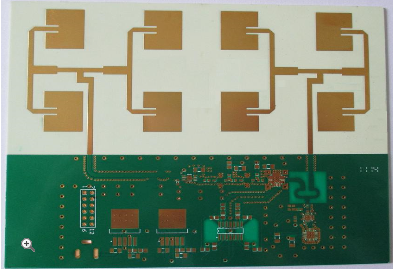
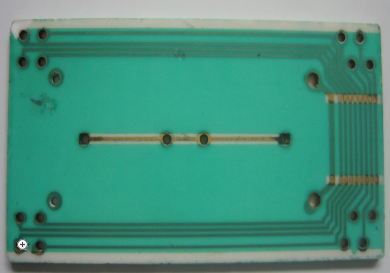
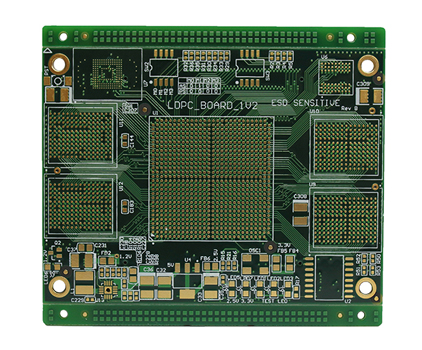
Unveiling The Secrets Behind High Frequency PCB Manufacturing Techniques And Material Selection For Optimal Performance In Modern Electronics
In the rapidly evolving landscape of modern electronics, where devices communicate at lightning speeds and process vast amounts of data, the humble printed circuit board (PCB) has undergone a profound transformation. No longer just a passive platform for mounting components, the PCB in high-frequency applications—such as 5G telecommunications, advanced radar systems, satellite communications, and high-speed computing—becomes the critical determinant of system performance. "Unveiling The Secrets Behind High Frequency PCB Manufacturing Techniques And Material Selection For Optimal Performance In Modern Electronics" delves into the intricate world where electrical engineering meets material science. This exploration is not merely academic; it is essential for engineers and designers pushing the boundaries of what's possible. As signal frequencies soar into the gigahertz and terahertz ranges, traditional PCB approaches falter, giving way to specialized manufacturing protocols and exotic material choices that preserve signal integrity, minimize loss, and ensure reliability. This article aims to demystify these advanced practices, providing a comprehensive guide to achieving optimal performance in cutting-edge electronic designs.
The Critical Role of Dielectric Materials in Signal Integrity
At the heart of high-frequency PCB performance lies the selection of the substrate material, or dielectric. Unlike standard FR-4 epoxy glass, which performs poorly at high frequencies due to high dielectric loss (Df), specialized materials are engineered for stability. These materials, such as PTFE (Teflon), ceramic-filled PTFE composites, hydrocarbon ceramics, and liquid crystal polymer (LCP), exhibit a low and consistent dielectric constant (Dk) across a wide frequency range. A stable Dk is crucial because it determines the speed of the signal and the impedance of the transmission lines; variations can cause impedance mismatches, leading to signal reflections and degradation.
Furthermore, the dissipation factor (Df), which quantifies signal loss converted to heat, is paramount. Materials like Rogers RO4000 series or Isola's Astra MT77 offer exceptionally low Df values, ensuring that minimal signal energy is lost as it traverses the board. The choice of material also affects the thermal management of the PCB. High-frequency circuits often generate significant heat, and the substrate must have a suitable thermal coefficient to maintain dimensional stability and electrical properties under operating temperatures, preventing delamination or performance drift.
Precision Manufacturing: Taming the Challenges of Fine Features and Tight Tolerances
Manufacturing a high-frequency PCB is an exercise in extreme precision. The process begins with meticulous laminate preparation, where copper foil with very low surface roughness is used. Smooth copper reduces signal loss at higher frequencies, as rough surfaces increase the effective conduction path and cause scattering. The etching process to form traces must achieve exceptionally fine lines and spaces, often down to 2-3 mils or less, to create controlled impedance transmission lines like microstrips or striplines. Any deviation in trace width can alter the characteristic impedance, causing signal reflections.
Another critical step is the lamination process. Multilayer high-frequency boards require perfect alignment and bonding without introducing air gaps or voids, which can create impedance discontinuities. Pressing parameters—temperature, pressure, and time—are tightly controlled. Drilling for vias, especially for blind and buried vias in HDI designs, must be precise to avoid damaging delicate inner layers. These vias are then plated with uniform copper to ensure reliable interlayer connections, but special attention is paid to via stub management, as stubs can act as antennas and resonate, degrading signal quality at high frequencies.
Impedance Control and Advanced Stack-up Design
Impedance control is the cornerstone of high-speed design. Every trace on a high-frequency PCB is designed as a transmission line with a specific target impedance, typically 50 or 100 ohms. Achieving this requires a holistic approach to stack-up design. Engineers must calculate the precise dimensions of traces based on the chosen material's Dk, the copper weight, and the distance to reference planes. This involves sophisticated electromagnetic field simulation software to model performance before fabrication.
The stack-up, or the arrangement of copper and dielectric layers, is strategically planned to provide clear return paths for signals and to isolate sensitive high-speed lines from noisy digital sections. Ground planes are kept intact as much as possible to shield signals and provide a consistent reference. The use of differential pairs for high-speed signals is common, requiring that the two traces of a pair be perfectly matched in length and spacing to maintain signal integrity and reject common-mode noise. Any asymmetry can lead to mode conversion and increased electromagnetic interference (EMI).
Surface Finishes and Their Impact on High-Frequency Performance
The final surface finish of a PCB, applied to protect exposed copper and ensure solderability, can surprisingly impact high-frequency performance. Traditional finishes like Hot Air Solder Leveling (HASL) create an uneven surface, which is detrimental for fine-pitch components and can slightly alter impedance. For high-frequency boards, finishes like Electroless Nickel Immersion Gold (ENIG), Immersion Silver, or Electroless Palladium Immersion Gold (EPIG) are preferred.
ENIG provides a flat, solderable surface with good oxidation resistance. However, the nickel layer can introduce slight magnetic properties and skin effect losses at very high frequencies. Immersion Silver offers excellent electrical conductivity and a very smooth surface, but it can tarnish over time. The choice often involves a trade-off between electrical performance, shelf life, assembly requirements, and cost. The finish must be uniformly thin to avoid affecting the geometry of the carefully designed transmission lines.
Testing, Validation, and the Future Horizon
Verifying the performance of a high-frequency PCB is as specialized as its manufacture. Time Domain Reflectometry (TDR) is used to measure the actual impedance profile of traces and identify any discontinuities. Vector Network Analyzers (VNAs) characterize the S-parameters (Scattering parameters) of the board, quantifying insertion loss, return loss, and crosstalk across the operational frequency band. These tests validate that the manufactured board meets the simulated electrical models.
Looking ahead, the demands of technologies like 6G, automotive radar, and quantum computing will push frequencies even higher. This drives innovation in areas like low-loss, ultra-low Dk materials, embedded passive and active components, and additive manufacturing techniques for creating more complex, three-dimensional circuit structures. The integration of photonics with traditional electronics on a PCB substrate is also an emerging frontier. Mastering the secrets of today's high-frequency PCB manufacturing is, therefore, the essential foundation for building the transformative electronic systems of tomorrow.
REPORT