







-
 Agriculture
-
 Health-Care
-
 Environment
-
 Construction-Real-Estate
-
 Tools-Hardware
-
 Home-Garden
-
 Furniture
-
 Luggage-Bags-Cases
-
 Medical-devices-Supplies
-
 Gifts-Crafts
-
 Sports-Entertainment
-
 Food-Beverage
-
 Vehicles-Transportation
-
 Power-Transmission
-
 Material-Handling
-
 Renewable-Energy
-
 Safety
-
 Testing-Instrument-Equipment
-
 Construction-Building-Machinery
-
 Pet-Supplies
-
 Personal-Care-Household-Cleaning
-
 Vehicle-Accessories-Electronics-Tools
-
 School-Office-Supplies
-
 Packaging-Printing
-
 Mother-Kids-Toys
-
 Business-Services
-
 Commercial-Equipment-Machinery
-
 Apparel-Accessories
-
 Security
-
 Shoes-Accessories
-
 Vehicle-Parts-Accessories
-
 Jewelry-Eyewear-Watches-Accessories
-
 Lights-Lighting
-
 Fabric-Textile-Raw-Material
-
 Fabrication-Services
-
 Industrial-Machinery
-
 Consumer-Electronics
-
 Electrical-Equipment-Supplies
-
 Electronic-Components-Accessories-Telecommunications
-
 Home-Appliances
-
 Beauty
-
 Chemicals
-
 Rubber-Plastics
-
 Metals-Alloys


























































































































































































































































































































































































































































































































































































- Masonry Materials
- Curtain Walls & Accessories
- Earthwork Products
- Fireproofing Materials
- Heat Insulation Materials
- Plastic Building Materials
- Building Boards
- Soundproofing Materials
- Timber
- Waterproofing Materials
- Balustrades & Handrails
- Bathroom & Kitchen
- Flooring & Accessories
- Tiles & Accessories
- Door, Window & Accessories
- Fireplaces & Stoves
- Floor Heating Systems & Parts
- Stairs & Stair Parts
- Ceilings
- Elevators & Escalators
- Stone
- Countertops, Vanity Tops & Table Tops
- Mosaics
- Metal Building Materials
- Multifunctional Materials
- Ladders & Scaffoldings
- Mouldings
- Corner Guards
- Decorative Films
- Formwork
- Building & Industrial Glass
- Other Construction & Real Estate
- Wallpapers/Wall panels
- HVAC System & Parts
- Outdoor Facilities
- Prefabricated Buildings
- Festive & Party Supplies
- Bathroom Products
- Household Sundries
- Rain Gear
- Garden Supplies
- Household Cleaning Tools & Accessories
- Lighters & Smoking Accessories
- Home Storage & Organization
- Household Scales
- Smart Home Improvement
- Home Textiles
- Kitchenware
- Drinkware & Accessories
- Dinnerware, Coffee & Wine
- Home Decor
- Golf
- Fitness & Body Building
- Amusement Park Facilities
- Billiards, Board Game,Coin Operated Games
- Musical Instruments
- Outdoor Affordable Luxury Sports
- Camping & Hiking
- Fishing
- Sports Safety&Rehabilitation
- Ball Sports Equipments
- Water Sports
- Winter Sports
- Luxury Travel Equipments
- Sports Shoes, Bags & Accessories
- Cycling
- Other Sports & Entertainment Products
- Artificial Grass&Sports Flooring&Sports Court Equipment
- Scooters
- Food Ingredients
- Honey & Honey Products
- Snacks
- Nuts & Kernels
- Seafood
- Plant & Animal Oil
- Beverages
- Fruit & Vegetable Products
- Frog & Escargot
- Bean Products
- Egg Products
- Dairy Products
- Seasonings & Condiments
- Canned Food
- Instant Food
- Baked Goods
- Other Food & Beverage
- Meat & Poultry
- Confectionery
- Grain Products
- Feminie Care
- Hair Care & Styling
- Body Care
- Hands & Feet Care
- Hygiene Products
- Men's Grooming
- Laundry Cleaning Supplies
- Travel Size & Gift Sets
- Room Deodorizers
- Other Personal Care Products
- Pest Control Products
- Special Household Cleaning
- Floor Cleaning
- Kitchen & Bathroom Cleaning
- Oral Care
- Bath Supplies
- Yellow Pages
- Correction Supplies
- Office Binding Supplies
- Office Cutting Supplies
- Board Erasers
- Office Adhesives & Tapes
- Education Supplies
- Pencil Cases & Bags
- Notebooks & Writing Pads
- File Folder Accessories
- Calendars
- Writing Accessories
- Commercial Office Supplies
- Pencil Sharpeners
- Pens
- Letter Pad/Paper
- Paper Envelopes
- Desk Organizers
- Pencils
- Markers & Highlighters
- Filing Products
- Art Supplies
- Easels
- Badge Holder & Accessories
- Office Paper
- Printer Supplies
- Book Covers
- Other Office & School Supplies
- Stationery Set
- Boards
- Clipboards
- Stamps
- Drafting Supplies
- Stencils
- Electronic Dictionary
- Books
- Map
- Magazines
- Calculators
- Baby & Toddler Toys
- Educational Toys
- Classic Toys
- Dress Up & Pretend Play
- Toy Vehicle
- Stuffed Animals & Plush Toys
- Outdoor Toys & Structures
- Balloons & Accessories
- Baby Food
- Children's Clothing
- Baby Supplies & Products
- Maternity Clothes
- Kids Shoes
- Baby Care
- Novelty & Gag Toys
- Dolls & Accessories
- Puzzle & Games
- Blocks & Model Building Toys
- Toddler Clothing
- Baby Clothing
- Kids' Luggage & Bags
- Arts, Crafts & DIY Toys
- Action & Toy Figures
- Baby Appliances
- Hobbies & Models
- Remote Control Toys
- Promotional Toys
- Pregnancy & Maternity
- Hygiene Products
- Kid's Textile&Bedding
- Novelty & Special Use
- Toy Weapons
- Baby Gifts
- Baby Storage & Organization
- Auto Drive Systems
- ATV/UTV Parts & Accessories
- Marine Parts & Accessories
- Other Auto Parts
- Trailer Parts & Accessories
- Auto Transmission Systems
- Train Parts & Accessories
- Universal Parts
- Railway Parts & Accessories
- Auto Brake Systems
- Aviation Parts & Accessories
- Truck Parts & Accessories
- Auto Suspension Systems
- Auto Lighting Systems
- New Energy Vehicle Parts & Accessories
- Auto Steering Systems
- Wheels, Tires & Accessories
- Bus Parts & Accessories
- Auto Performance Parts
- Cooling System
- Go-Kart & Kart Racer Parts & Accessories
- Air Conditioning Systems
- Heavy Duty Vehicle Parts & Accessories
- Auto Electrical Systems
- Auto Body Systems
- Auto Engine Systems
- Container Parts & Accessories
- Motorcycle Parts & Accessories
- Refrigeration & Heat Exchange Equipment
- Machine Tool Equipment
- Food & Beverage Machinery
- Agricultural Machinery & Equipment
- Apparel & Textile Machinery
- Chemical Machinery
- Packaging Machines
- Paper Production Machinery
- Plastic & Rubber Processing Machinery
- Industrial Robots
- Electronic Products Machinery
- Metal & Metallurgy Machinery
- Woodworking Machinery
- Home Product Manufacturing Machinery
- Machinery Accessories
- Environmental Machinery
- Machinery Service
- Electrical Equipment Manufacturing Machinery
- Industrial Compressors & Parts
- Tobacco & Cigarette Machinery
- Production Line
- Used Industrial Machinery
- Electronics Production Machinery
- Other Machinery & Industrial Equipment
- Camera, Photo & Accessories
- Portable Audio, Video & Accessories
- Television, Home Audio, Video & Accessories
- Video Games & Accessories
- Mobile Phone & Accessories
- Electronic Publications
- Earphone & Headphone & Accessories
- Speakers & Accessories
- Smart Electronics
- TV Receivers & Accessories
- Mobile Phone & Computer Repair Parts
- Chargers, Batteries & Power Supplies
- Used Electronics
- VR, AR, MR Hardware & Software
- Projectors & Presentation Equipments
- Other Consumer Electronics
- Cables & Commonly Used Accessories
- Computer Hardware & Software
- Displays, Signage and Optoelectronics
- Discrete Semiconductors
- Wireless & IoT Module and Products
- Telecommunications
- Connectors, Terminals & Accessories
- Development Boards, Electronic Modules and Kits
- Circuit Protection
- Sensors
- Isolators
- Audio Components and Products
- Integrated Circuits
- Power Supplies
- Relays
- RF, Microwave and RFID
- Electronic Accessories & Supplies
- Passive Components
- PCB & PCBA
- Air Quality Appliances
- Home Appliance Parts
- Heating & Cooling Appliances
- Small Kitchen Appliances
- Laundry Appliances
- Water Heaters
- Water Treatment Appliances
- Refrigerators & Freezers
- Personal Care & Beauty Appliances
- Major Kitchen Appliances
- Cleaning Appliances
- Second-hand Appliances
- Smart Home Appliances
- Other Home Appliances
- Energy Chemicals
- Inorganic Chemicals
- Basic Organic Chemicals
- Agrochemicals
- Admixture & Additives
- Catalysts & Chemical Auxiliary Agents
- Pigments & Dyestuff
- Coating & Paint
- Daily Chemicals
- Polymer
- Organic Intermediate
- Adhesives & Sealants
- Chemical Waste
- Biological Chemical Products
- Surface Treatment Chemicals
- Painting & Coating
- Chemical Reagents
- Flavor & Fragrance
- Non-Explosive Demolition Agents
- Other Chemicals
- Custom Chemical Services

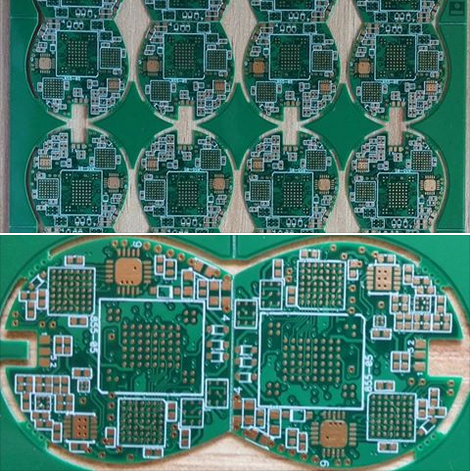
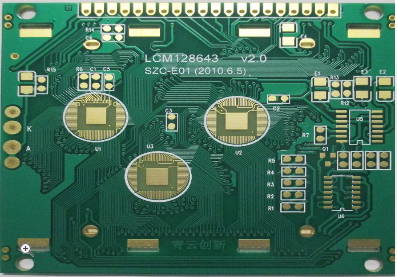
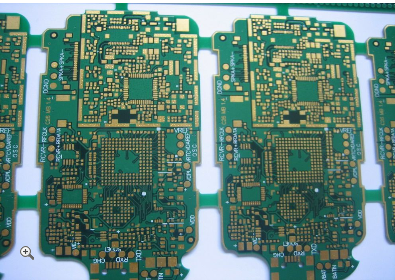
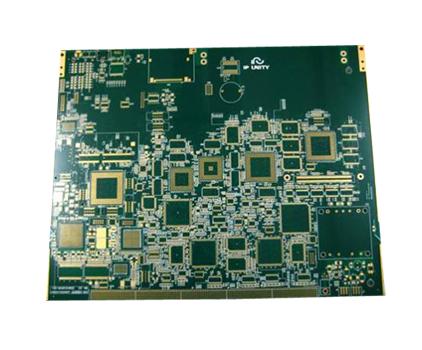
Efficient Plating Half Holes PCB Implementation For Seamless Integration And Enhanced Board Functionality
In the rapidly evolving landscape of electronics manufacturing, the demand for compact, high-performance, and reliably interconnected devices has never been greater. At the heart of this innovation lies printed circuit board (PCB) technology, where traditional design approaches are continually being refined to meet complex integration challenges. One such advanced technique garnering significant attention is the implementation of plated half holes, also known as castellated holes. This method represents a sophisticated solution for creating seamless, solderable edge connections between PCBs, enabling modular designs, stacked assemblies, and direct attachment to carrier boards. The core pursuit—Efficient Plating Half Holes PCB Implementation for Seamless Integration and Enhanced Board Functionality—focuses not merely on creating these structures but on optimizing the entire manufacturing process to achieve superior electrical performance, mechanical robustness, and cost-effectiveness. This article delves into the intricacies of this technology, exploring how meticulous design, precise fabrication, and strategic application unlock new potentials in modern electronic systems, from IoT modules and wearable tech to advanced telecommunications infrastructure.
Design Principles and Structural Advantages
The foundation of effective plated half-hole implementation begins with intelligent design. Unlike standard through-holes, half holes are created by drilling a hole at the edge of the board and then milling away half of it, leaving a semi-circular plated pad on the board's periphery. This design transforms the board edge into a series of conductive, solderable castellations. The primary structural advantage is the elimination of traditional connectors or headers, which consume valuable space and add points of potential failure.
From a design perspective, key parameters must be meticulously controlled. These include the hole diameter, the plating thickness (typically copper with a final finish like ENIG or HASL), and the amount of material removed during routing to ensure a clean, consistent half-cylinder profile. Proper design ensures that during soldering, solder flows smoothly into the plated half-hole, forming a reliable fillet that provides both electrical continuity and strong mechanical bonding. This seamless edge connection allows for a "board-on-board" mounting approach, enabling vertical stacking or side-by-side attachment, which is invaluable for creating modular, upgradeable systems or embedding functional sub-modules directly onto a larger motherboard.
Manufacturing Process and Efficiency Optimization
The realization of high-quality plated half holes hinges on a precise and controlled manufacturing workflow. The process typically starts after the standard PCB lamination and drilling phases. Holes are drilled along the designated board edge, followed by a comprehensive plating process that deposits a layer of copper onto the walls of these holes, establishing electrical connectivity through the board layers. The critical step is the precise routing or profiling operation that cuts the board to its final shape and simultaneously slices through the plated holes, creating the half-hole castellations.
Efficiency in this context is multi-faceted. It involves optimizing drilling and routing parameters—such as feed rate, spindle speed, and tool selection—to achieve clean cuts without causing copper tearing, burrs, or delamination. Advanced CNC machines with high positional accuracy are essential. Furthermore, the plating process itself must be efficient; maintaining uniform copper thickness across all holes, especially at the board edge, is crucial for consistent solderability and current carrying capacity. Manufacturers achieve efficiency by integrating design for manufacturability (DFM) checks early, using specialized fixtures during routing to support the board edge, and implementing rigorous automated optical inspection (AOI) to catch defects. This streamlined, careful process minimizes waste, reduces rework, and ensures high yield, directly contributing to lower production costs and faster time-to-market.
Enhancing Electrical Performance and Signal Integrity
Beyond mechanical integration, plated half holes significantly enhance the electrical functionality of a PCB assembly. By providing a direct, low-impedance path from one board to another, they minimize the signal discontinuities often associated with pin-and-socket connectors. The continuous plated surface from the inner layers to the edge castellation offers an excellent conductive bridge.
This is particularly advantageous for high-frequency and high-speed digital applications. Traditional connectors can introduce parasitic capacitance and inductance, leading to signal reflection, attenuation, and crosstalk. The integrated nature of half-hole connections shortens the signal path, offering better control over impedance matching. For power distribution, the robust plating allows for higher current transfer compared to many standard connector pins, supporting more power-hungry modules. Careful design of the power and ground planes extending to these castellations ensures stable reference voltages and reduces ground bounce, thereby enhancing the overall noise immunity and reliability of the interconnected system.
Applications Driving Seamless Integration
The practical applications of efficiently plated half holes are vast and growing, driven by the industry's push toward miniaturization and modularity. A quintessential example is in system-on-module (SoM) or computer-on-module (CoM) designs, where a complex, processor-centric core module can be mass-produced and then seamlessly integrated into various custom carrier boards for different end products, such as industrial controllers, medical devices, or automotive systems. This plug-and-play approach drastically reduces development time and cost.
Similarly, in RF and wireless communications, Bluetooth or Wi-Fi modules often utilize castellated holes for compact, low-profile attachment to main PCBs in smartphones, routers, and IoT sensors. The technique is also prevalent in wearable technology, where space is at an absolute premium, and reliable, solder-joint connections are preferred over flexing connectors. Furthermore, in aerospace and automotive electronics, where vibration resistance is critical, the solid solder joint formed with a plated half hole often proves more durable than many connector types, contributing to enhanced long-term reliability in harsh environments.
Reliability, Testing, and Future Outlook
The ultimate measure of an efficient implementation is the long-term reliability of the final product. Plated half holes, when executed correctly, form extremely reliable connections. The solder joint created is visually inspectable, allowing for quality verification post-assembly. However, ensuring this reliability requires stringent testing protocols. This includes thermal cycling tests to ensure the joint can withstand expansion and contraction stresses, mechanical shear tests to validate bond strength, and electrical continuity tests under varying environmental conditions.
Looking forward, the implementation of plated half holes will continue to evolve alongside broader PCB trends. The drive towards finer pitch castellations to support even smaller modules is already underway, demanding ever-greater precision in manufacturing. Integration with advanced materials like high-frequency laminates will further optimize performance for next-generation wireless devices. Moreover, as automation in assembly grows, the self-aligning and solder-paste-friendly nature of castellated holes makes them ideal for pick-and-place and reflow processes. The pursuit of efficiency in plating half holes is, therefore, not a static goal but a continuous journey of refinement, playing a pivotal role in enabling the seamless, functional, and robust electronic systems of the future.
REPORT